Download Mendeley
Structural basis for domain coupling in heteromeric glycine receptors revealed by an atypical allosteric agonist.
Gibbs, E., Feddersen, B., Kindig, K.J., Seiferth, D., Biggin, P.C., Chakrapani, S.(2026) Sci Adv 12: eaeb2036-eaeb2036
- PubMed: 41686897 Search on PubMedSearch on PubMed Central
- DOI: https://doi.org/10.1126/sciadv.aeb2036
- Primary Citation Related Structures:
9PKW, 9PKX, 9PKY, 9PKZ - PubMed Abstract:
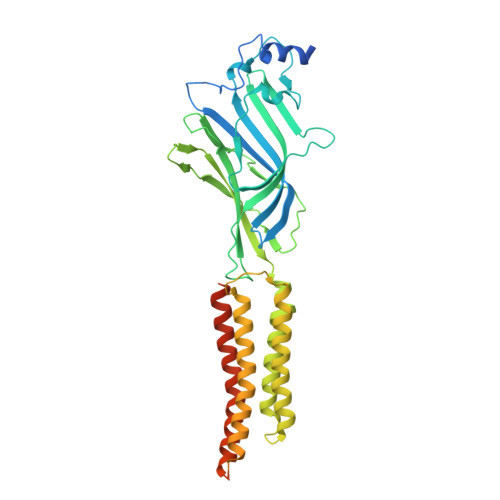
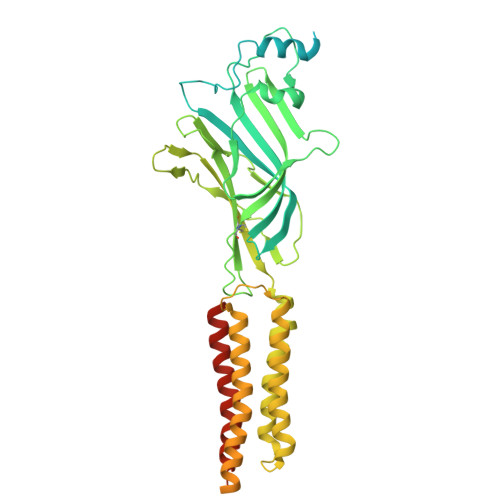
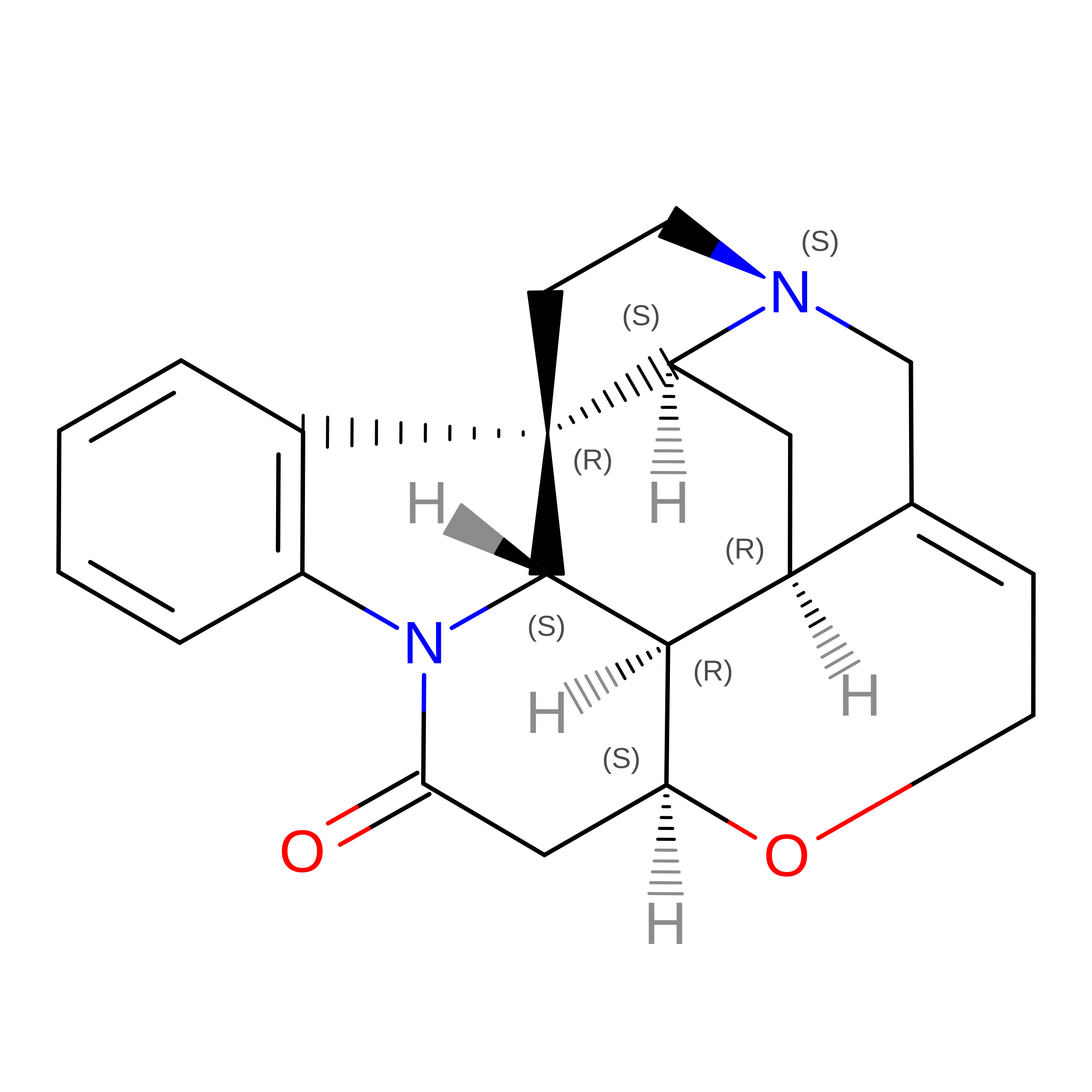
Glycine receptors (GlyRs), pentameric ligand-gated ion channels (pLGICs), mediate sensory and motor functions. GlyR functional states are well characterized; however, structural details of transitions between states remain undefined. Here, we determined cryo-electron microscopy structures of GlyRα1β (with gephyrin E-domain) at varying concentrations of ivermectin, a transmembrane domain (TMD) allosteric agonist, and at saturating concentrations of strychnine, a competitive antagonist at the extracellular domain (ECD). Electrophysiology shows that ivermectin activates GlyR even with strychnine present. Structures with both ligands reveal intermediate states featuring a desensitized TMD and an ECD between closed and desensitized conformations, providing insights into domain cooperativity and ligand efficacy. Molecular dynamics simulations show how ivermectin affects strychnine dynamics. These data support a model where ivermectin activates GlyRs through a concerted and near-symmetric TMD mechanism, whereas allosteric ECD motions are graded and spatially heterogeneous. These findings reveal unanticipated features of GlyR gating and establish principles of allosteric modulation applicable to pLGICs.
- Department of Pharmacology, Case Western Reserve University, Cleveland, OH 44106-4970, USA.
Organizational Affiliation: