9PFF | pdb_00009pff

Min22bin20S complex (NSF-alphaSNAP-2:2 syntaxin-1a H3:SNAP-25 SN1), non-hydrolyzing, class 27


Experimental Data Snapshot

  • Method: ELECTRON MICROSCOPY
  • Resolution: 3.09 Å
  • Aggregation State: PARTICLE 
  • Reconstruction Method: SINGLE PARTICLE 

Starting Models: experimental
View more details

wwPDB Validation 3D Report Full Report

Validation slider image for 9PFF

This is version 1.2 of the entry. See complete history

Literature

Structural remodeling of target-SNARE protein complexes by NSF enables synaptic transmission.

White, K.I.Khan, Y.A.Qiu, K.Balaji, A.Couoh-Cardel, S.Esquivies, L.Pfuetzner, R.A.Diao, J.Brunger, A.T.

(2025) Nat Commun 16: 8371-8371

  • DOI: https://doi.org/10.1038/s41467-025-62764-0
  • Primary Citation Related Structures: 
    9OJR, 9OJU, 9OJZ, 9OK3, 9OK5, 9OKC, 9OLJ, 9OLO, 9OM6, 9OMQ, 9PAF, 9PAG, 9PB9, 9PBA, 9PBF, 9PBV, 9PC3, 9PCX, 9PCZ, 9PD1, 9PD8, 9PDB, 9PDD, 9PF2, 9PFC, 9PFF, 9PFG

  • PubMed Abstract: 

    Synaptic vesicles containing neurotransmitters fuse with the plasma membrane upon the arrival of an action potential at the active zone. Multiple proteins organize trans-SNARE complex assembly and priming, leading to fusion. One target membrane SNARE, syntaxin, forms nanodomains at the active zone, and another, SNAP-25, enters non-fusogenic complexes with it. Here, we reveal mechanistic details of AAA+ protein NSF (N-ethylmaleimide sensitive factor) and SNAP (soluble NSF attachment protein) action before fusion. We show that syntaxin clusters are conserved, that NSF colocalizes with them, and characterize SNARE populations that may exist within or near them using cryo-EM. Supercomplexes of NSF, α-SNAP, and either a syntaxin tetramer or one of two binary complexes of syntaxin-SNAP-25 reveal atomic details of SNARE processing and show how sequential ATP hydrolysis drives disassembly. These results suggest a functional role for syntaxin clusters as reservoirs and a corresponding role for NSF in syntaxin liberation and SNARE protein quality control preceding fusion.


  • Organizational Affiliation
    • Department of Molecular and Cellular Physiology, Stanford University, Stanford, CA, USA. kiwhite@stanford.edu.

Macromolecule Content 

  • Total Structure Weight: 674.06 kDa 
  • Atom Count: 40,690 
  • Modeled Residue Count: 4,964 
  • Deposited Residue Count: 5,990 
  • Unique protein chains: 4

Macromolecules

Find similar proteins by:|  3D Structure
Entity ID: 1
MoleculeChains  Sequence LengthOrganismDetailsImage
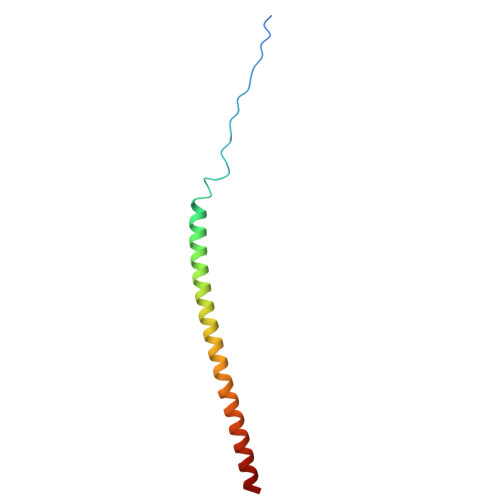
Synaptosomal-associated protein 25A [auth G],
C [auth I]
84Rattus norvegicusMutation(s): 0 
Gene Names: Snap25Snap
UniProt
Find proteins for P60881 (Rattus norvegicus)
Explore P60881 
Go to UniProtKB:  P60881
Entity Groups
Sequence Clusters30% Identity50% Identity70% Identity90% Identity95% Identity100% Identity
UniProt GroupP60881
Sequence Annotations
Expand
Reference Sequence
Find similar proteins by:|  3D Structure
Entity ID: 2
MoleculeChains  Sequence LengthOrganismDetailsImage
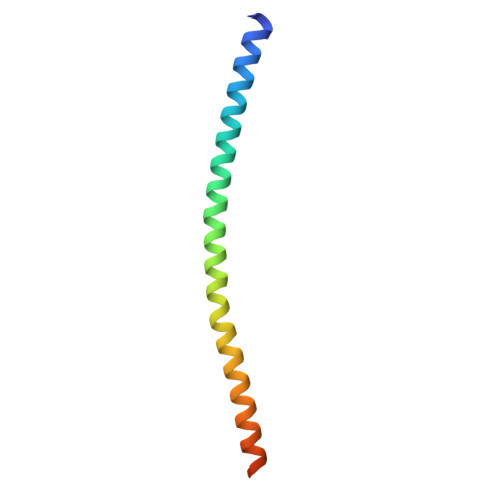
Syntaxin-1AB [auth H],
D [auth J]
78Rattus norvegicusMutation(s): 0 
Gene Names: Stx1aSap
UniProt
Find proteins for P32851 (Rattus norvegicus)
Explore P32851 
Go to UniProtKB:  P32851
Entity Groups
Sequence Clusters30% Identity50% Identity70% Identity90% Identity95% Identity100% Identity
UniProt GroupP32851
Sequence Annotations
Expand
Reference Sequence
Find similar proteins by:|  3D Structure
Entity ID: 3
MoleculeChains  Sequence LengthOrganismDetailsImage
Alpha-soluble NSF attachment proteinE [auth L],
F [auth M],
G [auth N],
H [auth O]
296Rattus norvegicusMutation(s): 0 
Gene Names: NapaSnapSnapa
UniProt
Find proteins for P54921 (Rattus norvegicus)
Explore P54921 
Go to UniProtKB:  P54921
Entity Groups
Sequence Clusters30% Identity50% Identity70% Identity90% Identity95% Identity100% Identity
UniProt GroupP54921
Sequence Annotations
Expand
Reference Sequence
Find similar proteins by:|  3D Structure
Entity ID: 4
MoleculeChains  Sequence LengthOrganismDetailsImage
Vesicle-fusing ATPase747Cricetulus griseusMutation(s): 0 
Gene Names: NSF
EC: 3.6.4.6
UniProt
Find proteins for P18708 (Cricetulus griseus)
Explore P18708 
Go to UniProtKB:  P18708
Entity Groups
Sequence Clusters30% Identity50% Identity70% Identity90% Identity95% Identity100% Identity
UniProt GroupP18708
Sequence Annotations
Expand
Reference Sequence

Small Molecules

Ligands 2 Unique
IDChains Name / Formula / InChI Key2D Diagram3D Interactions
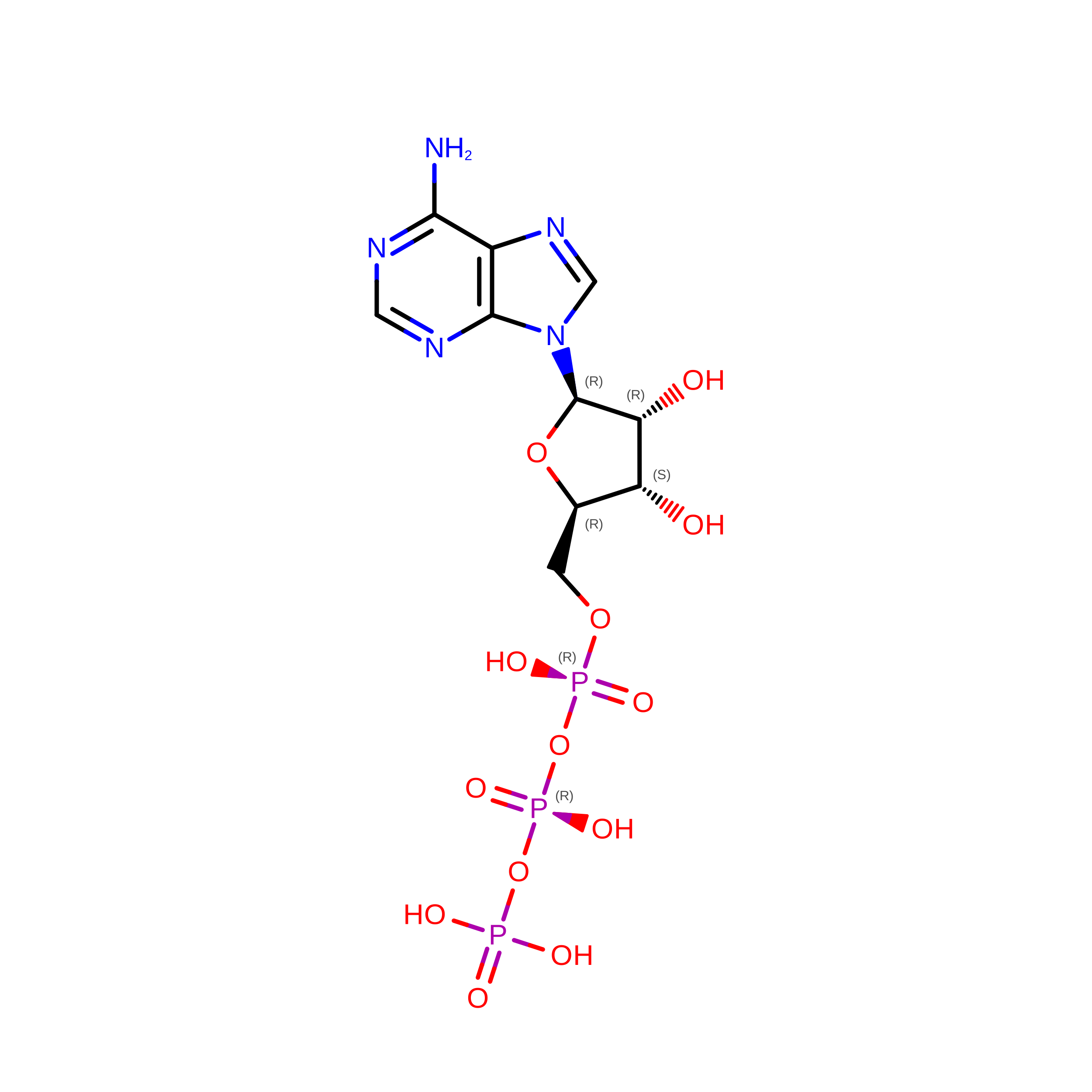
ATP
(Subject of Investigation/LOI)

Query on ATP


Download:Ideal Coordinates CCD File
O [auth A]
Q [auth B]
R [auth B]
S [auth C]
T [auth C]
O [auth A],
Q [auth B],
R [auth B],
S [auth C],
T [auth C],
U [auth D],
V [auth D],
W [auth E],
X [auth E],
Y [auth F]
ADENOSINE-5'-TRIPHOSPHATE
C10 H16 N5 O13 P3
ZKHQWZAMYRWXGA-KQYNXXCUSA-N
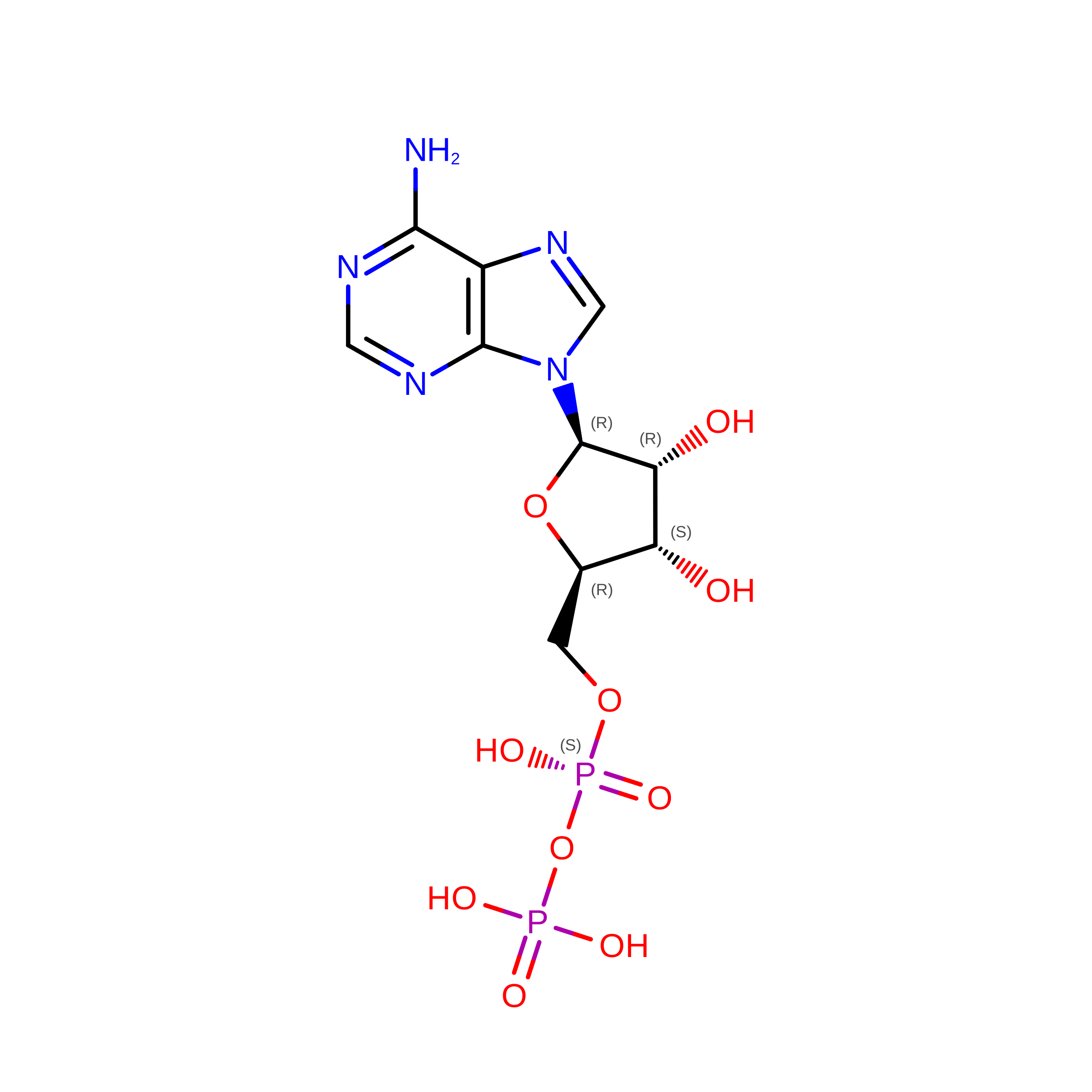
ADP
(Subject of Investigation/LOI)

Query on ADP


Download:Ideal Coordinates CCD File
P [auth A]ADENOSINE-5'-DIPHOSPHATE
C10 H15 N5 O10 P2
XTWYTFMLZFPYCI-KQYNXXCUSA-N

Experimental Data & Validation

Experimental Data

  • Method: ELECTRON MICROSCOPY
  • Resolution: 3.09 Å
  • Aggregation State: PARTICLE 
  • Reconstruction Method: SINGLE PARTICLE 
EM Software:
TaskSoftware PackageVersion
RECONSTRUCTIONcryoSPARC3.2.0
MODEL REFINEMENTPHENIX1.21

Structure Validation

View Full Validation Report


Entry History 

& Funding Information

Deposition Data


Funding OrganizationLocationGrant Number
Howard Hughes Medical Institute (HHMI)United States--
Helen Hay Whitney FoundationUnited States--
National Institutes of Health/National Institute of Mental Health (NIH/NIMH)United StatesMH063105

Revision History  (Full details and data files)

  • Version 1.0: 2025-08-06
    Type: Initial release
  • Version 1.1: 2025-09-17
    Changes: Data collection, Database references
  • Version 1.2: 2025-10-08
    Changes: Data collection, Database references