Download Mendeley
A bicistronic viral genome uses a compact type IV IRES near its 3' end to express a transmembrane protein.
Sherlock, M.E., Segar, K.E., Kieft, J.S.(2026) Cell Rep 45: 116982-116982
- PubMed: 41678338 Search on PubMedSearch on PubMed Central
- DOI: https://doi.org/10.1016/j.celrep.2026.116982
- Primary Citation Related Structures:
9OGY - PubMed Abstract:
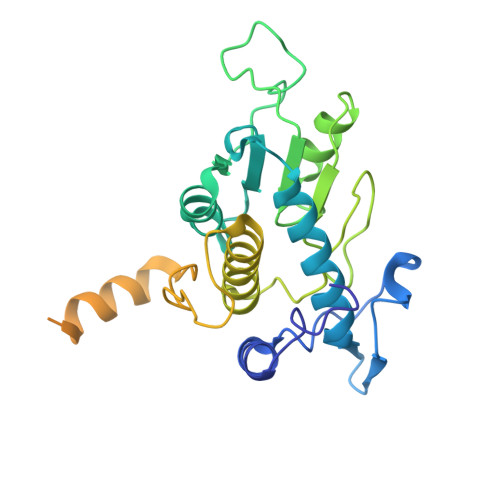
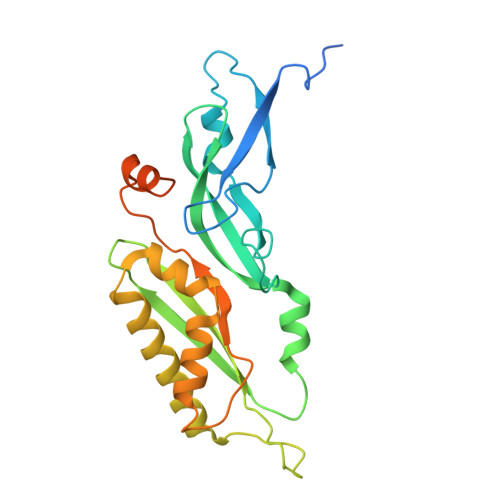
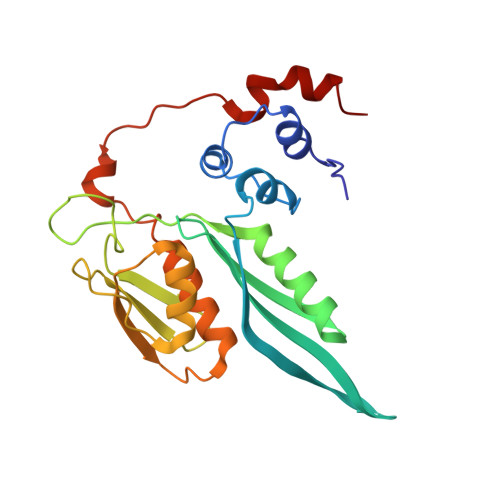
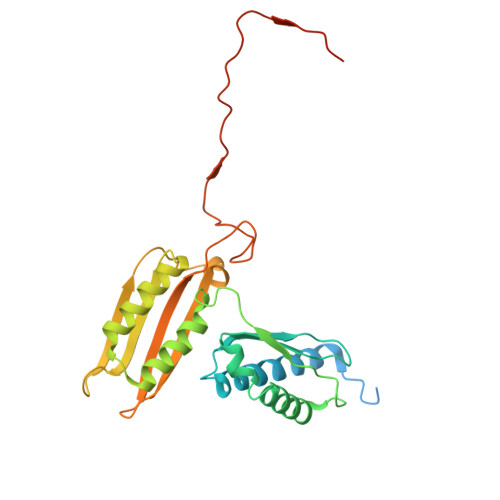
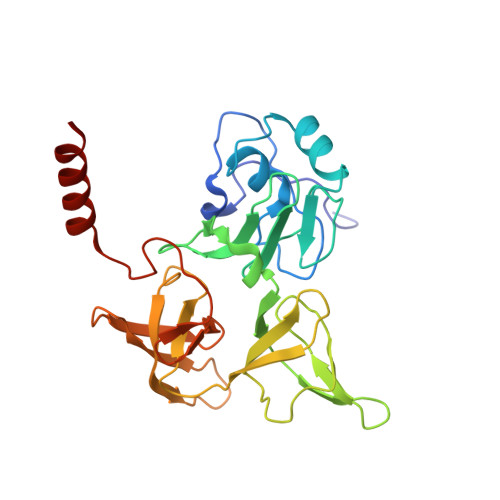
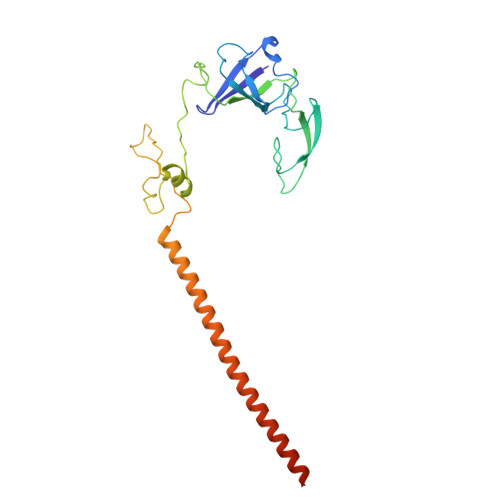
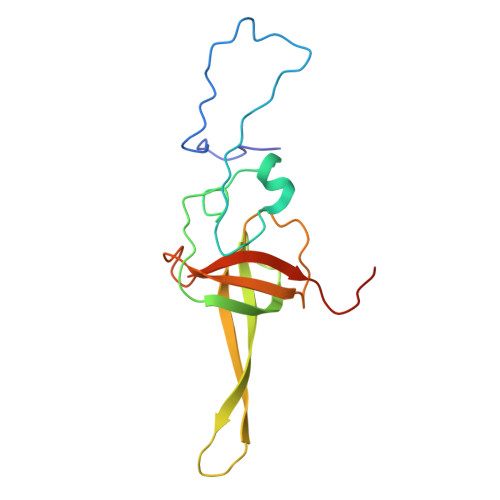
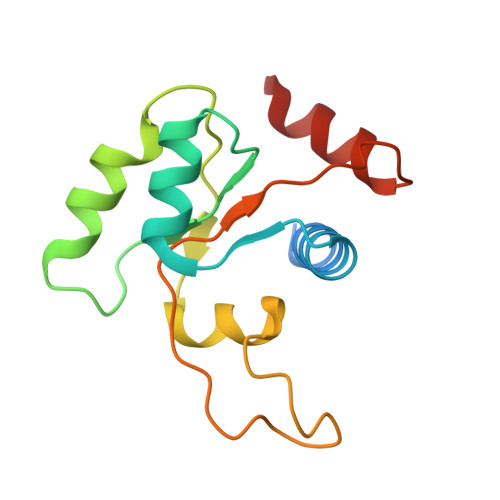
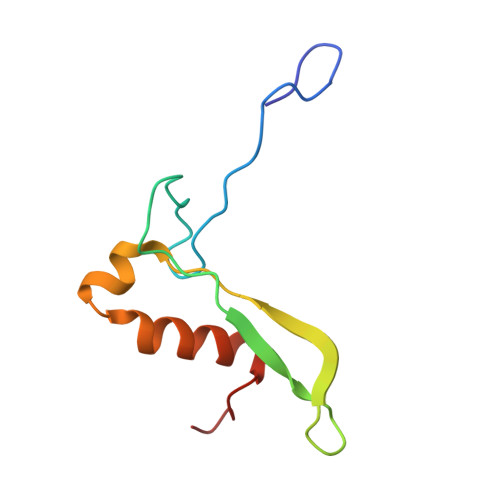
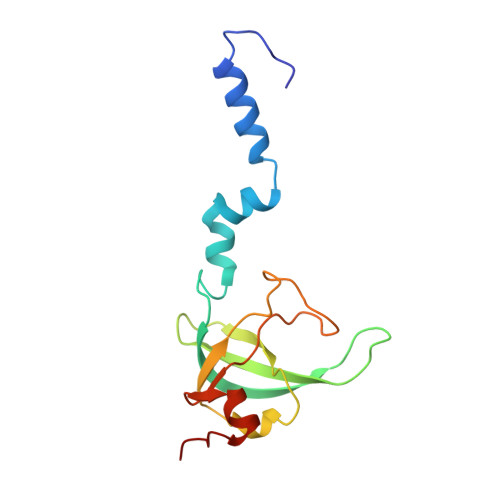
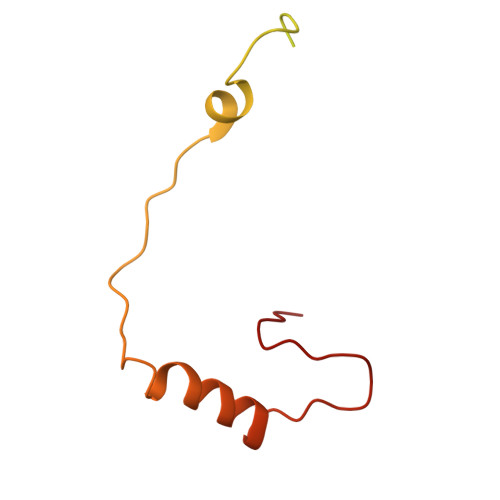
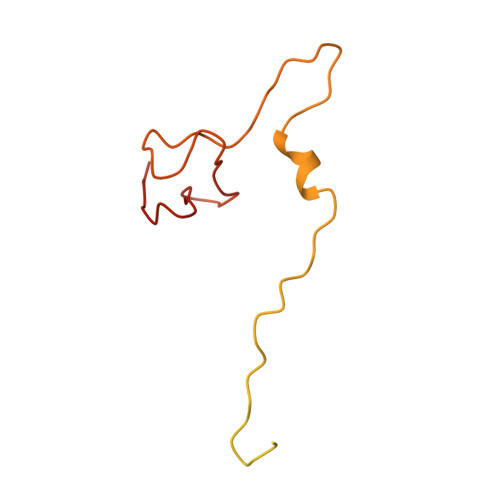
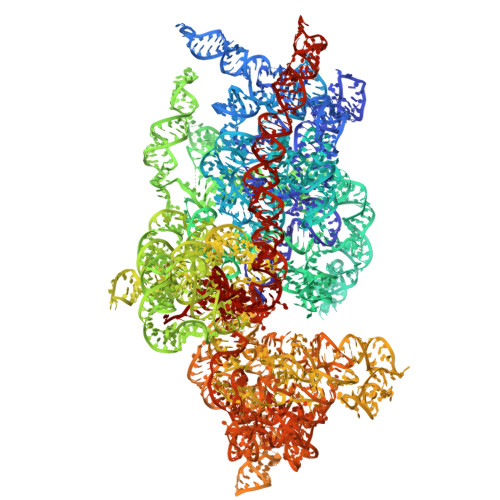
Hepatitis C virus (HCV) and many other RNA viruses contain a type IV internal ribosome entry site (IRES) in their 5' untranslated region (UTR). These IRES RNAs interact directly with the ribosome, enabling cap-independent translation initiation. Using bioinformatic homology searches, we identify a putative type IV IRES within the annotated 3' UTR of megrivirus E (MeV-E). In addition to its unusual genomic location, the MeV-E 3' IRES has a reduced size compared with HCV and many type IV IRESs. We determine the 3D structure of the MeV-E 3' IRES in complex with the ribosome using cryoelectron microscopy (cryo-EM) and show that the MeV-E 3' IRES initiates translation, but at lower levels than the larger IRES in the MeV-E 5' UTR. This small type IV IRES enables translation of a second open reading frame in the MeV-E genome, which likely encodes a transmembrane protein conserved in other megriviruses.
- New York Structural Biology Center, New York, NY 10025, USA; Department of Biochemistry and Molecular Genetics, University of Colorado Anschutz Medical Campus, Aurora, CO 80045, USA.
Organizational Affiliation: