Download Mendeley
Structures of the eIF4G-binding RNA domains among picornaviral IRES types are topologically conserved.
Banna, H.A., Das, N.K., Kalinina, M., Lu, G., Usman, M., Koirala, D.(2026) Nat Commun 17
- PubMed: 41690908 Search on PubMedSearch on PubMed Central
- DOI: https://doi.org/10.1038/s41467-026-69554-2
- Primary Citation Related Structures:
9NLN - PubMed Abstract:
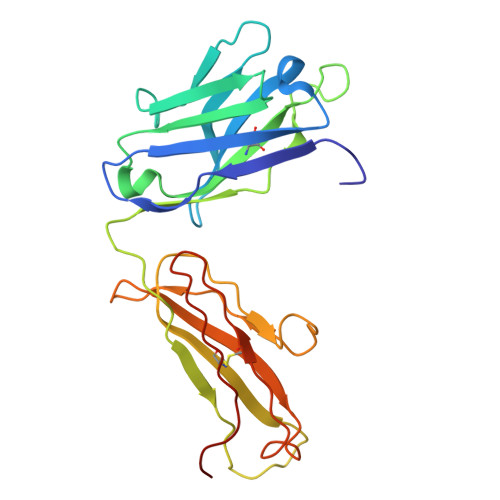
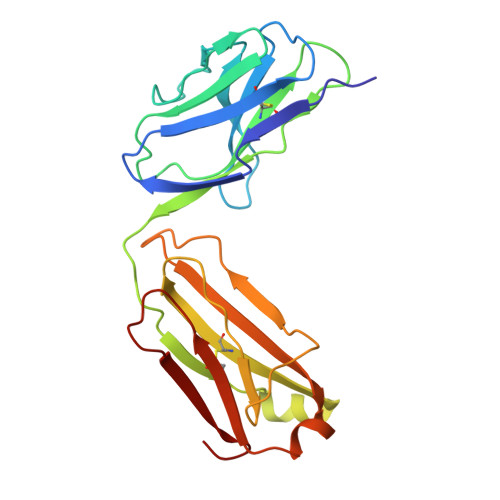
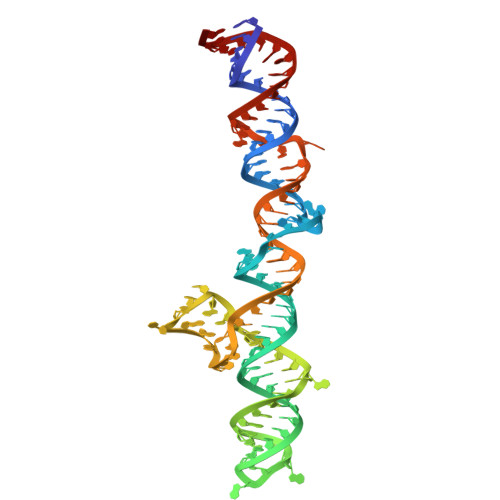
RNA domains within viral IRESs are crucial for initiating cap-independent translation of the genome in many positive-sense RNA viruses. However, the structures and mechanisms of these IRES domains remain unclear. Here, we present the 3 Å resolution crystal structure of the coxsackievirus B3 (CVB3) IRES domain V (dV) as a model for type I IRESs. The crystal structure revealed an elongated architecture of dV, with two sets of coaxially stacked stems forming an H-type four-way junction (4WJ) organized by an A-rich motif. Despite sequence dissimilarities, this dV from a type I IRES exhibits remarkable structural similarity to the analogous tertiary structures of the encephalomyocarditis virus (EMCV) JK domain and the hepatitis A virus (HAV) dV, which are typical domains in the type II and III IRESs, respectively. While SAXS studies indicate a similar RNA fold of dV in solution, structure-guided binding, computational modeling, and X-ray footprinting studies with and without the HEAT1 domain of eIF4G, compared to the analogous type II (EMCV JK) and III (HAV dV) domains, suggest that various IRESs maintain a common mechanism of eIF4G binding interactions during viral genome translation. Despite sequence variability, this structural conservation across IRES types may offer unique opportunities to develop universal antivirals targeting these structures.
- Department of Chemistry and Biochemistry, University of Maryland, Baltimore County, Baltimore, MA, USA.
Organizational Affiliation: