9MEW | pdb_00009mew

JUNV GP1, GP2, SSP and CR1-28 Fab complex in a pseudotyped virus membrane


Experimental Data Snapshot

  • Method: ELECTRON MICROSCOPY
  • Resolution: 3.80 Å
  • Aggregation State: PARTICLE 
  • Reconstruction Method: SINGLE PARTICLE 

wwPDB Validation 3D Report Full Report

Validation slider image for 9MEW

This is version 1.0 of the entry. See complete history

Literature

In situ insights into antibody-mediated neutralization of a pre-fusion Junin virus glycoprotein complex.

Taylor, L.J.Sawaya, M.R.Westover, J.B.Wang, C.Jimenez, F.Munoz, A.J.Whitelegge, J.Gowen, B.B.Helguera, G.F.Castells-Graells, R.Rodriguez, J.A.

(2025) Cell Rep 44: 115971-115971

  • DOI: https://doi.org/10.1016/j.celrep.2025.115971
  • Primary Citation Related Structures: 
    9MEW, 9N0D

  • PubMed Abstract: 

    A transmembrane glycoprotein complex (GPC) decorates the Junin mammarenavirus (JUNV) that causes New World hemorrhagic fevers. We leveraged single-particle cryoelectron microscopy (cryo-EM) to image the full-length JUNV GPC directly on pseudotyped virus (PV) membranes and bound by two JUNV-neutralizing antibodies: Candid#1 vaccine-elicited CR1-28 and J199, a potent therapeutic against Argentine hemorrhagic fever (AHF). The 3.8 Å resolution in situ structures of the antibody-neutralized, 3-fold symmetric JUNV GPC reveal its ectodomain architecture, signal peptide-bound transmembrane region, zinc-binding luminal domain, and post-translational modifications. JUNV-GPC sequence variants highlight the functional importance of the signal peptide transmembrane helix register for virus infection and attenuating Candid#1-associated variants. Overlapping CR1-28 and J199 epitopes suggest a common receptor-blocking mechanism for JUNV neutralization, while a J199-induced, symmetric GPC reorientation may further drive its potent inhibition of JUNV lethality in mice, compared to receptor blockade alone. This underscores the utility of in situ insights into GPC function and neutralization.


  • Organizational Affiliation
    • Department of Chemistry and Biochemistry, UCLA-DOE Institute for Genomics and Proteomics, STROBE, NSF Science and Technology Center, University of California, California, Los Angeles (UCLA), Los Angeles, CA 90095, USA. Electronic address: lilyjanetaylor@g.ucla.edu.

Macromolecule Content 

  • Total Structure Weight: 315.03 kDa 
  • Atom Count: 21,744 
  • Modeled Residue Count: 2,703 
  • Deposited Residue Count: 2,751 
  • Unique protein chains: 5

Macromolecules

Find similar proteins by:|  3D Structure
Entity ID: 1
MoleculeChains  Sequence LengthOrganismDetailsImage
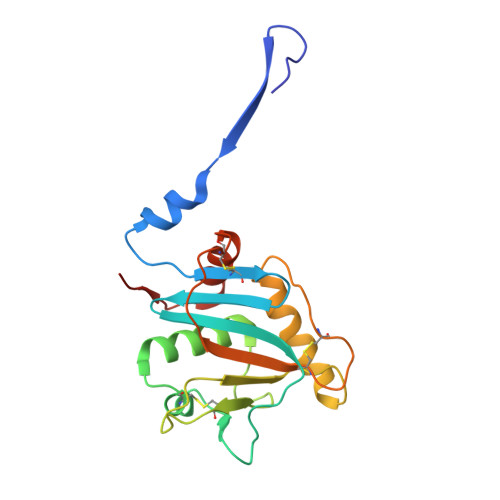
Pre-glycoprotein polyprotein GP complex
A, F, K
58Mammarenavirus juninenseMutation(s): 0 
Gene Names: GPCGP-C
UniProt
Find proteins for P26313 (Junin mammarenavirus)
Explore P26313 
Go to UniProtKB:  P26313
Entity Groups
Sequence Clusters30% Identity50% Identity70% Identity90% Identity95% Identity100% Identity
UniProt GroupP26313
Sequence Annotations
Expand
Reference Sequence
Find similar proteins by:|  3D Structure
Entity ID: 2
MoleculeChains  Sequence LengthOrganismDetailsImage
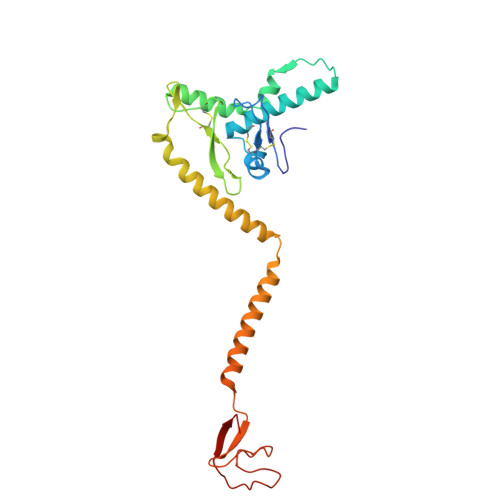
JUNV GP1
B, G, L
193Mammarenavirus juninenseMutation(s): 0 
Gene Names: GPCGP-C
UniProt
Find proteins for P26313 (Junin mammarenavirus)
Explore P26313 
Go to UniProtKB:  P26313
Entity Groups
Sequence Clusters30% Identity50% Identity70% Identity90% Identity95% Identity100% Identity
UniProt GroupP26313
Glycosylation
Glycosylation Sites: 3
Sequence Annotations
Expand
Reference Sequence
Find similar proteins by:|  3D Structure
Entity ID: 3
MoleculeChains  Sequence LengthOrganismDetailsImage
JUNV GP2
C, H, M
234Mammarenavirus juninenseMutation(s): 0 
Gene Names: GPCGP-C
UniProt
Find proteins for P26313 (Junin mammarenavirus)
Explore P26313 
Go to UniProtKB:  P26313
Entity Groups
Sequence Clusters30% Identity50% Identity70% Identity90% Identity95% Identity100% Identity
UniProt GroupP26313
Glycosylation
Glycosylation Sites: 4
Sequence Annotations
Expand
Reference Sequence
Find similar proteins by:|  3D Structure
Entity ID: 4
MoleculeChains  Sequence LengthOrganismDetailsImage
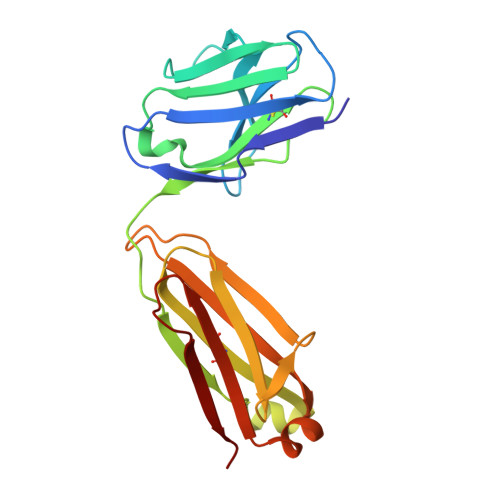
CR1-28 Fab Light Chain
D, I, N
206Homo sapiensMutation(s): 0 
Find similar proteins by:|  3D Structure
Entity ID: 5
MoleculeChains  Sequence LengthOrganismDetailsImage
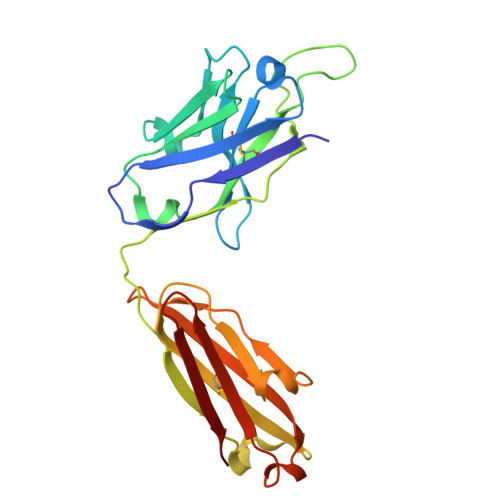
CR1-28 Fab Heavy Chain
E, J, O
226Homo sapiensMutation(s): 0 

Oligosaccharides

Help  
Entity ID: 6
MoleculeChains Length2D Diagram GlycosylationD Interactions
beta-D-mannopyranose-(1-4)-2-acetamido-2-deoxy-beta-D-glucopyranose-(1-4)-2-acetamido-2-deoxy-beta-D-glucopyranose
P, Q, R, S, T
P, Q, R, S, T, U
3N-Glycosylation
Glycosylation Resources
GlyTouCan: G15407YE
GlyCosmos: G15407YE
GlyGen: G15407YE

Small Molecules

Ligands 2 Unique
IDChains Name / Formula / InChI Key2D Diagram3D Interactions
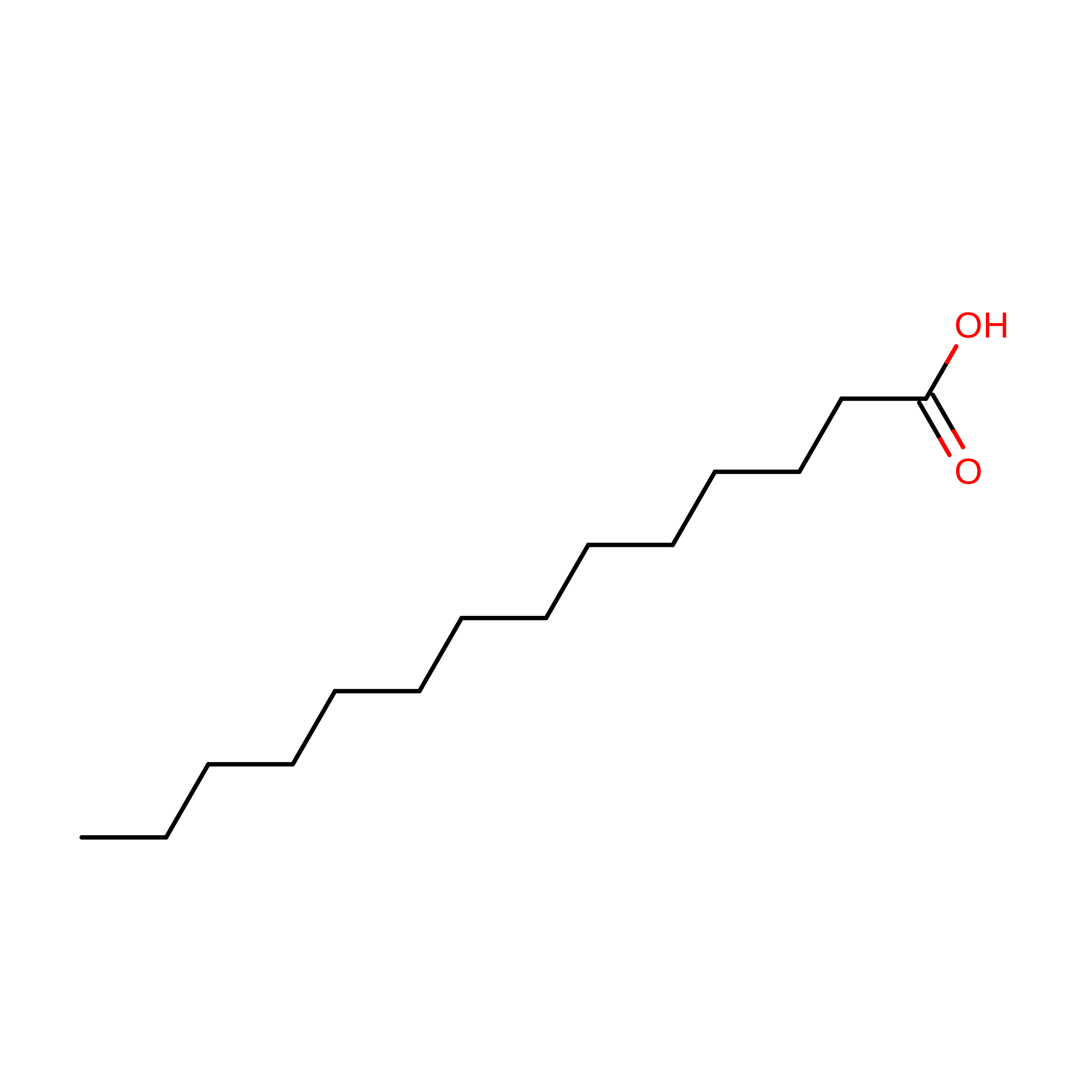
MYR

Query on MYR


Download:Ideal Coordinates CCD File
BA [auth F],
HA [auth K],
V [auth A]
MYRISTIC ACID
C14 H28 O2
TUNFSRHWOTWDNC-UHFFFAOYSA-N
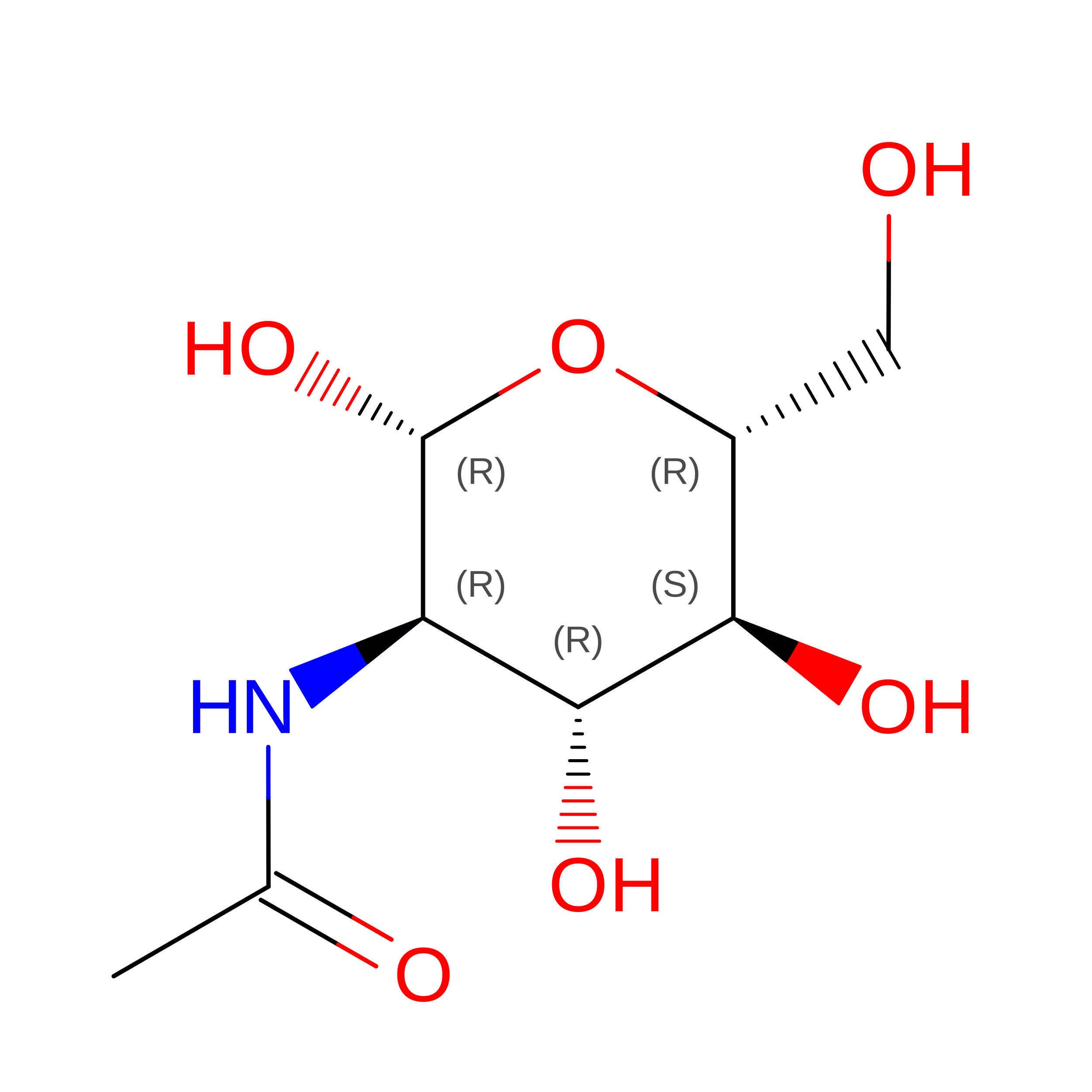
NAG

Query on NAG


Download:Ideal Coordinates CCD File
AA [auth C]
CA [auth G]
DA [auth G]
EA [auth H]
FA [auth H]
AA [auth C],
CA [auth G],
DA [auth G],
EA [auth H],
FA [auth H],
GA [auth H],
IA [auth L],
JA [auth L],
KA [auth M],
LA [auth M],
MA [auth M],
W [auth B],
X [auth B],
Y [auth C],
Z [auth C]
2-acetamido-2-deoxy-beta-D-glucopyranose
C8 H15 N O6
OVRNDRQMDRJTHS-FMDGEEDCSA-N

Experimental Data & Validation

Experimental Data

  • Method: ELECTRON MICROSCOPY
  • Resolution: 3.80 Å
  • Aggregation State: PARTICLE 
  • Reconstruction Method: SINGLE PARTICLE 
EM Software:
TaskSoftware PackageVersion
MODEL REFINEMENTPHENIX1.21_5207

Structure Validation

View Full Validation Report


Entry History 

& Funding Information

Deposition Data


Funding OrganizationLocationGrant Number
National Institutes of Health/National Institute of General Medical Sciences (NIH/NIGMS)United StatesT32GM145388
National Science Foundation (NSF, United States)United StatesDMR-1548924
National Institutes of Health/National Institute of General Medical Sciences (NIH/NIGMS)United StatesR35 GM128867
Howard Hughes Medical Institute (HHMI)United StatesHHMI EPI
Department of Defense (DOD, United States)United StatesFA9550-23-1-0281

Revision History  (Full details and data files)

  • Version 1.0: 2025-07-23
    Type: Initial release