Download Mendeley
A penicillin-binding protein inhibitor series to target drug-resistant Neisseria gonorrhoeae.
Uehara, T., Zulli, A.L., Miller, B., Avery, L.M., Boyd, S.A., Chatwin, C.L., Chu, G.H., Drager, A.S., Edwards, M., Emeigh Hart, S.G., Line, N.J., Myers, C.L., Rongala, G., Stevenson, A., Uehara, K., Yi, F., Wang, B., Liu, Z., Wang, M., Zhao, Z., Zhou, X., Zhao, H., Stratton, C.M., Bala, S., Davies, C., Tkavc, R., Jerse, A.E., Pevear, D.C., Burns, C.J., Daigle, D.M., Condon, S.M.(2026) Nat Microbiol 11: 1348-1360
- PubMed: 41951974 Search on PubMedSearch on PubMed Central
- DOI: https://doi.org/10.1038/s41564-026-02309-3
- Primary Citation Related Structures:
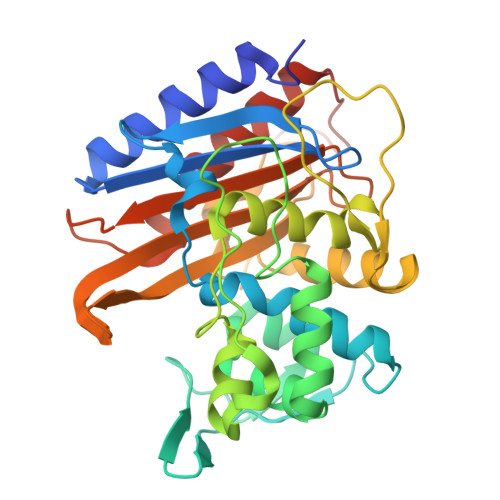
9MCZ, 9MD0, 9Z5T - PubMed Abstract:
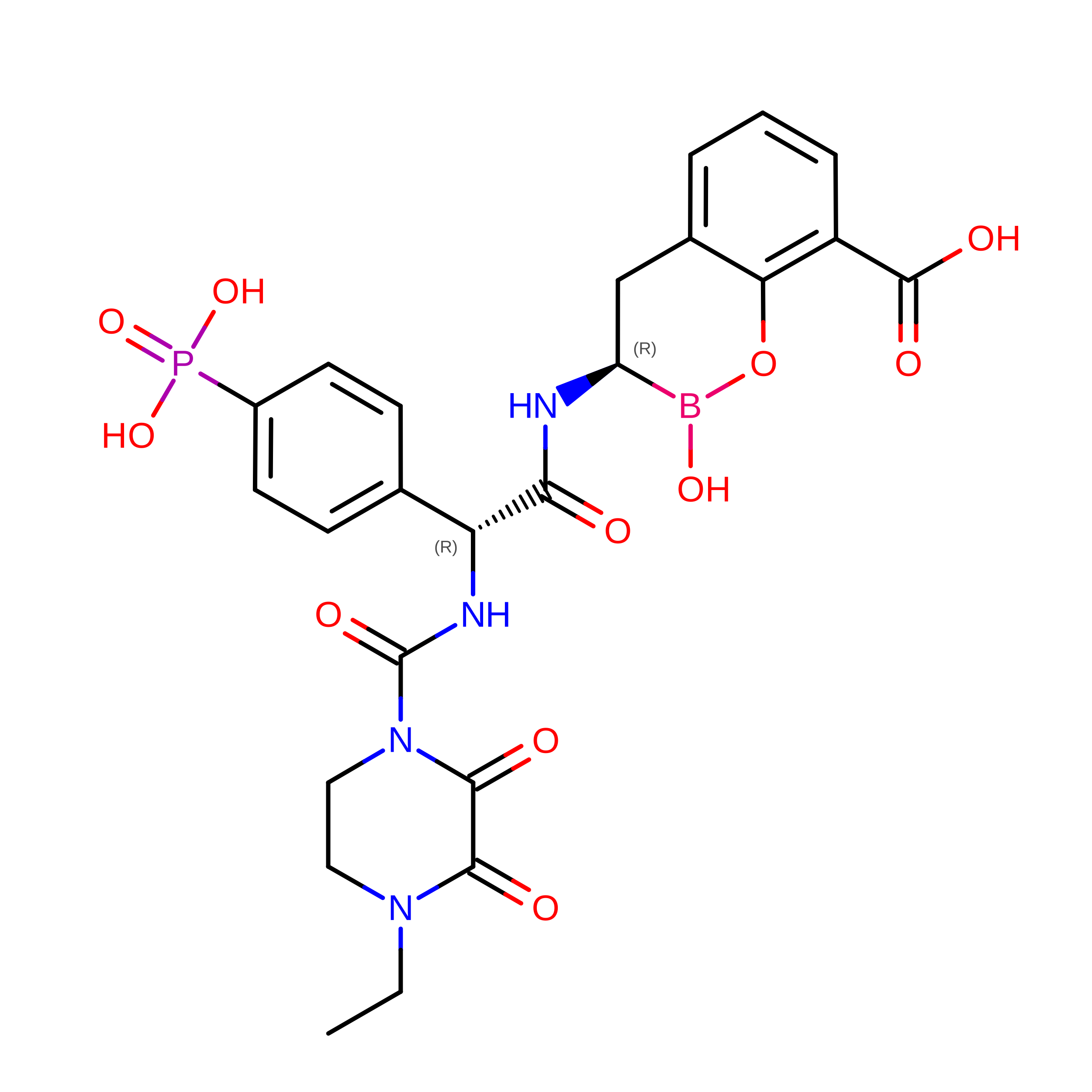
Emerging multidrug-resistant Neisseria gonorrhoeae strains possessing altered penA alleles (encoding penicillin-binding protein 2, PBP2) threaten the utility of ceftriaxone, the last remaining outpatient antibiotic for gonorrhoea treatment, posing a global health emergency. Here we report a benzoxaborinine-based penicillin-binding protein inhibitor series (boro-PBPi) developed to address penA-mediated ceftriaxone resistance. Optimization of boro-PBPi led to the identification of compound 21 (VNRX-14079), which exhibited potent antibacterial activity against multidrug-resistant N. gonorrhoeae through high-affinity binding to the PBP2 target. Boro-PBPi-PBP2 complex structures confirmed the covalent interaction of the boron atom with the catalytic residue Ser310 and the importance of the β 3 -β 4 loop mobility for improved affinity. Boro-PBPi 21 elicits bactericidal activity, a low frequency of resistance, a good safety profile, suitable pharmacokinetic properties and in vivo efficacy in a murine infection model against ceftriaxone-resistant N. gonorrhoeae. Boro-PBPi 21 is therefore a promising antigonorrhoea agent poised for further advancement.
- Venatorx Pharmaceuticals, Inc., Malvern, PA, USA. tsuyoshi.uehara@gmail.com.
Organizational Affiliation: