Download Mendeley
Identification of RIPK3 as a target of flavonoids for anti-necroptosis in vitro.
Xie, H., Li, W., Han, X., Li, M., Zhao, Q., Xu, Y., Su, H., Meng, W.(2025) Bioorg Chem 161: 108503-108503
- PubMed: 40328155 Search on PubMed
- DOI: https://doi.org/10.1016/j.bioorg.2025.108503
- Primary Citation Related Structures:
9LVG, 9LVH - PubMed Abstract:
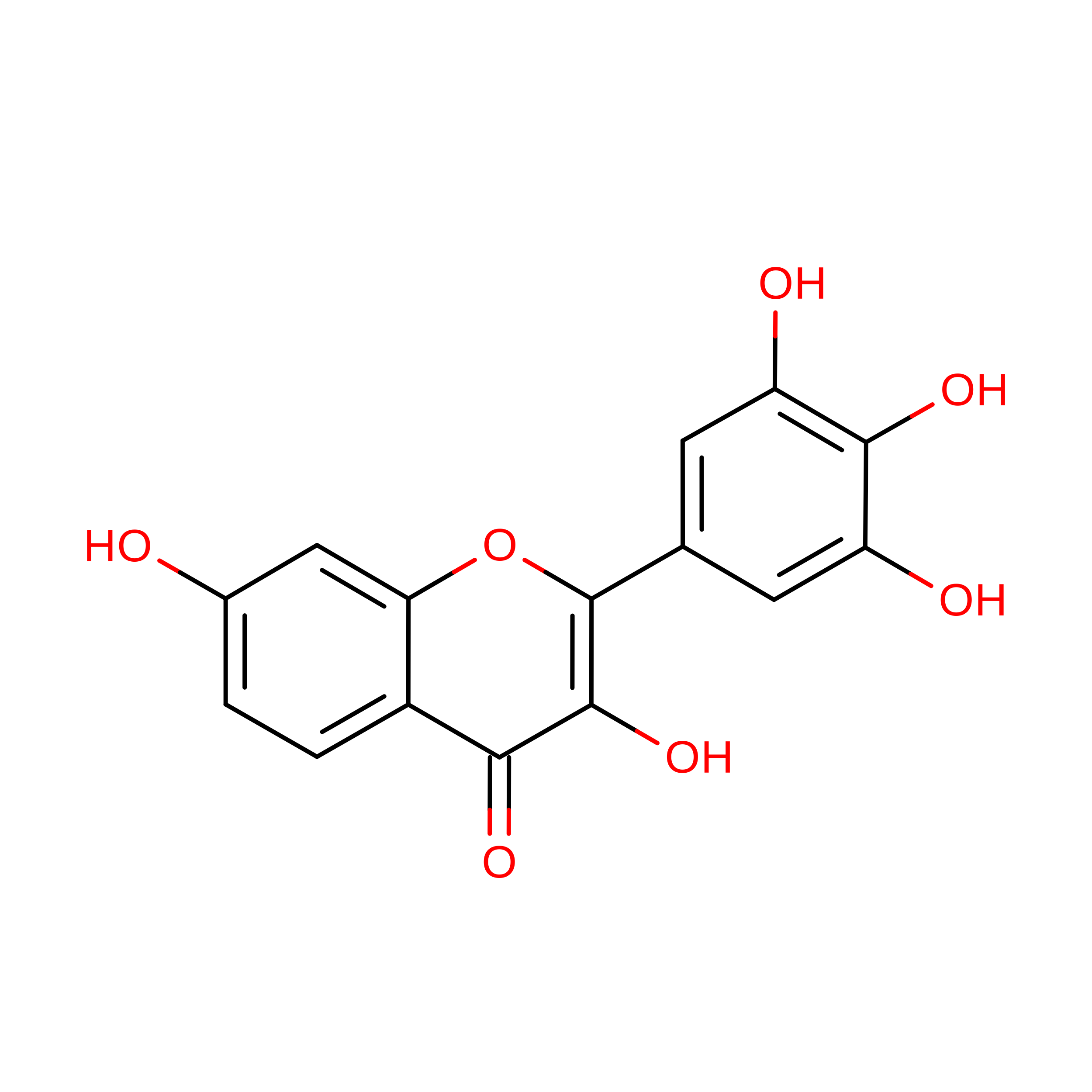
Receptor-interacting protein kinase 3 (RIPK3), a key regulator of necroptosis, has emerged as an important target for therapeutic intervention. Flavonoids are natural compounds known for their anti-inflammatory and antioxidant properties, with recent studies highlighting their potential to modulate necroptosis. In this study, we explored the potential of RIPK3 as a target for flavonoids to achieve anti-necroptosis and anti-inflammatory effects. A library of 63 flavonoids was tested for RIPK3 binding and kinase inhibition using fluorescence polarization (FP) competition assay and ADP-Glo kinase activity assay. Six flavonoids, including scutellarein, robinetin, baicalin, myricetin, baicalein, and tricetin, showed significant inhibition of RIPK3, with IC 50 values ranging from 2.5 to 13.7 μM. Structural studies of tricetin and robinetin through co-crystallization and molecular docking revealed distinct binding modes of these flavonoids within the ATP-binding pocket of RIPK3. The anti-necroptosis effects of these flavonoids were further evaluated in human HT-29 cells and mouse embryonic fibroblasts (MEFs) using a TSZ-induced cell death assay, resulting in EC 50 values in the tens of micromolar range. Western blot analysis demonstrated that these flavonoids inhibit the phosphorylation of RIPK3 and its downstream effector, mixed lineage kinase domain-like protein (MLKL), and disrupt the formation of RIPK1 and RIPK3 aggregates in the necroptosis pathway. These findings identify RIPK3 as a target of natural flavonoids for the first time and elucidate the molecular mechanism underlying the anti-necroptotic activity of these flavonoids.
- School of Chinese Materia Medica, Nanjing University of Chinese Medicine, Nanjing 210023, China.
Organizational Affiliation: