Download Mendeley
An anti-CRISPR targets the sgRNA to block Cas9 and guides the design of enhanced genome editors.
Yu, L., Yin, M., Zhu, Y., Lu, Z., Xiao, B., Zhou, F., Yu, Y., Huang, Z.(2026) Nat Struct Mol Biol 33: 318-329
- PubMed: 41555077 Search on PubMedSearch on PubMed Central
- DOI: https://doi.org/10.1038/s41594-025-01741-z
- Primary Citation Related Structures:
9LKJ - PubMed Abstract:
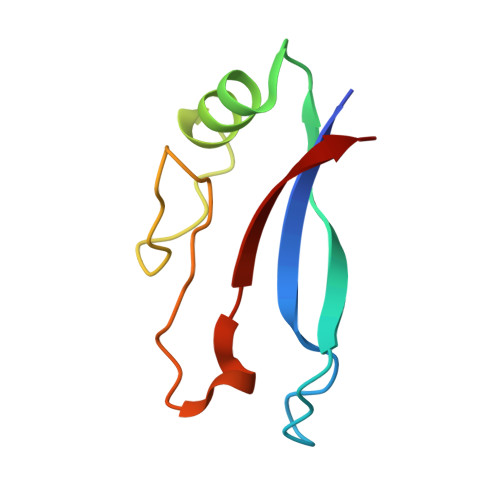
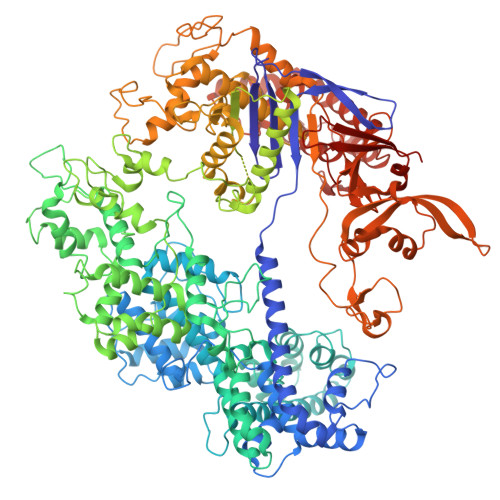
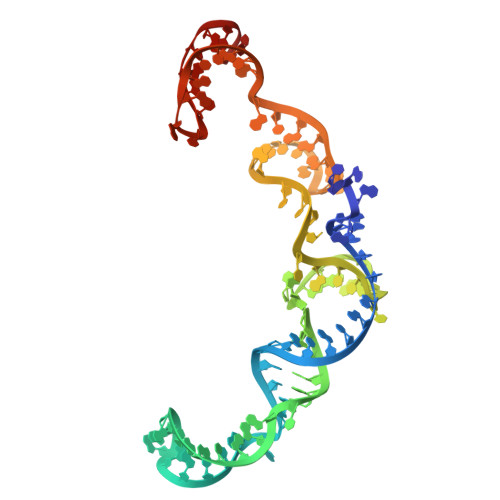
Bacteriophages have evolved anti-CRISPR (Acr) proteins to combat the adaptive immunity provided by bacterial CRISPR-Cas systems. Here, we report the cryo-electron microscopy structure of an anti-Cas9 protein AcrIIA27 bound to SpyCas9-sgRNA (single guide RNA) complex. Our structure reveals that AcrIIA27 binds the solvent-exposed phosphate backbone of the sgRNA, acting as a potent inhibitor of diverse Cas9 orthologs. AcrIIA27 in the structure is positioned near the protospacer-adjacent motif DNA-binding pocket on SpyCas9, causing steric hindrance that prevents substrate DNA recognition. This mechanism suggests solvent-exposed regions of sgRNAs (PTP RNAs), prone to nonspecific binding of positively charged components, may compromise CRISPR-Cas genome-editing efficiency. Indeed, truncations of the PTP RNAs in different editing systems significantly enhance genome-editing efficiency in human cells. Overall, our findings reveal a previously uncharacterized inhibition mechanism of an anti-Cas protein and offers a general strategy for developing more efficient genome-editing tools.
- HIT Center for Life Sciences, School of Life Science and Technology, Harbin Institute of Technology, Harbin, China.
Organizational Affiliation: