9HPQ | pdb_00009hpq

Peptide-substrate-binding (PSB) domain of human type I collagen prolyl 4-hydroxylase complexed with Pro-Pro-Gly-Pro-Arg-Gly-Pro-Pro-Gly.


Experimental Data Snapshot

  • Method: X-RAY DIFFRACTION
  • Resolution: 2.17 Å
  • R-Value Free: 
    0.250 (Depositor), 0.252 (DCC) 
  • R-Value Work: 
    0.225 (Depositor), 0.228 (DCC) 

Starting Model: experimental
View more details

wwPDB Validation 3D Report Full Report

Validation slider image for 9HPQ

Ligand Structure Quality Assessment 


This is version 1.0 of the entry. See complete history

Literature

Binding Differences of the Peptide-Substrate-Binding Domain of Collagen Prolyl 4-Hydroxylases I and II for Proline- and Hydroxyproline-Rich Peptides.

Rahman, M.M.Sulu, R.Adediran, B.Tu, H.Salo, A.M.Murthy, S.Myllyharju, J.Wierenga, R.K.Koski, M.K.

(2025) Proteins 93: 1732-1746

  • DOI: https://doi.org/10.1002/prot.26839
  • Primary Citation Related Structures: 
    9HPQ, 9HRE, 9HT8, 9HTD

  • PubMed Abstract: 

    Collagen prolyl 4-hydroxylase (C-P4H) catalyzes the 4-hydroxylation of Y-prolines of the XYG-repeat of procollagen. C-P4Hs are tetrameric α 2 β 2 enzymes. The α-subunit provides the N-terminal dimerization domain, the middle peptide-substrate-binding (PSB) domain, and the C-terminal catalytic (CAT) domain. There are three isoforms of the α-subunit, complexed with a β-subunit that is protein disulfide isomerase, forming C-P4H I-III. The PSB domain of the α-subunit binds proline-rich peptides, but its function with respect to the prolyl hydroxylation mechanism is unknown. An extended mode of binding of proline-rich peptides (PPII, polyproline type-II, conformation) to the PSB-I domain has previously been reported for the PPG-PPG-PPG and P9 peptides. Crystal structures now show that peptides with the motif PxGP (PPG-PRG-PPG, PPG-PAG-PPG) (where x, at Y-position 5, is not a proline) bind to the PSB-I domain differently, more deeply, in the peptide-binding groove. The latter mode of binding has previously been reported for structures of the PSB-II domain complexed with these PxGP-peptides. In addition, it is shown here by crystallographic binding studies that the POG-PAG-POG peptide (with 4-hydroxyprolines at Y-positions 2 and 8) also adopts the PxGP mode of binding to PSB-I as well as to PSB-II. Calorimetric binding studies show that the affinities of these peptides are lower for PSB-I than for PSB-II, with, respectively, K D values of about 70 μM for PSB-I and 20 μM for PSB-II. The importance of these results for understanding the reaction mechanism of C-P4H, in particular concerning the function of the PSB domain, is discussed.


  • Organizational Affiliation
    • Faculty of Biochemistry and Molecular Medicine, University of Oulu, Oulu, Finland.

Macromolecule Content 

  • Total Structure Weight: 54.43 kDa 
  • Atom Count: 3,754 
  • Modeled Residue Count: 421 
  • Deposited Residue Count: 447 
  • Unique protein chains: 2

Macromolecules

Find similar proteins by:|  3D Structure
Entity ID: 1
MoleculeChains  Sequence LengthOrganismDetailsImage
Prolyl 4-hydroxylase subunit alpha-1
A, B, C, D
105Homo sapiensMutation(s): 0 
Gene Names: P4HA1P4HA
EC: 1.14.11.2
UniProt & NIH Common Fund Data Resources
Find proteins for P13674 (Homo sapiens)
Explore P13674 
Go to UniProtKB:  P13674
PHAROS:  P13674
GTEx:  ENSG00000122884 
Entity Groups
Sequence Clusters30% Identity50% Identity70% Identity90% Identity95% Identity100% Identity
UniProt GroupP13674
Sequence Annotations
Expand
Reference Sequence
Find similar proteins by:  Sequence   |   3D Structure  
Entity ID: 2
MoleculeChains  Sequence LengthOrganismDetailsImage
Synthetic peptide PRO-PRO-GLY-PRO-ARG-GLY-PRO-PRO-GLY
E, F, G
9Homo sapiensMutation(s): 0 

Small Molecules

Ligands 4 Unique
IDChains Name / Formula / InChI Key2D Diagram3D Interactions
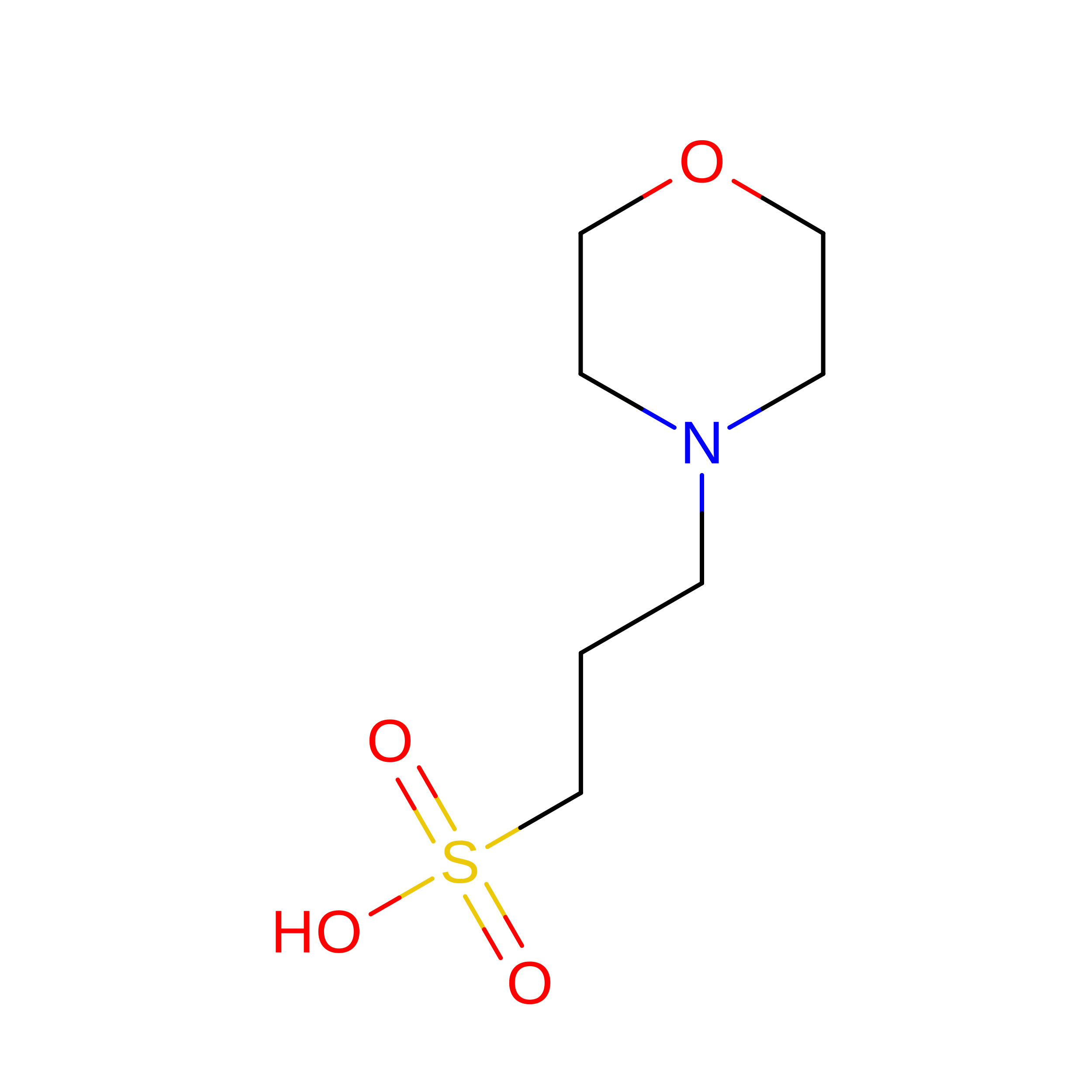
MPO

Query on MPO


Download:Ideal Coordinates CCD File
CA [auth D],
DA [auth F],
K [auth A],
U [auth C]
3[N-MORPHOLINO]PROPANE SULFONIC ACID
C7 H15 N O4 S
DVLFYONBTKHTER-UHFFFAOYSA-N
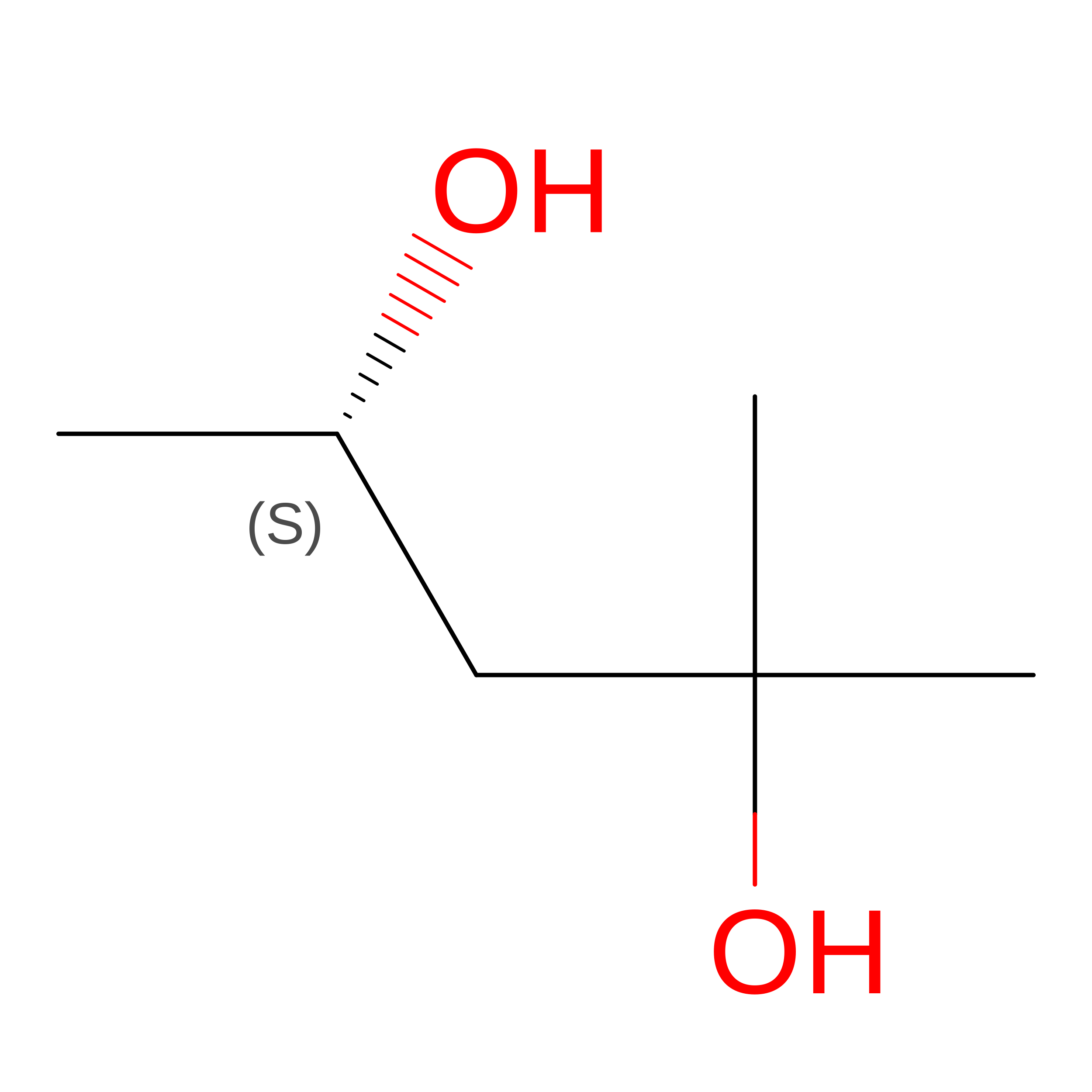
MPD

Query on MPD


Download:Ideal Coordinates CCD File
AA [auth D]
BA [auth D]
I [auth A]
J [auth A]
Q [auth B]
AA [auth D],
BA [auth D],
I [auth A],
J [auth A],
Q [auth B],
T [auth C]
(4S)-2-METHYL-2,4-PENTANEDIOL
C6 H14 O2
SVTBMSDMJJWYQN-YFKPBYRVSA-N
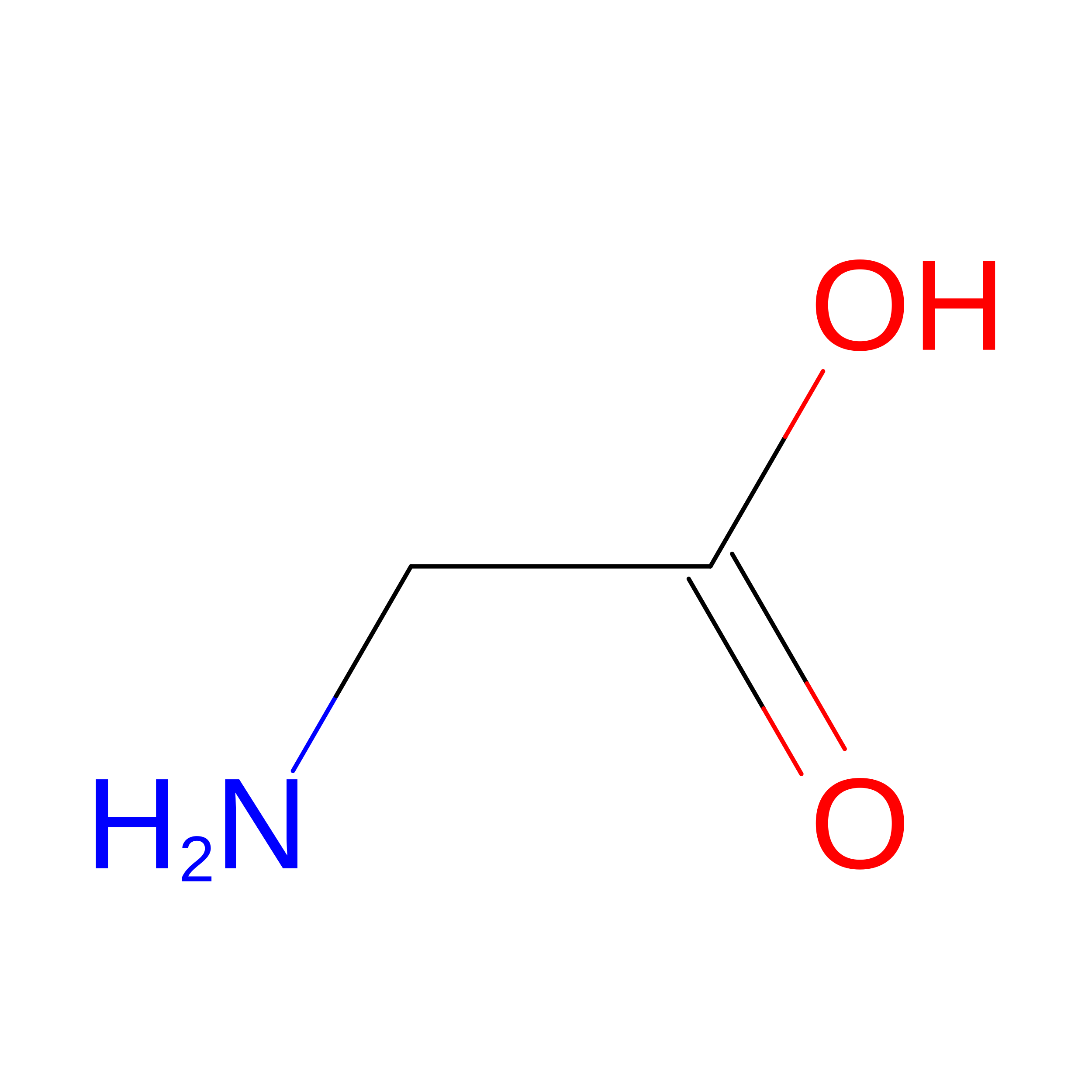
GLY

Query on GLY


Download:Ideal Coordinates CCD File
L [auth B]
M [auth B]
N [auth B]
O [auth B]
R [auth C]
L [auth B],
M [auth B],
N [auth B],
O [auth B],
R [auth C],
V [auth D],
W [auth D],
X [auth D],
Y [auth D]
GLYCINE
C2 H5 N O2
DHMQDGOQFOQNFH-UHFFFAOYSA-N
MG

Query on MG


Download:Ideal Coordinates CCD File
H [auth A],
P [auth B],
S [auth C],
Z [auth D]
MAGNESIUM ION
Mg
JLVVSXFLKOJNIY-UHFFFAOYSA-N

Experimental Data & Validation

Experimental Data

  • Method: X-RAY DIFFRACTION
  • Resolution: 2.17 Å
  • R-Value Free:  0.250 (Depositor), 0.252 (DCC) 
  • R-Value Work:  0.225 (Depositor), 0.228 (DCC) 
Space Group: P 21 21 2
Unit Cell:
Length ( Å )Angle ( ˚ )
a = 82.418α = 90
b = 86.315β = 90
c = 91.132γ = 90
Software Package:
Software NamePurpose
REFMACrefinement
XDSdata reduction
Aimlessdata scaling
PHASERphasing

Structure Validation

View Full Validation Report


Ligand Structure Quality Assessment 


Entry History 

& Funding Information

Deposition Data


Funding OrganizationLocationGrant Number
Jane and Aatos Erkko FoundationFinland220013
Sigrid Juselius FoundationFinland--

Revision History  (Full details and data files)

  • Version 1.0: 2025-09-24
    Type: Initial release