9HNN | pdb_00009hnn

Structure of the (6-4) photolyase of Caulobacter crescentus in its fully reduced state determined by serial femtosecond crystallography


Experimental Data Snapshot

  • Method: X-RAY DIFFRACTION
  • Resolution: 1.78 Å
  • R-Value Free: 
    0.212 (Depositor), 0.212 (DCC) 
  • R-Value Work: 
    0.184 (Depositor), 0.184 (DCC) 
  • R-Value Observed: 
    0.185 (Depositor) 

Starting Model: experimental
View more details

wwPDB Validation 3D Report Full Report

Validation slider image for 9HNN

Ligand Structure Quality Assessment 


This is version 1.1 of the entry. See complete history

Literature

Redox-State-Dependent Structural Changes within a Prokaryotic 6-4 Photolyase.

Wang, P.H.Hosokawa, Y.C Soares, J.Emmerich, H.J.Fuchs, V.Caramello, N.Engilberge, S.Bologna, A.Rosner, C.J.Nakamura, M.Watad, M.Luo, F.Owada, S.Tosha, T.Kang, J.Tono, K.Bessho, Y.Nango, E.Pierik, A.J.Royant, A.Tsai, M.D.Yamamoto, J.Maestre-Reyna, M.Essen, L.O.

(2025) J Am Chem Soc 147: 16084-16098

  • DOI: https://doi.org/10.1021/jacs.4c18116
  • Primary Citation Related Structures: 
    9HNK, 9HNL, 9HNM, 9HNN, 9HNO, 9Q8F

  • PubMed Abstract: 

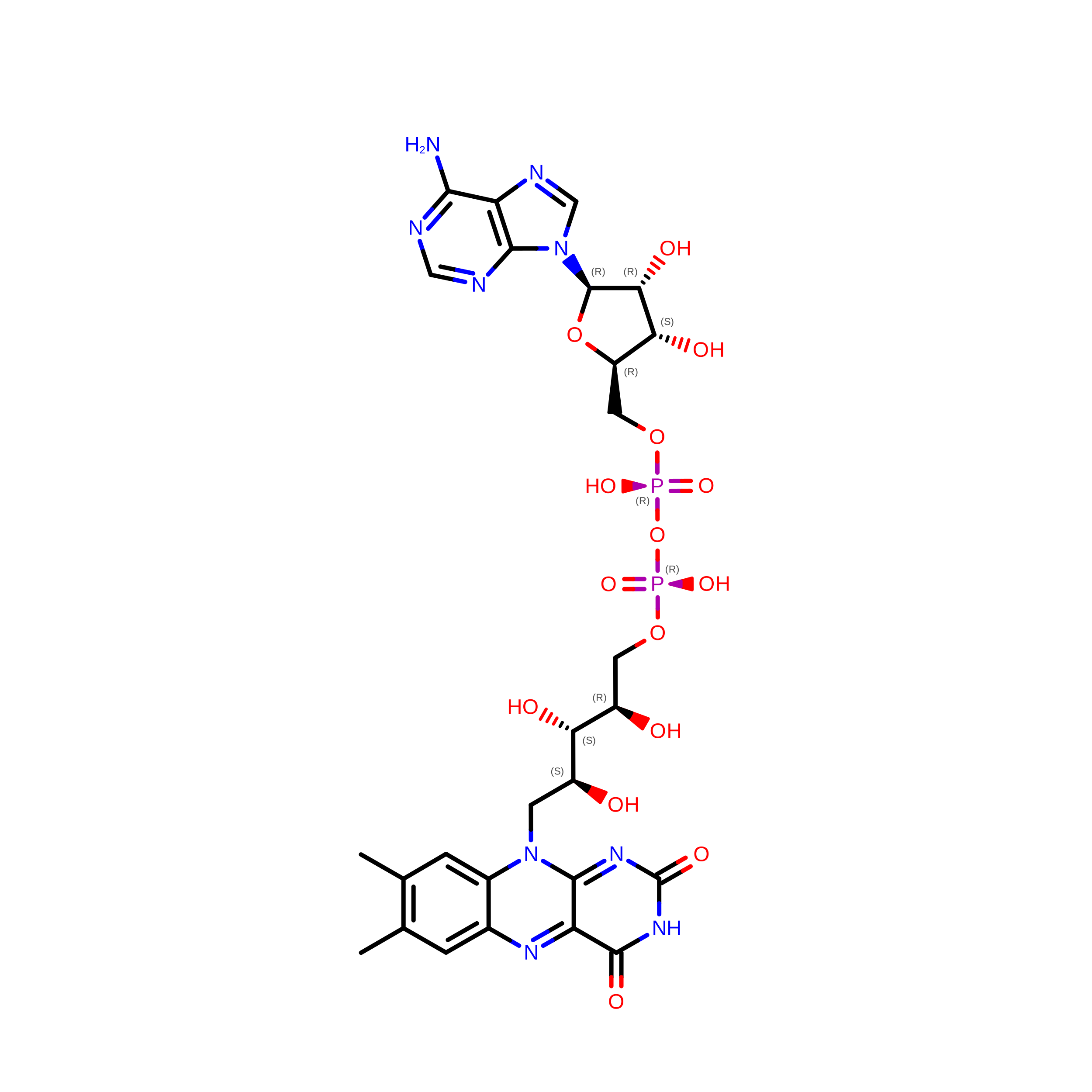
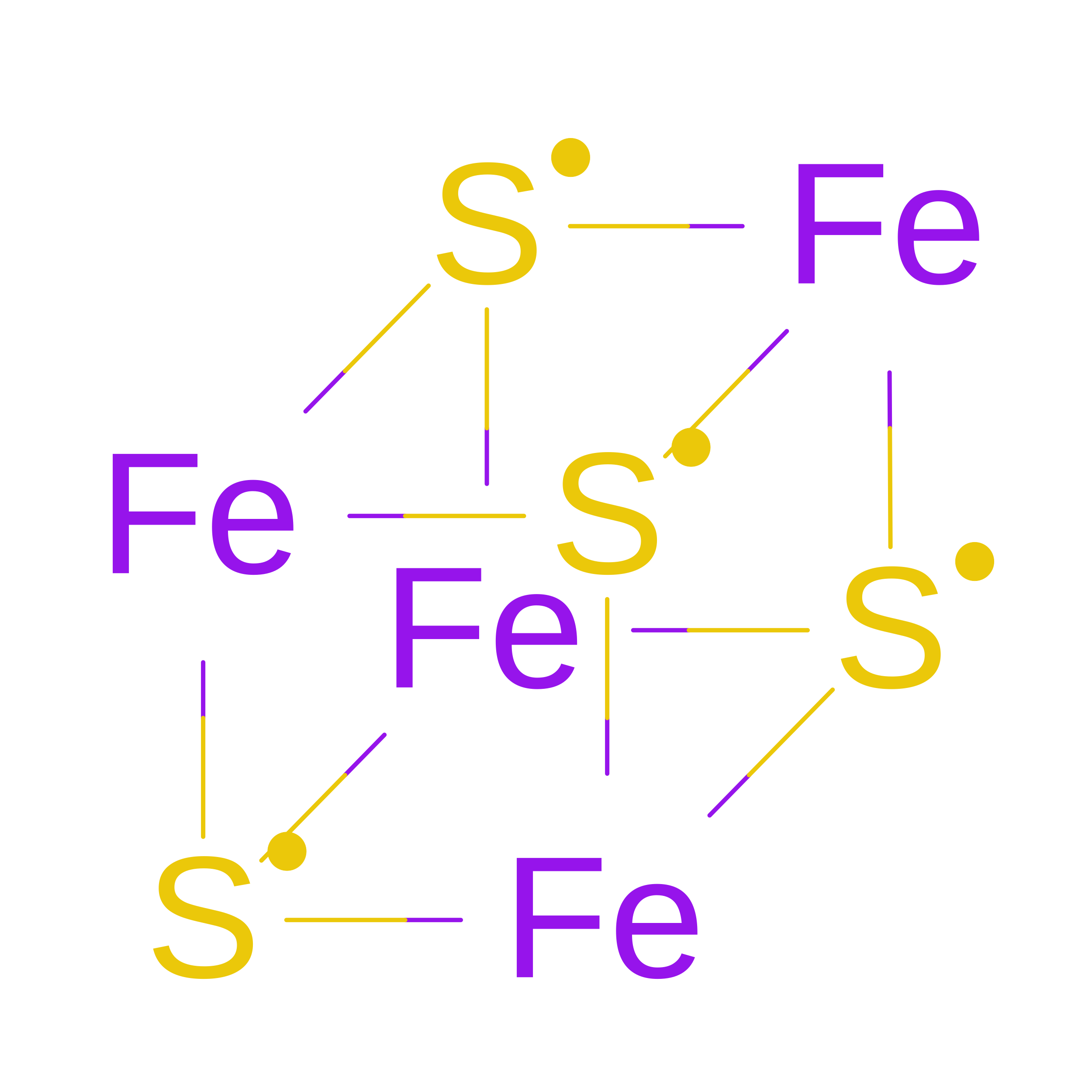
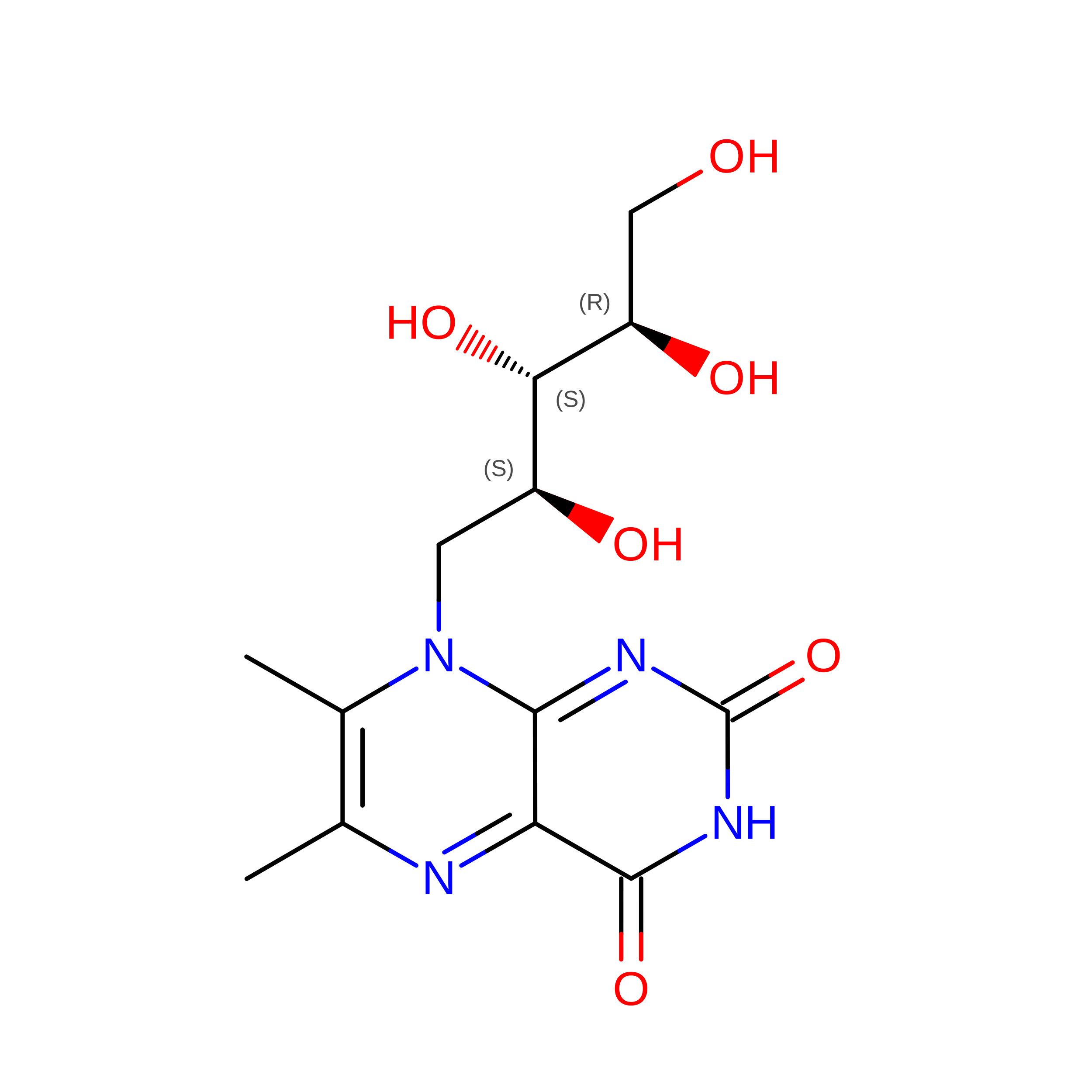
    Photolyases repair UV damage to DNA by using absorbed blue light. Within the photolyase/cryptochrome superfamily (PCSf), a major subgroup consists of prokaryotic (6-4) photolyases. These enzymes rely on flavin adenine dinucleotide (FAD) as a catalytic cofactor, besides an ancillary antenna chromophore, and a [4Fe-4S] cluster with yet unknown function. For the prokaryotic 6-4 photolyase of Caulobacter crescentus , we investigated structural changes associated with its different redox states by damage-free crystallography using X-ray free-electron lasers. EPR and optical spectroscopy confirmed redox-dependent structural transitions, including the formation of an oxidized [4Fe-4S] 3+ cluster with the dynamic cleavage of a single iron-sulfur bond. Photoreduction to the catalytic FADH - state alters the flavin binding site at the proximal aromatic pair Y390/F394 that is part of the electron transport pathway. Upon oxidation, the observable structural transitions of the protein matrix around the [4Fe-4S] cluster may affect DNA binding and are consistent with the much-debated role of the iron-sulfur cluster in DNA-binding proteins for quenching electron holes.


  • Organizational Affiliation
    • Department of Chemistry, Philipps University Marburg, Hans-Meerwein Strasse 4, Marburg 35032, Germany.

Macromolecule Content 

  • Total Structure Weight: 59.58 kDa 
  • Atom Count: 4,480 
  • Modeled Residue Count: 508 
  • Deposited Residue Count: 509 
  • Unique protein chains: 1

Macromolecules

Find similar proteins by:|  3D Structure
Entity ID: 1
MoleculeChains  Sequence LengthOrganismDetailsImage
Cryptochrome/photolyase family protein509Caulobacter vibrioidesMutation(s): 0 
Gene Names: CC_0646
UniProt
Find proteins for Q9AAF5 (Caulobacter vibrioides (strain ATCC 19089 / CIP 103742 / CB 15))
Explore Q9AAF5 
Go to UniProtKB:  Q9AAF5
Entity Groups
Sequence Clusters30% Identity50% Identity70% Identity90% Identity95% Identity100% Identity
UniProt GroupQ9AAF5
Sequence Annotations
Expand
Reference Sequence

Experimental Data & Validation

Experimental Data

  • Method: X-RAY DIFFRACTION
  • Resolution: 1.78 Å
  • R-Value Free:  0.212 (Depositor), 0.212 (DCC) 
  • R-Value Work:  0.184 (Depositor), 0.184 (DCC) 
  • R-Value Observed: 0.185 (Depositor) 
Space Group: P 21 21 21
Unit Cell:
Length ( Å )Angle ( ˚ )
a = 49.8α = 90
b = 103.4β = 90
c = 104.8γ = 90
Software Package:
Software NamePurpose
PHENIXrefinement
CrystFELdata reduction
CrystFELdata scaling
PHASERphasing

Structure Validation

View Full Validation Report


Ligand Structure Quality Assessment 


Entry History 

& Funding Information

Deposition Data


Funding OrganizationLocationGrant Number
German Research Foundation (DFG)GermanyES152/18

Revision History  (Full details and data files)

  • Version 1.0: 2025-05-07
    Type: Initial release
  • Version 1.1: 2025-05-21
    Changes: Database references