Download Mendeley
Molecular mechanism of transition-state inhibitors of bacterial antibiotic efflux pumps.
Bornsen, C., Muller, R.T., Vieira Da Cruz, A., Jimenez-Castellanos, J.C., Meurillon, V., Brandstatter, L., Lodinsky, E.V., Athar, M., Vargiu, A.V., Hartkoorn, R.C., Flipo, M., Frangakis, A.S., Pos, K.M.(2026) NPJ Antimicrob Resist 4
- PubMed: 42082832 Search on PubMedSearch on PubMed Central
- DOI: https://doi.org/10.1038/s44259-026-00207-6
- Primary Citation Related Structures:
9HAO, 9HCI - PubMed Abstract:
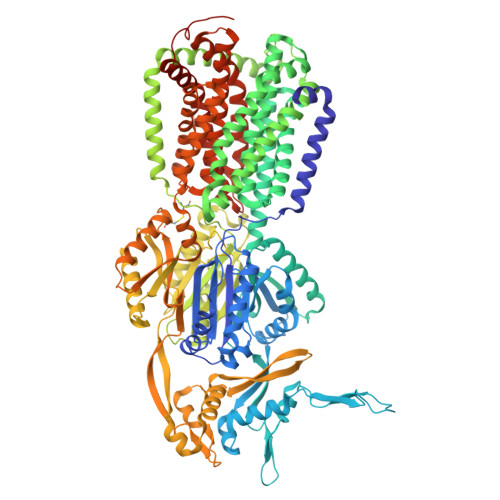
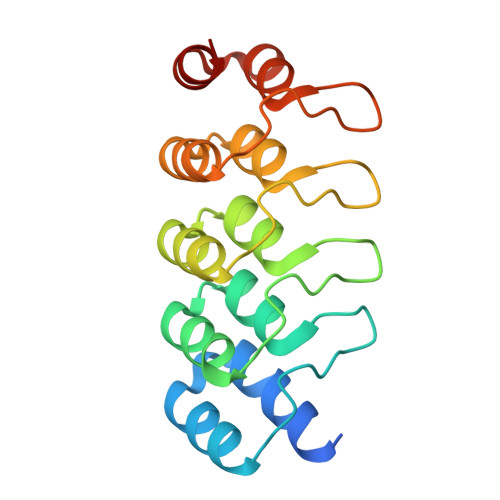
In many Gram-negative bacteria such as Escherichia coli and Klebsiella pneumoniae, the AcrAB-TolC efflux pump is central to multidrug resistance. We report the development of BDM91531, a nanomolar pyridylpiperazine inhibitor that potentiates the activity of several antibiotics. Structural analyses by X-ray crystallography and cryo-EM revealed that the divalent cationic BDM91531 binds AcrB through electrostatic interactions with a central role for residues D408 and E947, trapping protomers in an O to L transitional state and blocking the conformational cycling of the trimer. Differential scanning fluorimetry and susceptibility tests confirmed this inhibitory mechanism. Negative charges at the cytoplasmic rim are essential for inhibitor uptake as electrostatic attraction from rim carboxylates, including E947 and D951, facilitates entry. Loss of D951 abolished inhibitor sensitivity, whereas introducing alternative negative charges restored activity. These findings establish BDM91531 as a potent AcrB efflux pump inhibitor and highlight structural determinants for inhibitor access and binding.
- Buchmann Institute for Molecular Life Sciences and Institute for Biophysics, Goethe University Frankfurt, Frankfurt am Main, Germany.
Organizational Affiliation: