9DKK | pdb_00009dkk

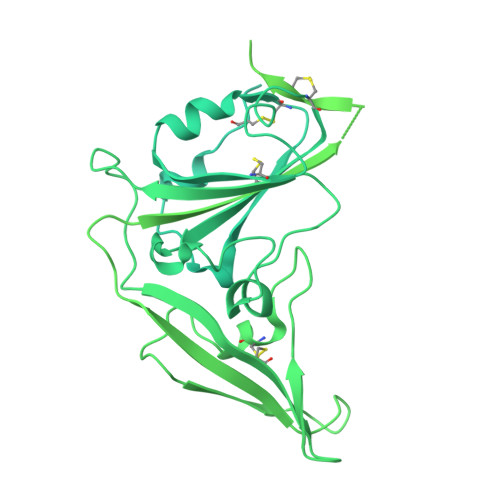
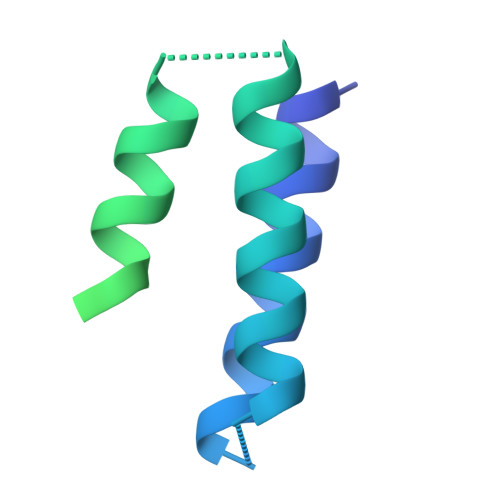
Designed miniproteins potently inhibit and protect against MERS-CoV. MERS-CoV S in complex with miniprotein cb3_GGGSGGGS_SB175, linker 7 (Local refinement of two RBDs and 2 miniproteins)


Experimental Data Snapshot

  • Method: ELECTRON MICROSCOPY
  • Resolution: 3.30 Å
  • Aggregation State: PARTICLE 
  • Reconstruction Method: SINGLE PARTICLE 

wwPDB Validation 3D Report Full Report

Validation slider image for 9DKK

This is version 1.1 of the entry. See complete history

Literature

Designed miniproteins potently inhibit and protect against MERS-CoV.

Ragotte, R.J.Tortorici, M.A.Catanzaro, N.J.Addetia, A.Coventry, B.Froggatt, H.M.Lee, J.Stewart, C.Brown, J.T.Goreshnik, I.Sims, J.N.Milles, L.F.Wicky, B.I.M.Glogl, M.Gerben, S.Kang, A.Bera, A.K.Sharkey, W.Schafer, A.Harkema, J.R.Baric, R.S.Baker, D.Veesler, D.

(2025) Cell Rep 44: 115760-115760

  • DOI: https://doi.org/10.1016/j.celrep.2025.115760
  • Primary Citation Related Structures: 
    9C7Z, 9DGO, 9DKK

  • PubMed Abstract: 

    Middle East respiratory syndrome coronavirus (MERS-CoV) is a zoonotic pathogen with a 36% case-fatality rate in humans. No vaccines or specific therapeutics are currently approved for use in humans or the camel host reservoir. Here, we computationally designed monomeric and homo-oligomeric miniproteins that bind with high affinity to the MERS-CoV spike (S) glycoprotein, the main target of neutralizing antibodies and vaccine development. We show that these miniproteins broadly neutralize a panel of MERS-CoV S variants, spanning the known antigenic diversity of this pathogen, by targeting a conserved site in the receptor-binding domain (RBD). The miniproteins directly compete with binding of the dipeptidylpeptidase 4 (DPP4) receptor to MERS-CoV S, thereby blocking viral attachment to the host entry receptor and subsequent membrane fusion. Intranasal administration of a lead miniprotein provides prophylactic protection against stringent MERS-CoV challenge in mice, motivating its future clinical development as a next-generation countermeasure against this virus with pandemic potential.


  • Organizational Affiliation
    • Department of Biochemistry, University of Washington, Seattle, WA 98195, USA; Institute for Protein Design, University of Washington, Seattle, WA 98195, USA.

Macromolecule Content 

  • Total Structure Weight: 334.57 kDa 
  • Atom Count: 3,782 
  • Modeled Residue Count: 515 
  • Deposited Residue Count: 3,020 
  • Unique protein chains: 2

Macromolecules

Find similar proteins by:|  3D Structure
Entity ID: 1
MoleculeChains  Sequence LengthOrganismDetailsImage
Spike proteinA [auth B],
C [auth A]
1,366Middle East respiratory syndrome-related coronavirusMutation(s): 0 
Find similar proteins by:|  3D Structure
Entity ID: 2
MoleculeChains  Sequence LengthOrganismDetailsImage
Miniprotein cb3_GGGSGGGS_SB175B [auth D],
D [auth C]
144synthetic constructMutation(s): 0 

Oligosaccharides

Help  
Entity ID: 3
MoleculeChains Length2D Diagram GlycosylationD Interactions
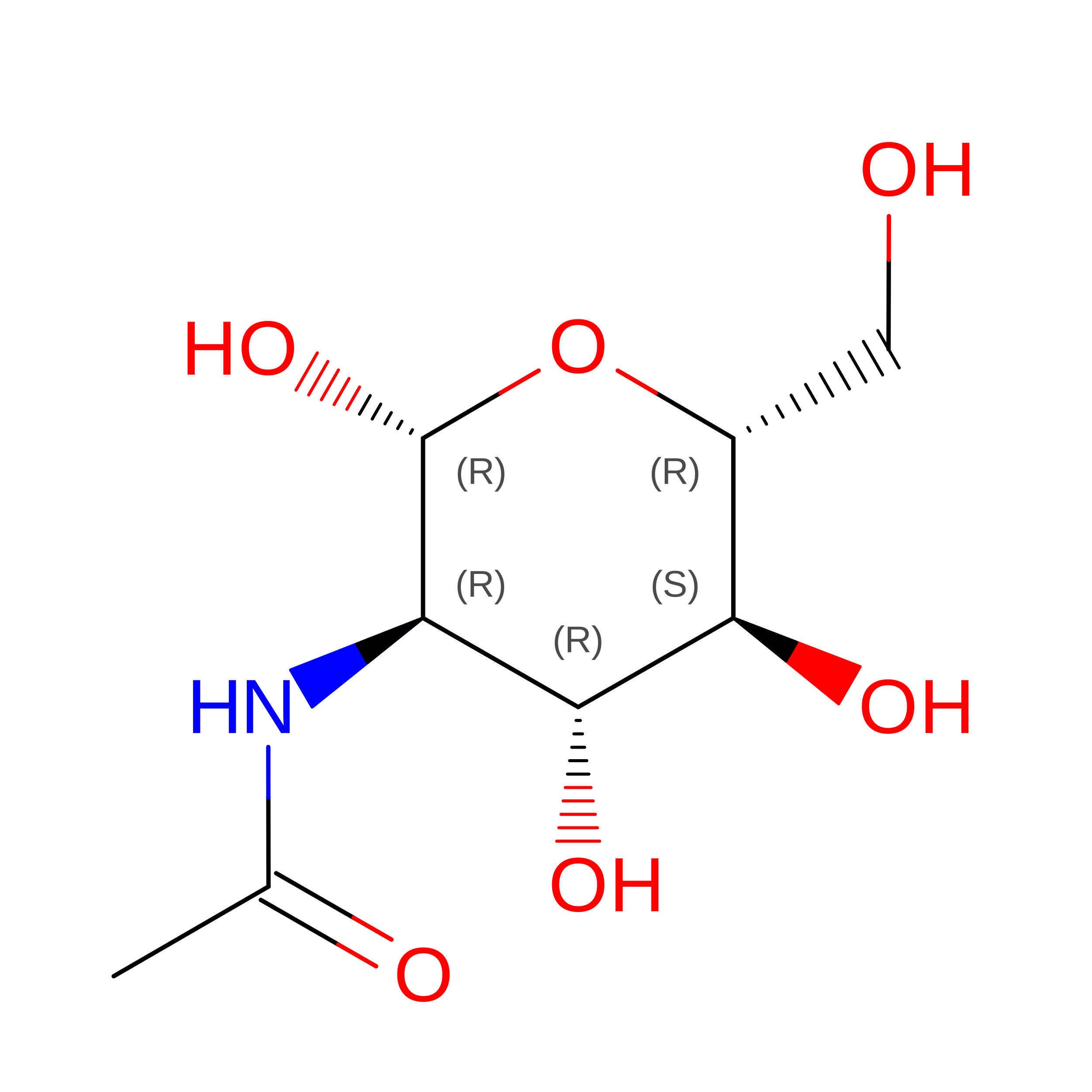
2-acetamido-2-deoxy-beta-D-glucopyranose-(1-4)-2-acetamido-2-deoxy-beta-D-glucopyranose
E, F
2N-Glycosylation
Glycosylation Resources
GlyTouCan: G42666HT
GlyCosmos: G42666HT
GlyGen: G42666HT

Experimental Data & Validation

Experimental Data

  • Method: ELECTRON MICROSCOPY
  • Resolution: 3.30 Å
  • Aggregation State: PARTICLE 
  • Reconstruction Method: SINGLE PARTICLE 
EM Software:
TaskSoftware PackageVersion
MODEL REFINEMENTPHENIX1.21.2_5419:
RECONSTRUCTIONcryoSPARC

Structure Validation

View Full Validation Report


Entry History 

& Funding Information

Deposition Data


Funding OrganizationLocationGrant Number
National Institutes of Health/National Institute Of Allergy and Infectious Diseases (NIH/NIAID)United StatesAI158186

Revision History  (Full details and data files)

  • Version 1.0: 2025-10-15
    Type: Initial release
  • Version 1.1: 2026-02-25
    Changes: Data collection, Database references