9BS5 | pdb_00009bs5

Bacteroides ovatus GH97C Sus

  • Classification: HYDROLASE
  • Organism(s): Bacteroides ovatus ATCC 8483
  • Expression System: Escherichia coli
  • Mutation(s): No 

  • Deposited: 2024-05-13 Released: 2024-10-30 
  • Deposition Author(s): Brown, H.A., Koropatkin, N.M.
  • Funding Organization(s): National Institutes of Health/National Institute of General Medical Sciences (NIH/NIGMS), National Institutes of Health/National Center for Complementary and Integrative Health (NIH/NCCIH), Department of Energy (DOE, United States), National Institutes of Health/National Institute of Diabetes and Digestive and Kidney Disease (NIH/NIDDK)

Experimental Data Snapshot

  • Method: X-RAY DIFFRACTION
  • Resolution: 1.46 Å
  • R-Value Free: 
    0.224 (Depositor), 0.228 (DCC) 
  • R-Value Work: 
    0.204 (Depositor), 0.208 (DCC) 
  • R-Value Observed: 
    0.205 (Depositor) 

Starting Model: experimental
View more details

wwPDB Validation 3D Report Full Report

Validation slider image for 9BS5

This is version 1.1 of the entry. See complete history

Literature

Acarbose impairs gut Bacteroides growth by targeting intracellular glucosidases.

Brown, H.A.Morris, A.L.Pudlo, N.A.Hopkins, A.E.Martens, E.C.Golob, J.L.Koropatkin, N.M.

(2024) mBio 15: e0150624-e0150624

  • DOI: https://doi.org/10.1128/mbio.01506-24
  • Primary Citation Related Structures: 
    9BS5

  • PubMed Abstract: 

    Acarbose is a type 2 diabetes medicine that prevents dietary starch breakdown into glucose by inhibiting host amylase and glucosidase enzymes. Numerous gut species in the Bacteroides genus enzymatically break down starch and change in relative abundance within the gut microbiome in acarbose-treated individuals. To mechanistically explain this observation, we used two model starch-degrading Bacteroides , Bacteroides ovatus (Bo), and Bacteroides thetaiotaomicron (Bt). Bt growth on starch polysaccharides is severely impaired by acarbose, whereas Bo growth is much less affected by the drug. The Bacteroides use a starch utilization system (Sus) to grow on starch. We hypothesized that Bo and Bt Sus enzymes are differentially inhibited by acarbose. Instead, we discovered that although acarbose primarily targets the Sus periplasmic GH97 enzymes in both organisms, the drug affects starch processing at multiple other points. Acarbose competes for transport through the TonB-dependent SusC proteins and binds to the Sus transcriptional regulators. Furthermore, Bo expresses a non-Sus GH97 (BoGH97D) when grown in starch with acarbose. The Bt homolog, BtGH97H, is not expressed in the same conditions, nor can overexpression of BoGH97D complement the Bt growth inhibition in the presence of acarbose. This work informs us about unexpected complexities of Sus function and regulation in Bacteroides , including variation between related species. Furthermore, this indicates that the gut microbiome may be a source of variable response to acarbose treatment for diabetes. Acarbose is a type 2 diabetes medication that works primarily by stopping starch breakdown into glucose in the small intestine. This is accomplished by the inhibition of host enzymes, leading to better blood sugar control via reduced ability to derive glucose from dietary starches. The drug and undigested starch travel to the large intestine where acarbose interferes with the ability of some bacteria to grow on starch. However, little is known about how gut bacteria interact with acarbose, including microbes that can use starch as a carbon source. Here, we show that two gut species, Bacteroides ovatus (Bo) and Bacteroides thetaiotaomicron (Bt), respond differently to acarbose: Bt growth is inhibited by acarbose, while Bo growth is less affected. We reveal a complex set of mechanisms involving differences in starch import and sensing behind the different Bo and Bt responses. This indicates the gut microbiome may be a source of variable response to acarbose treatment for diabetes via complex mechanisms in common gut microbes.


  • Organizational Affiliation
    • Department of Microbiology and Immunology, University of Michigan Medical School, Ann Arbor, Michigan, USA.

Macromolecule Content 

  • Total Structure Weight: 168.04 kDa 
  • Atom Count: 12,684 
  • Modeled Residue Count: 1,377 
  • Deposited Residue Count: 1,448 
  • Unique protein chains: 1

Macromolecules

Find similar proteins by:|  3D Structure
Entity ID: 1
MoleculeChains  Sequence LengthOrganismDetailsImage
Alpha-glucosidase
A, B
724Bacteroides ovatus ATCC 8483Mutation(s): 0 
Gene Names: DHW41_19285DWX70_08180DWY24_08950DYI28_22155F3D51_05285F3F51_00675R4E93_19165
UniProt
Find proteins for A0AAN3A6N4 (Bacteroides ovatus (strain ATCC 8483 / DSM 1896 / JCM 5824 / BCRC 10623 / CCUG 4943 / NCTC 11153))
Explore A0AAN3A6N4 
Go to UniProtKB:  A0AAN3A6N4
Entity Groups
Sequence Clusters30% Identity50% Identity70% Identity90% Identity95% Identity100% Identity
UniProt GroupA0AAN3A6N4
Sequence Annotations
Expand
Reference Sequence

Oligosaccharides

Help  
Entity ID: 2
MoleculeChains Length2D Diagram GlycosylationD Interactions
4,6-dideoxy-4-{[(1S,4R,5S,6S)-4,5,6-trihydroxy-3-(hydroxymethyl)cyclohex-2-en-1-yl]amino}-alpha-D-glucopyranose-(1-4)-alpha-D-glucopyranoseC [auth F],
D [auth G]
2N/AN/A
Glycosylation Resources
GlyTouCan: G61060BJ
GlyCosmos: G61060BJ

Small Molecules

Ligands 6 Unique
IDChains Name / Formula / InChI Key2D Diagram3D Interactions
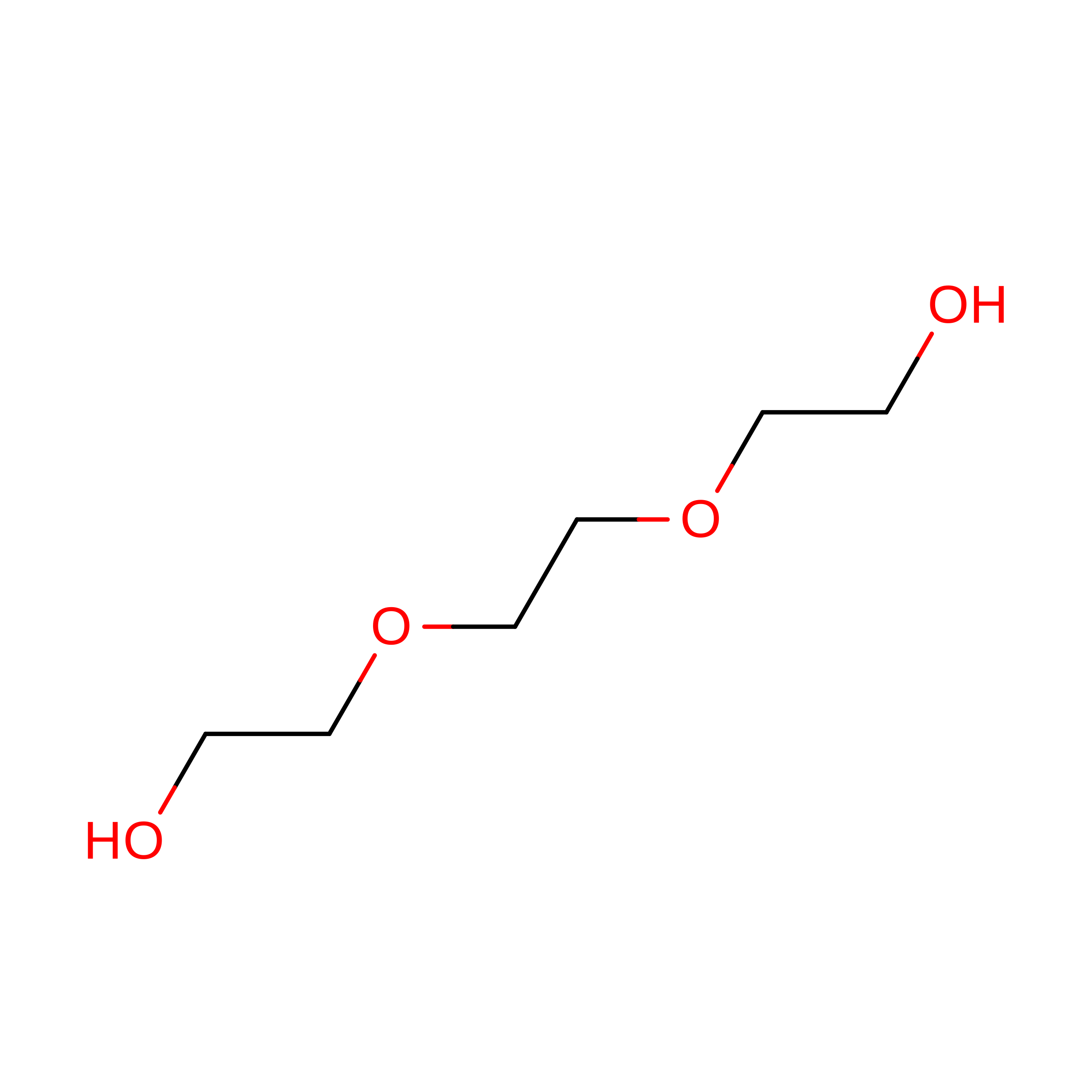
PGE

Query on PGE


Download:Ideal Coordinates CCD File
J [auth A],
S [auth B]
TRIETHYLENE GLYCOL
C6 H14 O4
ZIBGPFATKBEMQZ-UHFFFAOYSA-N
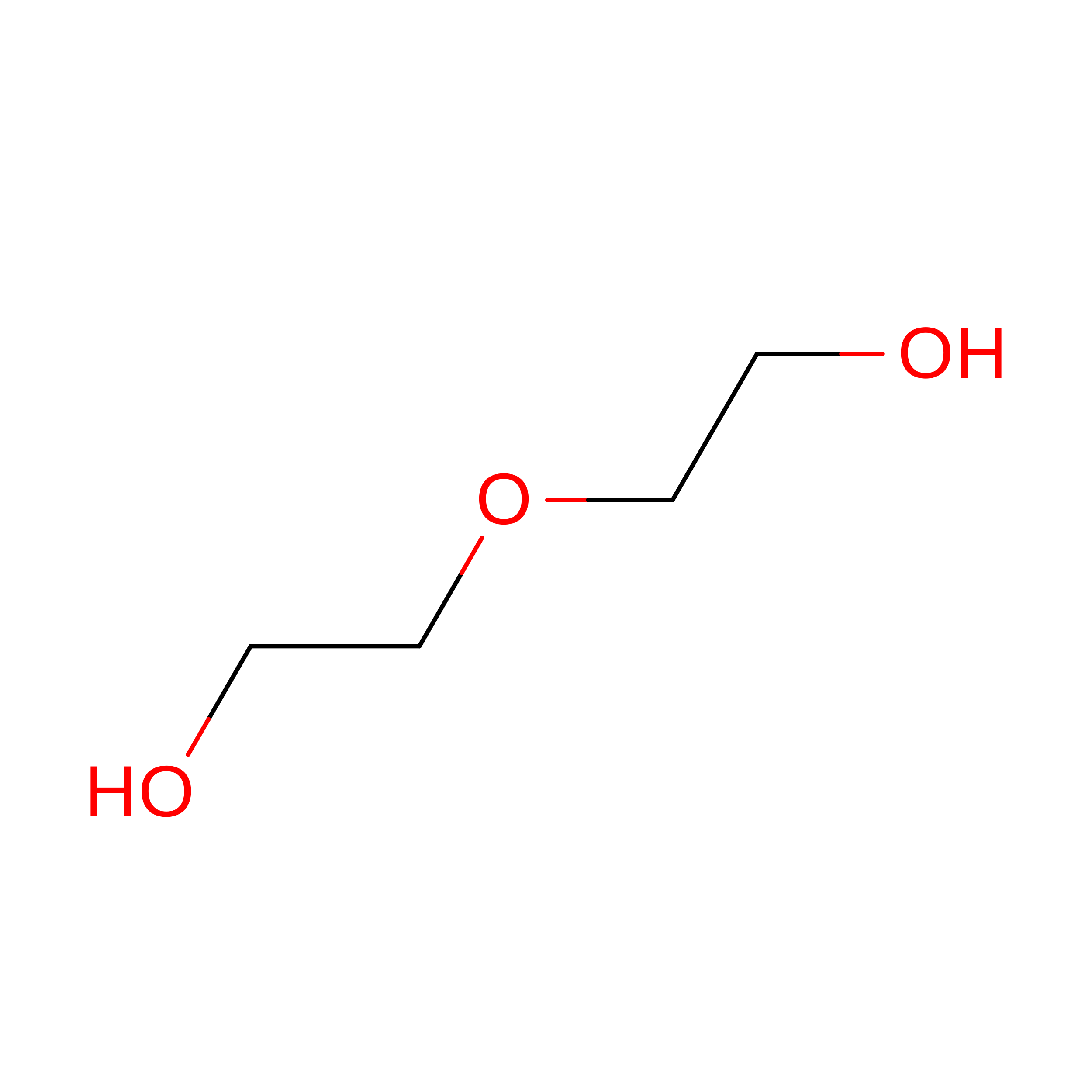
PEG

Query on PEG


Download:Ideal Coordinates CCD File
H [auth A]DI(HYDROXYETHYL)ETHER
C4 H10 O3
MTHSVFCYNBDYFN-UHFFFAOYSA-N
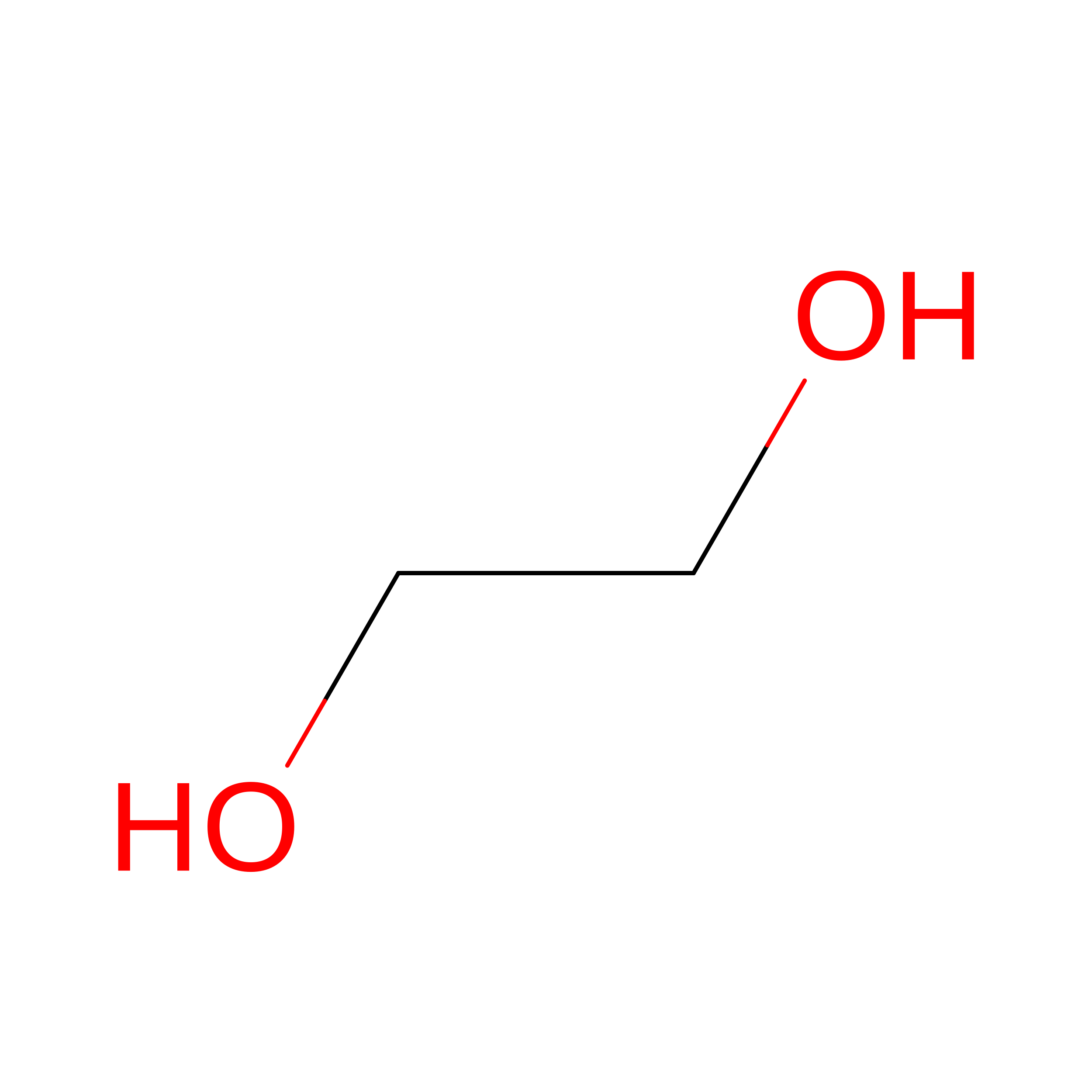
EDO

Query on EDO


Download:Ideal Coordinates CCD File
E [auth A]
F [auth A]
G [auth A]
L [auth A]
N [auth A]
E [auth A],
F [auth A],
G [auth A],
L [auth A],
N [auth A],
R [auth B],
T [auth B],
U [auth B],
V [auth B],
W [auth B],
X [auth B],
Y [auth B]
1,2-ETHANEDIOL
C2 H6 O2
LYCAIKOWRPUZTN-UHFFFAOYSA-N
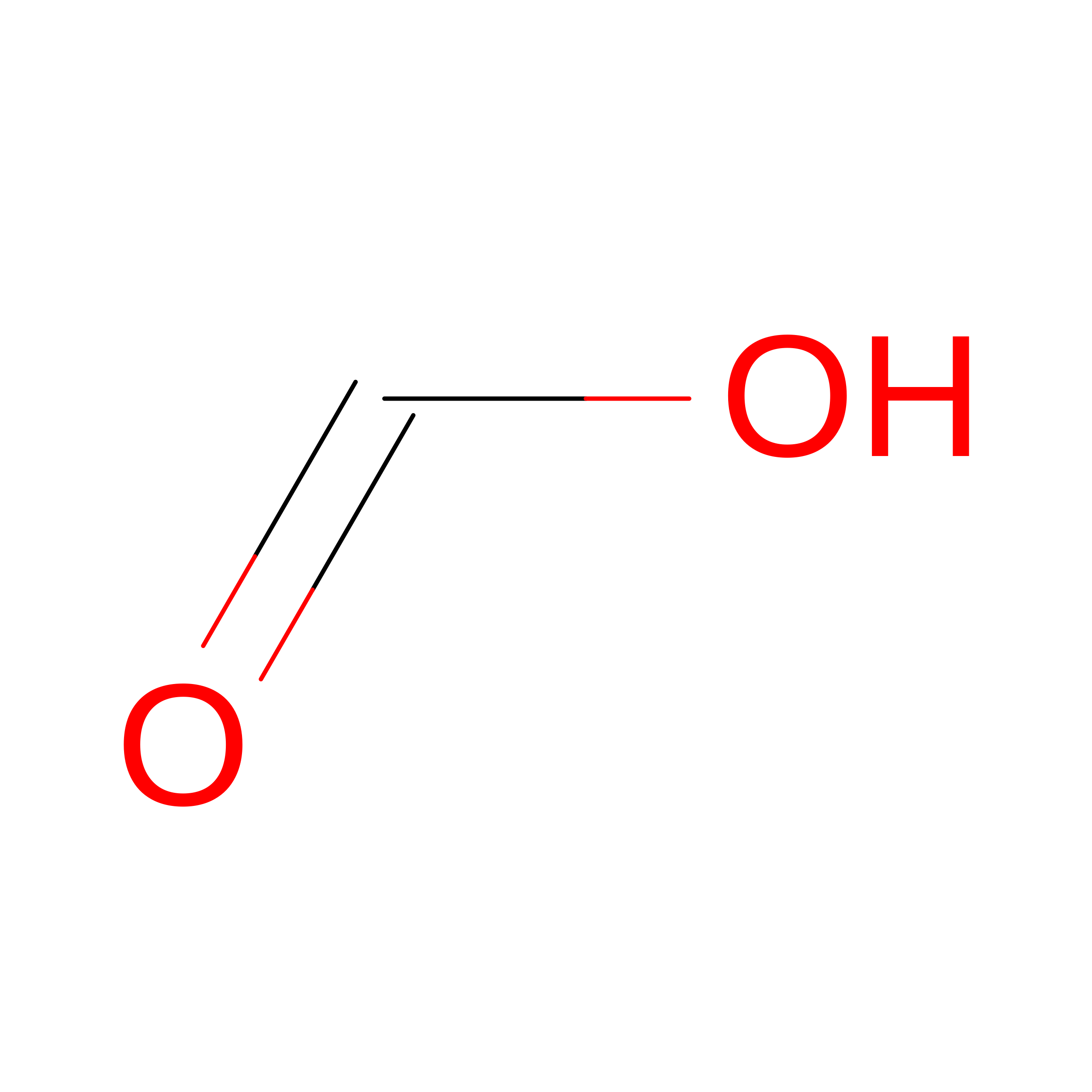
FMT

Query on FMT


Download:Ideal Coordinates CCD File
I [auth A],
K [auth A],
M [auth A],
O [auth A]
FORMIC ACID
C H2 O2
BDAGIHXWWSANSR-UHFFFAOYSA-N
CA

Query on CA


Download:Ideal Coordinates CCD File
P [auth A],
Z [auth B]
CALCIUM ION
Ca
BHPQYMZQTOCNFJ-UHFFFAOYSA-N
NA

Query on NA


Download:Ideal Coordinates CCD File
AA [auth B],
Q [auth A]
SODIUM ION
Na
FKNQFGJONOIPTF-UHFFFAOYSA-N

Experimental Data & Validation

Experimental Data

  • Method: X-RAY DIFFRACTION
  • Resolution: 1.46 Å
  • R-Value Free:  0.224 (Depositor), 0.228 (DCC) 
  • R-Value Work:  0.204 (Depositor), 0.208 (DCC) 
  • R-Value Observed: 0.205 (Depositor) 
Space Group: P 21 21 21
Unit Cell:
Length ( Å )Angle ( ˚ )
a = 107.855α = 90
b = 116.528β = 90
c = 144.004γ = 90
Software Package:
Software NamePurpose
REFMACrefinement
xia2data scaling
xia2data reduction
PHENIXphasing

Structure Validation

View Full Validation Report


Entry History 

& Funding Information

Deposition Data


Funding OrganizationLocationGrant Number
National Institutes of Health/National Institute of General Medical Sciences (NIH/NIGMS)United StatesGM118475
National Institutes of Health/National Center for Complementary and Integrative Health (NIH/NCCIH)United StatesF32-AT011278
Department of Energy (DOE, United States)United StatesDE-AC02-06CH11357
National Institutes of Health/National Institute of Diabetes and Digestive and Kidney Disease (NIH/NIDDK)United StatesDK125445

Revision History  (Full details and data files)

  • Version 1.0: 2024-10-30
    Type: Initial release
  • Version 1.1: 2025-05-14
    Changes: Database references