8VWZ | pdb_00008vwz

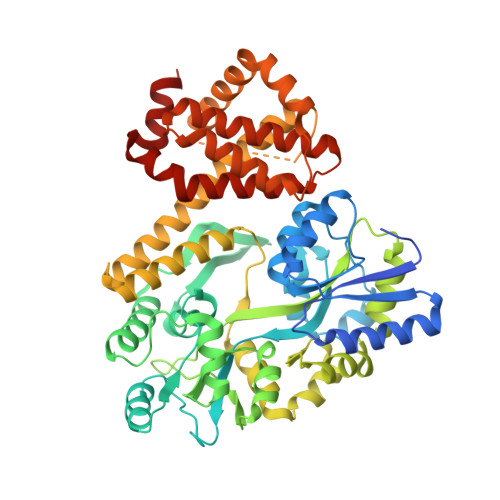
Human Bcl-2 (G101V Mutant)/Bcl-xL Chimera Fused to MBP in Complex with Inhibitor S55746


Experimental Data Snapshot

  • Method: X-RAY DIFFRACTION
  • Resolution: 2.33 Å
  • R-Value Free: 
    0.256 (Depositor), 0.256 (DCC) 
  • R-Value Work: 
    0.227 (Depositor), 0.227 (DCC) 
  • R-Value Observed: 
    0.228 (Depositor) 

Starting Model: experimental
View more details

wwPDB Validation 3D Report Full Report

Validation slider image for 8VWZ

Ligand Structure Quality Assessment 


This is version 1.2 of the entry. See complete history

Literature

Hydrogen/Deuterium Exchange and Protein Oxidative Footprinting with Mass Spectrometry Collectively Discriminate the Binding of Small-Molecule Therapeutics to Bcl-2.

Sun, Y.Houde, D.Iacob, R.E.Baird, J.Swift, R.V.Holliday, M.Shi, X.Sidoli, S.Brenowitz, M.

(2025) Anal Chem 97: 4329-4340

  • DOI: https://doi.org/10.1021/acs.analchem.4c04516
  • Primary Citation Related Structures: 
    8VWX, 8VWZ, 8VXM, 8VXN

  • PubMed Abstract: 

    Characterizing protein-ligand interactions is crucial to understanding cellular metabolism and guiding drug discovery and development. Herein, we explore complementing hydrogen/deuterium exchange mass spectrometry (HDX-MS) with a recently developed Fenton chemistry-based approach to protein oxidative footprinting mass spectrometry (OX-MS) to discriminate the binding of small-molecule therapeutics. Using drug-dependent perturbation as the experimental report, this combination of techniques more clearly differentiates the in-solution binding profiles of Venetoclax (ABT-199, GDC-0199-AbbVie and Genentech) and a drug candidate S55746 (Servier) to the apoptotic regulatory protein Bcl-2 than either technique alone. These results highlight the value of combining these methods to compare compounds in drug discovery and development. To better understand the structural context of the HDX-MS and OX-MS drug-dependent perturbations, we mapped these data on Bcl-2-Venetoclax and Bcl-2-S55746 cocrystal structures and compared these results with the structure of apo Bcl-2. HDX-MS shows that Venetoclax more strongly impacts the protein backbone compared to S55746. OX-MS reveals oxidation perturbations rationalized by direct side-chain protection as well as by crystallographically observed drug-induced protein restructuring. Both methods report the perturbation of some, but not all, residues mapped within 4 Å of the bound drugs in the crystal structures. Concordant characterization of backbone and side-chain accessibility will enhance our understanding of in-solution protein structure dynamics and protein-ligand interactions during drug discovery, development, and characterization, particularly when high-resolution structures are lacking.


  • Organizational Affiliation
    • Department of Biochemistry, Albert Einstein College of Medicine, Bronx, New York 10461, United States.

Macromolecule Content 

  • Total Structure Weight: 62.12 kDa 
  • Atom Count: 4,083 
  • Modeled Residue Count: 507 
  • Deposited Residue Count: 547 
  • Unique protein chains: 1

Macromolecules

Find similar proteins by:|  3D Structure
Entity ID: 1
MoleculeChains  Sequence LengthOrganismDetailsImage
Maltose/maltodextrin-binding periplasmic protein fused to apoptosis regulator Bcl-2/Bcl-xL chimera547Escherichia coli K-12Homo sapiensMutation(s): 6 
Gene Names: malEb4034JW3994BCL2BCL2L1BCL2LBCLX
UniProt & NIH Common Fund Data Resources
Find proteins for P0AEX9 (Escherichia coli (strain K12))
Explore P0AEX9 
Go to UniProtKB:  P0AEX9
Find proteins for P10415 (Homo sapiens)
Explore P10415 
Go to UniProtKB:  P10415
PHAROS:  P10415
GTEx:  ENSG00000171791 
Find proteins for Q07817 (Homo sapiens)
Explore Q07817 
Go to UniProtKB:  Q07817
PHAROS:  Q07817
GTEx:  ENSG00000171552 
Entity Groups
Sequence Clusters30% Identity50% Identity70% Identity90% Identity95% Identity100% Identity
UniProt GroupsQ07817P10415P0AEX9
Sequence Annotations
Expand
Reference Sequence

Small Molecules

Ligands 2 Unique
IDChains Name / Formula / InChI Key2D Diagram3D Interactions
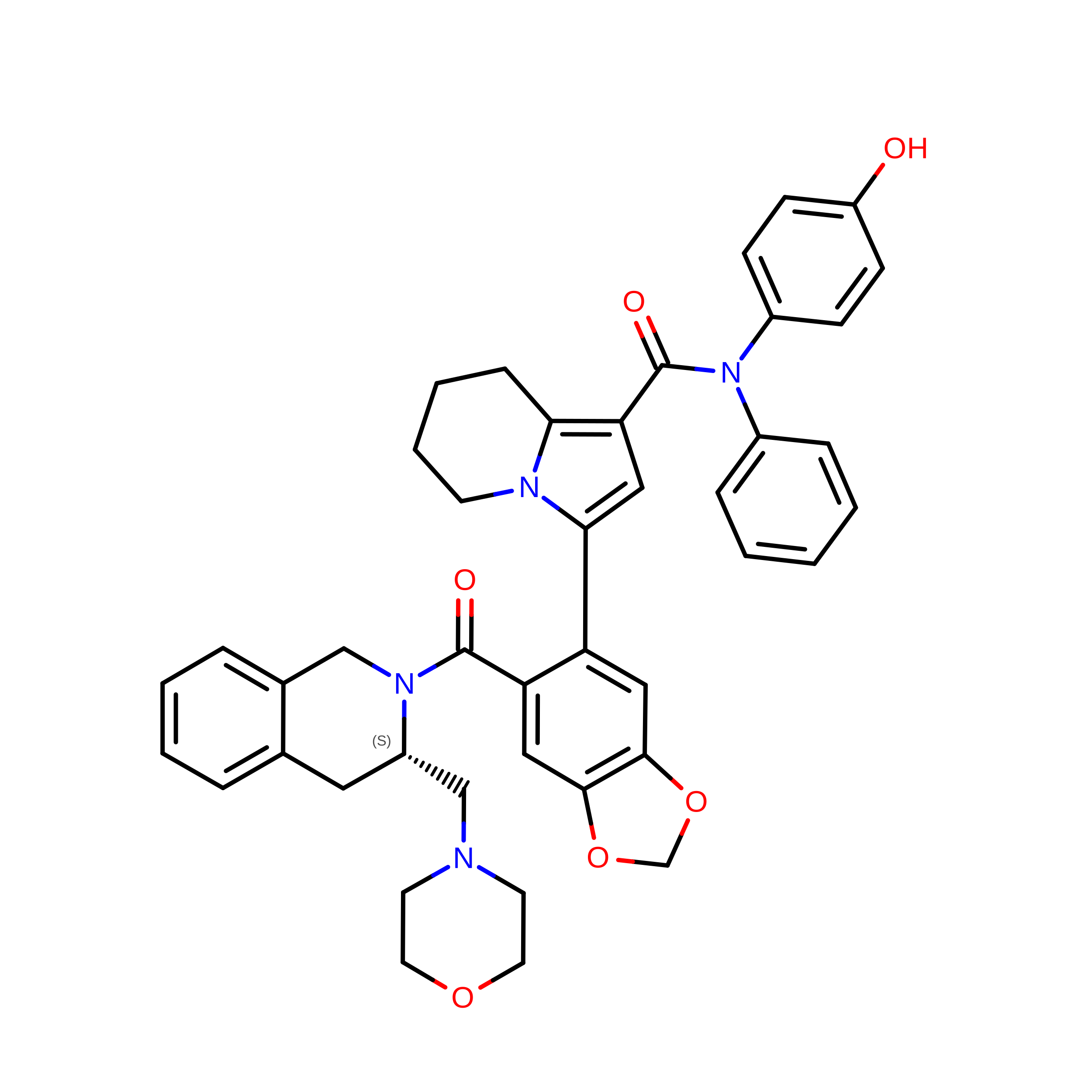
F3Q
(Subject of Investigation/LOI)

Query on F3Q


Download:Ideal Coordinates CCD File
B [auth A]~{N}-(4-hydroxyphenyl)-3-[6-[[(3~{S})-3-(morpholin-4-ylmethyl)-3,4-dihydro-1~{H}-isoquinolin-2-yl]carbonyl]-1,3-benzodioxol-5-yl]-~{N}-phenyl-5,6,7,8-tetrahydroindolizine-1-carboxamide
C43 H42 N4 O6
VYXJULKGMXJVGI-XIFFEERXSA-N
PEG

Query on PEG


Download:Ideal Coordinates CCD File
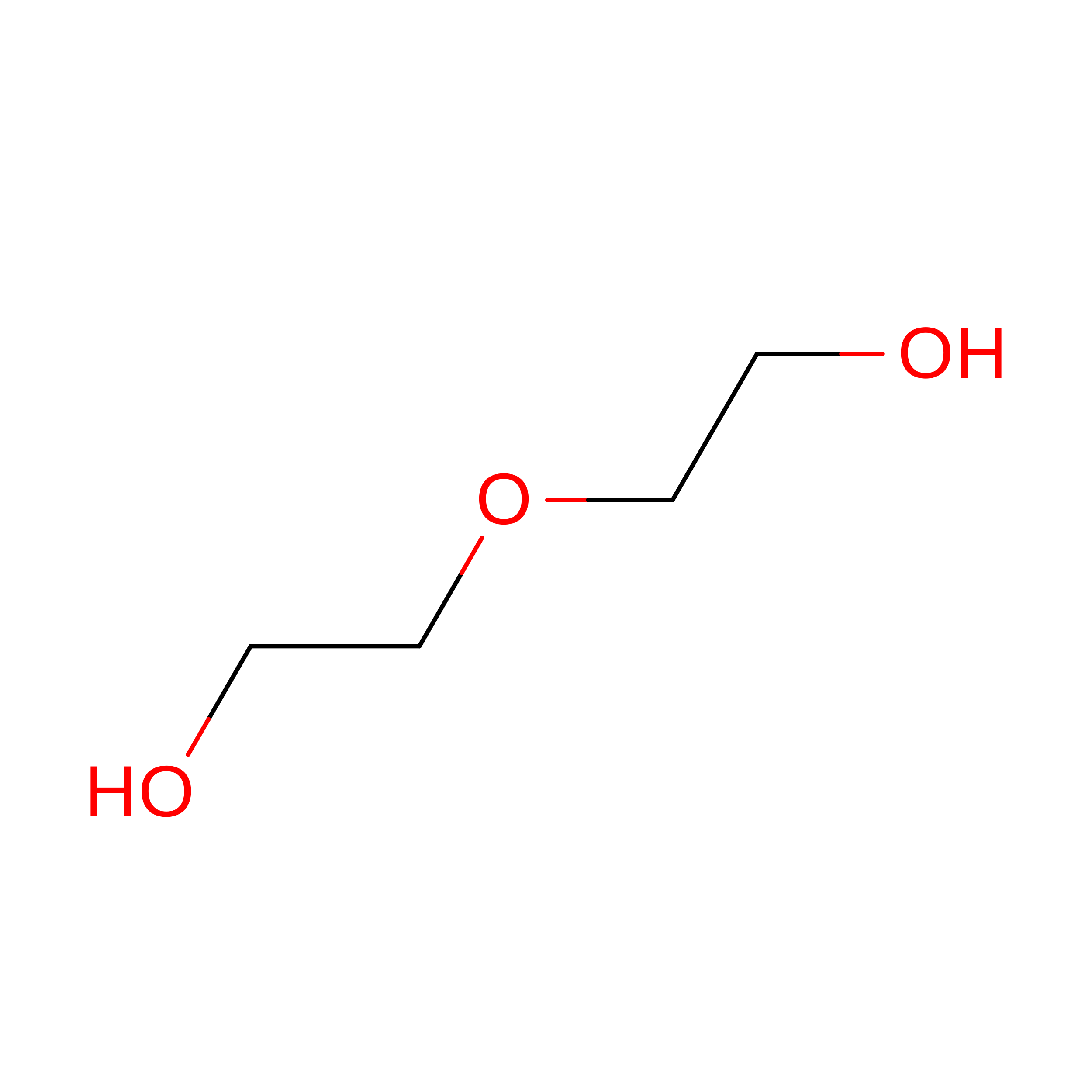
C [auth A]DI(HYDROXYETHYL)ETHER
C4 H10 O3
MTHSVFCYNBDYFN-UHFFFAOYSA-N

Experimental Data & Validation

Experimental Data

  • Method: X-RAY DIFFRACTION
  • Resolution: 2.33 Å
  • R-Value Free:  0.256 (Depositor), 0.256 (DCC) 
  • R-Value Work:  0.227 (Depositor), 0.227 (DCC) 
  • R-Value Observed: 0.228 (Depositor) 
Space Group: P 21 21 21
Unit Cell:
Length ( Å )Angle ( ˚ )
a = 45.26α = 90
b = 96.55β = 90
c = 125.19γ = 90
Software Package:
Software NamePurpose
PHENIXrefinement
autoPROCdata reduction
PHASERphasing
autoPROCdata scaling

Structure Validation

View Full Validation Report


Ligand Structure Quality Assessment 


Entry History 

& Funding Information

Deposition Data


Funding OrganizationLocationGrant Number
Not funded--

Revision History  (Full details and data files)

  • Version 1.0: 2024-10-02
    Type: Initial release
  • Version 1.1: 2025-03-05
    Changes: Database references, Structure summary
  • Version 1.2: 2025-03-12
    Changes: Database references