8VPI | pdb_00008vpi

CamA Adenine Methyltransferase Complexed to Cognate Substrate DNA and Containing Quinoline-based SGI-1027 Analog 462


Experimental Data Snapshot

  • Method: X-RAY DIFFRACTION
  • Resolution: 2.89 Å
  • R-Value Free: 
    0.245 (Depositor), 0.248 (DCC) 
  • R-Value Work: 
    0.203 (Depositor), 0.209 (DCC) 
  • R-Value Observed: 
    0.204 (Depositor) 

Starting Model: experimental
View more details

wwPDB Validation 3D Report Full Report

Validation slider image for 8VPI

Ligand Structure Quality Assessment 


This is version 1.1 of the entry. See complete history

Literature

Quinoline-based compounds can inhibit diverse enzymes that act on DNA.

Zhou, J.Chen, Q.Ren, R.Yang, J.Liu, B.Horton, J.R.Chang, C.Li, C.Maksoud, L.Yang, Y.Rotili, D.Zhang, X.Blumenthal, R.M.Chen, T.Gao, Y.Valente, S.Mai, A.Cheng, X.

(2024) bioRxiv 

  • DOI: https://doi.org/10.1101/2024.04.03.587980
  • Primary Citation Related Structures: 
    8VPG, 8VPH, 8VPI

  • PubMed Abstract: 

    DNA methylation, as exemplified by cytosine-C5 methylation in mammals and adenine-N6 methylation in bacteria, is a crucial epigenetic mechanism driving numerous vital biological processes. Developing non-nucleoside inhibitors to cause DNA hypomethylation is a high priority, in order to treat a variety of significant medical conditions without the toxicities associated with existing cytidine-based hypomethylating agents. In this study, we have characterized fifteen quinoline-based analogs. Notably, compounds with additions like a methylamine ( 9 ) or methylpiperazine ( 11 ) demonstrate similar low micromolar inhibitory potency against both human DNMT1 (which generates C5-methylcytosine) and Clostridioides difficile CamA (which generates N6-methyladenine). Structurally, compounds 9 and 11 specifically intercalate into CamA-bound DNA via the minor groove, adjacent to the target adenine, leading to a substantial conformational shift that moves the catalytic domain away from the DNA. This study adds to the limited examples of DNA methyltransferases being inhibited by non-nucleotide compounds through DNA intercalation, following the discovery of dicyanopyridine-based inhibitors for DNMT1. Furthermore, our study shows that some of these quinoline-based analogs inhibit other enzymes that act on DNA, such as polymerases and base excision repair glycosylases. Finally, in cancer cells compound 11 elicits DNA damage response via p53 activation. Six of fifteen quinoline-based derivatives demonstrated comparable low micromolar inhibitory effects on human cytosine methyltransferase DNMT1, and the bacterial adenine methyltransferases Clostridioides difficile CamA and Caulobacter crescentus CcrM. Compounds 9 and 11 were found to intercalate into a DNA substrate bound by CamA. These quinoline-based derivatives also showed inhibitory activity against various base excision repair DNA glycosylases, and DNA and RNA polymerases. Compound 11 provokes DNA damage response via p53 activation in cancer cells.

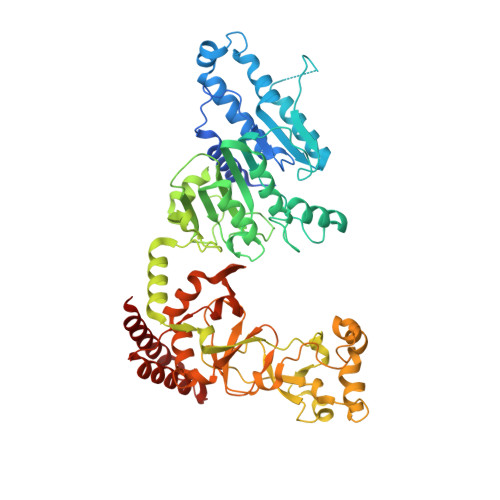
Macromolecule Content 

  • Total Structure Weight: 232.58 kDa 
  • Atom Count: 15,117 
  • Modeled Residue Count: 1,717 
  • Deposited Residue Count: 1,815 
  • Unique protein chains: 1
  • Unique nucleic acid chains: 2

Macromolecules


Find similar proteins by:|  3D Structure
Entity ID: 1
MoleculeChains  Sequence LengthOrganismDetailsImage
Site-specific DNA-methyltransferase (adenine-specific)
A, B, C
577Clostridioides difficileMutation(s): 0 
Gene Names: 
EC: 2.1.1.72
UniProt
Find proteins for A0A031WG99 (Clostridioides difficile)
Explore A0A031WG99 
Go to UniProtKB:  A0A031WG99
Entity Groups
Sequence Clusters30% Identity50% Identity70% Identity90% Identity95% Identity100% Identity
UniProt GroupA0A031WG99
Sequence Annotations
Expand
Reference Sequence
Find similar nucleic acids by:  Sequence
Entity ID: 2
MoleculeChains LengthOrganismImage
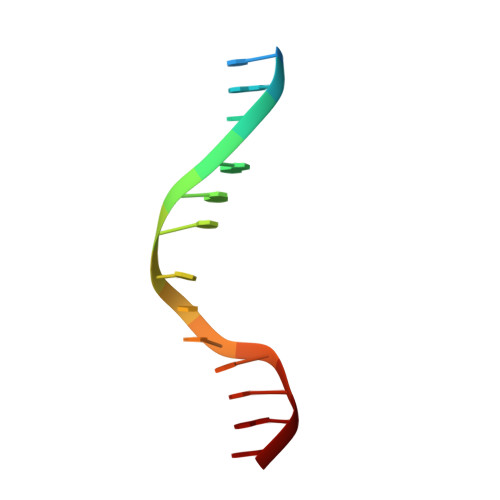
DNA Strand IID [auth E],
G,
I
14Clostridioides difficile
Sequence Annotations
Expand
Reference Sequence
Find similar nucleic acids by:  Sequence
Entity ID: 3
MoleculeChains LengthOrganismImage
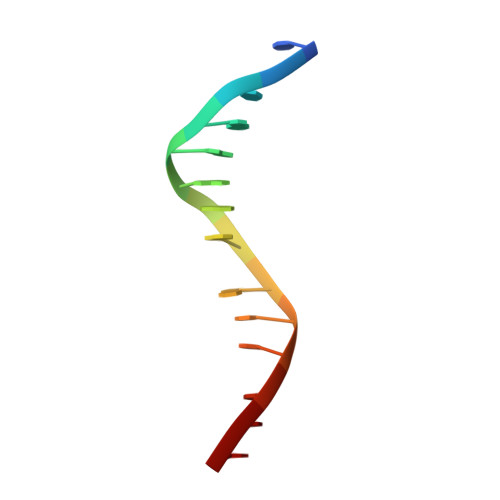
DNA Strand IE [auth D],
F,
H
14Clostridioides difficile
Sequence Annotations
Expand
Reference Sequence

Small Molecules

Ligands 2 Unique
IDChains Name / Formula / InChI Key2D Diagram3D Interactions
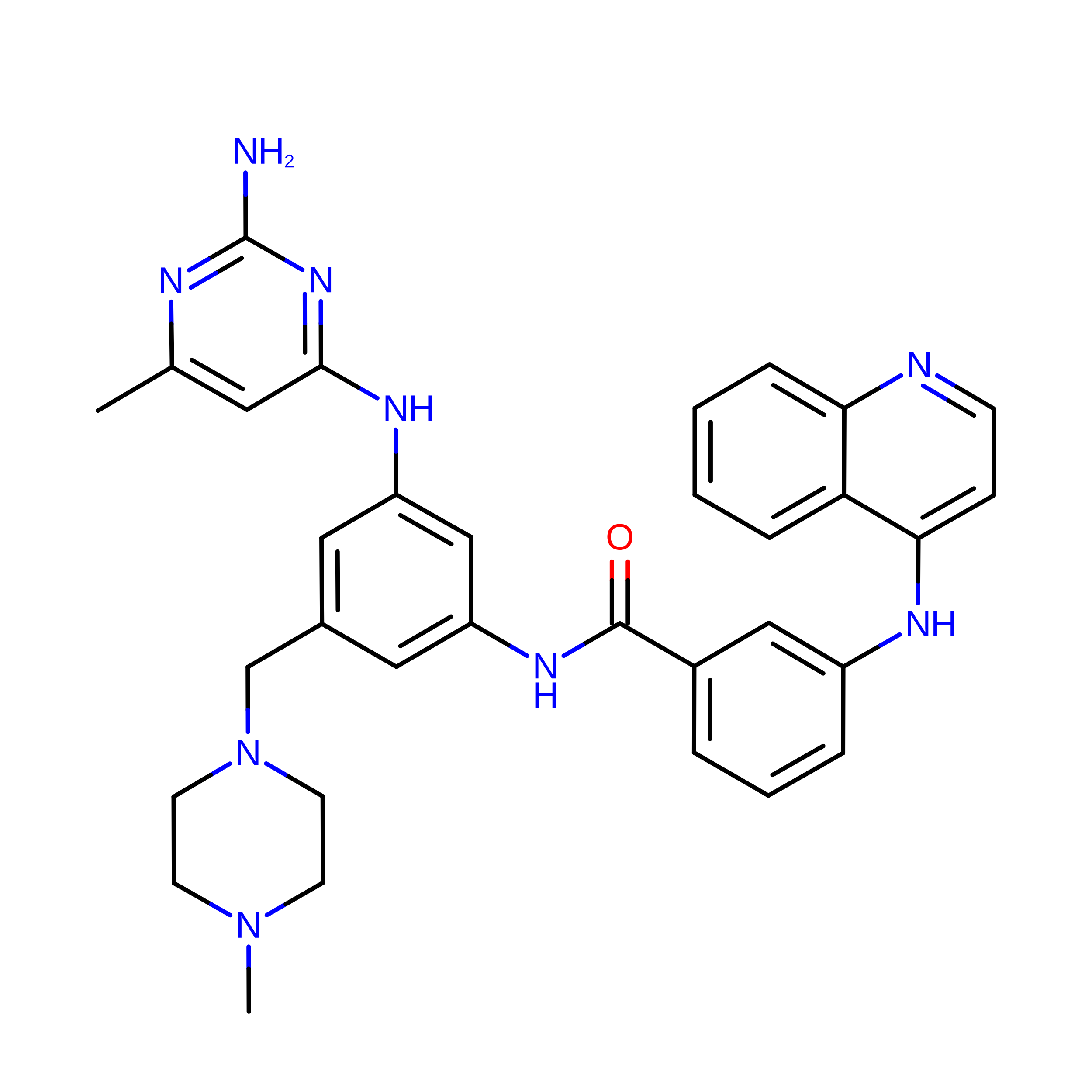
A1ADB
(Subject of Investigation/LOI)

Query on A1ADB


Download:Ideal Coordinates CCD File
J [auth E]N-{3-[(2-amino-6-methylpyrimidin-4-yl)amino]-5-[(4-methylpiperazin-1-yl)methyl]phenyl}-3-[(quinolin-4-yl)amino]benzamide
C33 H35 N9 O
HSJHGRCPBQHRPX-UHFFFAOYSA-N
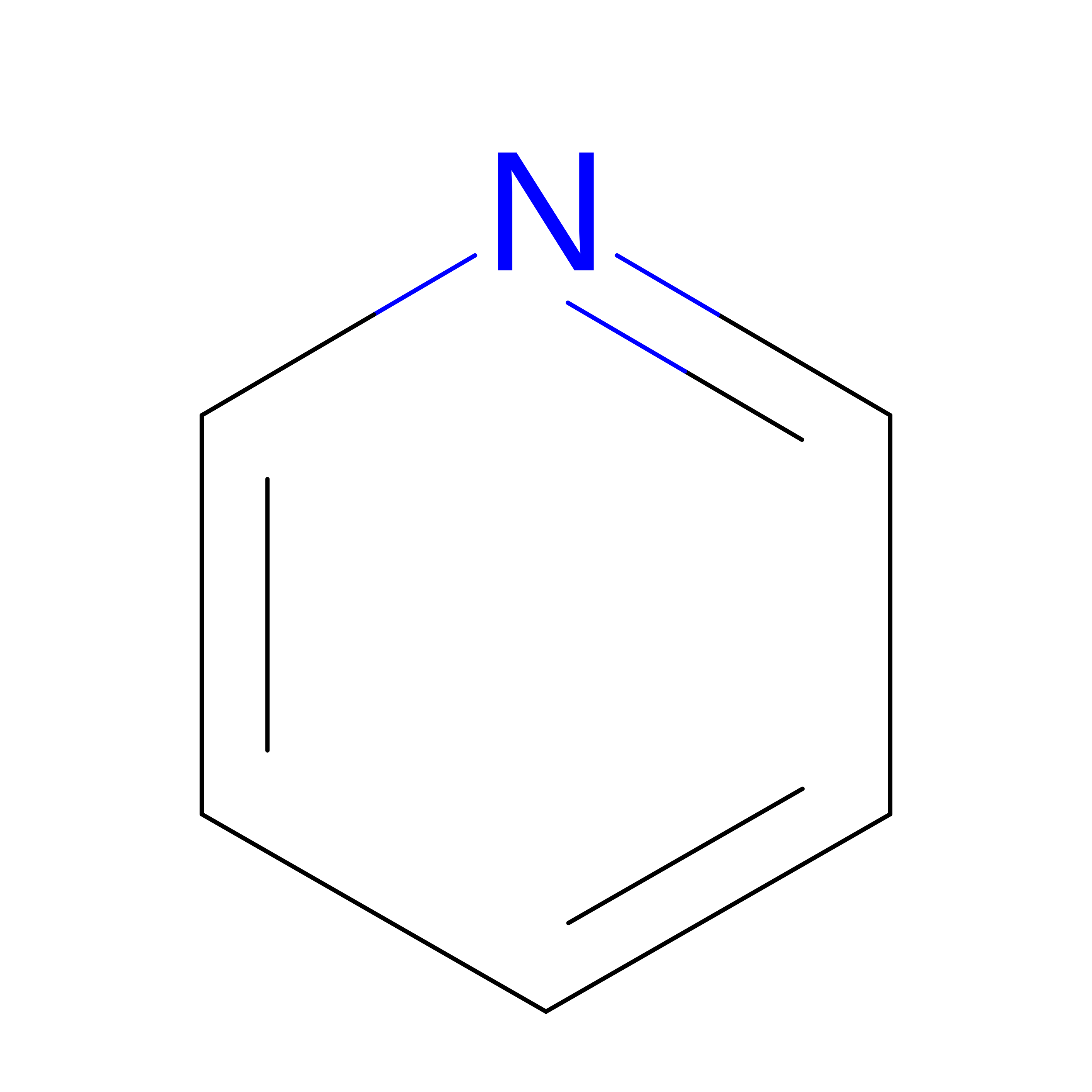
0PY

Query on 0PY


Download:Ideal Coordinates CCD File
K [auth D]pyridine
C5 H5 N
JUJWROOIHBZHMG-UHFFFAOYSA-N

Experimental Data & Validation

Experimental Data

  • Method: X-RAY DIFFRACTION
  • Resolution: 2.89 Å
  • R-Value Free:  0.245 (Depositor), 0.248 (DCC) 
  • R-Value Work:  0.203 (Depositor), 0.209 (DCC) 
  • R-Value Observed: 0.204 (Depositor) 
Space Group: P 21 21 21
Unit Cell:
Length ( Å )Angle ( ˚ )
a = 81.588α = 90
b = 161.26β = 90
c = 235.716γ = 90
Software Package:
Software NamePurpose
PHENIXrefinement
SERGUIdata collection
HKL-2000data reduction
HKL-2000data scaling
PHENIXphasing

Structure Validation

View Full Validation Report


Ligand Structure Quality Assessment 


Entry History 

& Funding Information

Deposition Data


Funding OrganizationLocationGrant Number
National Institutes of Health/National Institute of General Medical Sciences (NIH/NIGMS)United StatesGM049245-23

Revision History  (Full details and data files)

  • Version 1.0: 2024-09-25
    Type: Initial release
  • Version 1.1: 2024-10-02
    Changes: Database references