8R8Q | pdb_00008r8q

Lysosomal peptide transporter


Experimental Data Snapshot

  • Method: ELECTRON MICROSCOPY
  • Resolution: 4.08 Å
  • Aggregation State: PARTICLE 
  • Reconstruction Method: SINGLE PARTICLE 

Starting Model: in silico
View more details

wwPDB Validation 3D Report Full Report

Validation slider image for 8R8Q

This is version 1.4 of the entry. See complete history

Literature

MFSD1 with its accessory subunit GLMP functions as a general dipeptide uniporter in lysosomes.

Jungnickel, K.E.J.Guelle, O.Iguchi, M.Dong, W.Kotov, V.Gabriel, F.Debacker, C.Dairou, J.McCort-Tranchepain, I.Laqtom, N.N.Chan, S.H.Ejima, A.Sato, K.Massa Lopez, D.Saftig, P.Mehdipour, A.R.Abu-Remaileh, M.Gasnier, B.Low, C.Damme, M.

(2024) Nat Cell Biol 26: 1047-1061

  • DOI: https://doi.org/10.1038/s41556-024-01436-5
  • Primary Citation Related Structures: 
    8R8Q

  • PubMed Abstract: 

    The lysosomal degradation of macromolecules produces diverse small metabolites exported by specific transporters for reuse in biosynthetic pathways. Here we deorphanized the major facilitator superfamily domain containing 1 (MFSD1) protein, which forms a tight complex with the glycosylated lysosomal membrane protein (GLMP) in the lysosomal membrane. Untargeted metabolomics analysis of MFSD1-deficient mouse lysosomes revealed an increase in cationic dipeptides. Purified MFSD1 selectively bound diverse dipeptides, while electrophysiological, isotope tracer and fluorescence-based studies in Xenopus oocytes and proteoliposomes showed that MFSD1-GLMP acts as a uniporter for cationic, neutral and anionic dipeptides. Cryoelectron microscopy structure of the dipeptide-bound MFSD1-GLMP complex in outward-open conformation characterized the heterodimer interface and, in combination with molecular dynamics simulations, provided a structural basis for its selectivity towards diverse dipeptides. Together, our data identify MFSD1 as a general lysosomal dipeptide uniporter, providing an alternative route to recycle lysosomal proteolysis products when lysosomal amino acid exporters are overloaded.


  • Organizational Affiliation
    • Centre for Structural Systems Biology, Hamburg, Germany.

Macromolecule Content 

  • Total Structure Weight: 99.97 kDa 
  • Atom Count: 5,702 
  • Modeled Residue Count: 732 
  • Deposited Residue Count: 909 
  • Unique protein chains: 2

Macromolecules

Find similar proteins by:|  3D Structure
Entity ID: 1
MoleculeChains  Sequence LengthOrganismDetailsImage
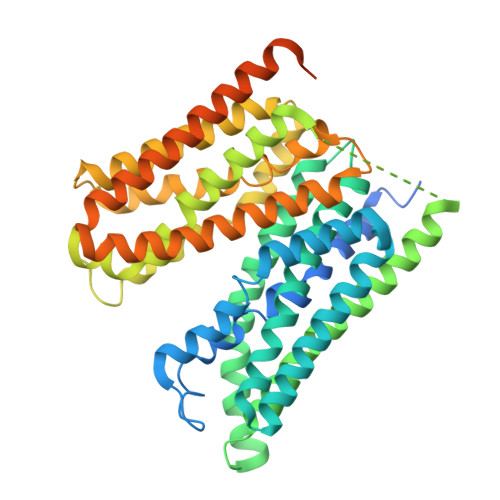
Major facilitator superfamily domain-containing protein 1506Mus musculusMutation(s): 0 
Gene Names: Mfsd1
Membrane Entity: Yes 
UniProt & NIH Common Fund Data Resources
Find proteins for Q9DC37 (Mus musculus)
Explore Q9DC37 
Go to UniProtKB:  Q9DC37
IMPC:  MGI:1914118
Entity Groups
Sequence Clusters30% Identity50% Identity70% Identity90% Identity95% Identity100% Identity
UniProt GroupQ9DC37
Sequence Annotations
Expand
Reference Sequence
Find similar proteins by:|  3D Structure
Entity ID: 2
MoleculeChains  Sequence LengthOrganismDetailsImage
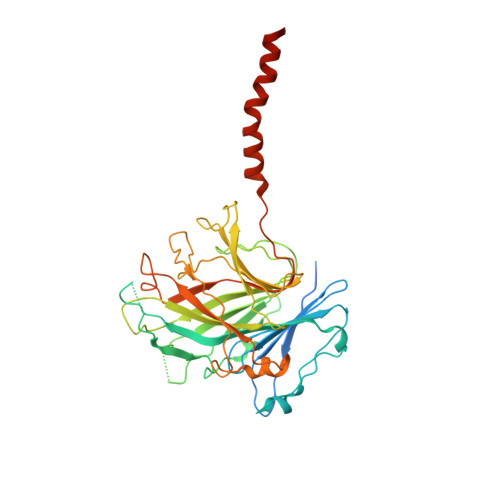
Glycosylated lysosomal membrane protein403Mus musculusMutation(s): 0 
Gene Names: Glmp
Membrane Entity: Yes 
UniProt
Find proteins for Q9JHJ3 (Mus musculus)
Explore Q9JHJ3 
Go to UniProtKB:  Q9JHJ3
Entity Groups
Sequence Clusters30% Identity50% Identity70% Identity90% Identity95% Identity100% Identity
UniProt GroupQ9JHJ3
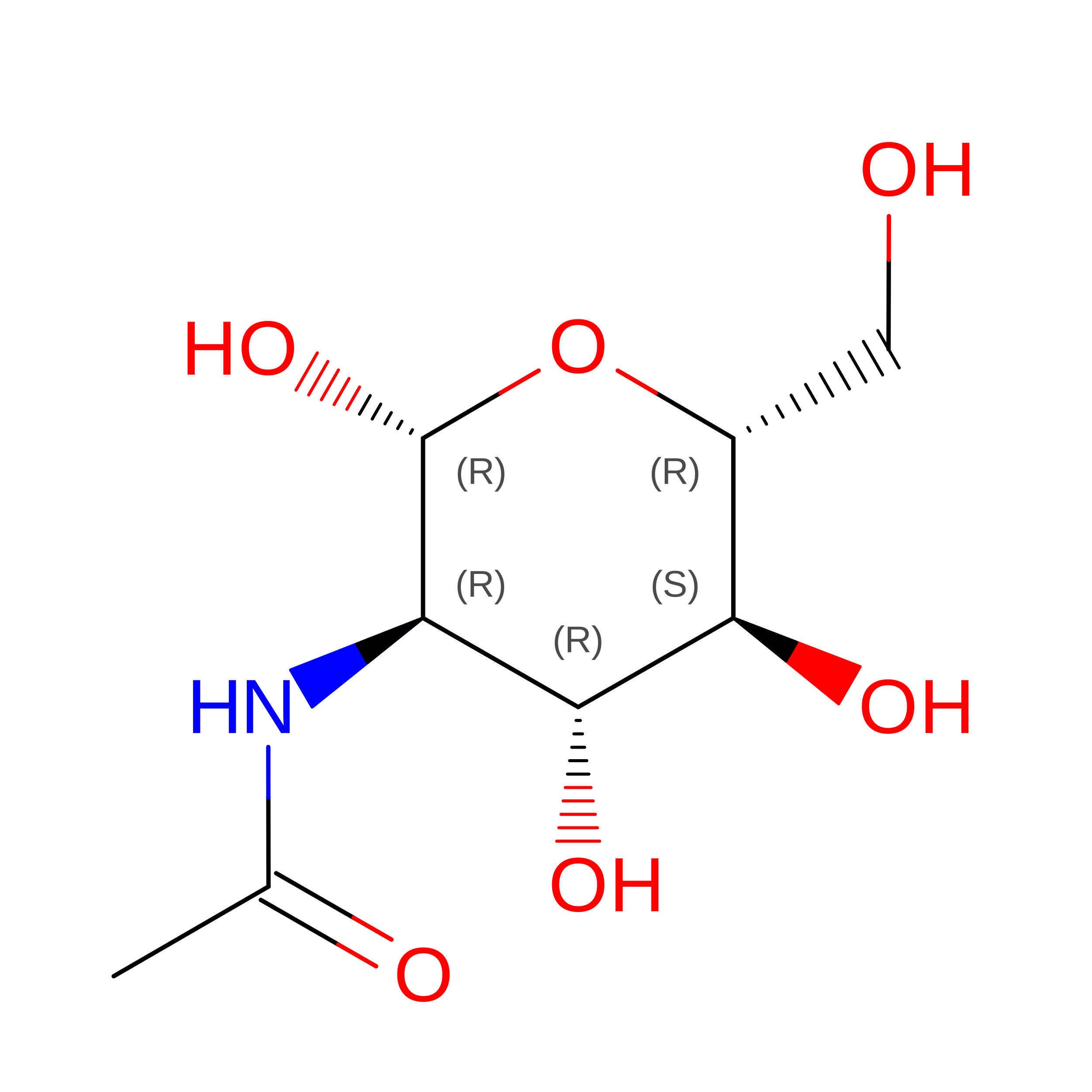
Glycosylation
Glycosylation Sites: 5Go to GlyGen: Q9JHJ3-1
Sequence Annotations
Expand
Reference Sequence

Experimental Data & Validation

Experimental Data

  • Method: ELECTRON MICROSCOPY
  • Resolution: 4.08 Å
  • Aggregation State: PARTICLE 
  • Reconstruction Method: SINGLE PARTICLE 
EM Software:
TaskSoftware PackageVersion
MODEL REFINEMENTPHENIX1.20.1-4487

Structure Validation

View Full Validation Report


Entry History 

& Funding Information

Deposition Data


Funding OrganizationLocationGrant Number
Other governmentGermany05K18YEA

Revision History  (Full details and data files)

  • Version 1.0: 2024-05-01
    Type: Initial release
  • Version 1.1: 2024-06-12
    Changes: Database references
  • Version 1.2: 2024-06-19
    Changes: Database references
  • Version 1.3: 2024-07-24
    Changes: Data collection, Database references
  • Version 1.4: 2024-11-06
    Changes: Data collection, Structure summary