8DQV | pdb_00008dqv

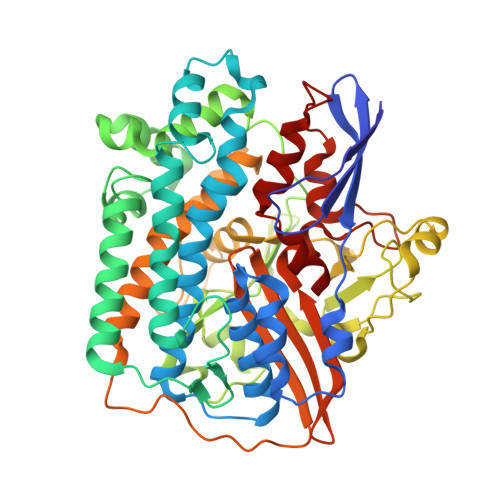
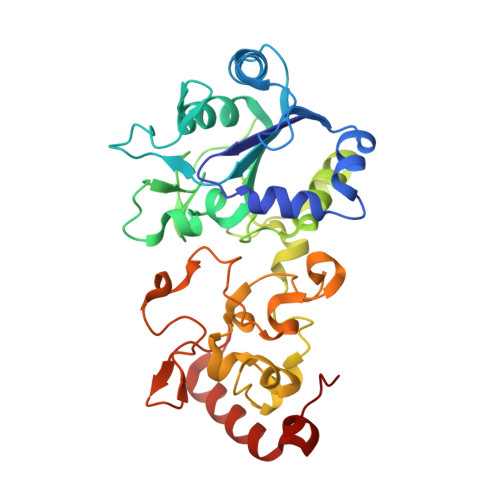
The 1.52 angstrom CryoEM structure of the [NiFe]-hydrogenase Huc from Mycobacterium smegmatis - catalytic dimer (Huc2S2L)


Experimental Data Snapshot

  • Method: ELECTRON MICROSCOPY
  • Resolution: 1.52 Å
  • Aggregation State: PARTICLE 
  • Reconstruction Method: SINGLE PARTICLE 

wwPDB Validation 3D Report Full Report

Validation slider image for 8DQV

This is version 1.5 of the entry. See complete history

Literature

Structural basis for bacterial energy extraction from atmospheric hydrogen.

Grinter, R.Kropp, A.Venugopal, H.Senger, M.Badley, J.Cabotaje, P.R.Jia, R.Duan, Z.Huang, P.Stripp, S.T.Barlow, C.K.Belousoff, M.Shafaat, H.S.Cook, G.M.Schittenhelm, R.B.Vincent, K.A.Khalid, S.Berggren, G.Greening, C.

(2023) Nature 615: 541-547

  • DOI: https://doi.org/10.1038/s41586-023-05781-7
  • Primary Citation Related Structures: 
    7UTD, 7UUR, 7UUS, 8DQV

  • PubMed Abstract: 

    Diverse aerobic bacteria use atmospheric H 2 as an energy source for growth and survival 1 . This globally significant process regulates the composition of the atmosphere, enhances soil biodiversity and drives primary production in extreme environments 2,3 . Atmospheric H 2 oxidation is attributed to uncharacterized members of the [NiFe] hydrogenase superfamily 4,5 . However, it remains unresolved how these enzymes overcome the extraordinary catalytic challenge of oxidizing picomolar levels of H 2 amid ambient levels of the catalytic poison O 2 and how the derived electrons are transferred to the respiratory chain 1 . Here we determined the cryo-electron microscopy structure of the Mycobacterium smegmatis hydrogenase Huc and investigated its mechanism. Huc is a highly efficient oxygen-insensitive enzyme that couples oxidation of atmospheric H 2 to the hydrogenation of the respiratory electron carrier menaquinone. Huc uses narrow hydrophobic gas channels to selectively bind atmospheric H 2 at the expense of O 2 , and 3 [3Fe-4S] clusters modulate the properties of the enzyme so that atmospheric H 2 oxidation is energetically feasible. The Huc catalytic subunits form an octameric 833 kDa complex around a membrane-associated stalk, which transports and reduces menaquinone 94 Å from the membrane. These findings provide a mechanistic basis for the biogeochemically and ecologically important process of atmospheric H 2 oxidation, uncover a mode of energy coupling dependent on long-range quinone transport, and pave the way for the development of catalysts that oxidize H 2 in ambient air.


  • Organizational Affiliation
    • Department of Microbiology, Biomedicine Discovery Institute, Monash University, Clayton, Victoria, Australia. rhys.grinter@monash.edu.

Macromolecule Content 

  • Total Structure Weight: 187.17 kDa 
  • Atom Count: 13,676 
  • Modeled Residue Count: 1,670 
  • Deposited Residue Count: 1,670 
  • Unique protein chains: 2

Macromolecules

Find similar proteins by:|  3D Structure
Entity ID: 1
MoleculeChains  Sequence LengthOrganismDetailsImage
Hydrogenase-2, large subunit
A, C
513Mycolicibacterium smegmatis MC2 155Mutation(s): 0 
EC: 1.12.99.6
UniProt
Find proteins for A0QUM7 (Mycolicibacterium smegmatis (strain ATCC 700084 / mc(2)155))
Explore A0QUM7 
Go to UniProtKB:  A0QUM7
Entity Groups
Sequence Clusters30% Identity50% Identity70% Identity90% Identity95% Identity100% Identity
UniProt GroupA0QUM7
Sequence Annotations
Expand
Reference Sequence
Find similar proteins by:|  3D Structure
Entity ID: 2
MoleculeChains  Sequence LengthOrganismDetailsImage
Hydrogenase-2, small subunit
B, D
322Mycolicibacterium smegmatis MC2 155Mutation(s): 0 
EC: 1.12.99.6
UniProt
Find proteins for A0QUM6 (Mycolicibacterium smegmatis (strain ATCC 700084 / mc(2)155))
Explore A0QUM6 
Go to UniProtKB:  A0QUM6
Entity Groups
Sequence Clusters30% Identity50% Identity70% Identity90% Identity95% Identity100% Identity
UniProt GroupA0QUM6
Sequence Annotations
Expand
Reference Sequence

Small Molecules

Ligands 6 Unique
IDChains Name / Formula / InChI Key2D Diagram3D Interactions
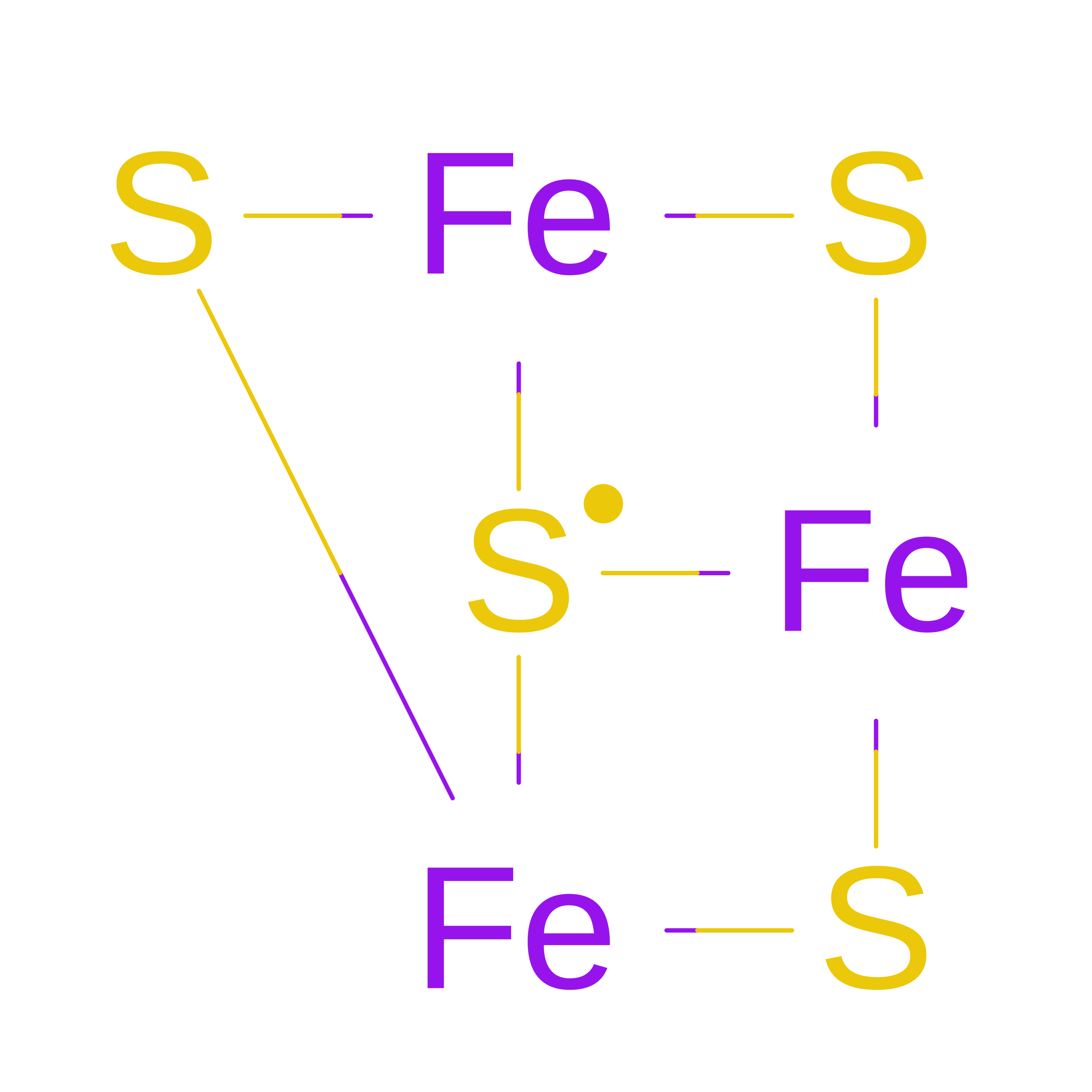
F3S
(Subject of Investigation/LOI)

Query on F3S


Download:Ideal Coordinates CCD File
J [auth B]
K [auth B]
L [auth B]
R [auth D]
S [auth D]
J [auth B],
K [auth B],
L [auth B],
R [auth D],
S [auth D],
T [auth D]
FE3-S4 CLUSTER
Fe3 S4
FCXHZBQOKRZXKS-UHFFFAOYSA-N
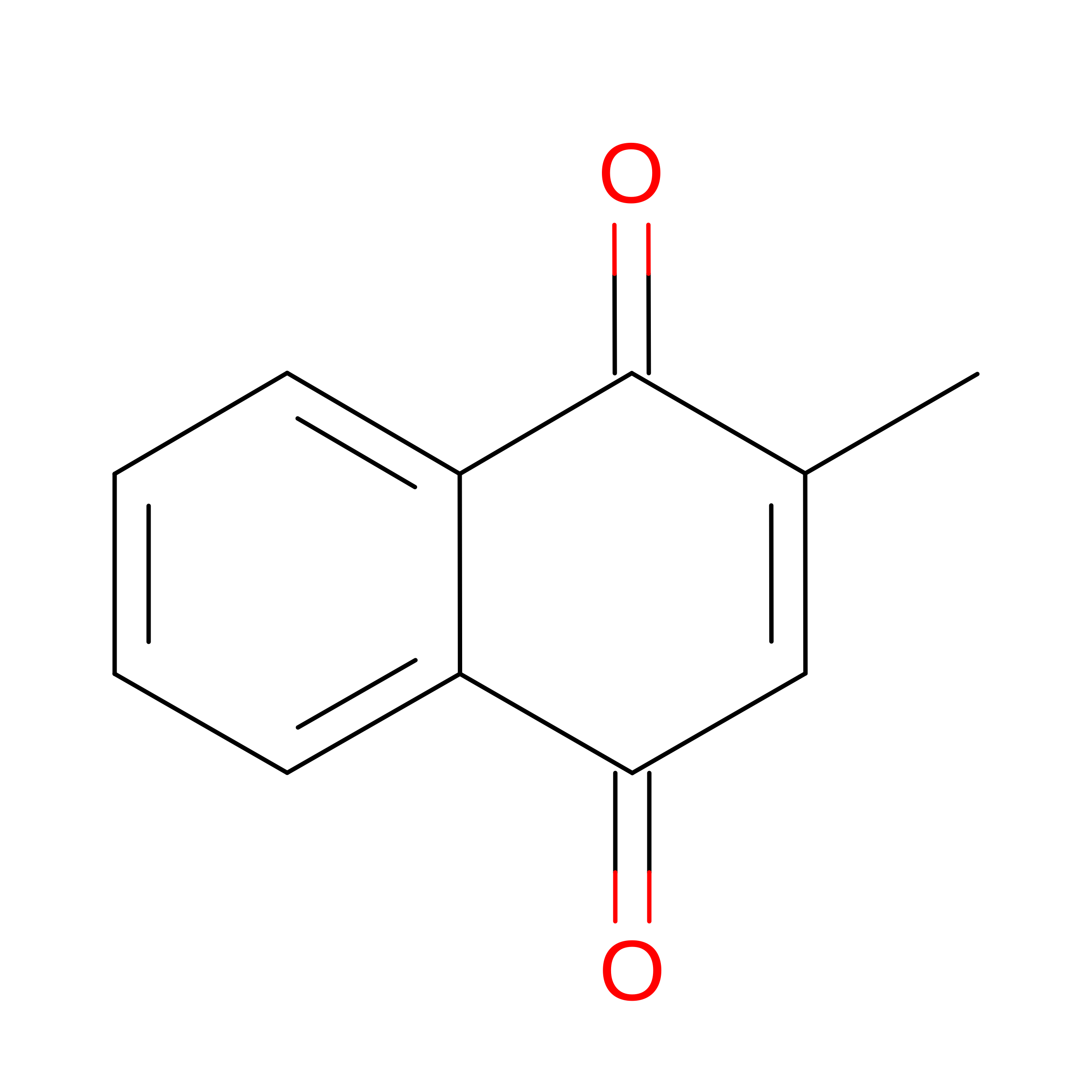
VK3
(Subject of Investigation/LOI)

Query on VK3


Download:Ideal Coordinates CCD File
I [auth B],
Q [auth D]
MENADIONE
C11 H8 O2
MJVAVZPDRWSRRC-UHFFFAOYSA-N
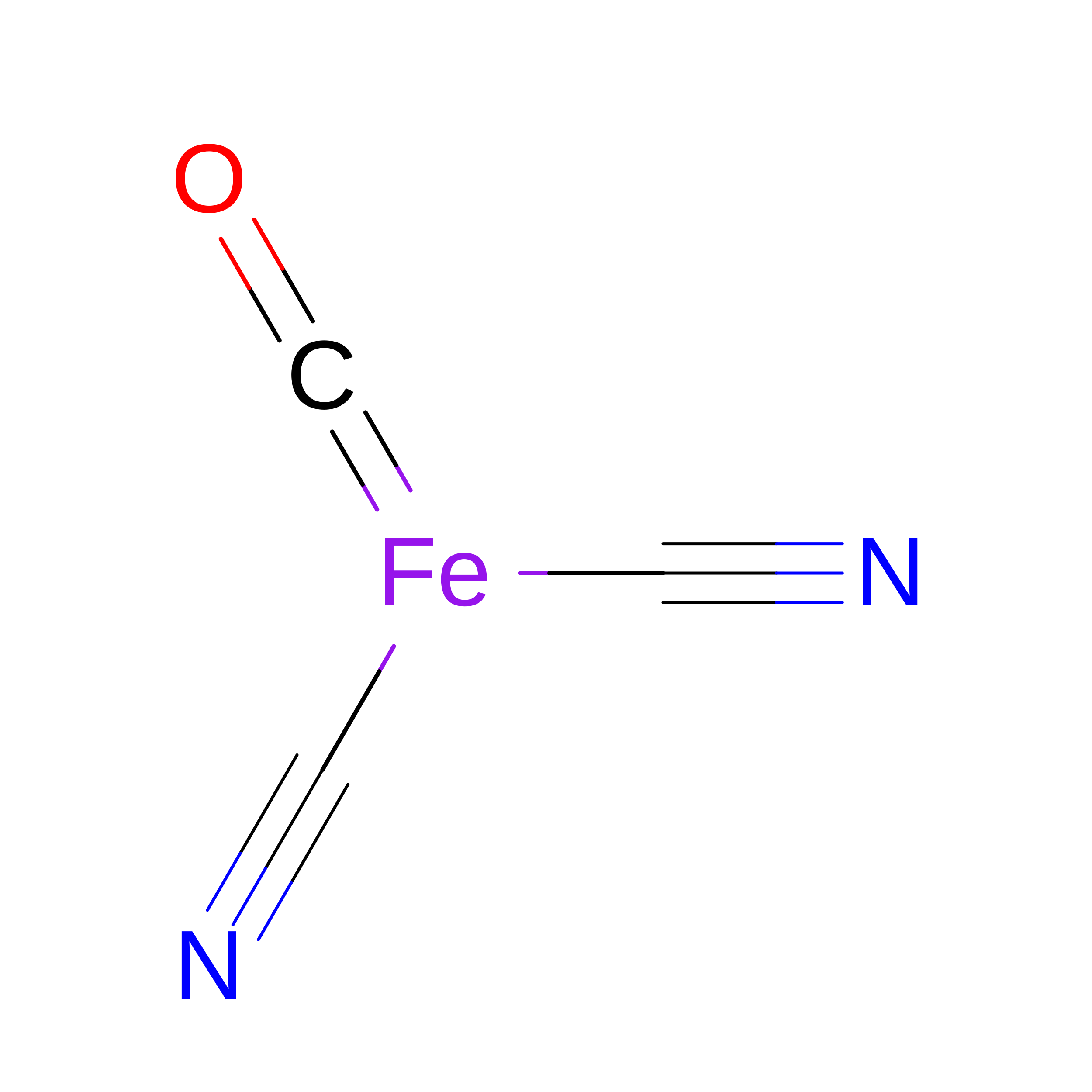
FCO
(Subject of Investigation/LOI)

Query on FCO


Download:Ideal Coordinates CCD File
G [auth A],
O [auth C]
CARBONMONOXIDE-(DICYANO) IRON
C3 Fe N2 O
VBQUCMTXYFMTTE-UHFFFAOYSA-N
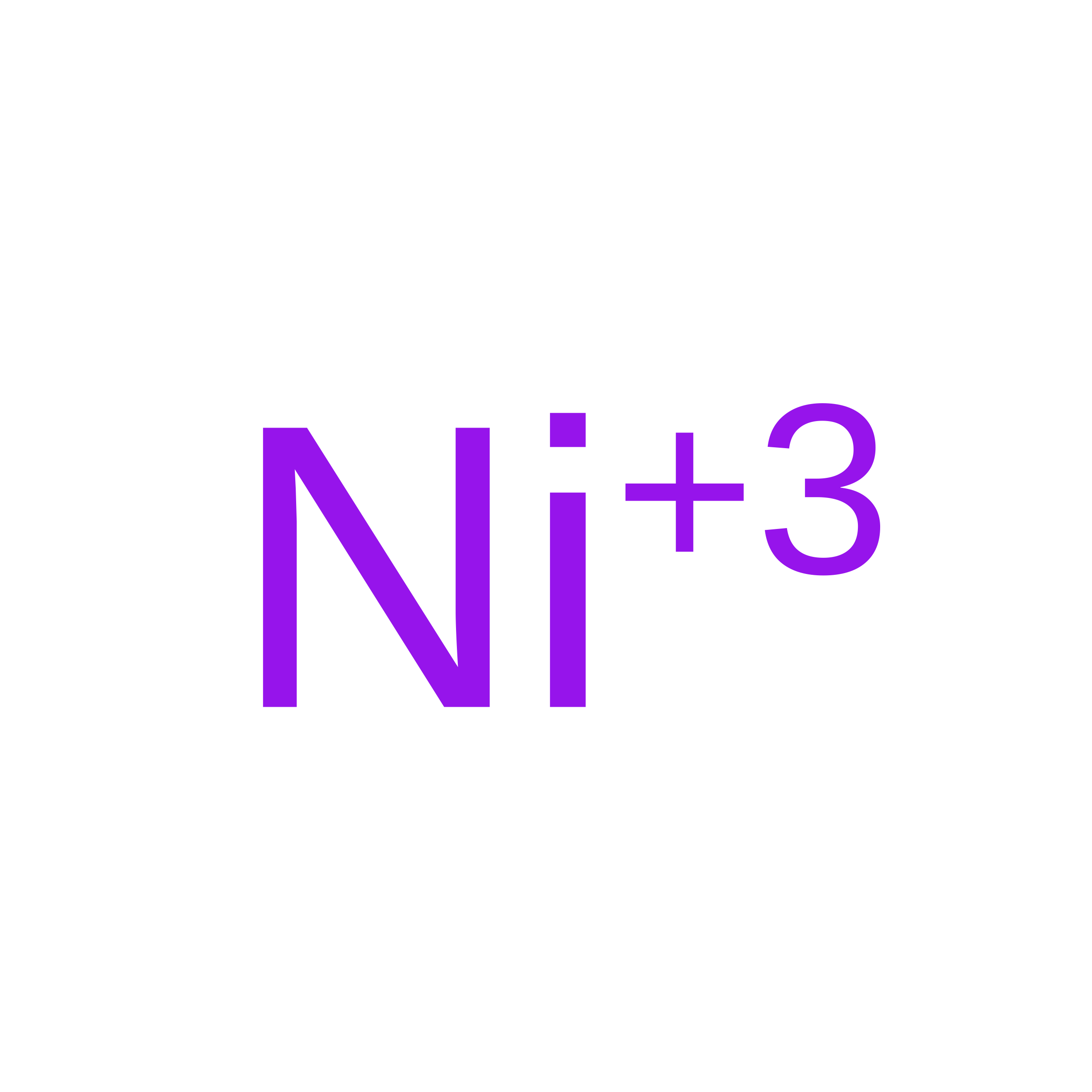
3NI
(Subject of Investigation/LOI)

Query on 3NI


Download:Ideal Coordinates CCD File
H [auth A],
P [auth C]
NICKEL (III) ION
Ni
JDRCAGKFDGHRNQ-UHFFFAOYSA-N
MG
(Subject of Investigation/LOI)

Query on MG


Download:Ideal Coordinates CCD File
F [auth A],
N [auth C]
MAGNESIUM ION
Mg
JLVVSXFLKOJNIY-UHFFFAOYSA-N
O
(Subject of Investigation/LOI)

Query on O


Download:Ideal Coordinates CCD File
E [auth A],
M [auth C]
OXYGEN ATOM
O
XLYOFNOQVPJJNP-UHFFFAOYSA-N

Experimental Data & Validation

Experimental Data

  • Method: ELECTRON MICROSCOPY
  • Resolution: 1.52 Å
  • Aggregation State: PARTICLE 
  • Reconstruction Method: SINGLE PARTICLE 
EM Software:
TaskSoftware PackageVersion
MODEL REFINEMENTPHENIX1.20
MODEL REFINEMENTCoot0.92
RECONSTRUCTIONcryoSPARC3.3.2

Structure Validation

View Full Validation Report


Entry History 

& Funding Information

Deposition Data


Funding OrganizationLocationGrant Number
Australian Research Council (ARC)AustraliaDP200103074
National Health and Medical Research Council (NHMRC, Australia)AustraliaAPP1197376

Revision History  (Full details and data files)

  • Version 1.0: 2023-01-04
    Type: Initial release
  • Version 1.1: 2023-01-25
    Changes: Database references
  • Version 1.2: 2023-03-08
    Changes: Database references
  • Version 1.3: 2023-03-22
    Changes: Database references
  • Version 1.4: 2023-03-29
    Changes: Database references
  • Version 1.5: 2024-11-13
    Changes: Data collection, Structure summary