Download Mendeley
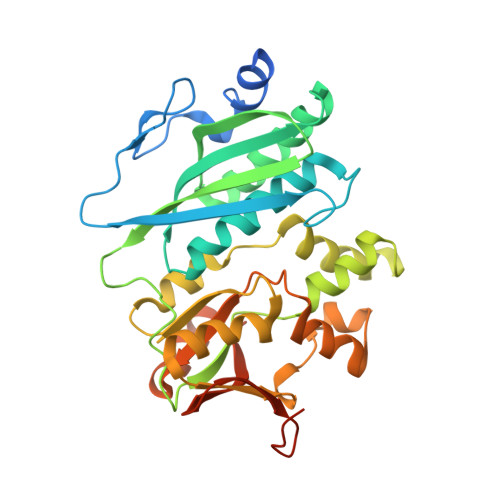
A thiadiazolylidene-morpholine compound inhibits Pseudomonas aeruginosa by destabilizing the thiamine monophosphate kinase thiL.
Li, Y., Lin, J., Chung, Z., Yee Yeo, B.K., Lescar, J., Pethe, K.(2026) J Biol Chem 302: 113112-113112
- PubMed: 42103215 Search on PubMedSearch on PubMed Central
- DOI: https://doi.org/10.1016/j.jbc.2026.113112
- Primary Citation Related Structures:
8YKS, 8YKU - PubMed Abstract:
Pseudomonas aeruginosa, an opportunistic gram-negative pathogen, poses a growing threat in healthcare-associated infections. Its intrinsic resistance and acquisition of carbapenemases have driven widespread multidrug resistance and severely limited treatment options. P. aeruginosa causes life-threatening infections including ventilator-associated pneumonia, bloodstream infections, complicated urinary tract infections, and chronic lung disease in cystic fibrosis. We identified and validated thiL, encoding thiamine monophosphate kinase, as a critical metabolic vulnerability and promising antibacterial target. ThiL deletion abolished virulence in murine lung and wound models and rendered bacteria incapable of survival without a supraphysiological level of thiamine pyrophosphate. A screen of 1231 kinase inhibitors identified VP3.15 as the first specific ThiL inhibitor with antibacterial potency. Mechanistic studies showed VP3.15 destabilizes ThiL, promoting protein unfolding and functional loss. These results establish ThiL as a druggable target and highlight metabolic dependencies as a therapeutic opportunity against multidrug-resistant P. aeruginosa.
- Lee Kong Chian School of Medicine, Nanyang Technological University, Singapore.
Organizational Affiliation: