8XHX | pdb_00008xhx

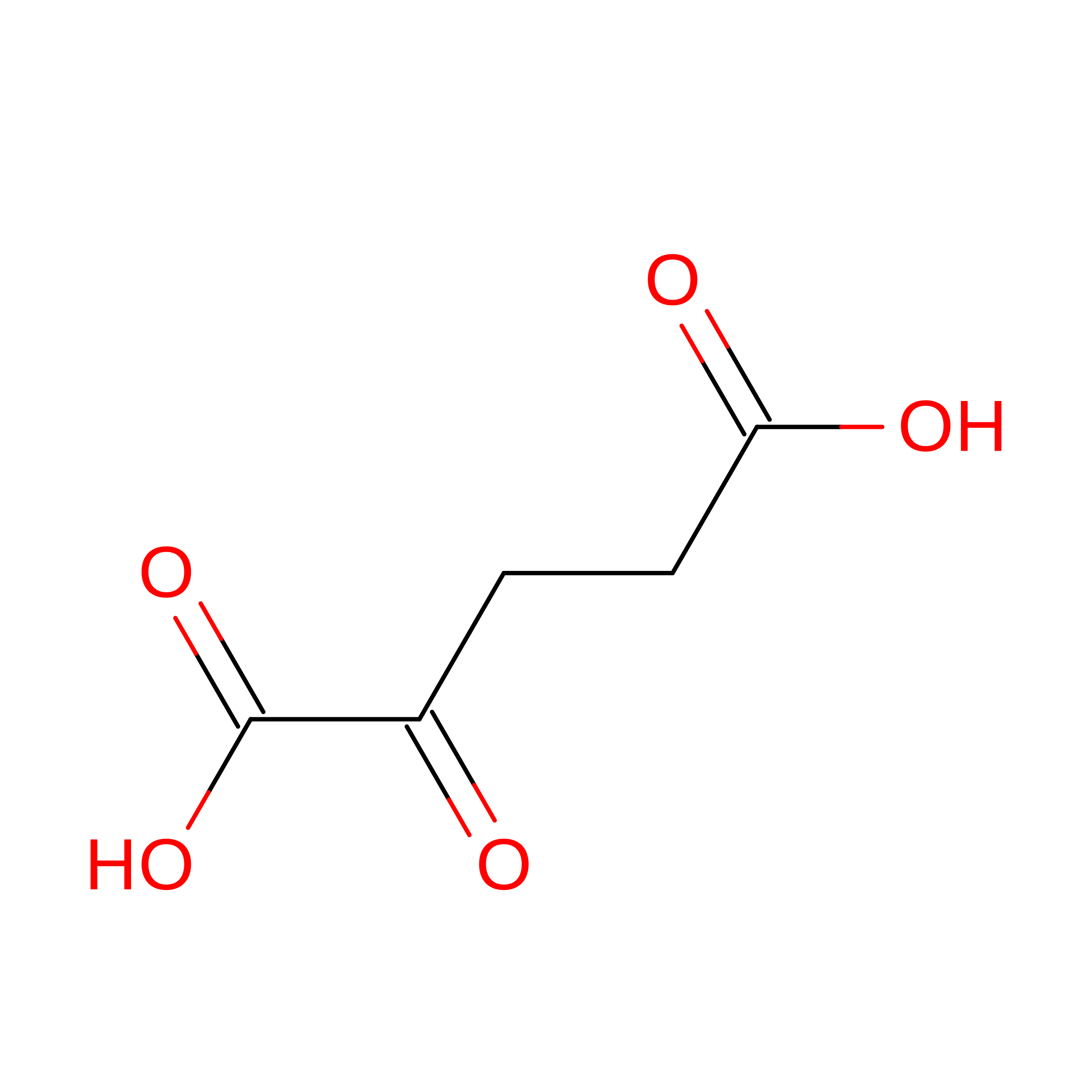
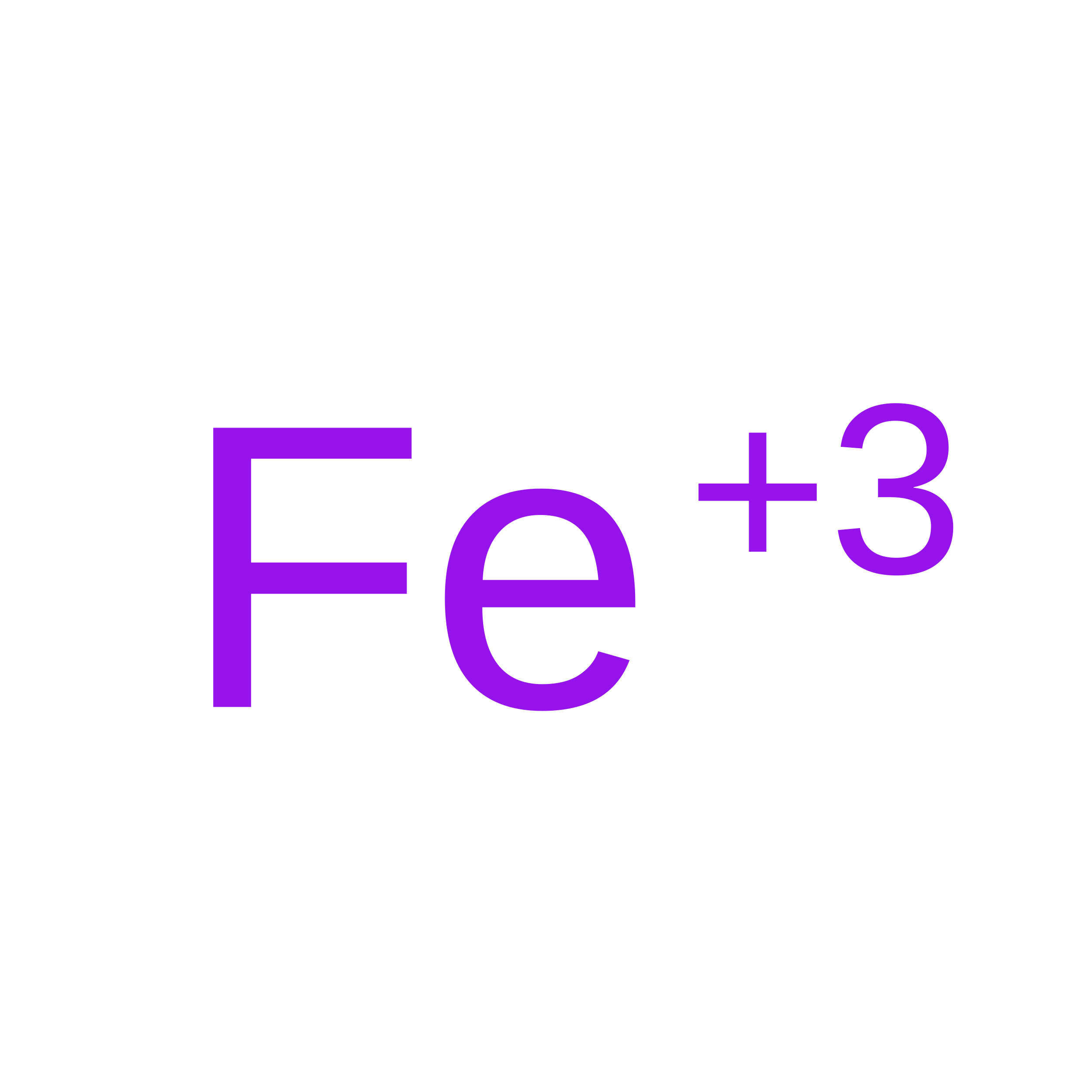
The complex structure of PaBcmG and its natural substrate


Experimental Data Snapshot

  • Method: X-RAY DIFFRACTION
  • Resolution: 1.61 Å
  • R-Value Free: 
    0.181 (Depositor), 0.182 (DCC) 
  • R-Value Work: 
    0.155 (Depositor), 0.157 (DCC) 
  • R-Value Observed: 
    0.157 (Depositor) 

Starting Model: experimental
View more details

wwPDB Validation 3D Report Full Report

Validation slider image for 8XHX

Ligand Structure Quality Assessment 


This is version 1.0 of the entry. See complete history

Literature

Three distinct strategies lead to programmable aliphatic C-H oxidation in bicyclomycin biosynthesis.

Wu, L.He, J.B.Wei, W.Pan, H.X.Wang, X.Yang, S.Liang, Y.Tang, G.L.Zhou, J.

(2025) Nat Commun 16: 4651-4651

  • DOI: https://doi.org/10.1038/s41467-025-58997-8
  • Primary Citation Related Structures: 
    8XHP, 8XHQ, 8XHT, 8XHX, 8XHY

  • PubMed Abstract: 

    The C-H bond functionalization has been widely used in chemical synthesis over the past decade. However, regio- and stereoselectivity still remain a significant challenge, especially for inert aliphatic C-H bonds. Here we report the mechanism of three Fe(II)/α-ketoglutarate-dependent dioxygenases in bicyclomycin synthesis, which depicts the natural tactic to sequentially hydroxylate specific C-H bonds of similar substrates (cyclodipeptides). Molecular basis by crystallographic studies, computational simulations, and site-directed mutagenesis reveals the exquisite arrangement of three enzymes using mutually orthogonal strategies to realize three different regio-selectivities. Moreover, this programmable selective hydroxylation can be extended to other cyclodipeptides. This evidence not only provides a naturally occurring showcase corresponding to the widely used methods in chemical catalysis but also expands the toolbox of biocatalysts to address the regioselective functionalization of C-H bonds.


  • Organizational Affiliation
    • Key Laboratory of Synthetic Biology, Chinese Academy of Sciences (CAS) Center for Excellence in Molecular Plant Sciences, University of CAS, Shanghai, 200032, China.

Macromolecule Content 

  • Total Structure Weight: 35.55 kDa 
  • Atom Count: 2,789 
  • Modeled Residue Count: 294 
  • Deposited Residue Count: 306 
  • Unique protein chains: 1

Macromolecules

Find similar proteins by:|  3D Structure
Entity ID: 1
MoleculeChains  Sequence LengthOrganismDetailsImage
Fe/2OG dependent dioxygenase306Pseudomonas aeruginosaMutation(s): 0 
UniProt
Find proteins for A0A241XEQ7 (Pseudomonas aeruginosa)
Explore A0A241XEQ7 
Go to UniProtKB:  A0A241XEQ7
Entity Groups
Sequence Clusters30% Identity50% Identity70% Identity90% Identity95% Identity100% Identity
UniProt GroupA0A241XEQ7
Sequence Annotations
Expand
Reference Sequence

Experimental Data & Validation

Experimental Data

  • Method: X-RAY DIFFRACTION
  • Resolution: 1.61 Å
  • R-Value Free:  0.181 (Depositor), 0.182 (DCC) 
  • R-Value Work:  0.155 (Depositor), 0.157 (DCC) 
  • R-Value Observed: 0.157 (Depositor) 
Space Group: P 21 21 21
Unit Cell:
Length ( Å )Angle ( ˚ )
a = 43.835α = 90
b = 77.512β = 90
c = 86.837γ = 90
Software Package:
Software NamePurpose
PHENIXrefinement
XDSdata reduction
XDSdata scaling
PHASERphasing

Structure Validation

View Full Validation Report


Ligand Structure Quality Assessment 


Entry History 

& Funding Information

Deposition Data


Funding OrganizationLocationGrant Number
Not funded--

Revision History  (Full details and data files)

  • Version 1.0: 2025-05-28
    Type: Initial release