Download Mendeley
Structural insights into the catalytic mechanism of the microcystin tailoring enzyme McyI.
Wang, X., Yin, Y., Cheng, W.L., Duan, Y.F., Li, Y.S., Wang, J., Wang, M., Dai, H.E., Liu, L.(2025) Commun Biol 8: 578-578
- PubMed: 40195441 Search on PubMedSearch on PubMed Central
- DOI: https://doi.org/10.1038/s42003-025-08008-9
- Primary Citation Related Structures:
8WPH, 8WPI, 8WPJ, 8WPO, 8WPQ, 8WPR, 8WPS - PubMed Abstract:
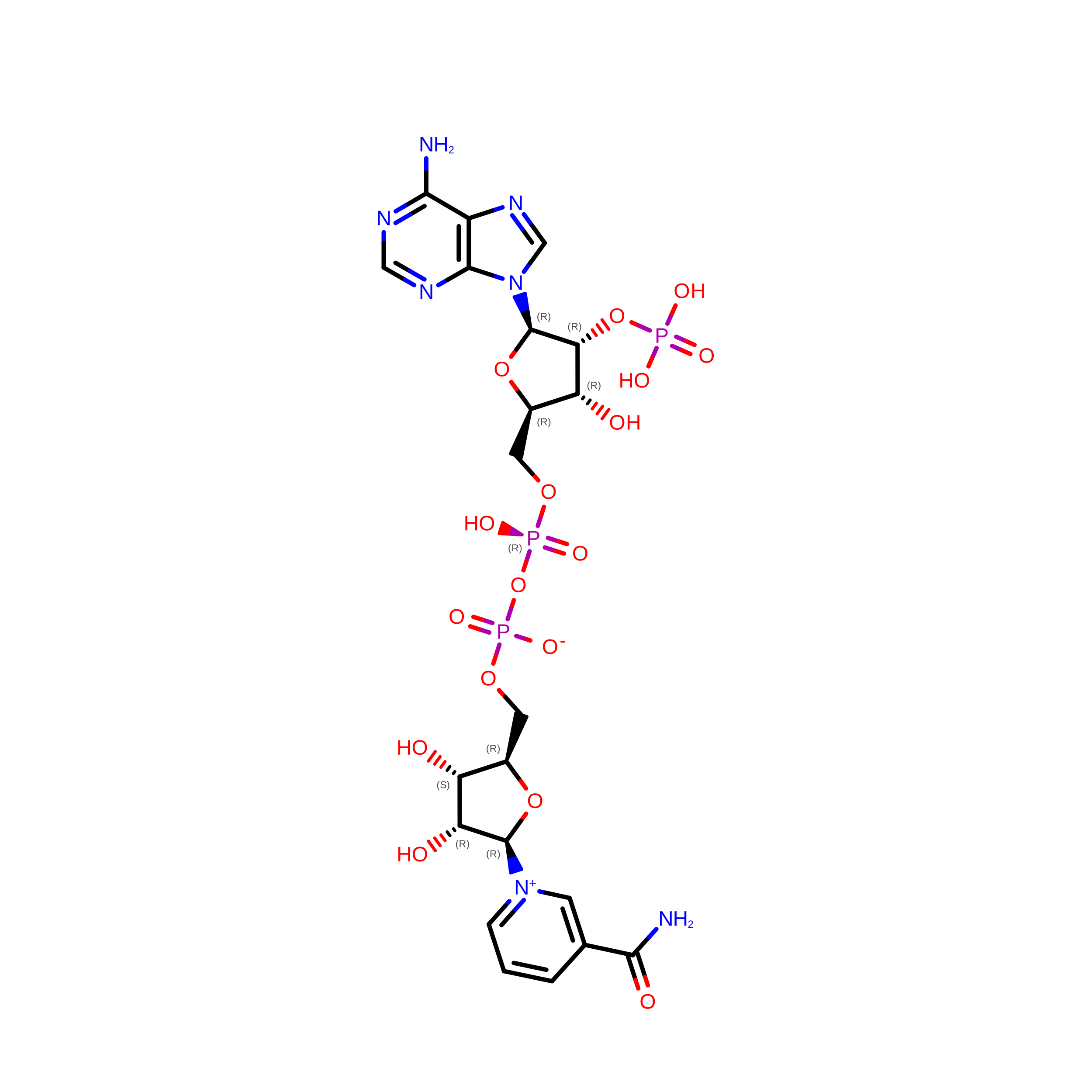
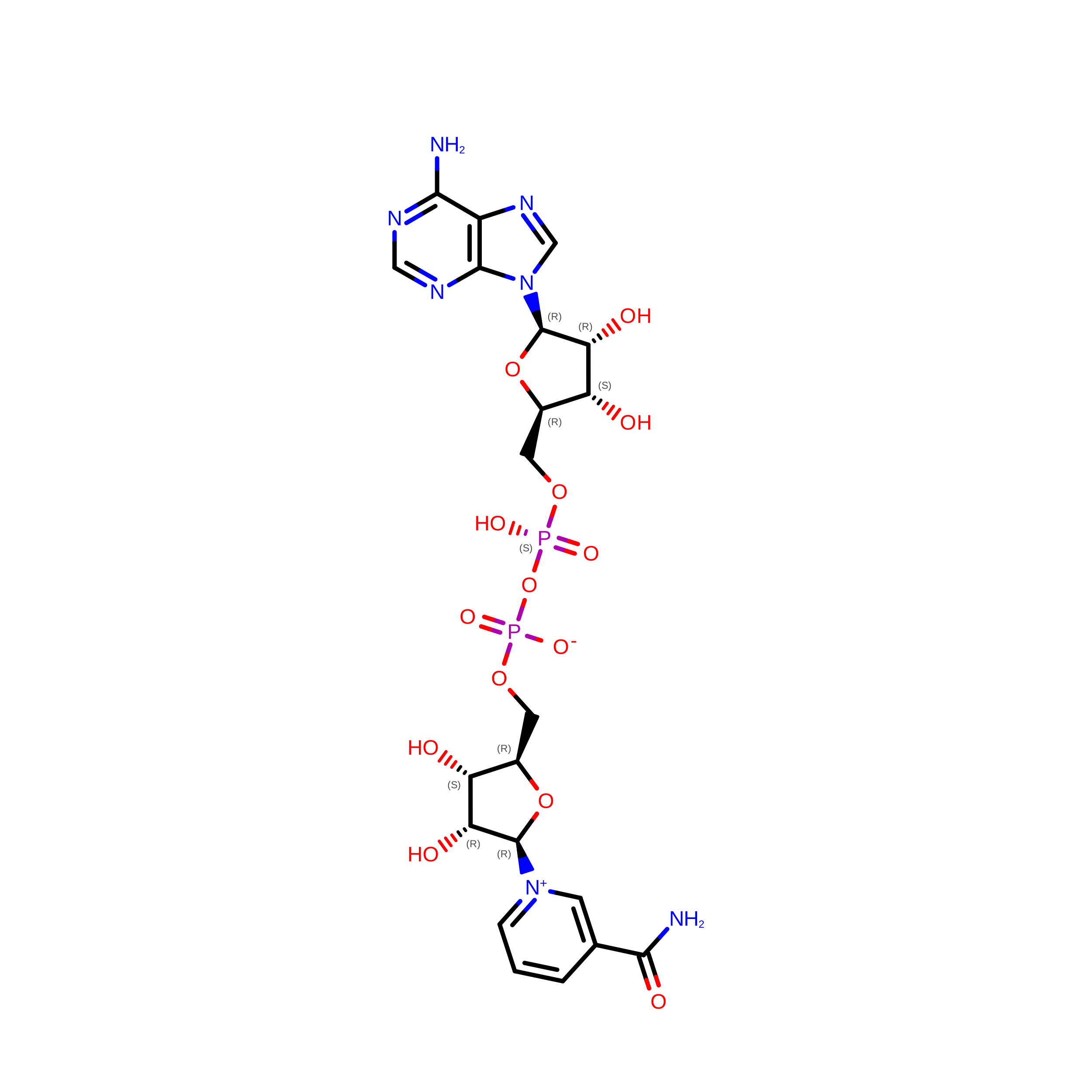
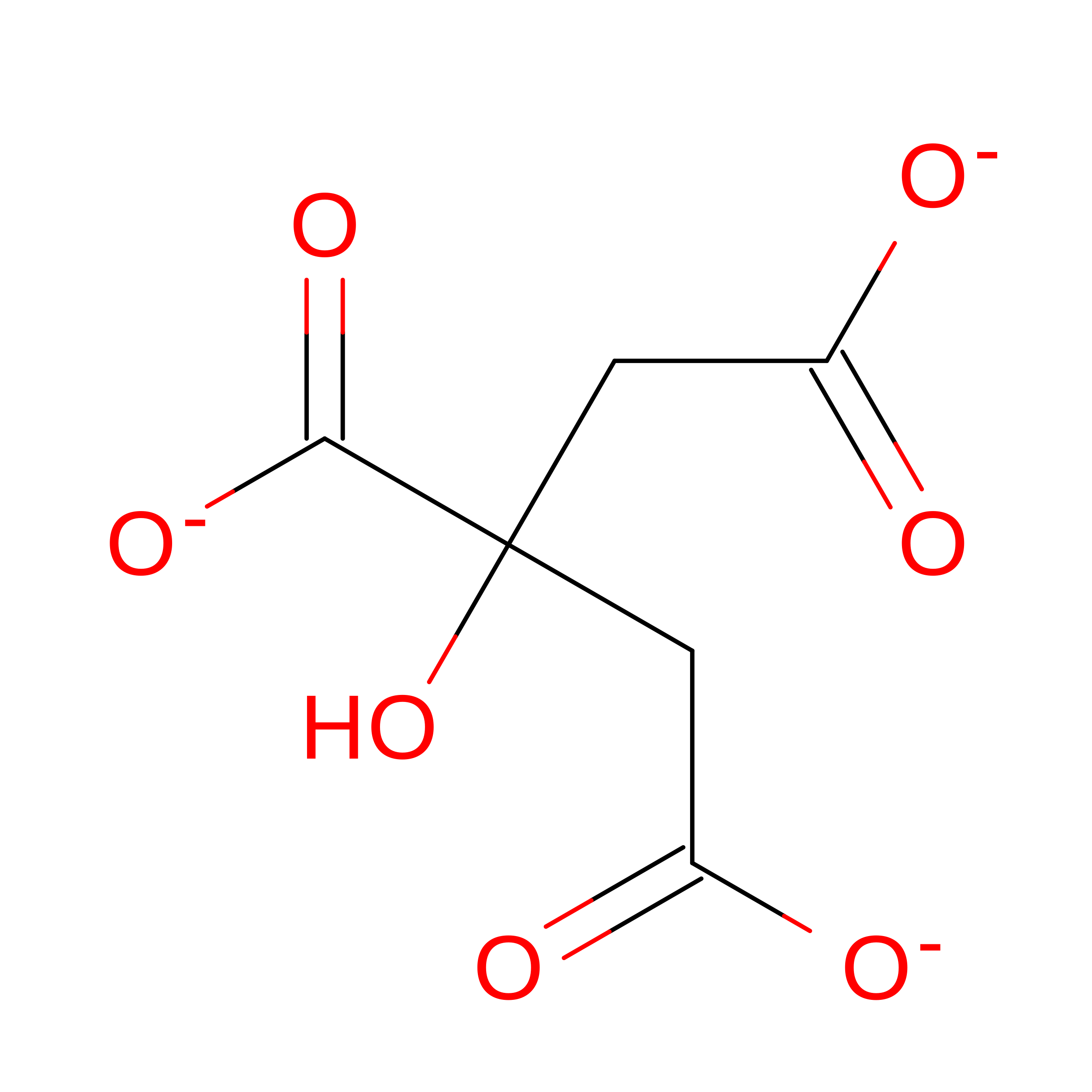
The most common cyanotoxin microcystin is a cyclic heptapeptide produced by non-ribosomal peptide-polyketide synthetases and tailoring enzymes. The tailoring enzyme McyI, a 2-hydroxyacid dehydrogenase, converts (3-methyl)malate into (3-methyl)oxaloacetate to produce the non-proteinogenic amino acid (3-methyl)aspartate. The reaction is NAD(P)-dependent but the catalytic mechanism remains unclear. Here we describe the crystal structures of McyI at three states: bound with copurified NAD, cocrystallized with NAD/NADP, and cocrystallized with malate or the substrate analogue citrate. An McyI protomer has unusual three nicotinamide cofactor-binding sites, named the NAD-prebound, NADP specific, and non-specific sites. Biochemical studies confirmed the NADP preference during oxidoreductase reaction. Molecular basis for McyI catalysis was revealed by the structures of McyI-NAD binary complex, McyI-NAD-NADP and McyI-NAD-malate ternary complexes, which demonstrate different opening angles between the substrate-binding domain and the nucleotide-binding domain. These findings indicate that McyI is a unique member of the 2-hydroxyacid dehydrogenase superfamily and provide detailed structural insights into its catalytic mechanism. In addition, the structural ensemble representing various binding states offers clues for designing enzyme for bioengineering applications.
- School of Life Sciences, Anhui University, Hefei, Anhui, 230601, China. 19130@ahu.edu.cn.
Organizational Affiliation: