8VZ8 | pdb_00008vz8

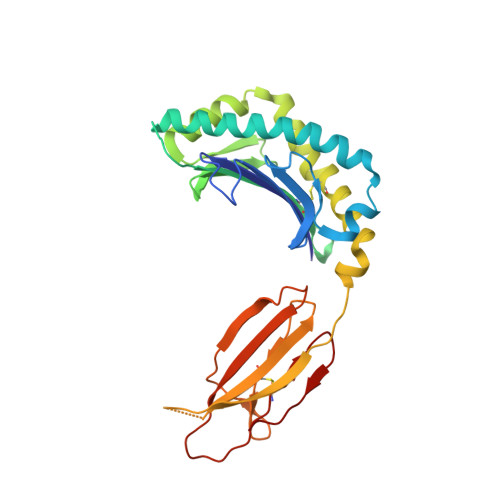
Crystal structure of mouse MAIT M2B TCR-MR1-5-OP-RU complex


Experimental Data Snapshot

  • Method: X-RAY DIFFRACTION
  • Resolution: 3.45 Å
  • R-Value Free: 
    0.280 (Depositor), 0.280 (DCC) 
  • R-Value Work: 
    0.256 (Depositor), 0.256 (DCC) 
  • R-Value Observed: 
    0.259 (Depositor) 

Starting Model: experimental
View more details

wwPDB Validation 3D Report Full Report

Validation slider image for 8VZ8

Ligand Structure Quality Assessment 


This is version 1.2 of the entry. See complete history

Literature

Mouse mucosal-associated invariant T cell receptor recognition of MR1 presenting the vitamin B metabolite, 5-(2-oxopropylideneamino)-6-d-ribitylaminouracil.

Ciacchi, L.Mak, J.Y.W.Le, J.P.Fairlie, D.P.McCluskey, J.Corbett, A.J.Rossjohn, J.Awad, W.

(2024) J Biological Chem 300: 107229-107229

  • DOI: https://doi.org/10.1016/j.jbc.2024.107229
  • Primary Citation Related Structures: 
    8VZ8, 8VZ9

  • PubMed Abstract: 

    Mucosal-associated invariant T (MAIT) cells can elicit immune responses against riboflavin-based antigens presented by the evolutionary conserved MHC class I related protein, MR1. While we have an understanding of the structural basis of human MAIT cell receptor (TCR) recognition of human MR1 presenting a variety of ligands, how the semi-invariant mouse MAIT TCR binds mouse MR1-ligand remains unknown. Here, we determine the crystal structures of 2 mouse TRAV1-TRBV13-2 + MAIT TCR-MR1-5-OP-RU ternary complexes, whose TCRs differ only in the composition of their CDR3β loops. These mouse MAIT TCRs mediate high affinity interactions with mouse MR1-5-OP-RU and cross-recognize human MR1-5-OP-RU. Similarly, a human MAIT TCR could bind mouse MR1-5-OP-RU with high affinity. This cross-species recognition indicates the evolutionary conserved nature of this MAIT TCR-MR1 axis. Comparing crystal structures of the mouse versus human MAIT TCR-MR1-5-OP-RU complexes provides structural insight into the conserved nature of this MAIT TCR-MR1 interaction and conserved specificity for the microbial antigens, whereby key germline-encoded interactions required for MAIT activation are maintained. This is an important consideration for the development of MAIT cell-based therapeutics that will rely on preclinical mouse models of disease.


  • Organizational Affiliation
    • Infection and Immunity Program, Department of Biochemistry and Molecular Biology, Biomedicine Discovery Institute, Monash University, Clayton, Victoria, Australia.

Macromolecule Content 

  • Total Structure Weight: 93.67 kDa 
  • Atom Count: 5,821 
  • Modeled Residue Count: 777 
  • Deposited Residue Count: 819 
  • Unique protein chains: 4

Macromolecules

Find similar proteins by:|  3D Structure
Entity ID: 1
MoleculeChains  Sequence LengthOrganismDetailsImage
Major histocompatibility complex class I-related gene protein271Mus musculusMutation(s): 0 
Gene Names: Mr1Mr1a
UniProt & NIH Common Fund Data Resources
Find proteins for Q8HWB0 (Mus musculus)
Explore Q8HWB0 
Go to UniProtKB:  Q8HWB0
IMPC:  MGI:1195463
Entity Groups
Sequence Clusters30% Identity50% Identity70% Identity90% Identity95% Identity100% Identity
UniProt GroupQ8HWB0
Sequence Annotations
Expand
Reference Sequence
Find similar proteins by:|  3D Structure
Entity ID: 2
MoleculeChains  Sequence LengthOrganismDetailsImage
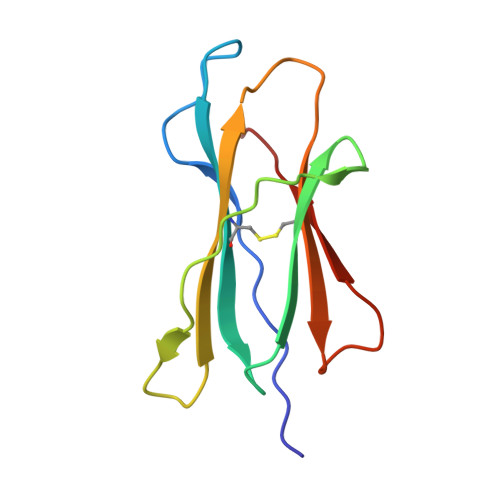
Beta-2-microglobulin100Mus musculusMutation(s): 0 
Gene Names: B2m
UniProt & NIH Common Fund Data Resources
Find proteins for P01887 (Mus musculus)
Explore P01887 
Go to UniProtKB:  P01887
IMPC:  MGI:88127
Entity Groups
Sequence Clusters30% Identity50% Identity70% Identity90% Identity95% Identity100% Identity
UniProt GroupP01887
Sequence Annotations
Expand
Reference Sequence
Find similar proteins by:|  3D Structure
Entity ID: 3
MoleculeChains  Sequence LengthOrganismDetailsImage
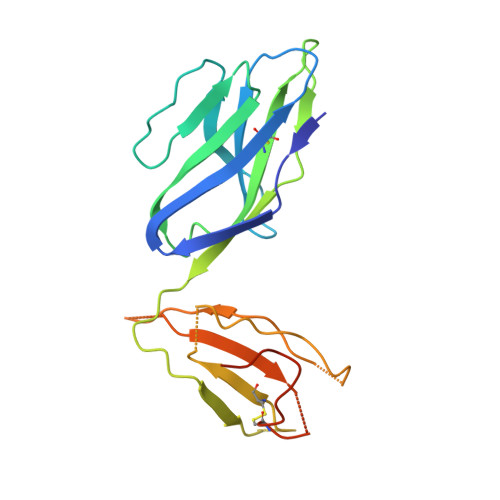
Mouse MAIT TRAV1-TRAJ33 a-chain204Mus musculusMutation(s): 0 
Find similar proteins by:|  3D Structure
Entity ID: 4
MoleculeChains  Sequence LengthOrganismDetailsImage
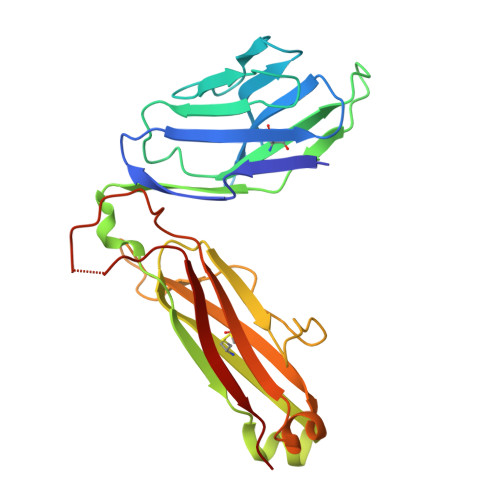
Mouse MAIT MBV13-2B b-chain244Mus musculusMutation(s): 0 

Small Molecules

Ligands 2 Unique
IDChains Name / Formula / InChI Key2D Diagram3D Interactions
2LJ
(Subject of Investigation/LOI)

Query on 2LJ


Download:Ideal Coordinates CCD File
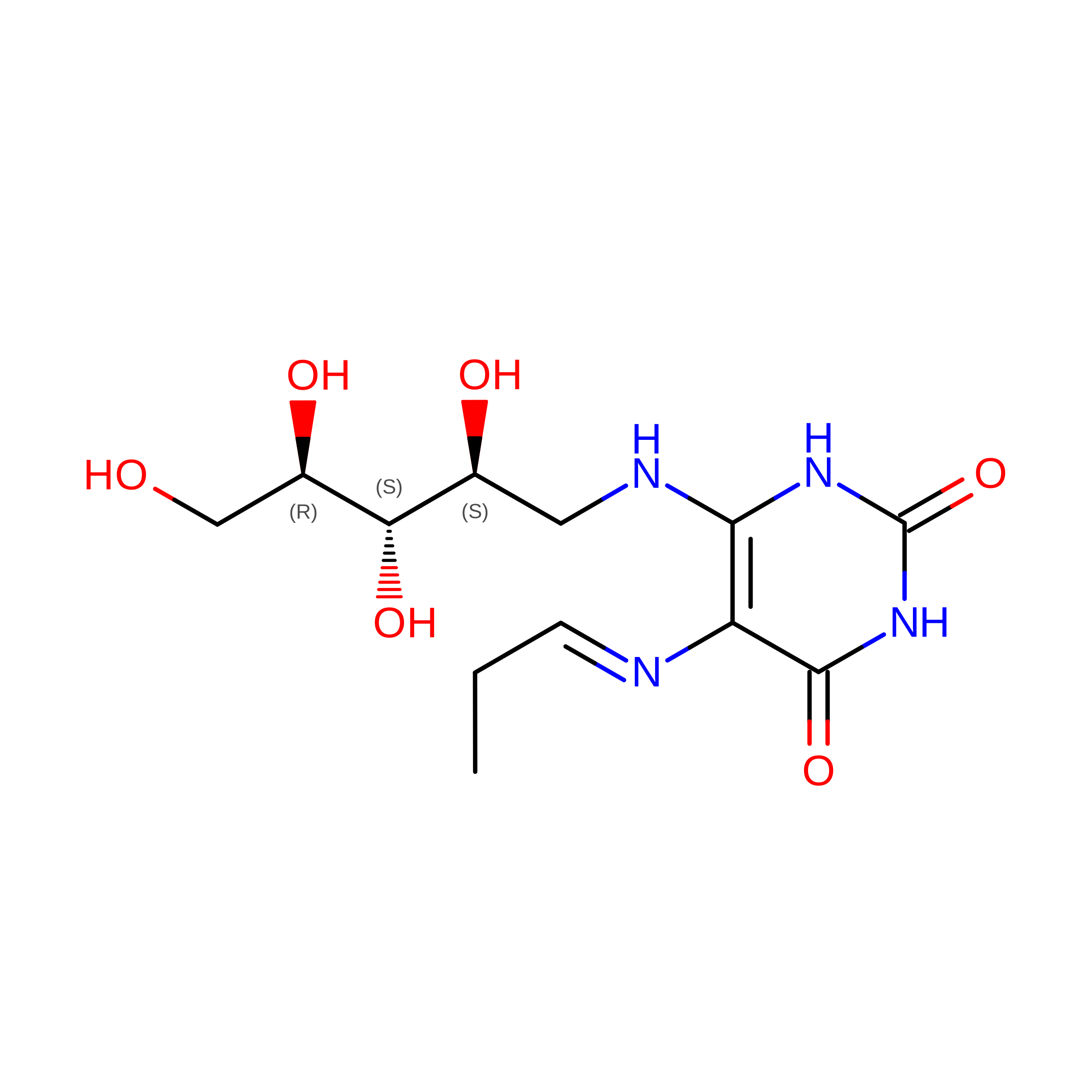
F [auth A]1-deoxy-1-({2,6-dioxo-5-[(E)-propylideneamino]-1,2,3,6-tetrahydropyrimidin-4-yl}amino)-D-ribitol
C12 H20 N4 O6
YCMPUNANLDFPQG-FHZGFTDOSA-N
GOL

Query on GOL


Download:Ideal Coordinates CCD File
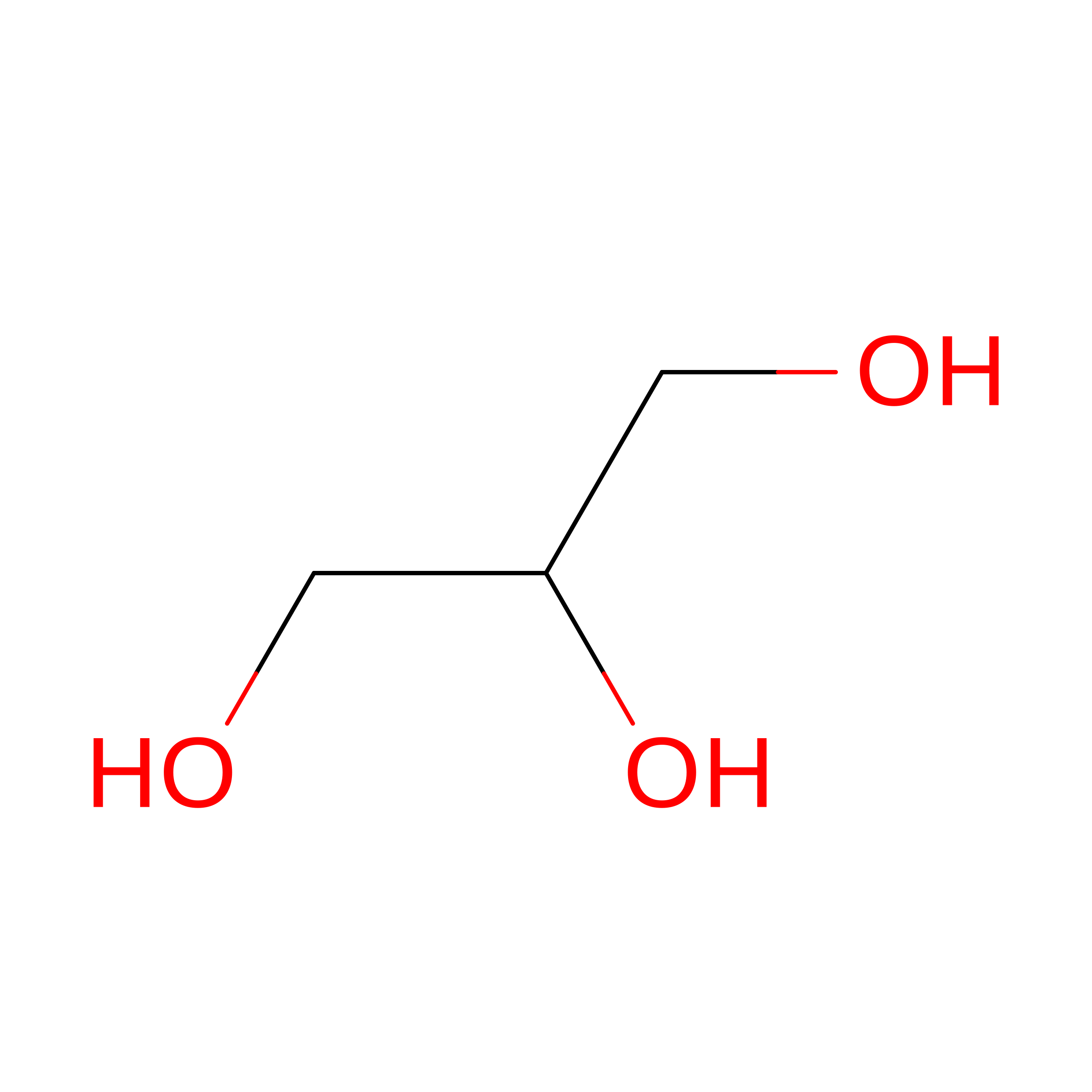
E [auth A]GLYCEROL
C3 H8 O3
PEDCQBHIVMGVHV-UHFFFAOYSA-N

Experimental Data & Validation

Experimental Data

  • Method: X-RAY DIFFRACTION
  • Resolution: 3.45 Å
  • R-Value Free:  0.280 (Depositor), 0.280 (DCC) 
  • R-Value Work:  0.256 (Depositor), 0.256 (DCC) 
  • R-Value Observed: 0.259 (Depositor) 
Space Group: P 2 21 21
Unit Cell:
Length ( Å )Angle ( ˚ )
a = 64.486α = 90
b = 84.635β = 90
c = 166.067γ = 90
Software Package:
Software NamePurpose
PHENIXrefinement
XDSdata reduction
Aimlessdata scaling
PHASERphasing

Structure Validation

View Full Validation Report


Ligand Structure Quality Assessment 


Entry History 

& Funding Information

Deposition Data


Funding OrganizationLocationGrant Number
Australian Research Council (ARC)AustraliaDE220101491
Australian Research Council (ARC)AustraliaDP220102401

Revision History  (Full details and data files)

  • Version 1.0: 2024-04-10
    Type: Initial release
  • Version 1.1: 2024-05-08
    Changes: Database references
  • Version 1.2: 2024-11-06
    Changes: Structure summary