8UY3 | pdb_00008uy3

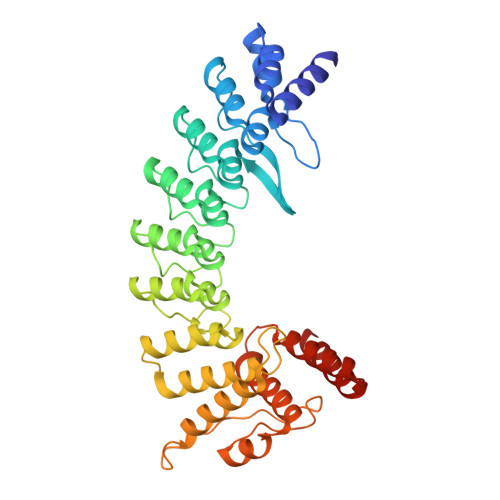
Fem1B with FNIP1 and Tom20 fragment


Experimental Data Snapshot

  • Method: X-RAY DIFFRACTION
  • Resolution: 3.20 Å
  • R-Value Free: 
    0.264 (Depositor), 0.231 (DCC) 
  • R-Value Work: 
    0.239 (Depositor) 
  • R-Value Observed: 
    0.240 (Depositor) 

Starting Model: experimental
View more details

wwPDB Validation 3D Report Full Report

Validation slider image for 8UY3

This is version 1.0 of the entry. See complete history

Literature

Reactive oxygen species control protein degradation at the mitochondrial import gate.

McMinimy, R.Manford, A.G.Gee, C.L.Chandrasekhar, S.Mousa, G.A.Chuang, J.Phu, L.Shih, K.Y.Rose, C.M.Kuriyan, J.Bingol, B.Rape, M.

(2024) Mol Cell 84: 4612-4628.e13

  • DOI: https://doi.org/10.1016/j.molcel.2024.11.004
  • Primary Citation Related Structures: 
    8UY3

  • PubMed Abstract: 

    While reactive oxygen species (ROS) have long been known to drive aging and neurodegeneration, their persistent depletion below basal levels also disrupts organismal function. Cells counteract loss of basal ROS via the reductive stress response, but the identity and biochemical activity of ROS sensed by this pathway remain unknown. Here, we show that the central enzyme of the reductive stress response, the E3 ligase Cullin 2-FEM1 homolog B (CUL2 FEM1B ), specifically acts at mitochondrial TOM complexes, where it senses ROS produced by complex III of the electron transport chain (ETC). ROS depletion during times of low ETC activity triggers the localized degradation of CUL2 FEM1B substrates, which sustains mitochondrial import and ensures the biogenesis of the rate-limiting ETC complex IV. As complex III yields most ROS when the ETC outpaces metabolic demands or oxygen availability, basal ROS are sentinels of mitochondrial activity that help cells adjust their ETC to changing environments, as required for cell differentiation and survival.


  • Organizational Affiliation
    • Department of Molecular and Cell Biology, University of California at Berkeley, Berkeley, CA 94720, USA.

Macromolecule Content 

  • Total Structure Weight: 206.61 kDa 
  • Atom Count: 13,741 
  • Modeled Residue Count: 1,750 
  • Deposited Residue Count: 1,846 
  • Unique protein chains: 3

Macromolecules

Find similar proteins by:|  3D Structure
Entity ID: 1
MoleculeChains  Sequence LengthOrganismDetailsImage
Protein fem-1 homolog BA,
B [auth C],
C [auth B],
D
381Mus musculusMutation(s): 0 
Gene Names: Fem1bF1aaKiaa0396
UniProt
Find proteins for Q9Z2G0 (Mus musculus)
Explore Q9Z2G0 
Go to UniProtKB:  Q9Z2G0
Entity Groups
Sequence Clusters30% Identity50% Identity70% Identity90% Identity95% Identity100% Identity
UniProt GroupQ9Z2G0
Sequence Annotations
Expand
Reference Sequence
Find similar proteins by:|  3D Structure
Entity ID: 2
MoleculeChains  Sequence LengthOrganismDetailsImage
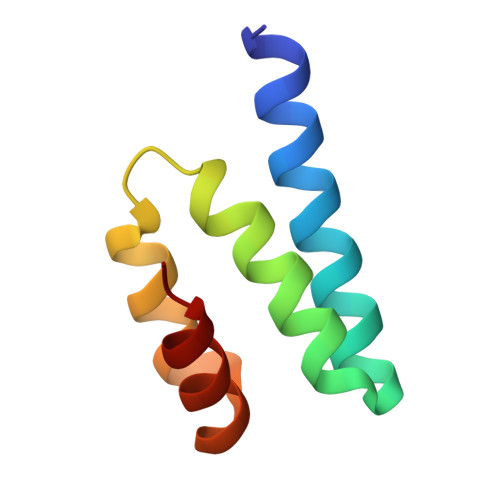
Folliculin-interacting protein 1E,
F,
I [auth H],
J [auth I]
31Mus musculusMutation(s): 0 
Gene Names: Fnip1Kiaa1961
UniProt & NIH Common Fund Data Resources
Find proteins for Q68FD7 (Mus musculus)
Explore Q68FD7 
Go to UniProtKB:  Q68FD7
IMPC:  MGI:2444668
Entity Groups
Sequence Clusters30% Identity50% Identity70% Identity90% Identity95% Identity100% Identity
UniProt GroupQ68FD7
Sequence Annotations
Expand
Reference Sequence
Find similar proteins by:|  3D Structure
Entity ID: 3
MoleculeChains  Sequence LengthOrganismDetailsImage
Mitochondrial import receptor subunit TOM20 homologG [auth J],
H [auth K],
K [auth M]
66Homo sapiensMutation(s): 0 
Gene Names: TOMM20KIAA0016
UniProt & NIH Common Fund Data Resources
Find proteins for Q15388 (Homo sapiens)
Explore Q15388 
Go to UniProtKB:  Q15388
PHAROS:  Q15388
GTEx:  ENSG00000173726 
Entity Groups
Sequence Clusters30% Identity50% Identity70% Identity90% Identity95% Identity100% Identity
UniProt GroupQ15388
Sequence Annotations
Expand
Reference Sequence

Small Molecules

Ligands 4 Unique
IDChains Name / Formula / InChI Key2D Diagram3D Interactions
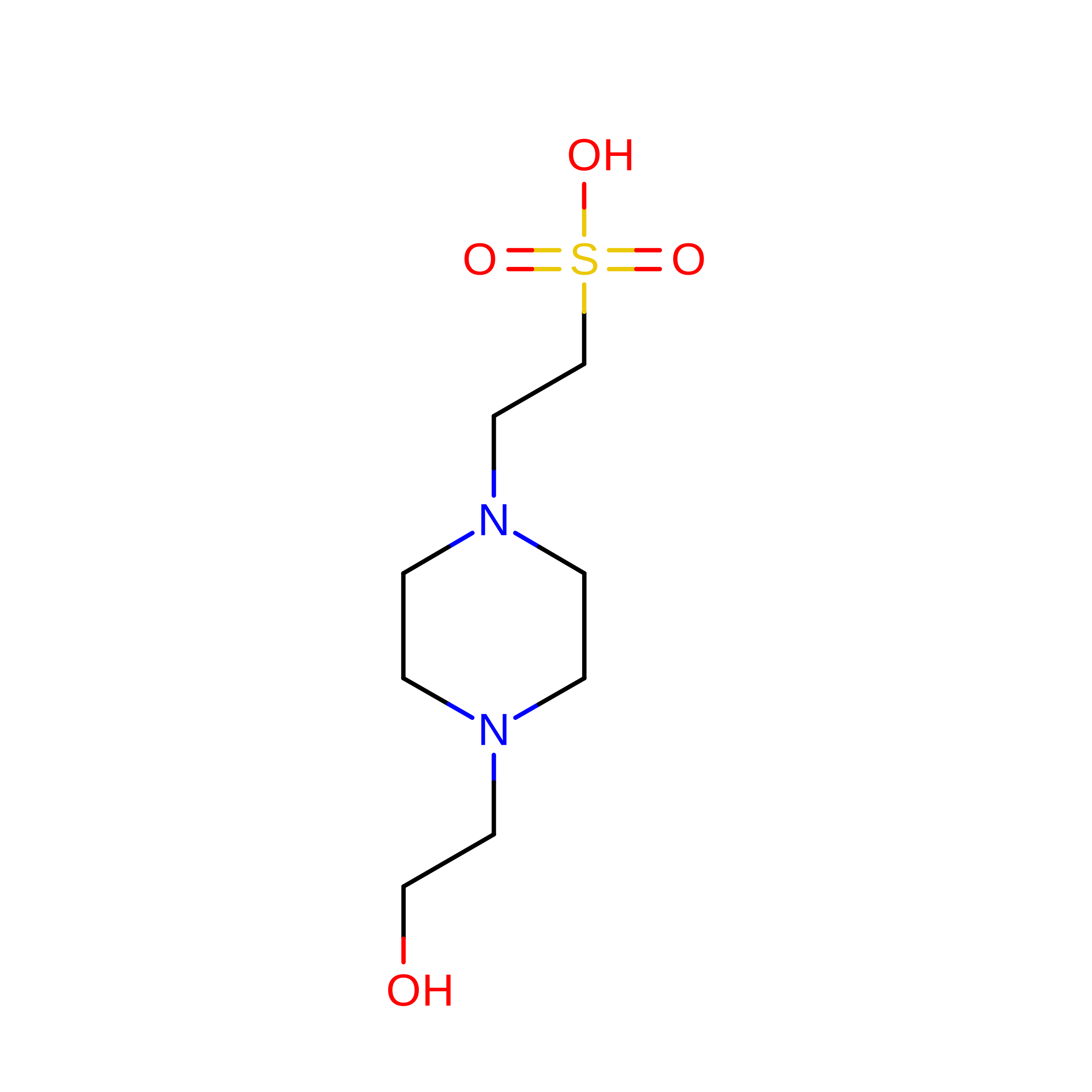
EPE

Query on EPE


Download:Ideal Coordinates CCD File
M [auth A]4-(2-HYDROXYETHYL)-1-PIPERAZINE ETHANESULFONIC ACID
C8 H18 N2 O4 S
JKMHFZQWWAIEOD-UHFFFAOYSA-N
SO4

Query on SO4


Download:Ideal Coordinates CCD File
P [auth C],
R [auth B]
SULFATE ION
O4 S
QAOWNCQODCNURD-UHFFFAOYSA-L
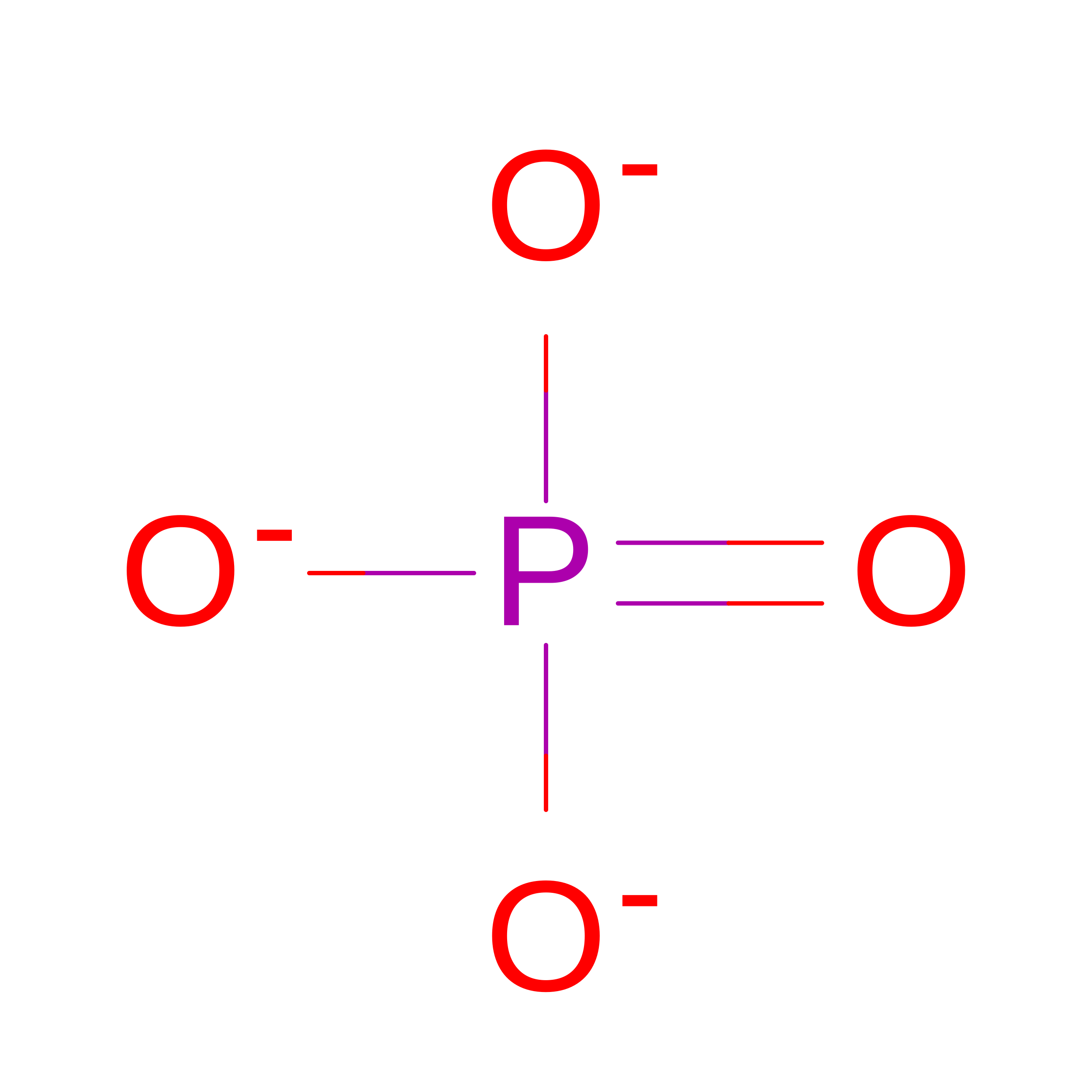
PO4

Query on PO4


Download:Ideal Coordinates CCD File
N [auth A]PHOSPHATE ION
O4 P
NBIIXXVUZAFLBC-UHFFFAOYSA-K
ZN
(Subject of Investigation/LOI)

Query on ZN


Download:Ideal Coordinates CCD File
L [auth A]
O [auth C]
Q [auth B]
S [auth D]
T [auth E]
L [auth A],
O [auth C],
Q [auth B],
S [auth D],
T [auth E],
U [auth F],
V [auth H],
W [auth I]
ZINC ION
Zn
PTFCDOFLOPIGGS-UHFFFAOYSA-N

Experimental Data & Validation

Experimental Data

  • Method: X-RAY DIFFRACTION
  • Resolution: 3.20 Å
  • R-Value Free:  0.264 (Depositor), 0.231 (DCC) 
  • R-Value Work:  0.239 (Depositor) 
  • R-Value Observed: 0.240 (Depositor) 
Space Group: P 21 3
Unit Cell:
Length ( Å )Angle ( ˚ )
a = 183.715α = 90
b = 183.715β = 90
c = 183.715γ = 90
Software Package:
Software NamePurpose
PHENIXrefinement
XDSdata reduction
Aimlessdata scaling
PHASERphasing

Structure Validation

View Full Validation Report


Entry History 

& Funding Information

Deposition Data


Funding OrganizationLocationGrant Number
Howard Hughes Medical Institute (HHMI)United States--

Revision History  (Full details and data files)

  • Version 1.0: 2025-03-19
    Type: Initial release