8U3Z | pdb_00008u3z

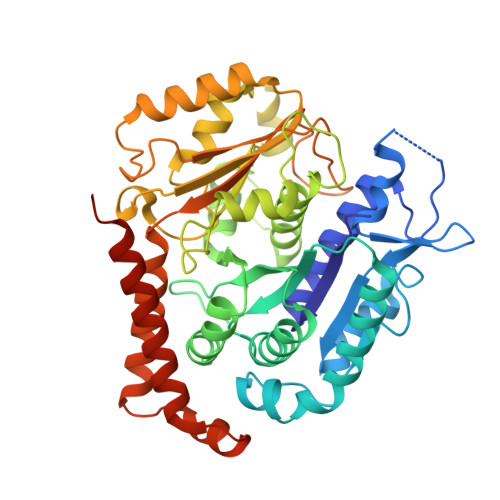
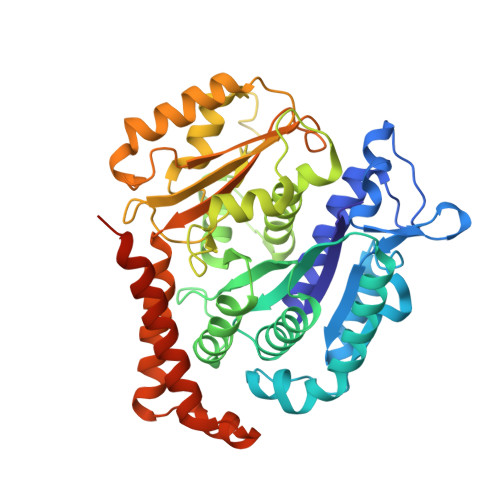
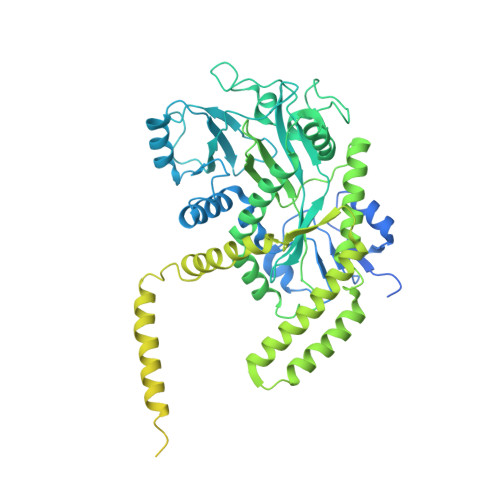
Model of TTLL6 bound to microtubule from composite map


Experimental Data Snapshot

  • Method: ELECTRON MICROSCOPY
  • Resolution: 3.60 Å
  • Aggregation State: FILAMENT 
  • Reconstruction Method: SINGLE PARTICLE 

Starting Models: experimental
View more details

wwPDB Validation 3D Report Full Report

Validation slider image for 8U3Z

This is version 1.2 of the entry. See complete history

Literature

Structural basis for alpha-tubulin-specific and modification state-dependent glutamylation.

Mahalingan, K.K.Grotjahn, D.A.Li, Y.Lander, G.C.Zehr, E.A.Roll-Mecak, A.

(2024) Nat Chem Biol 20: 1493-1504

  • DOI: https://doi.org/10.1038/s41589-024-01599-0
  • Primary Citation Related Structures: 
    8T42, 8U3Z

  • PubMed Abstract: 

    Microtubules have spatiotemporally complex posttranslational modification patterns. Tubulin tyrosine ligase-like (TTLL) enzymes introduce the most prevalent modifications on α-tubulin and β-tubulin. How TTLLs specialize for specific substrate recognition and ultimately modification-pattern generation is largely unknown. TTLL6, a glutamylase implicated in ciliopathies, preferentially modifies tubulin α-tails in microtubules. Cryo-electron microscopy, kinetic analysis and single-molecule biochemistry reveal an unprecedented quadrivalent recognition that ensures simultaneous readout of microtubule geometry and posttranslational modification status. By binding to a β-tubulin subunit, TTLL6 modifies the α-tail of the longitudinally adjacent tubulin dimer. Spanning two tubulin dimers along and across protofilaments (PFs) ensures fidelity of recognition of both the α-tail and the microtubule. Moreover, TTLL6 reads out and is stimulated by glutamylation of the β-tail of the laterally adjacent tubulin dimer, mediating crosstalk between α-tail and β-tail. This positive feedback loop can generate localized microtubule glutamylation patterns. Our work uncovers general principles that generate tubulin chemical and topographic complexity.


  • Organizational Affiliation
    • Cell Biology and Biophysics Unit, Porter Neuroscience Research Center, National Institute of Neurological Disorders and Stroke, Bethesda, MD, USA.

Macromolecule Content 

  • Total Structure Weight: 297.16 kDa 
  • Atom Count: 17,350 
  • Modeled Residue Count: 2,174 
  • Deposited Residue Count: 2,612 
  • Unique protein chains: 3

Macromolecules

Find similar proteins by:|  3D Structure
Entity ID: 1
MoleculeChains  Sequence LengthOrganismDetailsImage
Tubulin alpha-1B chainA,
D [auth F]
451Homo sapiensMutation(s): 0 
EC: 3.6.5
UniProt & NIH Common Fund Data Resources
Find proteins for P68363 (Homo sapiens)
Explore P68363 
Go to UniProtKB:  P68363
PHAROS:  P68363
GTEx:  ENSG00000123416 
Entity Groups
Sequence Clusters30% Identity50% Identity70% Identity90% Identity95% Identity100% Identity
UniProt GroupP68363
Sequence Annotations
Expand
Reference Sequence
Find similar proteins by:|  3D Structure
Entity ID: 2
MoleculeChains  Sequence LengthOrganismDetailsImage
Tubulin beta chainB,
C [auth E]
444Homo sapiensMutation(s): 0 
UniProt & NIH Common Fund Data Resources
Find proteins for P07437 (Homo sapiens)
Explore P07437 
Go to UniProtKB:  P07437
PHAROS:  P07437
GTEx:  ENSG00000196230 
Entity Groups
Sequence Clusters30% Identity50% Identity70% Identity90% Identity95% Identity100% Identity
UniProt GroupP07437
Sequence Annotations
Expand
Reference Sequence
Find similar proteins by:|  3D Structure
Entity ID: 3
MoleculeChains  Sequence LengthOrganismDetailsImage
Tubulin polyglutamylase TTLL6E [auth N]822Mus musculusMutation(s): 0 
Gene Names: Ttll6
EC: 6.3.2
UniProt & NIH Common Fund Data Resources
Find proteins for A4Q9E8 (Mus musculus)
Explore A4Q9E8 
Go to UniProtKB:  A4Q9E8
IMPC:  MGI:2683461
Entity Groups
Sequence Clusters30% Identity50% Identity70% Identity90% Identity95% Identity100% Identity
UniProt GroupA4Q9E8
Sequence Annotations
Expand
Reference Sequence

Small Molecules

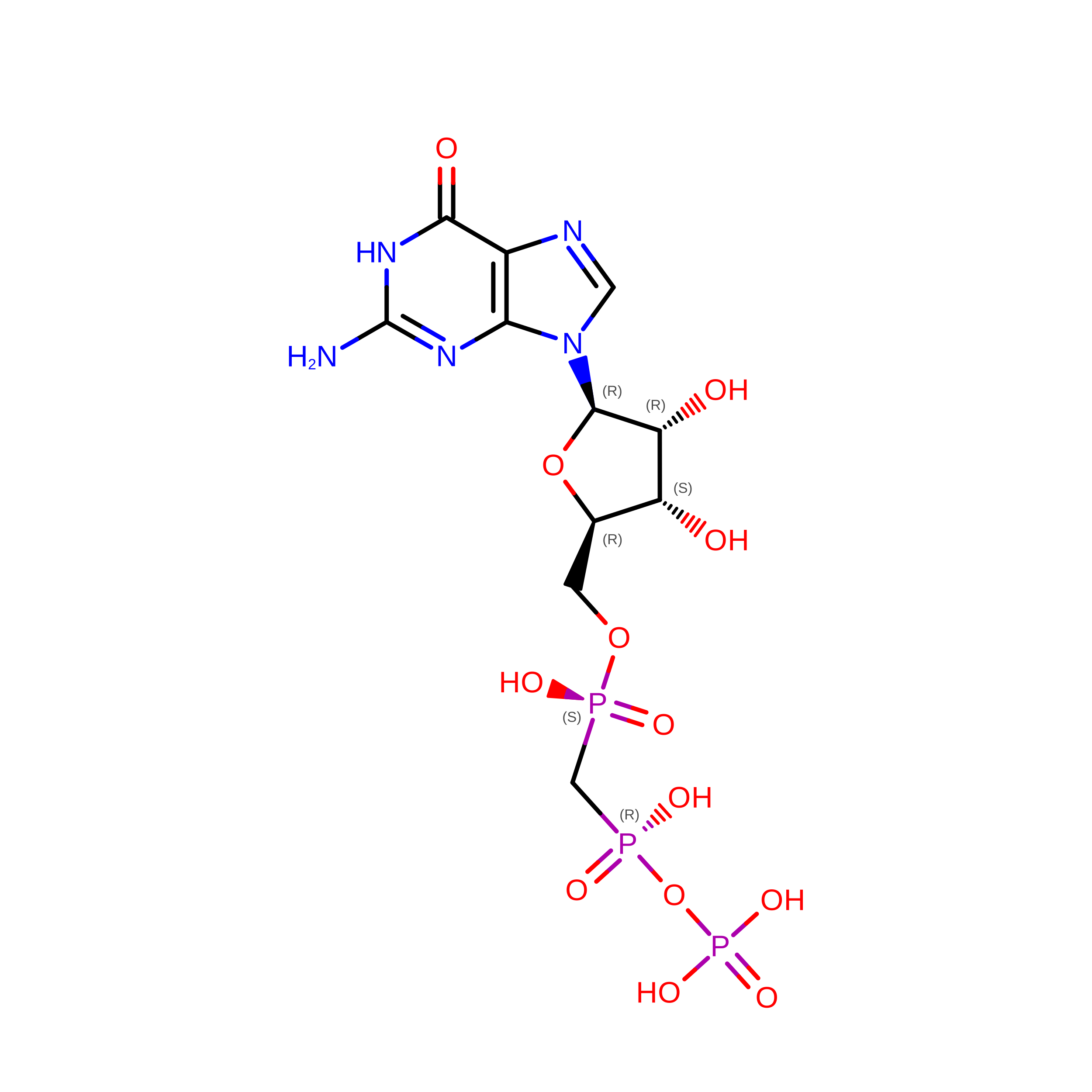
Ligands 4 Unique
IDChains Name / Formula / InChI Key2D Diagram3D Interactions
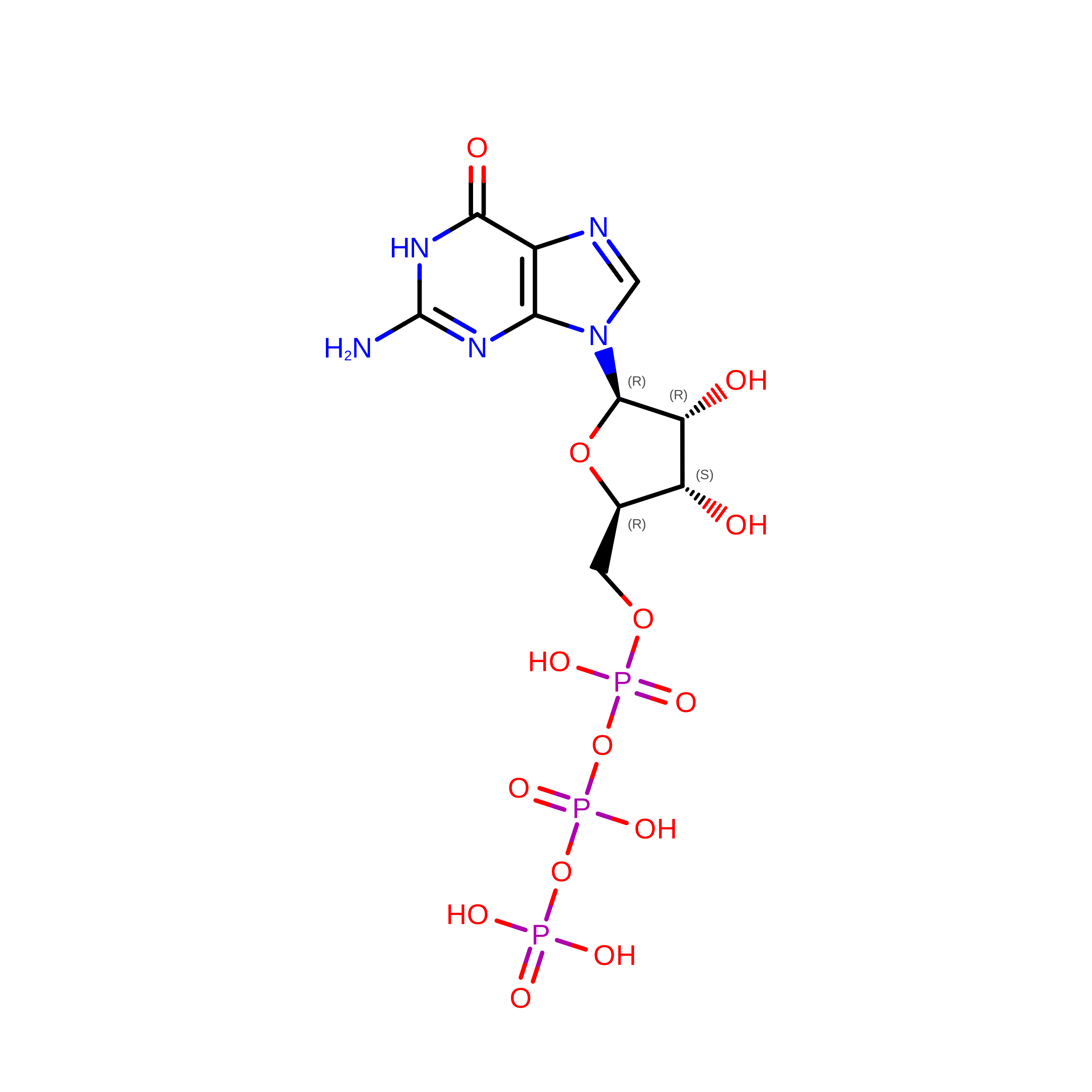
GTP

Query on GTP


Download:Ideal Coordinates CCD File
F [auth A],
L [auth F]
GUANOSINE-5'-TRIPHOSPHATE
C10 H16 N5 O14 P3
XKMLYUALXHKNFT-UUOKFMHZSA-N
G2P
(Subject of Investigation/LOI)

Query on G2P


Download:Ideal Coordinates CCD File
H [auth B],
J [auth E]
PHOSPHOMETHYLPHOSPHONIC ACID GUANYLATE ESTER
C11 H18 N5 O13 P3
GXTIEXDFEKYVGY-KQYNXXCUSA-N
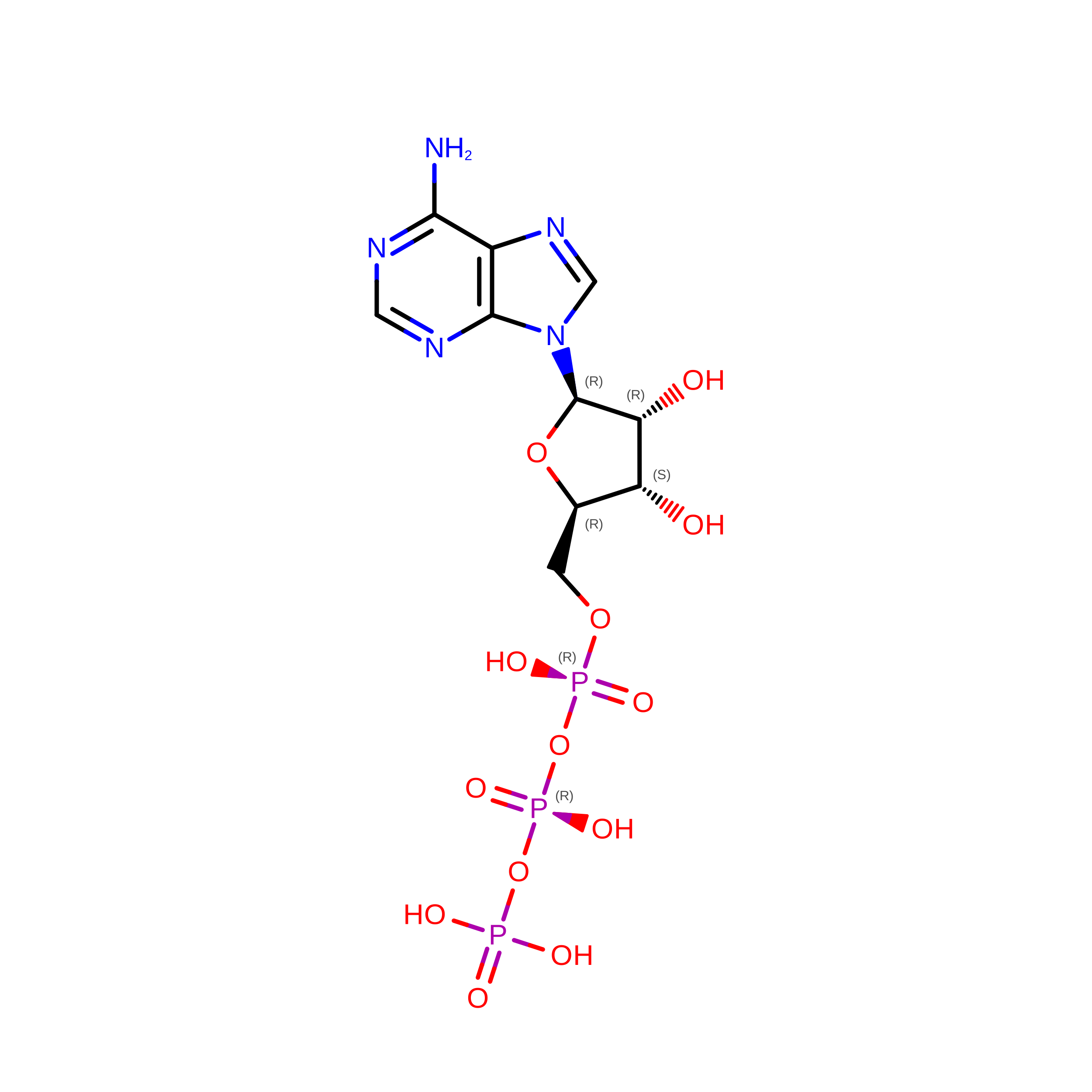
ATP

Query on ATP


Download:Ideal Coordinates CCD File
N
ADENOSINE-5'-TRIPHOSPHATE
C10 H16 N5 O13 P3
ZKHQWZAMYRWXGA-KQYNXXCUSA-N
MG

Query on MG


Download:Ideal Coordinates CCD File
G [auth A],
I [auth B],
K [auth E],
M [auth F],
O [auth N]
MAGNESIUM ION
Mg
JLVVSXFLKOJNIY-UHFFFAOYSA-N

Experimental Data & Validation

Experimental Data

  • Method: ELECTRON MICROSCOPY
  • Resolution: 3.60 Å
  • Aggregation State: FILAMENT 
  • Reconstruction Method: SINGLE PARTICLE 
EM Software:
TaskSoftware PackageVersion
MODEL REFINEMENTPHENIX
RECONSTRUCTIONRELION3.0

Structure Validation

View Full Validation Report


Entry History 

& Funding Information

Deposition Data


Funding OrganizationLocationGrant Number
National Institutes of Health/National Institute of Neurological Disorders and Stroke (NIH/NINDS)United StatesZO1 NS003163

Revision History  (Full details and data files)

  • Version 1.0: 2024-05-29
    Type: Initial release
  • Version 1.1: 2024-11-06
    Changes: Database references, Structure summary
  • Version 1.2: 2024-11-13
    Changes: Database references