8SPB | pdb_00008spb

Caspase-4/Pro-IL-18 complex


Experimental Data Snapshot

  • Method: ELECTRON MICROSCOPY
  • Resolution: 3.20 Å
  • Aggregation State: PARTICLE 
  • Reconstruction Method: SINGLE PARTICLE 

wwPDB Validation 3D Report Full Report

Validation slider image for 8SPB

This is version 2.3 of the entry. See complete history

Literature

Structural insights into cytokine cleavage by inflammatory caspase-4.

Devant, P.Dong, Y.Mintseris, J.Ma, W.Gygi, S.P.Wu, H.Kagan, J.C.

(2023) Nature 624: 451-459

  • DOI: https://doi.org/10.1038/s41586-023-06751-9
  • Primary Citation Related Structures: 
    8SPB

  • PubMed Abstract: 

    Inflammatory caspases are key enzymes in mammalian innate immunity that control the processing and release of interleukin-1 (IL-1)-family cytokines 1,2 . Despite the biological importance, the structural basis for inflammatory caspase-mediated cytokine processing has remained unclear. To date, catalytic cleavage of IL-1-family members, including pro-IL-1β and pro-IL-18, has been attributed primarily to caspase-1 activities within canonical inflammasomes 3 . Here we demonstrate that the lipopolysaccharide receptor caspase-4 from humans and other mammalian species (except rodents) can cleave pro-IL-18 with an efficiency similar to pro-IL-1β and pro-IL-18 cleavage by the prototypical IL-1-converting enzyme caspase-1. This ability of caspase-4 to cleave pro-IL-18, combined with its previously defined ability to cleave and activate the lytic pore-forming protein gasdermin D (GSDMD) 4,5 , enables human cells to bypass the need for canonical inflammasomes and caspase-1 for IL-18 release. The structure of the caspase-4-pro-IL-18 complex determined using cryogenic electron microscopy reveals that pro-lL-18 interacts with caspase-4 through two distinct interfaces: a protease exosite and an interface at the caspase-4 active site involving residues in the pro-domain of pro-IL-18, including the tetrapeptide caspase-recognition sequence 6 . The mechanisms revealed for cytokine substrate capture and cleavage differ from those observed for the caspase substrate GSDMD 7,8 . These findings provide a structural framework for the discussion of caspase activities in health and disease.


  • Organizational Affiliation
    • Division of Gastroenterology, Boston Children's Hospital and Harvard Medical School, Boston, MA, USA.

Macromolecule Content 

  • Total Structure Weight: 111.95 kDa 
  • Atom Count: 6,726 
  • Modeled Residue Count: 828 
  • Deposited Residue Count: 974 
  • Unique protein chains: 3

Macromolecules

Find similar proteins by:|  3D Structure
Entity ID: 1
MoleculeChains  Sequence LengthOrganismDetailsImage
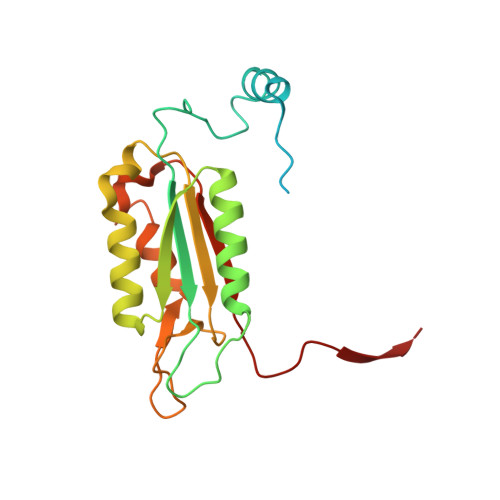
Caspase-4 subunit p20A,
D [auth a]
207Homo sapiensMutation(s): 0 
Gene Names: CASP4ICH2
EC: 3.4.22.57
UniProt & NIH Common Fund Data Resources
Find proteins for P49662 (Homo sapiens)
Explore P49662 
Go to UniProtKB:  P49662
PHAROS:  P49662
GTEx:  ENSG00000196954 
Entity Groups
Sequence Clusters30% Identity50% Identity70% Identity90% Identity95% Identity100% Identity
UniProt GroupP49662
Sequence Annotations
Expand
Reference Sequence
Find similar proteins by:|  3D Structure
Entity ID: 2
MoleculeChains  Sequence LengthOrganismDetailsImage
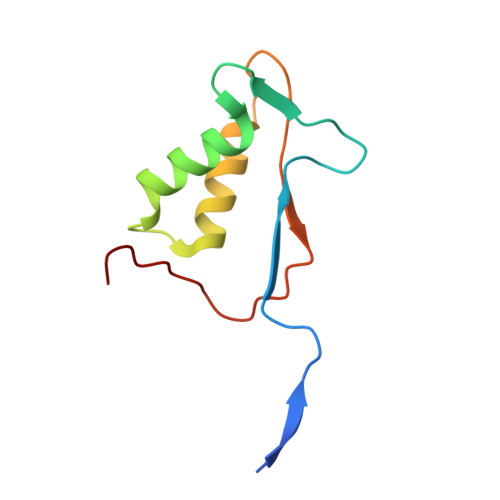
Caspase-4 subunit p10B,
E [auth b]
92Homo sapiensMutation(s): 0 
Gene Names: CASP4ICH2
EC: 3.4.22.57
UniProt & NIH Common Fund Data Resources
Find proteins for P49662 (Homo sapiens)
Explore P49662 
Go to UniProtKB:  P49662
PHAROS:  P49662
GTEx:  ENSG00000196954 
Entity Groups
Sequence Clusters30% Identity50% Identity70% Identity90% Identity95% Identity100% Identity
UniProt GroupP49662
Sequence Annotations
Expand
Reference Sequence
Find similar proteins by:|  3D Structure
Entity ID: 3
MoleculeChains  Sequence LengthOrganismDetailsImage
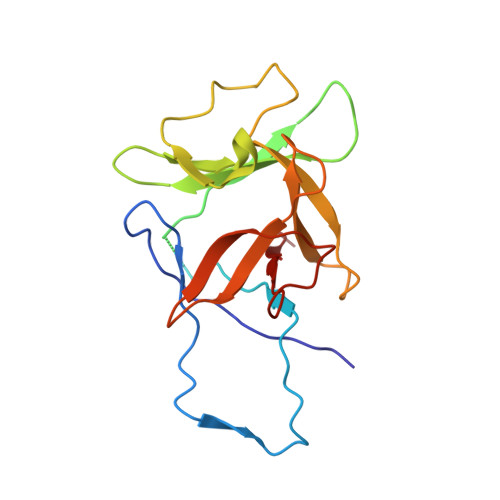
Interleukin-18C,
F [auth c]
188Homo sapiensMutation(s): 0 
Gene Names: IL18
UniProt & NIH Common Fund Data Resources
Find proteins for Q14116 (Homo sapiens)
Explore Q14116 
Go to UniProtKB:  Q14116
PHAROS:  Q14116
GTEx:  ENSG00000150782 
Entity Groups
Sequence Clusters30% Identity50% Identity70% Identity90% Identity95% Identity100% Identity
UniProt GroupQ14116
Sequence Annotations
Expand
Reference Sequence

Experimental Data & Validation

Experimental Data

  • Method: ELECTRON MICROSCOPY
  • Resolution: 3.20 Å
  • Aggregation State: PARTICLE 
  • Reconstruction Method: SINGLE PARTICLE 
EM Software:
TaskSoftware PackageVersion
MODEL REFINEMENTPHENIX

Structure Validation

View Full Validation Report


Entry History 

& Funding Information

Deposition Data


Funding OrganizationLocationGrant Number
National Institutes of Health/Eunice Kennedy Shriver National Institute of Child Health & Human Development (NIH/NICHD)United States--

Revision History  (Full details and data files)

  • Version 1.0: 2023-11-22
    Type: Initial release
  • Version 2.0: 2023-11-29
    Type: Coordinate replacement
    Reason: Atomic clashes
    Changes: Advisory, Atomic model, Database references, Derived calculations, Polymer sequence, Source and taxonomy, Structure summary
  • Version 2.1: 2023-12-06
    Changes: Database references
  • Version 2.2: 2023-12-27
    Changes: Database references
  • Version 2.3: 2025-05-21
    Changes: Data collection, Structure summary