8PXA | pdb_00008pxa

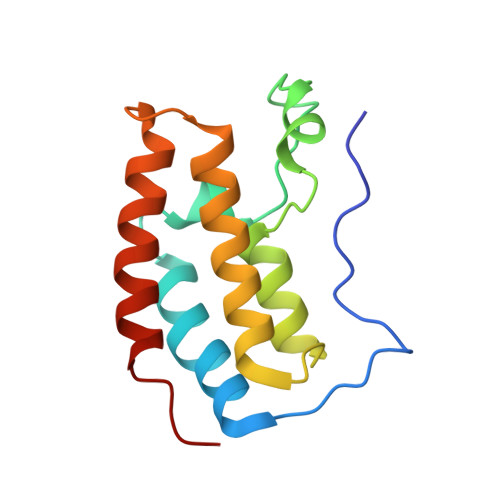
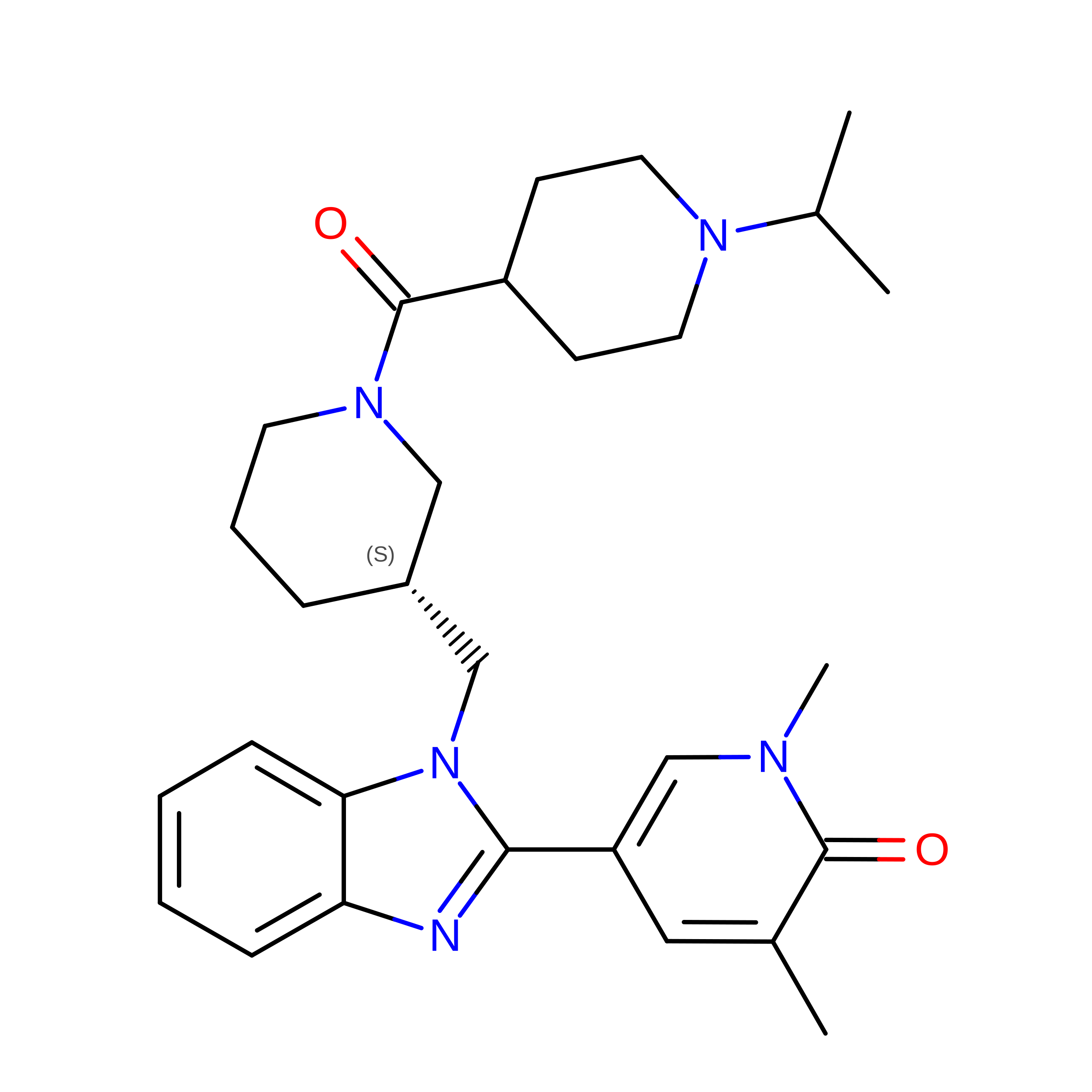
N-TERMINAL BROMODOMAIN OF HUMAN BRD4 WITH (S)-5-(1-((1-(1-isopropylpiperidine-4-carbonyl)piperidin-3-yl)methyl)-1H-benzo[d]imidazol-2-yl)-1,3-dimethylpyridin-2(1H)-one


Experimental Data Snapshot

  • Method: X-RAY DIFFRACTION
  • Resolution: 1.30 Å
  • R-Value Free: 
    0.217 (Depositor), 0.226 (DCC) 
  • R-Value Work: 
    0.198 (Depositor), 0.208 (DCC) 

Starting Model: experimental
View more details

wwPDB Validation 3D Report Full Report

Validation slider image for 8PXA

Ligand Structure Quality Assessment 


This is version 1.2 of the entry. See complete history

Literature

Structure-Guided Design of a Domain-Selective Bromodomain and Extra Terminal N-Terminal Bromodomain Chemical Probe.

Bradley, E.Fusani, L.Chung, C.W.Craggs, P.D.Demont, E.H.Humphreys, P.G.Mitchell, D.J.Phillipou, A.Rioja, I.Shah, R.R.Wellaway, C.R.Prinjha, R.K.Palmer, D.S.Kerr, W.J.Reid, M.Wall, I.D.Cookson, R.

(2023) J Med Chem 66: 15728-15749

  • DOI: https://doi.org/10.1021/acs.jmedchem.3c00906
  • Primary Citation Related Structures: 
    8PX2, 8PX8, 8PXA

  • PubMed Abstract: 

    Small-molecule-mediated disruption of the protein-protein interactions between acetylated histone tails and the tandem bromodomains of the bromodomain and extra-terminal (BET) family of proteins is an important mechanism of action for the potential modulation of immuno-inflammatory and oncology disease. High-quality chemical probes have proven invaluable in elucidating profound BET bromodomain biology, with seminal publications of both pan- and domain-selective BET family bromodomain inhibitors enabling academic and industrial research. To enrich the toolbox of structurally differentiated N-terminal bromodomain (BD1) BET family chemical probes, this work describes an analysis of the GSK BRD4 bromodomain data set through a lipophilic efficiency lens, which enabled identification of a BD1 domain-biased benzimidazole series. Structure-guided growth targeting a key Asp/His BD1/BD2 switch enabled delivery of GSK023, a high-quality chemical probe with 300-1000-fold BET BD1 domain selectivity and a phenotypic cellular fingerprint consistent with BET bromodomain inhibition.


  • Organizational Affiliation
    • GSK, Medicines Research Centre, Stevenage SG1 2NY, Hertfordshire, U.K.

Macromolecule Content 

  • Total Structure Weight: 15.59 kDa 
  • Atom Count: 1,309 
  • Modeled Residue Count: 125 
  • Deposited Residue Count: 127 
  • Unique protein chains: 1

Macromolecules

Find similar proteins by:|  3D Structure
Entity ID: 1
MoleculeChains  Sequence LengthOrganismDetailsImage
Bromodomain-containing protein 4A [auth AAA]127Homo sapiensMutation(s): 0 
Gene Names: BRD4HUNK1
UniProt & NIH Common Fund Data Resources
Find proteins for O60885 (Homo sapiens)
Explore O60885 
Go to UniProtKB:  O60885
PHAROS:  O60885
GTEx:  ENSG00000141867 
Entity Groups
Sequence Clusters30% Identity50% Identity70% Identity90% Identity95% Identity100% Identity
UniProt GroupO60885
Sequence Annotations
Expand
Reference Sequence

Small Molecules

Ligands 1 Unique
IDChains Name / Formula / InChI Key2D Diagram3D Interactions
I0Z
(Subject of Investigation/LOI)

Query on I0Z


Download:Ideal Coordinates CCD File
B [auth AAA]1,3-dimethyl-5-[1-[[(3~{S})-1-(1-propan-2-ylpiperidin-4-yl)carbonylpiperidin-3-yl]methyl]benzimidazol-2-yl]pyridin-2-one
C29 H39 N5 O2
WSHVXKCBHNIVJO-JOCHJYFZSA-N

Experimental Data & Validation

Experimental Data

  • Method: X-RAY DIFFRACTION
  • Resolution: 1.30 Å
  • R-Value Free:  0.217 (Depositor), 0.226 (DCC) 
  • R-Value Work:  0.198 (Depositor), 0.208 (DCC) 
Space Group: P 21 21 21
Unit Cell:
Length ( Å )Angle ( ˚ )
a = 44.845α = 90
b = 47.236β = 90
c = 58.974γ = 90
Software Package:
Software NamePurpose
REFMACrefinement
XDSdata reduction
Aimlessdata scaling

Structure Validation

View Full Validation Report


Ligand Structure Quality Assessment 


Entry History 

& Funding Information

Deposition Data

  • Released Date: 2023-10-18 
  • Deposition Author(s): Chung, C.

Funding OrganizationLocationGrant Number
Not funded--

Revision History  (Full details and data files)

  • Version 1.0: 2023-10-18
    Type: Initial release
  • Version 1.1: 2023-11-29
    Changes: Database references
  • Version 1.2: 2023-12-27
    Changes: Database references