8HNW | pdb_00008hnw

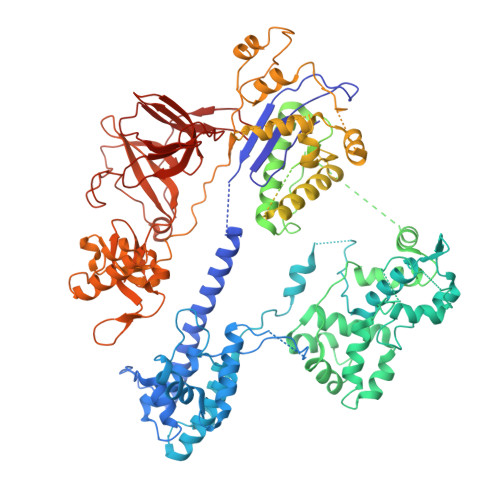
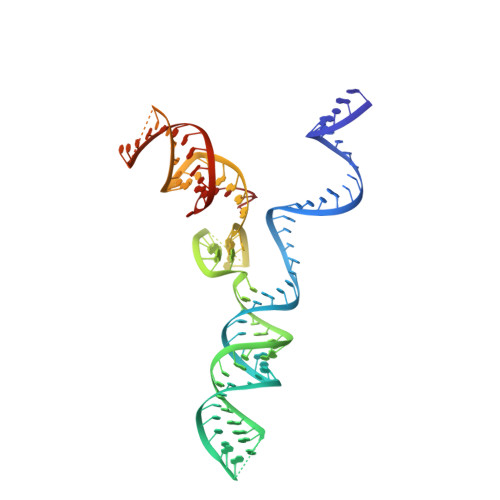
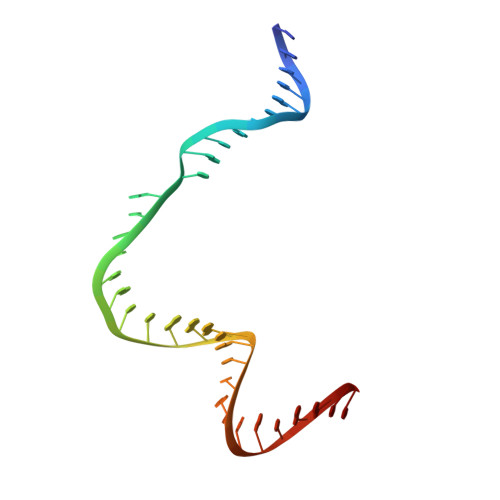
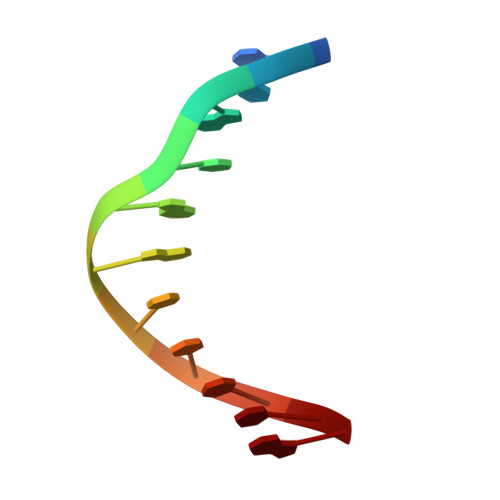
Crystal structure of HpaCas9-sgRNA surveillance complex bound to double-stranded DNA


Experimental Data Snapshot

  • Method: X-RAY DIFFRACTION
  • Resolution: 3.41 Å
  • R-Value Free: 
    0.281 (Depositor), 0.304 (DCC) 
  • R-Value Work: 
    0.258 (Depositor), 0.287 (DCC) 
  • R-Value Observed: 
    0.259 (Depositor) 

Starting Model: experimental
View more details

wwPDB Validation 3D Report Full Report

Validation slider image for 8HNW

This is version 1.2 of the entry. See complete history

Literature

AcrIIC4 inhibits type II-C Cas9 by preventing R-loop formation.

Sun, W.Cheng, Z.Wang, J.Yang, J.Li, X.Wang, J.Chen, M.Yang, X.Sheng, G.Lou, J.Wang, Y.

(2023) Proc Natl Acad Sci U S A 120: e2303675120-e2303675120

  • DOI: https://doi.org/10.1073/pnas.2303675120
  • Primary Citation Related Structures: 
    8HNS, 8HNT, 8HNV, 8HNW

  • PubMed Abstract: 

    Anti-CRISPR (Acr) proteins are encoded by phages and other mobile genetic elements and inhibit host CRISPR-Cas immunity using versatile strategies. AcrIIC4 is a broad-spectrum Acr that inhibits the type II-C CRISPR-Cas9 system in several species by an unknown mechanism. Here, we determined a series of structures of Haemophilus parainfluenzae Cas9 (HpaCas9)-sgRNA in complex with AcrIIC4 and/or target DNA, as well as the crystal structure of AcrIIC4 alone. We found that AcrIIC4 resides in the crevice between the REC1 and REC2 domains of HpaCas9, where its extensive interactions restrict the mobility of the REC2 domain and prevent the unwinding of target double-stranded (ds) DNA at the PAM-distal end. Therefore, the full-length guide RNA:target DNA heteroduplex fails to form in the presence of AcrIIC4, preventing Cas9 nuclease activation. Altogether, our structural and biochemical studies illuminate a unique Acr mechanism that allows DNA binding to the Cas9 effector complex but blocks its cleavage by preventing R-loop formation, a key step supporting DNA cleavage by Cas9.


  • Organizational Affiliation
    • Key Laboratory of RNA Biology, Center for Excellence in Biomacromolecules, Institute of Biophysics, Chinese Academy of Sciences, Beijing 100101, China.

Macromolecule Content 

  • Total Structure Weight: 176.72 kDa 
  • Atom Count: 9,266 
  • Modeled Residue Count: 962 
  • Deposited Residue Count: 1,229 
  • Unique protein chains: 1
  • Unique nucleic acid chains: 3

Macromolecules


Find similar proteins by:|  3D Structure
Entity ID: 1
MoleculeChains  Sequence LengthOrganismDetailsImage
CRISPR-associated endonuclease Cas91,055Haemophilus parainfluenzaeMutation(s): 1 
Gene Names: csn1
Find similar nucleic acids by:  (by identity cutoff) 
Entity ID: 2
MoleculeChains LengthOrganismImage
sgRNA128synthetic construct
Sequence Annotations
Expand
Reference Sequence
Find similar nucleic acids by:  (by identity cutoff) 
Entity ID: 3
MoleculeChains LengthOrganismImage
Target strand35Haemophilus parainfluenzae
Sequence Annotations
Expand
Reference Sequence
Find similar nucleic acids by:  Sequence
Entity ID: 4
MoleculeChains LengthOrganismImage
Non-target strand11Haemophilus parainfluenzae
Sequence Annotations
Expand
Reference Sequence

Experimental Data & Validation

Experimental Data

  • Method: X-RAY DIFFRACTION
  • Resolution: 3.41 Å
  • R-Value Free:  0.281 (Depositor), 0.304 (DCC) 
  • R-Value Work:  0.258 (Depositor), 0.287 (DCC) 
  • R-Value Observed: 0.259 (Depositor) 
Space Group: C 2 2 21
Unit Cell:
Length ( Å )Angle ( ˚ )
a = 158.867α = 90
b = 185.76β = 90
c = 160.88γ = 90
Software Package:
Software NamePurpose
PHENIXrefinement
Cootmodel building
HKL-2000data reduction
HKL-2000data scaling
PHASERphasing

Structure Validation

View Full Validation Report


Entry History 

& Funding Information

Deposition Data


Funding OrganizationLocationGrant Number
National Natural Science Foundation of China (NSFC)China--

Revision History  (Full details and data files)

  • Version 1.0: 2023-07-19
    Type: Initial release
  • Version 1.1: 2023-08-02
    Changes: Database references
  • Version 1.2: 2024-05-29
    Changes: Data collection