8HHP | pdb_00008hhp

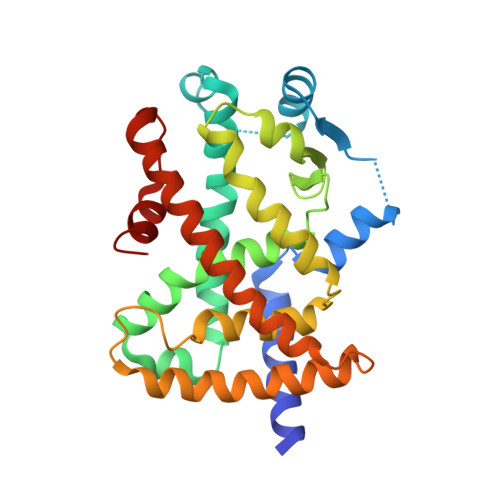
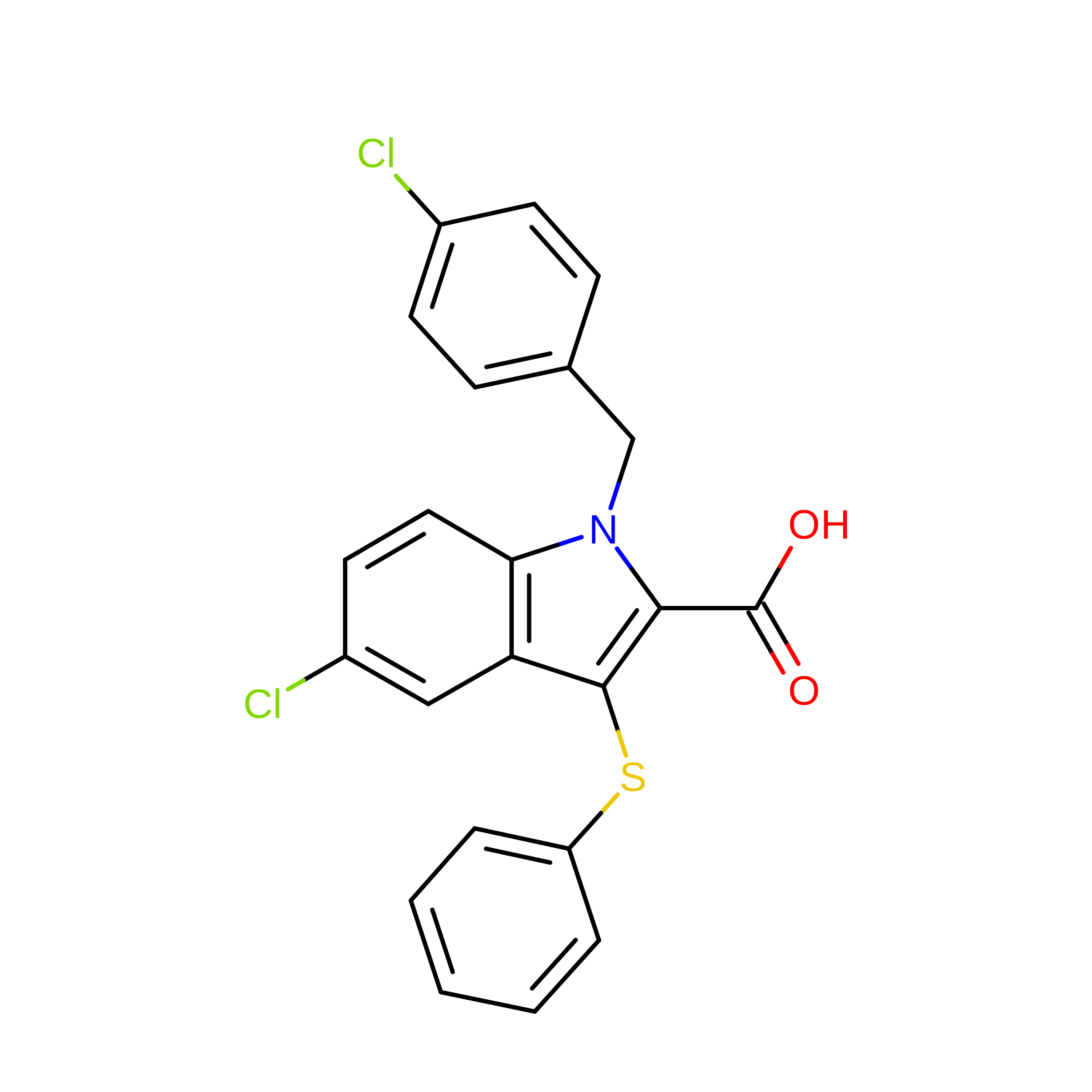
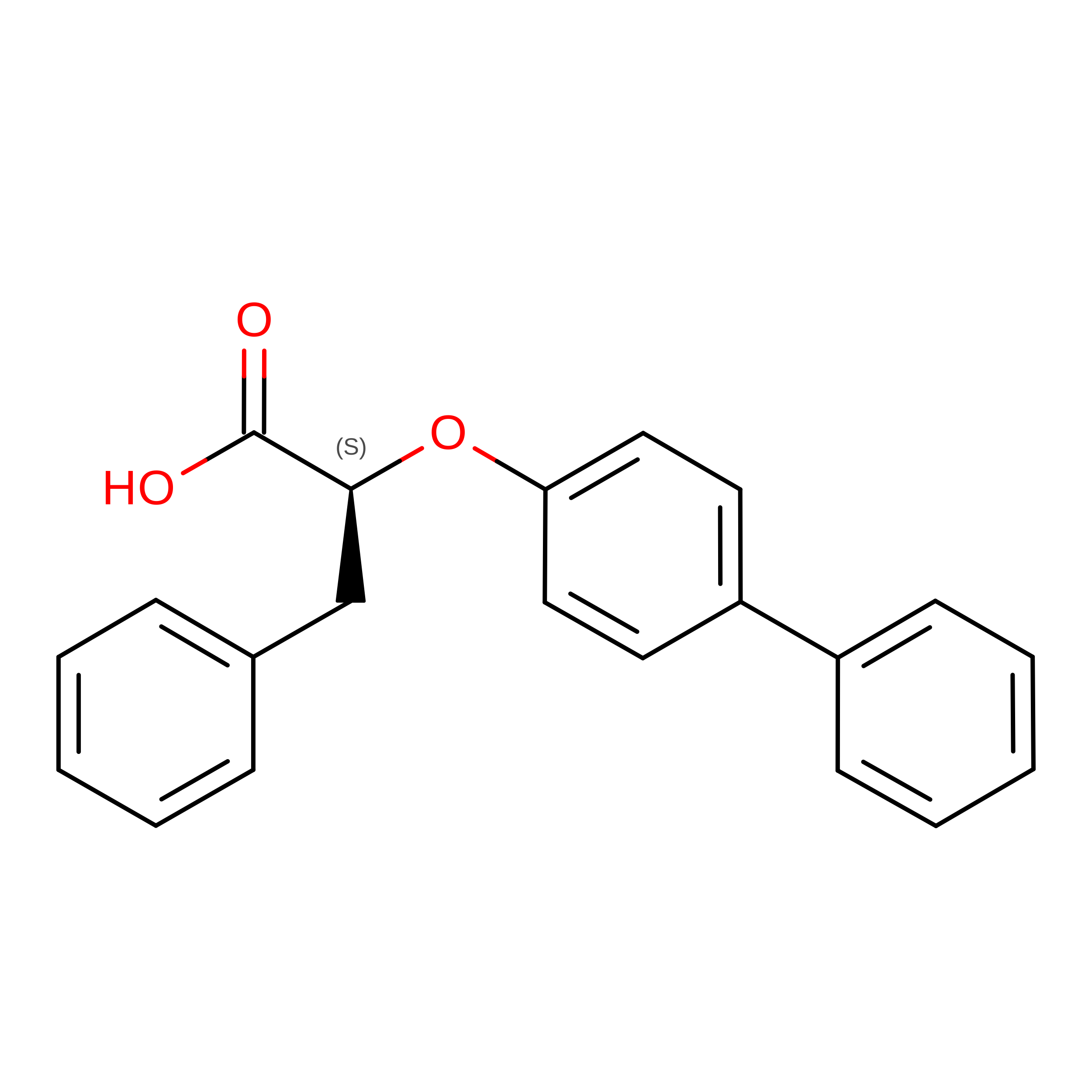
Crystal structure of PPARg-LBD complexed with three partial agonists, one nTZDpa and two LT175


Experimental Data Snapshot

  • Method: X-RAY DIFFRACTION
  • Resolution: 2.45 Å
  • R-Value Free: 
    0.286 (Depositor), 0.288 (DCC) 
  • R-Value Work: 
    0.214 (Depositor), 0.214 (DCC) 
  • R-Value Observed: 
    0.221 (Depositor) 

Starting Model: experimental
View more details

wwPDB Validation 3D Report Full Report

Validation slider image for 8HHP

Ligand Structure Quality Assessment 


This is version 1.2 of the entry. See complete history

Literature

Covalent Modifier Discovery Using Hydrogen/Deuterium Exchange-Mass Spectrometry.

Kojima, H.Yanagi, R.Higuchi, E.Yoshizawa, M.Shimodaira, T.Kumagai, M.Kyoya, T.Sekine, M.Egawa, D.Ohashi, N.Ishida, H.Yamamoto, K.Itoh, T.

(2023) J Med Chem 66: 4827-4839

  • DOI: https://doi.org/10.1021/acs.jmedchem.2c01986
  • Primary Citation Related Structures: 
    8HHP, 8HHQ

  • PubMed Abstract: 

    Covalent ligands are generally filtered out of chemical libraries used for high-throughput screening, because electrophilic functional groups are considered to be pan-assay interference compounds (PAINS). Therefore, screening strategies that can distinguish true covalent ligands from PAINS are required. Hydrogen/deuterium-exchange mass spectrometry (HDX-MS) is a powerful tool for evaluating protein stability. Here, we report a covalent modifier screening approach using HDX-MS. In this study, HDX-MS was used to classify peroxisome proliferator-activated receptor γ (PPARγ) and vitamin D receptor ligands. HDX-MS could discriminate the strength of ligand-protein interactions. Our HDX-MS screening method identified LT175 and nTZDpa, which can bind concurrently to the PPARγ ligand-binding domain (PPARγ-LBD) with synergistic activation. Furthermore, iodoacetic acid was identified as a novel covalent modifier that stabilizes the PPARγ-LBD.


  • Organizational Affiliation
    • Laboratory of Drug Design and Medicinal Chemistry, Showa Pharmaceutical University, 3-3165 Higashi-Tamagawagakuen, Machida, Tokyo 194-8543, Japan.

Macromolecule Content 

  • Total Structure Weight: 32.51 kDa 
  • Atom Count: 2,209 
  • Modeled Residue Count: 263 
  • Deposited Residue Count: 276 
  • Unique protein chains: 1

Macromolecules

Find similar proteins by:|  3D Structure
Entity ID: 1
MoleculeChains  Sequence LengthOrganismDetailsImage
Peroxisome proliferator-activated receptor gamma276Homo sapiensMutation(s): 0 
Gene Names: PPARG
UniProt & NIH Common Fund Data Resources
Find proteins for P37231 (Homo sapiens)
Explore P37231 
Go to UniProtKB:  P37231
PHAROS:  P37231
GTEx:  ENSG00000132170 
Entity Groups
Sequence Clusters30% Identity50% Identity70% Identity90% Identity95% Identity100% Identity
UniProt GroupP37231
Sequence Annotations
Expand
Reference Sequence

Small Molecules

Binding Affinity Annotations 
IDSourceBinding Affinity
NZA BindingDB:  8HHP Kd: 29 (nM) from 1 assay(s)
IC50: 26 (nM) from 1 assay(s)
EC50: min: 55, max: 57 (nM) from 2 assay(s)

Experimental Data & Validation

Experimental Data

  • Method: X-RAY DIFFRACTION
  • Resolution: 2.45 Å
  • R-Value Free:  0.286 (Depositor), 0.288 (DCC) 
  • R-Value Work:  0.214 (Depositor), 0.214 (DCC) 
  • R-Value Observed: 0.221 (Depositor) 
Space Group: P 43 21 2
Unit Cell:
Length ( Å )Angle ( ˚ )
a = 60.5α = 90
b = 60.5β = 90
c = 162.26γ = 90
Software Package:
Software NamePurpose
PHENIXrefinement
iMOSFLMdata reduction
Aimlessdata scaling
PHASERphasing

Structure Validation

View Full Validation Report


Ligand Structure Quality Assessment 


Entry History 

& Funding Information

Deposition Data


Funding OrganizationLocationGrant Number
Japan Agency for Medical Research and Development (AMED)Japan--

Revision History  (Full details and data files)

  • Version 1.0: 2023-11-22
    Type: Initial release
  • Version 1.1: 2024-05-22
    Changes: Database references
  • Version 1.2: 2026-03-04
    Changes: Refinement description, Structure summary