8FM8 | pdb_00008fm8

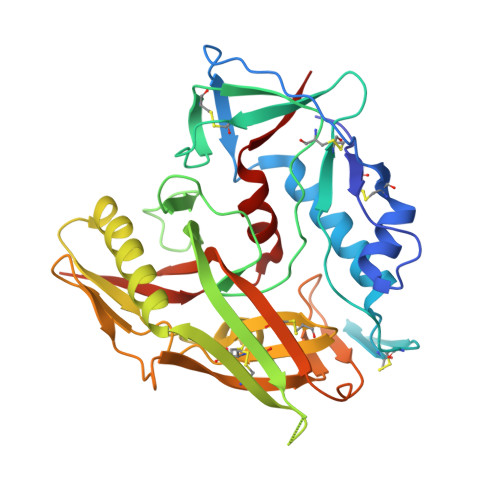
HIV-1 gp120 complex with CJF-IV-046


Experimental Data Snapshot

  • Method: X-RAY DIFFRACTION
  • Resolution: 2.47 Å
  • R-Value Free: 
    0.263 (Depositor), 0.262 (DCC) 
  • R-Value Work: 
    0.217 (Depositor), 0.220 (DCC) 
  • R-Value Observed: 
    0.219 (Depositor) 

Starting Model: experimental
View more details

wwPDB Validation 3D Report Full Report

Validation slider image for 8FM8

Ligand Structure Quality Assessment 


This is version 1.1 of the entry. See complete history

Literature

Indoline CD4-mimetic compounds mediate potent and broad HIV-1 inhibition and sensitization to antibody-dependent cellular cytotoxicity.

Fritschi, C.J.Anang, S.Gong, Z.Mohammadi, M.Richard, J.Bourassa, C.Severino, K.T.Richter, H.Yang, D.Chen, H.C.Chiu, T.J.Seaman, M.S.Madani, N.Abrams, C.Finzi, A.Hendrickson, W.A.Sodroski, J.G.Smith III, A.B.

(2023) Proc Natl Acad Sci U S A 120: e2222073120-e2222073120

  • DOI: https://doi.org/10.1073/pnas.2222073120
  • Primary Citation Related Structures: 
    8FLY, 8FLZ, 8FM0, 8FM2, 8FM3, 8FM4, 8FM5, 8FM7, 8FM8

  • PubMed Abstract: 

    Binding to the host cell receptors, CD4 and CCR5/CXCR4, triggers large-scale conformational changes in the HIV-1 envelope glycoprotein (Env) trimer [(gp120/gp41) 3 ] that promote virus entry into the cell. CD4-mimetic compounds (CD4mcs) comprise small organic molecules that bind in the highly conserved CD4-binding site of gp120 and prematurely induce inactivating Env conformational changes, including shedding of gp120 from the Env trimer. By inducing more "open," antibody-susceptible Env conformations, CD4mcs also sensitize HIV-1 virions to neutralization by antibodies and infected cells to antibody-dependent cellular cytotoxicity (ADCC). Here, we report the design, synthesis, and evaluation of novel CD4mcs based on an indoline scaffold. Compared with our current lead indane scaffold CD4mc, BNM-III-170, several indoline CD4mcs exhibit increased potency and breadth against HIV-1 variants from different geographic clades. Viruses that were selected for resistance to the lead indane CD4mc, BNM-III-170, are susceptible to inhibition by the indoline CD4mcs. The indoline CD4mcs also potently sensitize HIV-1-infected cells to ADCC mediated by plasma from HIV-1-infected individuals. Crystal structures indicate that the indoline CD4mcs gain potency compared to the indane CD4mcs through more favorable π-π overlap from the indoline pose and by making favorable contacts with the vestibule of the CD4-binding pocket on gp120. The rational design of indoline CD4mcs thus holds promise for further improvements in antiviral activity, potentially contributing to efforts to treat and prevent HIV-1 infection.


  • Organizational Affiliation
    • Department of Chemistry, University of Pennsylvania, Philadelphia, PA 19104.

Macromolecule Content 

  • Total Structure Weight: 167.09 kDa 
  • Atom Count: 11,277 
  • Modeled Residue Count: 1,340 
  • Deposited Residue Count: 1,432 
  • Unique protein chains: 1

Macromolecules

Find similar proteins by:|  3D Structure
Entity ID: 1
MoleculeChains  Sequence LengthOrganismDetailsImage
Envelope glycoprotein gp120A [auth C],
B [auth D],
C [auth A],
D [auth B]
358HIV-1 06TG.HT008Mutation(s): 0 
UniProt
Find proteins for C6G099 (Human immunodeficiency virus type 1)
Explore C6G099 
Go to UniProtKB:  C6G099
Entity Groups
Sequence Clusters30% Identity50% Identity70% Identity90% Identity95% Identity100% Identity
UniProt GroupC6G099
Glycosylation
Glycosylation Sites: 6
Sequence Annotations
Expand
Reference Sequence

Small Molecules

Ligands 3 Unique
IDChains Name / Formula / InChI Key2D Diagram3D Interactions
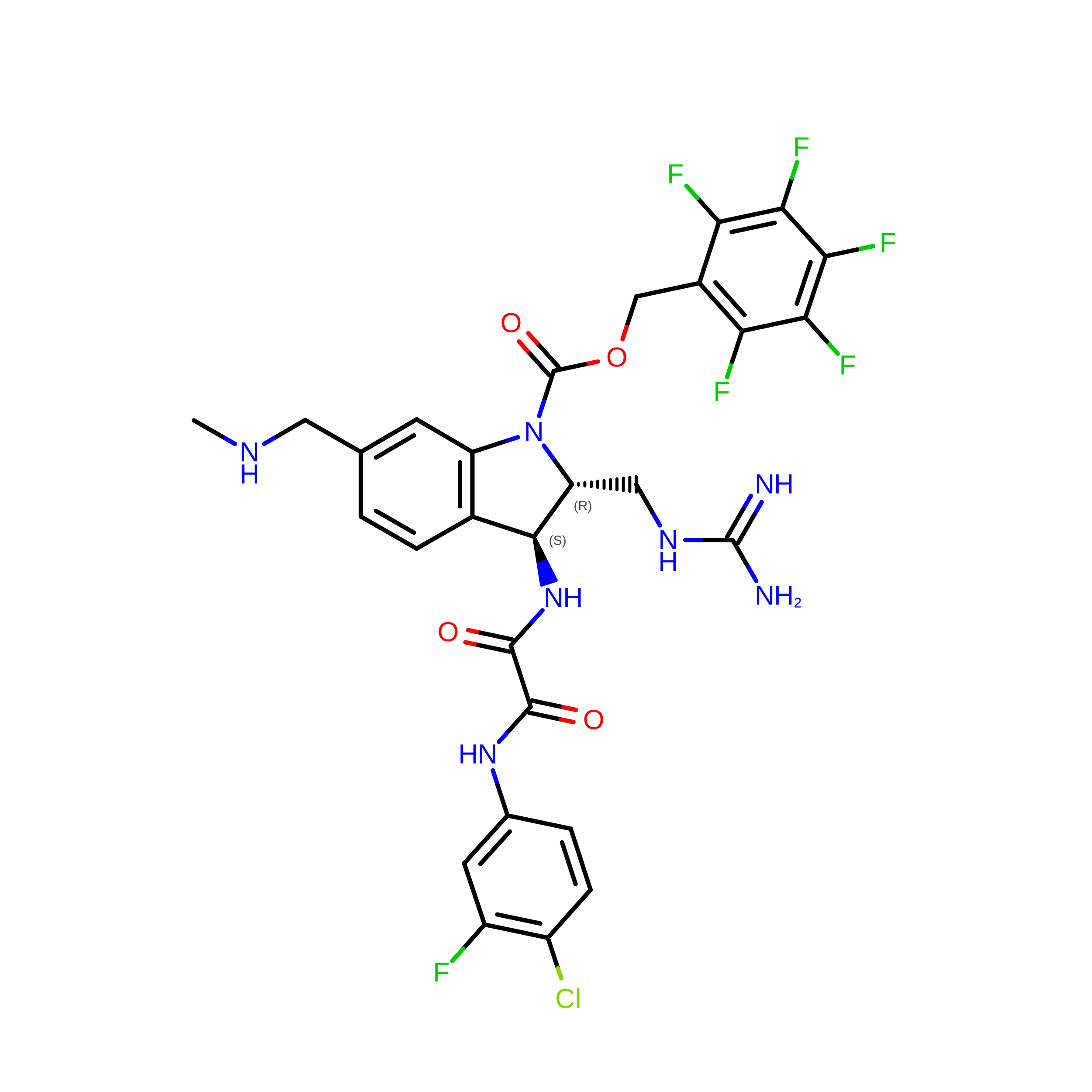
Y1T
(Subject of Investigation/LOI)

Query on Y1T


Download:Ideal Coordinates CCD File
GA [auth B],
K [auth C],
R [auth D],
Y [auth A]
(pentafluorophenyl)methyl (2R,3S)-2-(carbamimidamidomethyl)-3-[2-(4-chloro-3-fluoroanilino)(oxo)acetamido]-6-[(methylamino)methyl]-2,3-dihydro-1H-indole-1-carboxylate
C28 H24 Cl F6 N7 O4
ZLEHMUPVIABTKG-KOSHJBKYSA-N
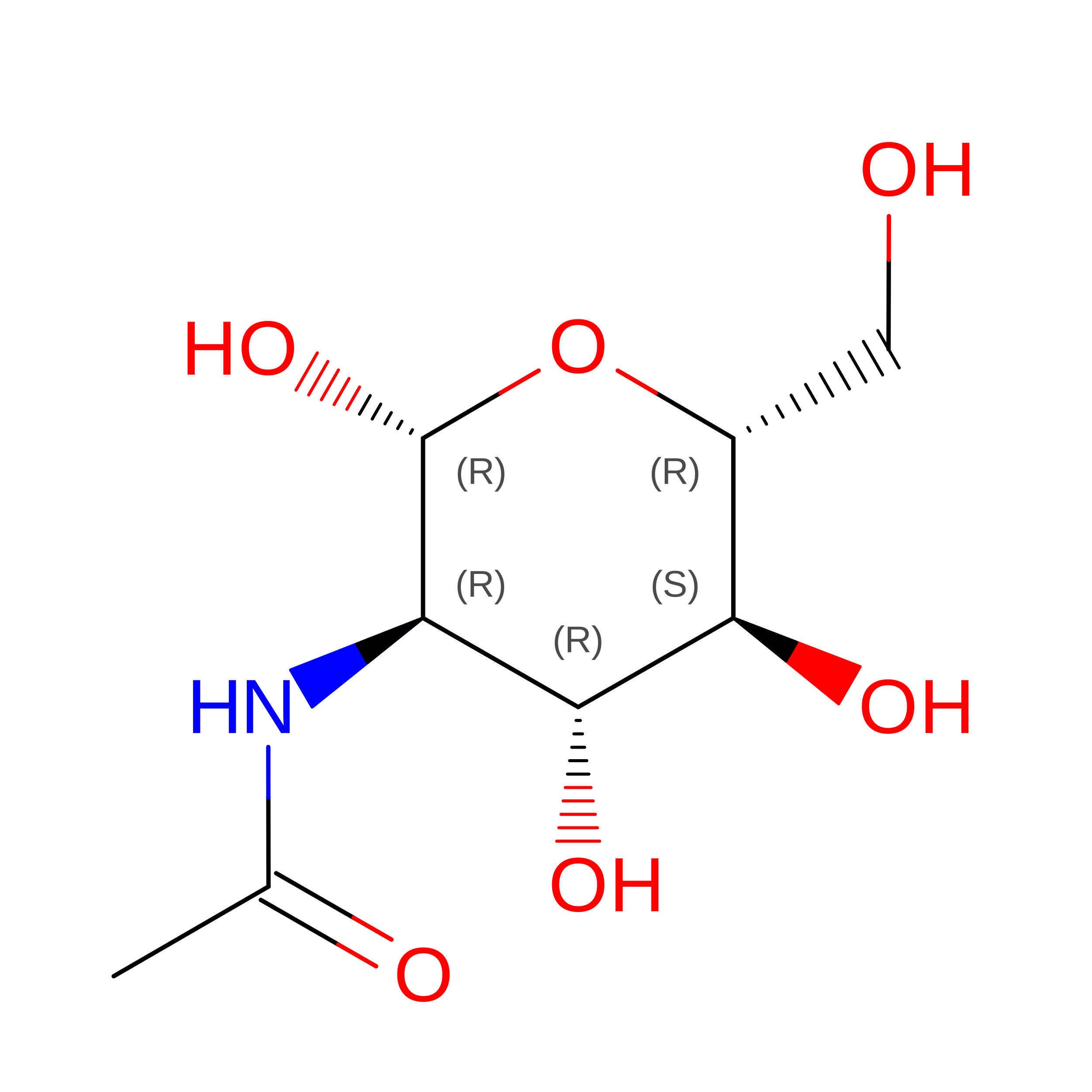
NAG

Query on NAG


Download:Ideal Coordinates CCD File
AA [auth B]
BA [auth B]
CA [auth B]
DA [auth B]
E [auth C]
AA [auth B],
BA [auth B],
CA [auth B],
DA [auth B],
E [auth C],
EA [auth B],
F [auth C],
FA [auth B],
G [auth C],
H [auth C],
I [auth C],
J [auth C],
L [auth D],
M [auth D],
N [auth D],
O [auth D],
P [auth D],
Q [auth D],
S [auth A],
T [auth A],
U [auth A],
V [auth A],
W [auth A],
X [auth A]
2-acetamido-2-deoxy-beta-D-glucopyranose
C8 H15 N O6
OVRNDRQMDRJTHS-FMDGEEDCSA-N
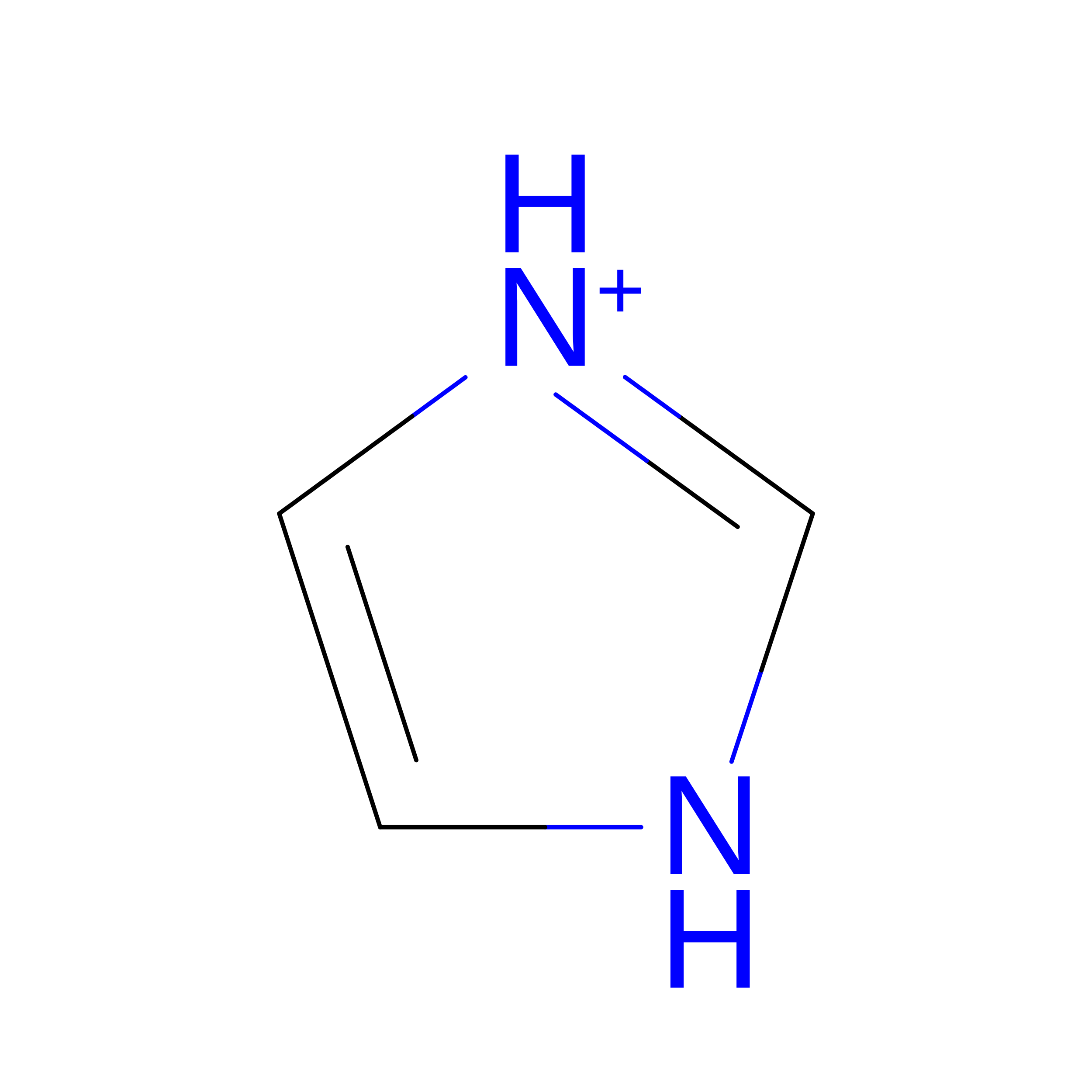
IMD

Query on IMD


Download:Ideal Coordinates CCD File
Z [auth A]IMIDAZOLE
C3 H5 N2
RAXXELZNTBOGNW-UHFFFAOYSA-O

Experimental Data & Validation

Experimental Data

  • Method: X-RAY DIFFRACTION
  • Resolution: 2.47 Å
  • R-Value Free:  0.263 (Depositor), 0.262 (DCC) 
  • R-Value Work:  0.217 (Depositor), 0.220 (DCC) 
  • R-Value Observed: 0.219 (Depositor) 
Space Group: P 21 21 21
Unit Cell:
Length ( Å )Angle ( ˚ )
a = 71.534α = 90
b = 121.79β = 90
c = 194.603γ = 90
Software Package:
Software NamePurpose
PHENIXrefinement
XDSdata reduction
STARANISOdata scaling
PHASERphasing

Structure Validation

View Full Validation Report


Ligand Structure Quality Assessment 


Entry History 

& Funding Information

Deposition Data


Funding OrganizationLocationGrant Number
National Institutes of Health/Eunice Kennedy Shriver National Institute of Child Health & Human Development (NIH/NICHD)United StatesAI150471-25 8117

Revision History  (Full details and data files)

  • Version 1.0: 2023-04-05
    Type: Initial release
  • Version 1.1: 2024-10-16
    Changes: Data collection, Structure summary