Download Mendeley
Improving the secretion of designed protein assemblies through negative design of cryptic transmembrane domains.
Wang, J.Y.J., Khmelinskaia, A., Sheffler, W., Miranda, M.C., Antanasijevic, A., Borst, A.J., Torres, S.V., Shu, C., Hsia, Y., Nattermann, U., Ellis, D., Walkey, C., Ahlrichs, M., Chan, S., Kang, A., Nguyen, H., Sydeman, C., Sankaran, B., Wu, M., Bera, A.K., Carter, L., Fiala, B., Murphy, M., Baker, D., Ward, A.B., King, N.P.(2023) Proc Natl Acad Sci U S A 120: e2214556120-e2214556120
- PubMed: 36888664 Search on PubMedSearch on PubMed Central
- DOI: https://doi.org/10.1073/pnas.2214556120
- Primary Citation Related Structures:
8FBI, 8FBJ, 8FBK, 8FBN, 8FBO - PubMed Abstract:
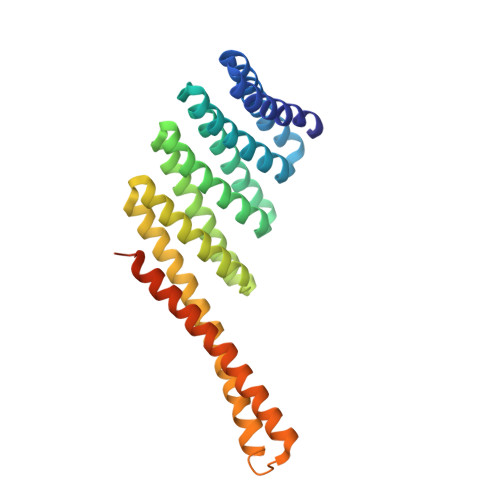
Computationally designed protein nanoparticles have recently emerged as a promising platform for the development of new vaccines and biologics. For many applications, secretion of designed nanoparticles from eukaryotic cells would be advantageous, but in practice, they often secrete poorly. Here we show that designed hydrophobic interfaces that drive nanoparticle assembly are often predicted to form cryptic transmembrane domains, suggesting that interaction with the membrane insertion machinery could limit efficient secretion. We develop a general computational protocol, the Degreaser, to design away cryptic transmembrane domains without sacrificing protein stability. The retroactive application of the Degreaser to previously designed nanoparticle components and nanoparticles considerably improves secretion, and modular integration of the Degreaser into design pipelines results in new nanoparticles that secrete as robustly as naturally occurring protein assemblies. Both the Degreaser protocol and the nanoparticles we describe may be broadly useful in biotechnological applications.
- Department of Biochemistry, University of Washington, Seattle, WA 98195.
Organizational Affiliation: