Download Mendeley
Gut colonization by Bacteroides requires translation by an EF-G paralog lacking GTPase activity.
Han, W., Peng, B.Z., Wang, C., Townsend 2nd, G.E., Barry, N.A., Peske, F., Goodman, A.L., Liu, J., Rodnina, M.V., Groisman, E.A.(2022) EMBO J : e112372-e112372
- PubMed: 36472247 Search on PubMedSearch on PubMed Central
- DOI: https://doi.org/10.15252/embj.2022112372
- Primary Citation Related Structures:
8DMF - PubMed Abstract:
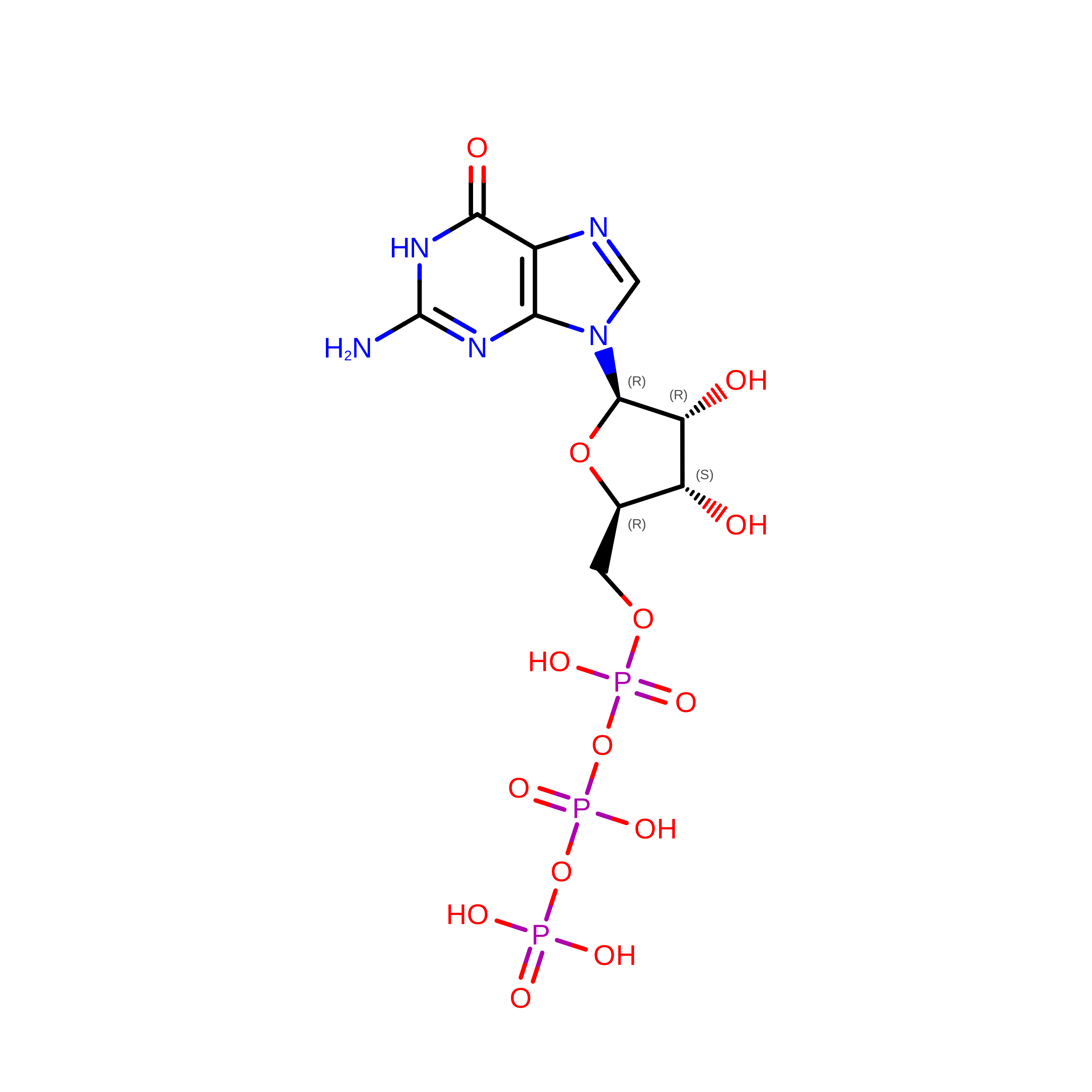
Protein synthesis is crucial for cell growth and survival yet one of the most energy-consuming cellular processes. How, then, do cells sustain protein synthesis under starvation conditions when energy is limited? To accelerate the translocation of mRNA-tRNAs through the ribosome, bacterial elongation factor G (EF-G) hydrolyzes energy-rich guanosine triphosphate (GTP) for every amino acid incorporated into a protein. Here, we identify an EF-G paralog-EF-G2-that supports translocation without hydrolyzing GTP in the gut commensal bacterium Bacteroides thetaiotaomicron. EF-G2's singular ability to sustain protein synthesis, albeit at slow rates, is crucial for bacterial gut colonization. EF-G2 is ~10-fold more abundant than canonical EF-G1 in bacteria harvested from murine ceca and, unlike EF-G1, specifically accumulates during carbon starvation. Moreover, we uncover a 26-residue region unique to EF-G2 that is essential for protein synthesis, EF-G2 dissociation from the ribosome, and responsible for the absence of GTPase activity. Our findings reveal how cells curb energy consumption while maintaining protein synthesis to advance fitness in nutrient-fluctuating environments.
- Department of Microbial Pathogenesis, Yale School of Medicine, New Haven, CT, USA.
Organizational Affiliation: