8BZM | pdb_00008bzm

FOXK1-ELF1-heterodimer bound to DNA


Experimental Data Snapshot

  • Method: X-RAY DIFFRACTION
  • Resolution: 2.69 Å
  • R-Value Free: 
    0.324 (Depositor), 0.328 (DCC) 
  • R-Value Work: 
    0.271 (Depositor), 0.283 (DCC) 
  • R-Value Observed: 
    0.274 (Depositor) 

Starting Models: experimental
View more details

wwPDB Validation 3D Report Full Report

Validation slider image for 8BZM

This is version 1.1 of the entry. See complete history. 

Literature

DNA-guided transcription factor interactions extend human gene regulatory code.

Xie, Z., Sokolov, I., Osmala, M., Yue, X., Bower, G., Pett, J.P., Chen, Y., Wang, K., Cavga, A.D., Popov, A., Teichmann, S.A., Morgunova, E., Kvon, E.Z., Yin, Y., Taipale, J.

(2025) Nature 

  • DOI: https://doi.org/10.1038/s41586-025-08844-z
  • Primary Citation Related Structures: 
    5EG0, 5NO6, 8BYX, 8BZM, 8R7F, 8R7Z

  • PubMed Abstract: 

    In the same way that the mRNA-binding specificities of transfer RNAs define the genetic code, the DNA-binding specificities of transcription factors (TFs) form the molecular basis of the gene regulatory code 1,2 . The human gene regulatory code is much more complex than the genetic code, in particular because there are more than 1,600 TFs that commonly interact with each other. TF-TF interactions are required for specifying cell fate and executing cell-type-specific transcriptional programs. Despite this, the landscape of interactions between DNA-bound TFs is poorly defined. Here we map the biochemical interactions between DNA-bound TFs using CAP-SELEX, a method that can simultaneously identify individual TF binding preferences, TF-TF interactions and the DNA sequences that are bound by the interacting complexes. A screen of more than 58,000 TF-TF pairs identified 2,198 interacting TF pairs, 1,329 of which preferentially bound to their motifs arranged in a distinct spacing and/or orientation. We also discovered 1,131 TF-TF composite motifs that were markedly different from the motifs of the individual TFs. In total, we estimate that the screen identified between 18% and 47% of all human TF-TF motifs. The novel composite motifs we found were enriched in cell-type-specific elements, active in vivo and more likely to be formed between developmentally co-expressed TFs. Furthermore, TFs that define embryonic axes commonly interacted with different TFs and bound to distinct motifs, explaining how TFs with a similar specificity can define distinct cell types along developmental axes.


  • Organizational Affiliation: 
    • State Key Laboratory of Cardiovascular Diseases and Medical Innovation Center, Shanghai East Hospital, School of Medicine, Tongji University, Shanghai, China.

Macromolecule Content 

  • Total Structure Weight: 87.51 kDa 
  • Atom Count: 6,097 
  • Modeled Residue Count: 621 
  • Deposited Residue Count: 628 
  • Unique protein chains: 2
  • Unique nucleic acid chains: 2

Macromolecules


Find similar proteins by:|  3D Structure
Entity ID: 2
MoleculeChains  Sequence LengthOrganismDetailsImage
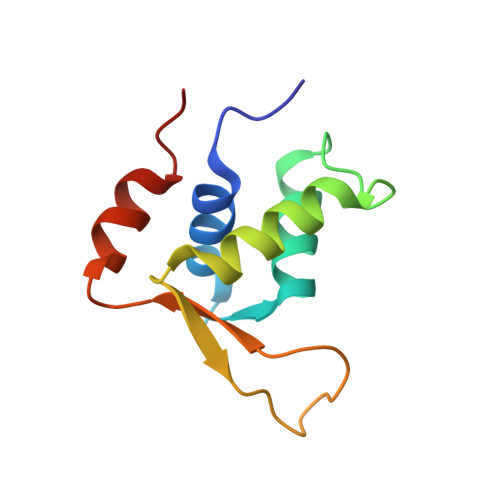
Forkhead box protein K1B [auth A],
C [auth E],
G [auth I],
H [auth J]
95Homo sapiensMutation(s): 0 
Gene Names: FOXK1, MNF
UniProt & NIH Common Fund Data Resources
Find proteins for P85037 (Homo sapiens)
Explore P85037 
Go to UniProtKB:  P85037
PHAROS:  P85037
GTEx:  ENSG00000164916 
Entity Groups
Sequence Clusters30% Identity50% Identity70% Identity90% Identity95% Identity100% Identity
UniProt GroupP85037
Sequence Annotations
Expand
Reference Sequence
Find similar proteins by:|  3D Structure
Entity ID: 4
MoleculeChains  Sequence LengthOrganismDetailsImage
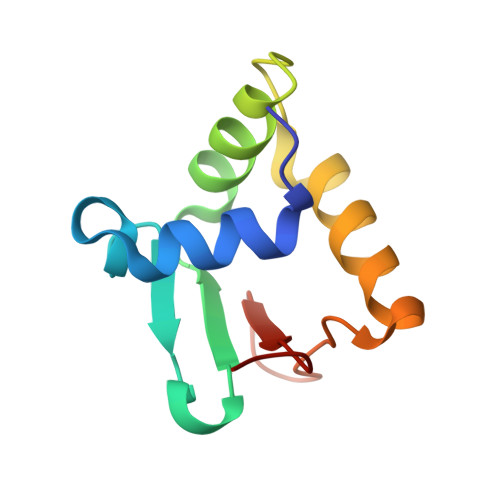
ETS-related transcription factor Elf-1I [auth B],
J [auth H]
89Homo sapiensMutation(s): 0 
Gene Names: ELF1
UniProt & NIH Common Fund Data Resources
Find proteins for P32519 (Homo sapiens)
Explore P32519 
Go to UniProtKB:  P32519
PHAROS:  P32519
GTEx:  ENSG00000120690 
Entity Groups
Sequence Clusters30% Identity50% Identity70% Identity90% Identity95% Identity100% Identity
UniProt GroupP32519
Sequence Annotations
Expand
Reference Sequence
Find similar nucleic acids by:  Sequence
Entity ID: 1
MoleculeChains LengthOrganismImage
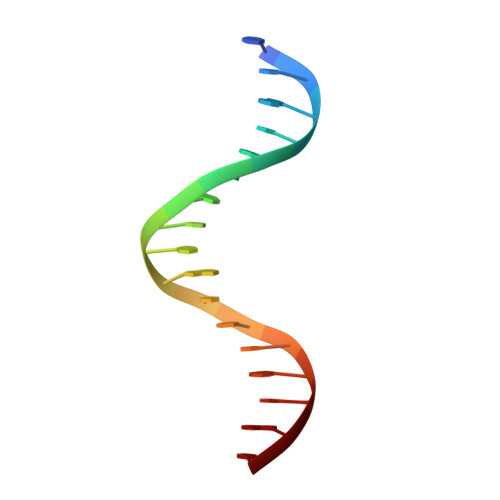
DNAA [auth G],
F [auth D]
17Homo sapiens
Sequence Annotations
Expand
Reference Sequence
Find similar nucleic acids by:  Sequence
Entity ID: 3
MoleculeChains LengthOrganismImage
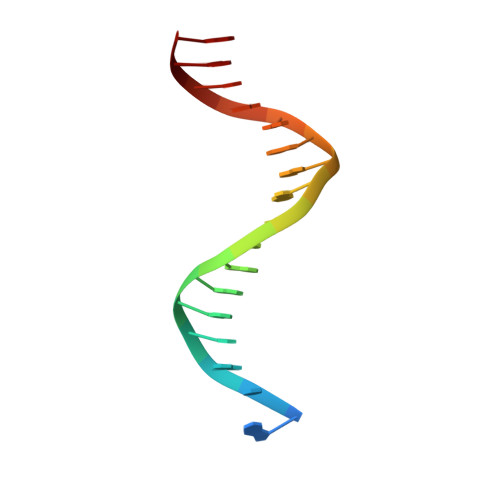
DNAD [auth F],
E [auth C]
18Homo sapiens
Sequence Annotations
Expand
Reference Sequence

Small Molecules

Ligands 1 Unique
IDChains Name / Formula / InChI Key2D Diagram3D Interactions
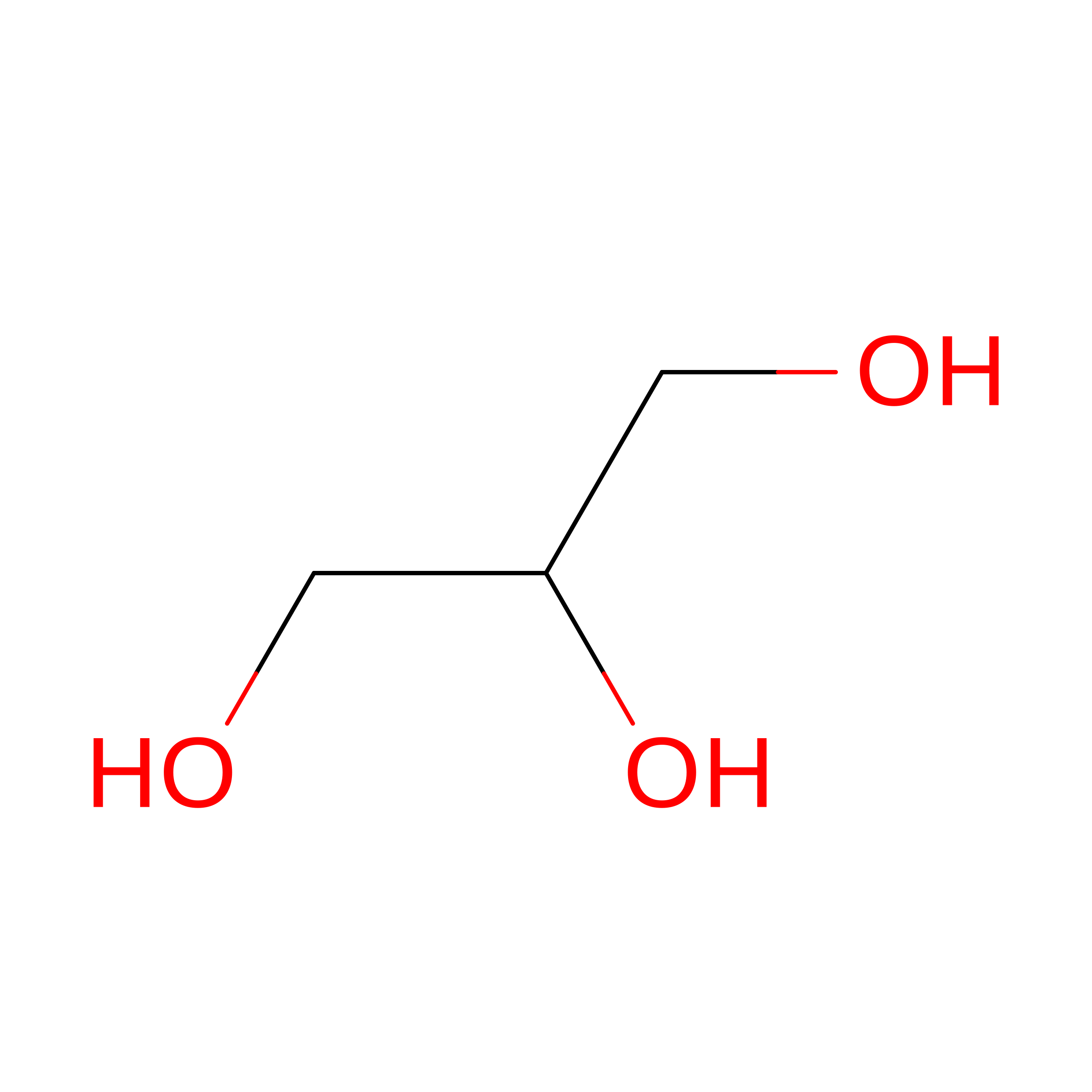
GOL

Query on GOL


Download:Ideal Coordinates CCD File
K [auth F]GLYCEROL
C3 H8 O3
PEDCQBHIVMGVHV-UHFFFAOYSA-N

Experimental Data & Validation

Experimental Data

  • Method: X-RAY DIFFRACTION
  • Resolution: 2.69 Å
  • R-Value Free:  0.324 (Depositor), 0.328 (DCC) 
  • R-Value Work:  0.271 (Depositor), 0.283 (DCC) 
  • R-Value Observed: 0.274 (Depositor) 
Space Group: P 1 21 1
Unit Cell:
Length ( Å )Angle ( ˚ )
a = 66.181α = 90
b = 105.868β = 112.94
c = 68.194γ = 90
Software Package:
Software NamePurpose
REFMACrefinement
XDSdata reduction
Aimlessdata scaling
PHASERphasing

Structure Validation

View Full Validation Report


Entry History 

& Funding Information

Deposition Data


Funding OrganizationLocationGrant Number
Not funded--

Revision History  (Full details and data files)

  • Version 1.0: 2023-12-27
    Type: Initial release
  • Version 1.1: 2025-04-23
    Changes: Database references, Structure summary