8AD7 | pdb_00008ad7

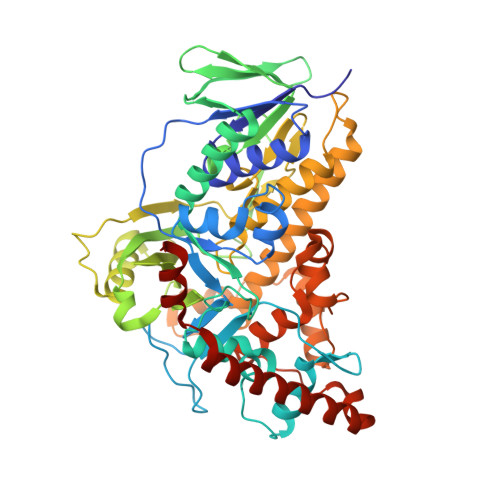
Flavin-dependent tryptophan 6-halogenase Thal in complex with D-Trp


Experimental Data Snapshot

  • Method: X-RAY DIFFRACTION
  • Resolution: 2.33 Å
  • R-Value Free: 
    0.237 (Depositor), 0.235 (DCC) 
  • R-Value Work: 
    0.192 (Depositor), 0.196 (DCC) 

Starting Model: experimental
View more details

wwPDB Validation 3D Report Full Report

Validation slider image for 8AD7

Ligand Structure Quality Assessment 


This is version 1.4 of the entry. See complete history

Literature

Enzymatic Late-Stage Halogenation of Peptides.

Schnepel, C.Moritzer, A.C.Gafe, S.Montua, N.Minges, H.Niess, A.Niemann, H.H.Sewald, N.

(2023) Chembiochem 24: e202200569-e202200569

  • DOI: https://doi.org/10.1002/cbic.202200569
  • Primary Citation Related Structures: 
    8AD7, 8AD8

  • PubMed Abstract: 

    The late-stage site-selective derivatisation of peptides has many potential applications in structure-activity relationship studies and postsynthetic modification or conjugation of bioactive compounds. The development of orthogonal methods for C-H functionalisation is crucial for such peptide derivatisation. Among them, biocatalytic methods are increasingly attracting attention. Tryptophan halogenases emerged as valuable catalysts to functionalise tryptophan (Trp), while direct enzyme-catalysed halogenation of synthetic peptides is yet unprecedented. Here, it is reported that the Trp 6-halogenase Thal accepts a wide range of amides and peptides containing a Trp moiety. Increasing the sequence length and reaction optimisation made bromination of pentapeptides feasible with good turnovers and a broad sequence scope, while regioselectivity turned out to be sequence dependent. Comparison of X-ray single crystal structures of Thal in complex with d-Trp and a dipeptide revealed a significantly altered binding mode for the peptide. The viability of this bioorthogonal approach was exemplified by halogenation of a cyclic RGD peptide.


  • Organizational Affiliation
    • Organische und Bioorganische Chemie, Fakultät für Chemie, Universität Bielefeld, Universitätsstraße 25, 33615, Bielefeld, Germany.

Macromolecule Content 

  • Total Structure Weight: 121.6 kDa 
  • Atom Count: 8,691 
  • Modeled Residue Count: 1,053 
  • Deposited Residue Count: 1,068 
  • Unique protein chains: 1

Macromolecules

Find similar proteins by:|  3D Structure
Entity ID: 1
MoleculeChains  Sequence LengthOrganismDetailsImage
Tryptophan 6-halogenase
A, B
534Streptomyces albogriseolusMutation(s): 0 
Gene Names: thalthdH
EC: 1.14.19.59
UniProt
Find proteins for A1E280 (Streptomyces albogriseolus)
Explore A1E280 
Go to UniProtKB:  A1E280
Entity Groups
Sequence Clusters30% Identity50% Identity70% Identity90% Identity95% Identity100% Identity
UniProt GroupA1E280
Sequence Annotations
Expand
Reference Sequence

Small Molecules

Ligands 3 Unique
IDChains Name / Formula / InChI Key2D Diagram3D Interactions
DTR
(Subject of Investigation/LOI)

Query on DTR


Download:Ideal Coordinates CCD File
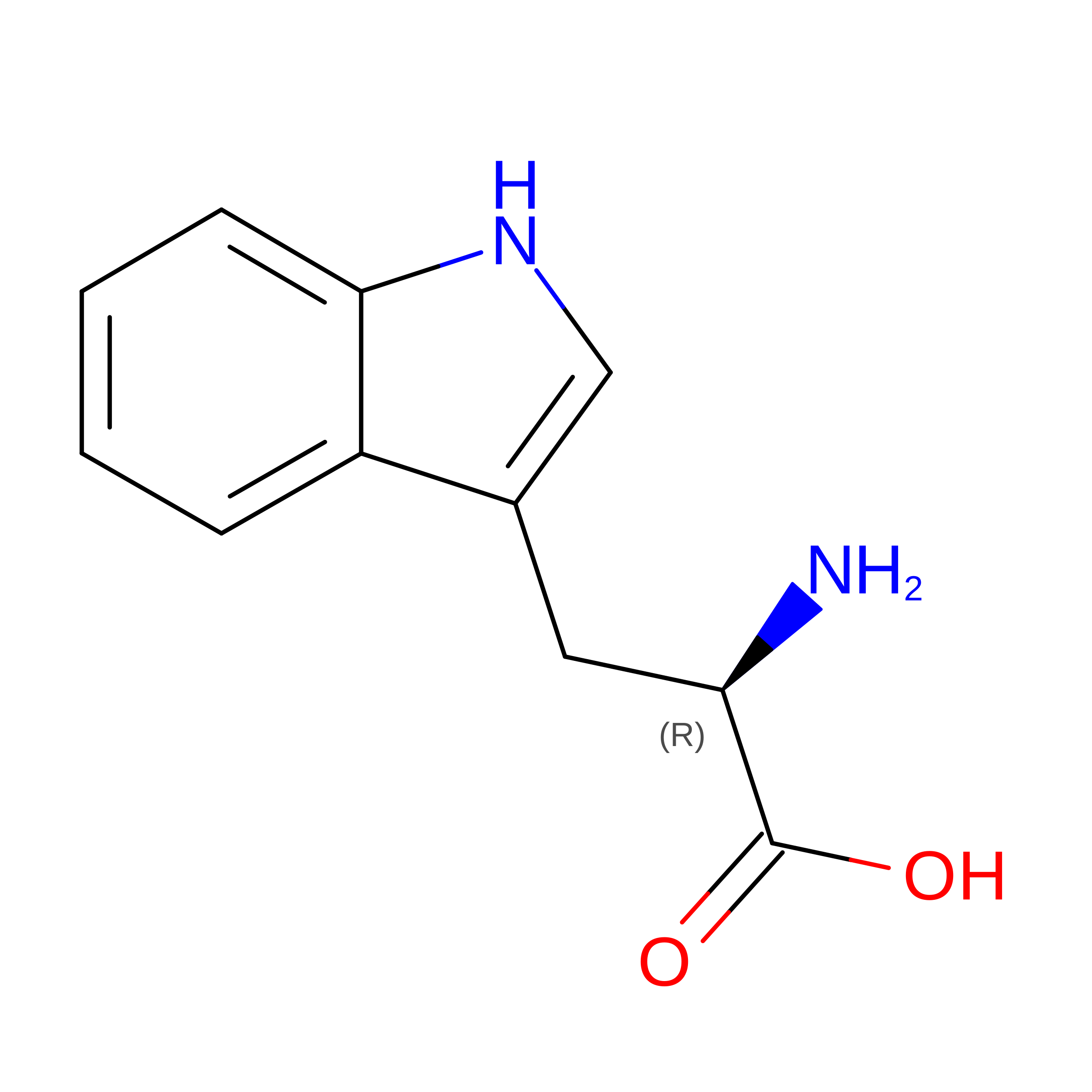
J [auth A]D-TRYPTOPHAN
C11 H12 N2 O2
QIVBCDIJIAJPQS-SECBINFHSA-N
PO4

Query on PO4


Download:Ideal Coordinates CCD File
C [auth A],
D [auth A],
E [auth A]
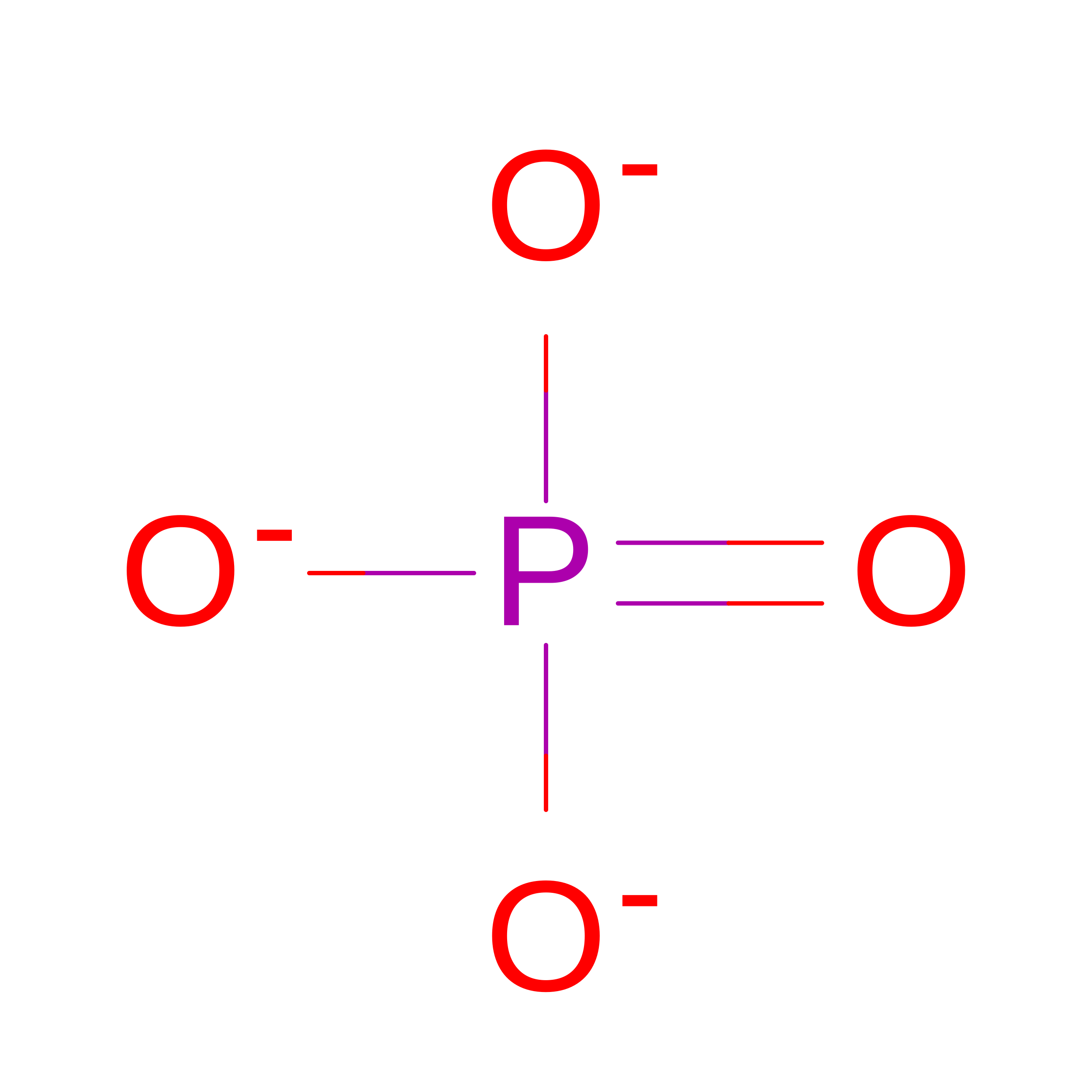
PHOSPHATE ION
O4 P
NBIIXXVUZAFLBC-UHFFFAOYSA-K
GOL

Query on GOL


Download:Ideal Coordinates CCD File
F [auth A]
G [auth A]
H [auth A]
I [auth A]
K [auth B]
F [auth A],
G [auth A],
H [auth A],
I [auth A],
K [auth B],
L [auth B]
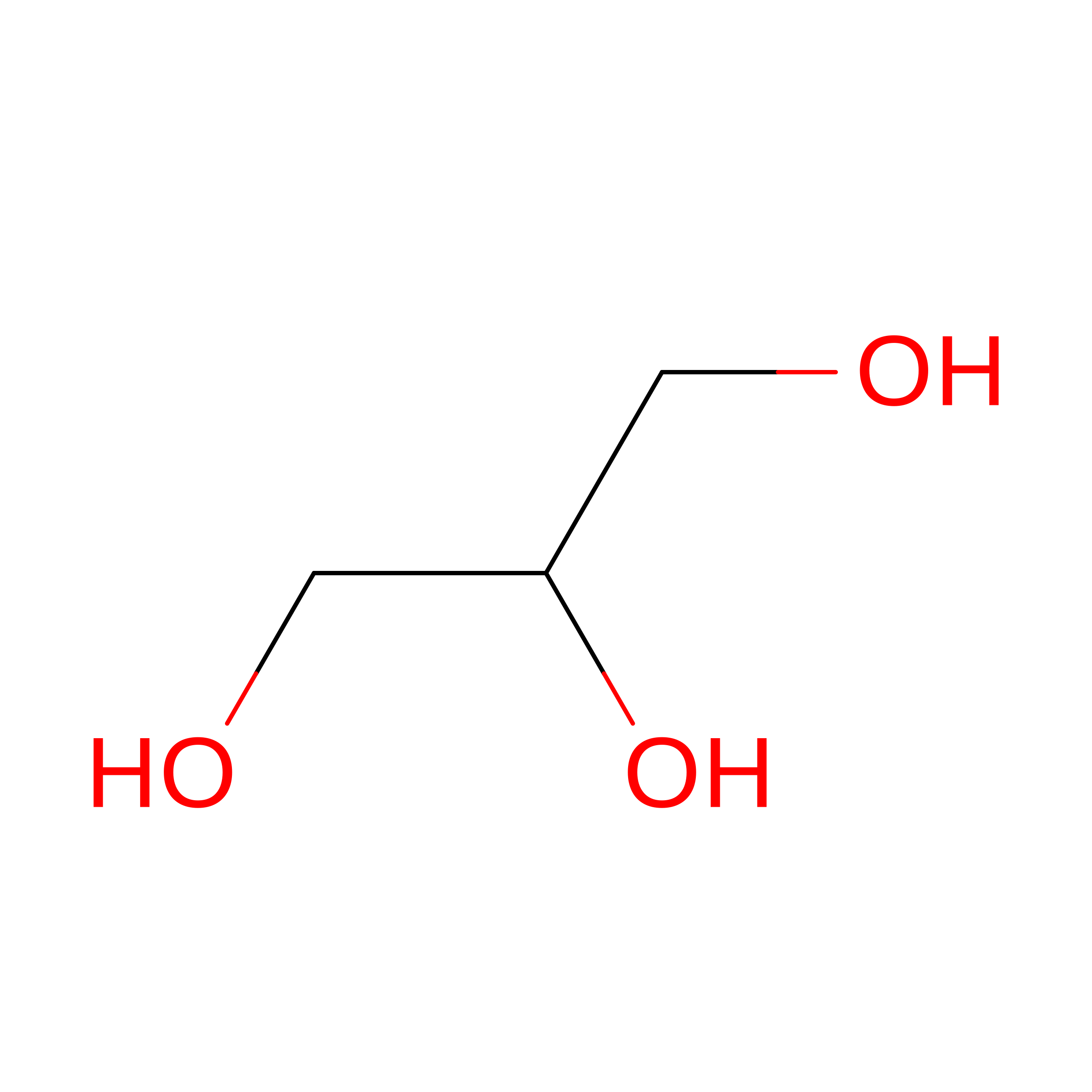
GLYCEROL
C3 H8 O3
PEDCQBHIVMGVHV-UHFFFAOYSA-N

Experimental Data & Validation

Experimental Data

  • Method: X-RAY DIFFRACTION
  • Resolution: 2.33 Å
  • R-Value Free:  0.237 (Depositor), 0.235 (DCC) 
  • R-Value Work:  0.192 (Depositor), 0.196 (DCC) 
Space Group: P 64
Unit Cell:
Length ( Å )Angle ( ˚ )
a = 138.91α = 90
b = 138.91β = 90
c = 142.59γ = 120
Software Package:
Software NamePurpose
REFMACrefinement
XDSdata reduction
XSCALEdata scaling
PHASERphasing

Structure Validation

View Full Validation Report


Ligand Structure Quality Assessment 


Entry History 

& Funding Information

Deposition Data


Funding OrganizationLocationGrant Number
Not funded--

Revision History  (Full details and data files)

  • Version 1.0: 2022-10-12
    Type: Initial release
  • Version 1.1: 2022-11-02
    Changes: Database references
  • Version 1.2: 2022-12-07
    Changes: Database references
  • Version 1.3: 2023-01-11
    Changes: Database references
  • Version 1.4: 2024-01-31
    Changes: Data collection, Refinement description