7KG7 | pdb_00007kg7

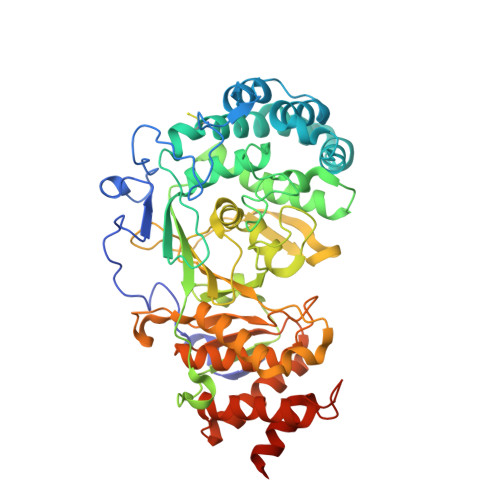
Structure of human PARG complexed with PARG-292


Experimental Data Snapshot

  • Method: X-RAY DIFFRACTION
  • Resolution: 1.85 Å
  • R-Value Free: 
    0.196 (Depositor), 0.201 (DCC) 
  • R-Value Work: 
    0.177 (Depositor), 0.185 (DCC) 
  • R-Value Observed: 
    0.178 (Depositor) 

Starting Model: experimental
View more details

wwPDB Validation 3D Report Full Report

Validation slider image for 7KG7

Ligand Structure Quality Assessment 


This is version 1.3 of the entry. See complete history

Literature

Targeting SARS-CoV-2 Nsp3 macrodomain structure with insights from human poly(ADP-ribose) glycohydrolase (PARG) structures with inhibitors.

Brosey, C.A.Houl, J.H.Katsonis, P.Balapiti-Modarage, L.P.F.Bommagani, S.Arvai, A.Moiani, D.Bacolla, A.Link, T.Warden, L.S.Lichtarge, O.Jones, D.E.Ahmed, Z.Tainer, J.A.

(2021) Prog Biophys Mol Biol 163: 171-186

  • DOI: https://doi.org/10.1016/j.pbiomolbio.2021.02.002
  • Primary Citation Related Structures: 
    7KFP, 7KG0, 7KG1, 7KG3, 7KG6, 7KG7, 7KG8, 7KXB, 7LG7

  • PubMed Abstract: 

    Arrival of the novel SARS-CoV-2 has launched a worldwide effort to identify both pre-approved and novel therapeutics targeting the viral proteome, highlighting the urgent need for efficient drug discovery strategies. Even with effective vaccines, infection is possible, and at-risk populations would benefit from effective drug compounds that reduce the lethality and lasting damage of COVID-19 infection. The CoV-2 MacroD-like macrodomain (Mac1) is implicated in viral pathogenicity by disrupting host innate immunity through its mono (ADP-ribosyl) hydrolase activity, making it a prime target for antiviral therapy. We therefore solved the structure of CoV-2 Mac1 from non-structural protein 3 (Nsp3) and applied structural and sequence-based genetic tracing, including newly determined A. pompejana MacroD2 and GDAP2 amino acid sequences, to compare and contrast CoV-2 Mac1 with the functionally related human DNA-damage signaling factor poly (ADP-ribose) glycohydrolase (PARG). Previously, identified targetable features of the PARG active site allowed us to develop a pharmacologically useful PARG inhibitor (PARGi). Here, we developed a focused chemical library and determined 6 novel PARGi X-ray crystal structures for comparative analysis. We applied this knowledge to discovery of CoV-2 Mac1 inhibitors by combining computation and structural analysis to identify PARGi fragments with potential to bind the distal-ribose and adenosyl pockets of the CoV-2 Mac1 active site. Scaffold development of these PARGi fragments has yielded two novel compounds, PARG-345 and PARG-329, that crystallize within the Mac1 active site, providing critical structure-activity data and a pathway for inhibitor optimization. The reported structural findings demonstrate ways to harness our PARGi synthesis and characterization pipeline to develop CoV-2 Mac1 inhibitors targeting the ADP-ribose active site. Together, these structural and computational analyses reveal a path for accelerating development of antiviral therapeutics from pre-existing drug optimization pipelines.


  • Organizational Affiliation
    • Department of Molecular and Cellular Oncology, M. D. Anderson Cancer Center, Houston, TX, 77030, USA. Electronic address: CABrosey@mdanderson.org.

Macromolecule Content 

  • Total Structure Weight: 62.19 kDa 
  • Atom Count: 4,222 
  • Modeled Residue Count: 500 
  • Deposited Residue Count: 531 
  • Unique protein chains: 1

Macromolecules

Find similar proteins by:|  3D Structure
Entity ID: 1
MoleculeChains  Sequence LengthOrganismDetailsImage
Poly(ADP-ribose) glycohydrolase531Homo sapiensMutation(s): 6 
Gene Names: PARG
EC: 3.2.1.143
UniProt & NIH Common Fund Data Resources
Find proteins for Q86W56 (Homo sapiens)
Explore Q86W56 
Go to UniProtKB:  Q86W56
PHAROS:  Q86W56
GTEx:  ENSG00000227345 
Entity Groups
Sequence Clusters30% Identity50% Identity70% Identity90% Identity95% Identity100% Identity
UniProt GroupQ86W56
Sequence Annotations
Expand
Reference Sequence

Small Molecules

Ligands 3 Unique
IDChains Name / Formula / InChI Key2D Diagram3D Interactions
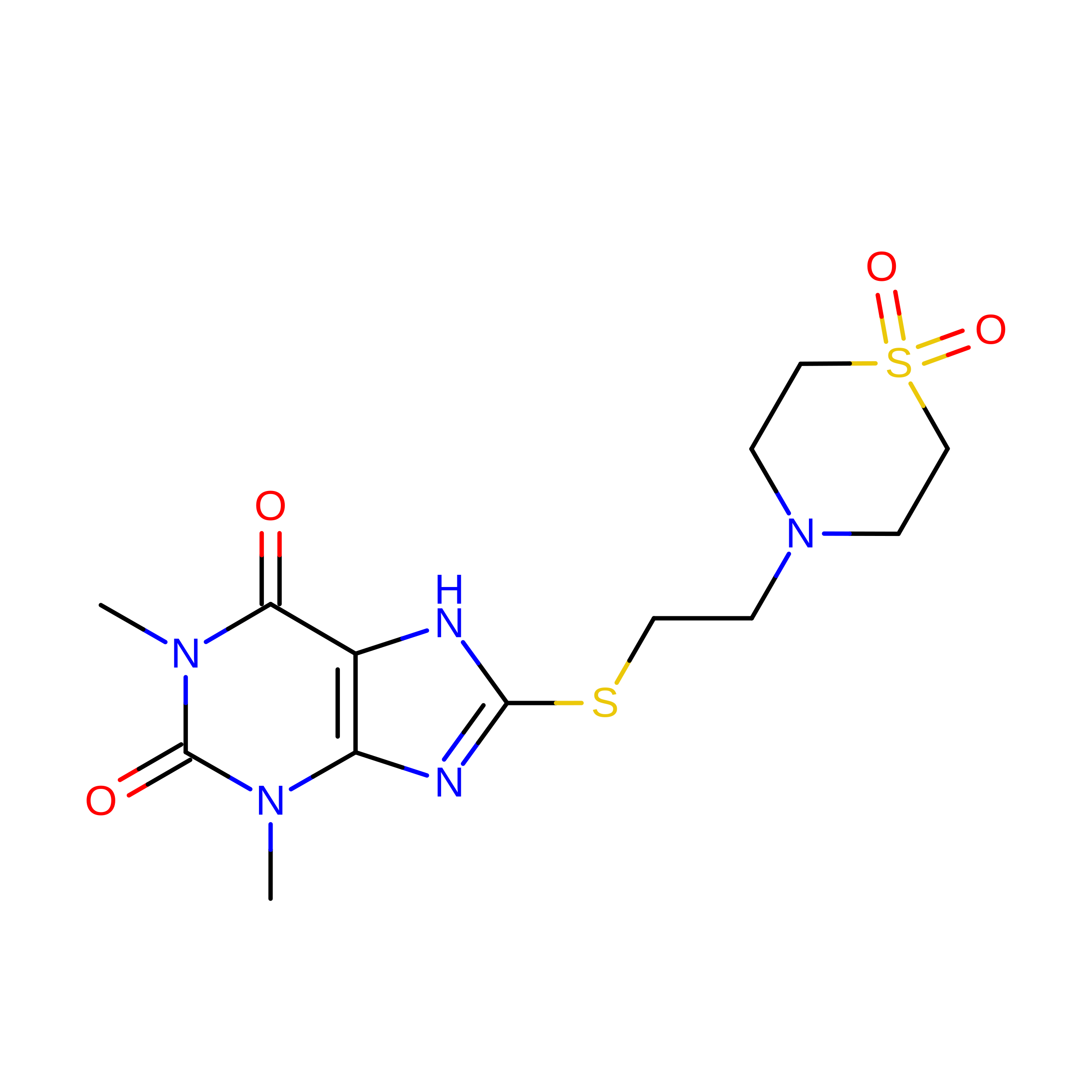
WDJ
(Subject of Investigation/LOI)

Query on WDJ


Download:Ideal Coordinates CCD File
B [auth A]8-{[2-(1,1-dioxo-1lambda~6~,4-thiazinan-4-yl)ethyl]sulfanyl}-1,3-dimethyl-3,7-dihydro-1H-purine-2,6-dione
C13 H19 N5 O4 S2
YPZHYYKYMSTZFD-UHFFFAOYSA-N
SO4

Query on SO4


Download:Ideal Coordinates CCD File
G [auth A],
H [auth A],
I [auth A],
J [auth A],
K [auth A]
SULFATE ION
O4 S
QAOWNCQODCNURD-UHFFFAOYSA-L
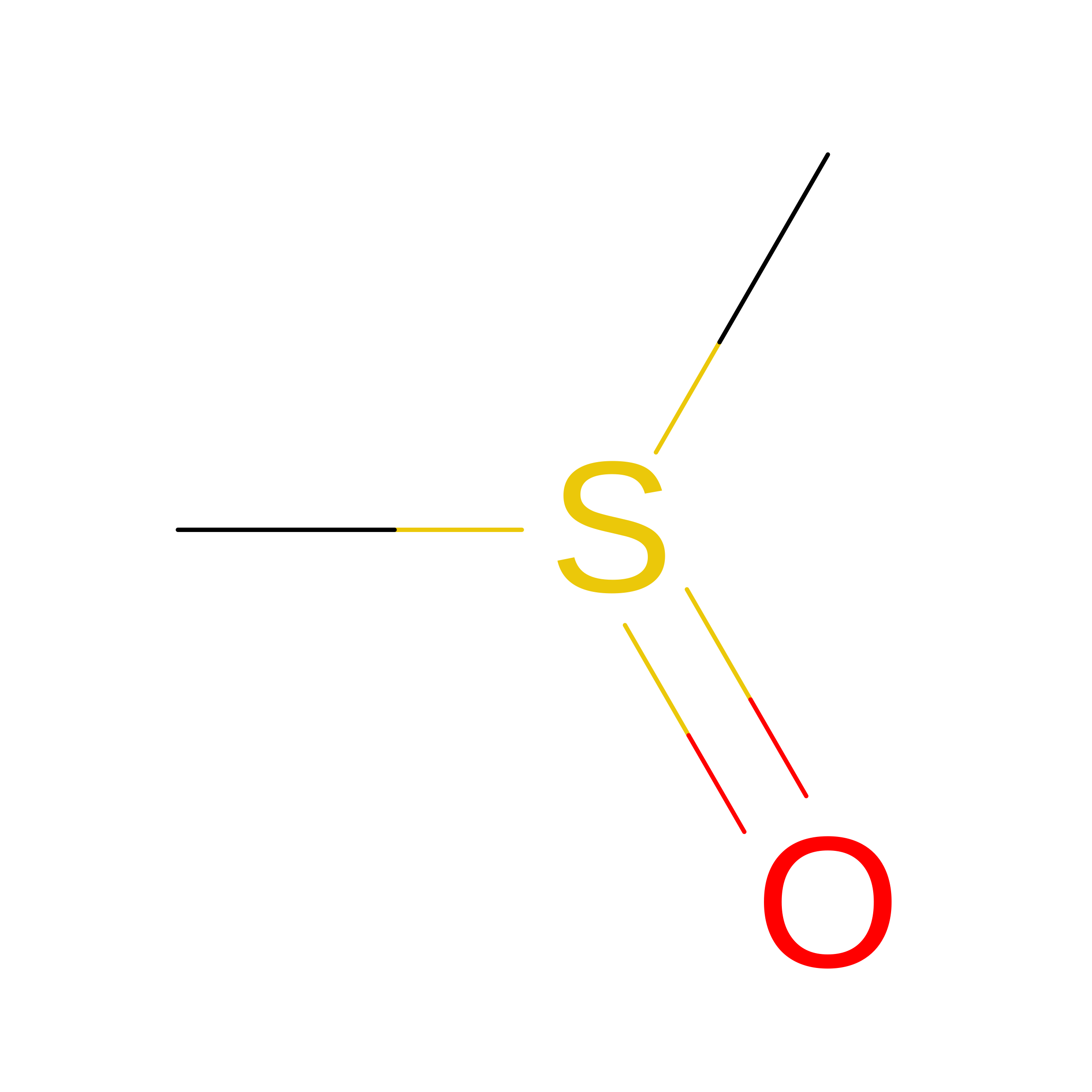
DMS

Query on DMS


Download:Ideal Coordinates CCD File
C [auth A],
D [auth A],
E [auth A],
F [auth A]
DIMETHYL SULFOXIDE
C2 H6 O S
IAZDPXIOMUYVGZ-UHFFFAOYSA-N
Modified Residues  1 Unique
IDChains TypeFormula2D DiagramParent
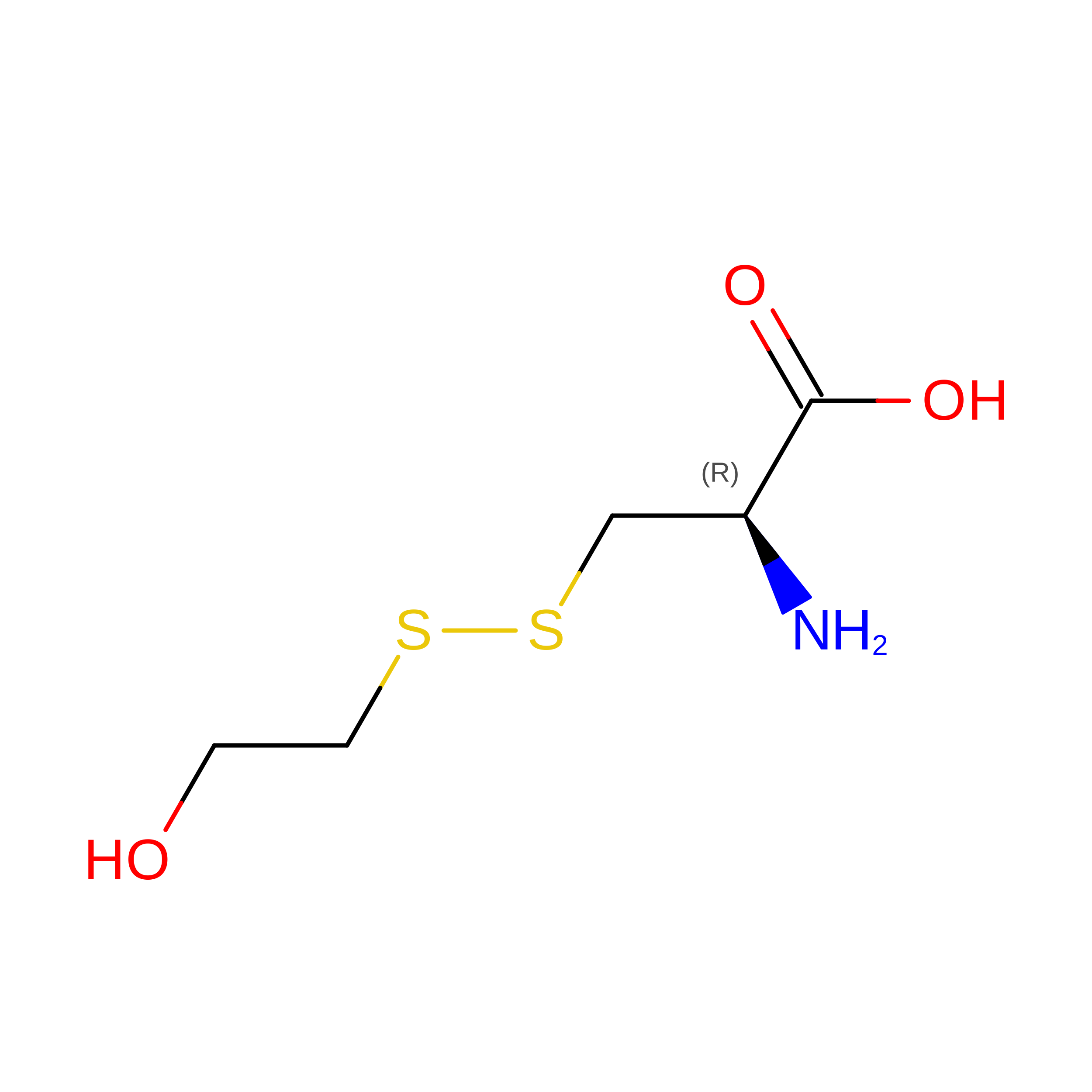
CME
Query on CME
A
L-PEPTIDE LINKINGC5 H11 N O3 S2CYS

Experimental Data & Validation

Experimental Data

  • Method: X-RAY DIFFRACTION
  • Resolution: 1.85 Å
  • R-Value Free:  0.196 (Depositor), 0.201 (DCC) 
  • R-Value Work:  0.177 (Depositor), 0.185 (DCC) 
  • R-Value Observed: 0.178 (Depositor) 
Space Group: P 21 21 21
Unit Cell:
Length ( Å )Angle ( ˚ )
a = 66.607α = 90
b = 89.038β = 90
c = 94.799γ = 90
Software Package:
Software NamePurpose
PHENIXrefinement
XDSdata reduction
Aimlessdata scaling
PHASERphasing

Structure Validation

View Full Validation Report


Ligand Structure Quality Assessment 


Entry History 

& Funding Information

Deposition Data


Funding OrganizationLocationGrant Number
National Institutes of Health/National Cancer Institute (NIH/NCI)United StatesR01 CA200231

Revision History  (Full details and data files)

  • Version 1.0: 2021-03-10
    Type: Initial release
  • Version 1.1: 2021-06-16
    Changes: Database references
  • Version 1.2: 2023-10-18
    Changes: Data collection, Database references, Refinement description
  • Version 1.3: 2024-10-16
    Changes: Structure summary