7KB3 | pdb_00007kb3

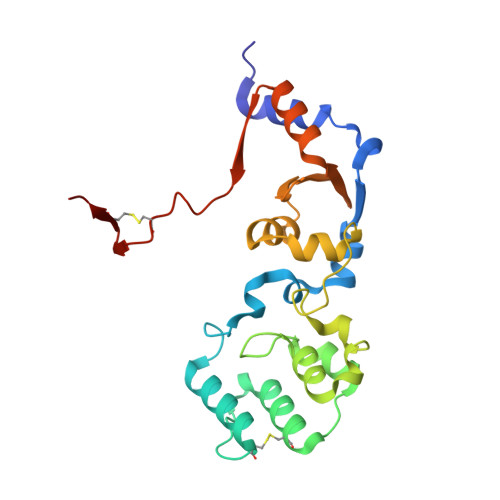
The structure of a sensor domain of a histidine kinase (VxrA) from Vibrio cholerae O1 biovar eltor str. N16961, 2nd form


Experimental Data Snapshot

  • Method: X-RAY DIFFRACTION
  • Resolution: 2.25 Å
  • R-Value Free: 
    0.227 (Depositor), 0.229 (DCC) 
  • R-Value Work: 
    0.205 (Depositor), 0.208 (DCC) 
  • R-Value Observed: 
    0.206 (Depositor) 

Starting Model: experimental
View more details

wwPDB Validation 3D Report Full Report

Validation slider image for 7KB3

Ligand Structure Quality Assessment 


This is version 1.3 of the entry. See complete history

Literature

Sensor Domain of Histidine Kinase VxrA of Vibrio cholerae - A Hairpin-swapped Dimer and its Conformational Change.

Tan, K.Teschler, J.K.Wu, R.Jedrzejczak, R.P.Zhou, M.Shuvalova, L.A.Endres, M.J.Welk, L.F.Kwon, K.Anderson, W.F.Satchell, K.J.F.Yildiz, F.H.Joachimiak, A.

(2021) J Bacteriol 

  • DOI: https://doi.org/10.1128/JB.00643-20
  • Primary Citation Related Structures: 
    4R7Q, 7KB3, 7KB7, 7KB9, 7LA6

  • PubMed Abstract: 

    VxrA and VxrB are cognate histidine kinase (HK) - response regulator (RR) pairs of a two-component signaling system (TCS) found in Vibrio cholerae , a bacterial pathogen that causes cholera. The VxrAB TCS positively regulates virulence, the Type VI Secretion System, biofilm formation, and cell wall homeostasis in V. cholerae , providing protection from environmental stresses and contributing to the transmission and virulence of the pathogen. The VxrA HK has a unique periplasmic sensor domain (SD) and, remarkably, lacks a cytoplasmic linker domain between the second transmembrane helix and the dimerization and histidine phosphotransfer (DHp) domain, indicating that this system may utilize a potentially unique signal sensing and transmission TCS mechanism. In this study, we have determined several crystal structures of VxrA-SD and its mutants. These structures reveal a novel structural fold forming an unusual β hairpin-swapped dimer. A conformational change caused by relative rotation of the two monomers in a VxrA-SD dimer could potentially change the association of transmembrane helices and, subsequently, the pairing of cytoplasmic DHp domains. Based on the structural observation, we propose a putative scissor-like closing regulation mechanism for the VxrA HK. IMPORTANCE V. cholerae has a dynamic life cycle, which requires rapid adaptation to changing external conditions. Two-component signal transduction (TCS) systems allow V. cholerae to sense and respond to these environmental changes. The VxrAB TCS positively regulates a number of important V. cholerae phenotypes, including virulence, the Type Six Secretion System, biofilm formation, and cell wall homeostasis. Here, we provide the crystal structure of the VxrA sensor histidine kinase sensing domain and propose a mechanism for signal transduction. The cognate signal for VxrAB remains unknown, however, in this work we couple our structural analysis with functional assessments of key residues to further our understanding of this important TCS.


  • Organizational Affiliation
    • Center for Structural Genomics of Infectious Diseases, University of Chicago, 5735 South Ellis Avenue, Chicago, IL 60637, USA.

Macromolecule Content 

  • Total Structure Weight: 101.52 kDa 
  • Atom Count: 7,135 
  • Modeled Residue Count: 872 
  • Deposited Residue Count: 888 
  • Unique protein chains: 1

Macromolecules

Find similar proteins by:|  3D Structure
Entity ID: 1
MoleculeChains  Sequence LengthOrganismDetailsImage
Sensor histidine kinase
A, B, C, D
222Vibrio cholerae O1 biovar El Tor str. N16961Mutation(s): 0 
Gene Names: VC_A0565
EC: 2.7.13.3
UniProt
Find proteins for Q9KM24 (Vibrio cholerae serotype O1 (strain ATCC 39315 / El Tor Inaba N16961))
Explore Q9KM24 
Go to UniProtKB:  Q9KM24
Entity Groups
Sequence Clusters30% Identity50% Identity70% Identity90% Identity95% Identity100% Identity
UniProt GroupQ9KM24
Sequence Annotations
Expand
Reference Sequence

Small Molecules

Ligands 5 Unique
IDChains Name / Formula / InChI Key2D Diagram3D Interactions
SRT

Query on SRT


Download:Ideal Coordinates CCD File
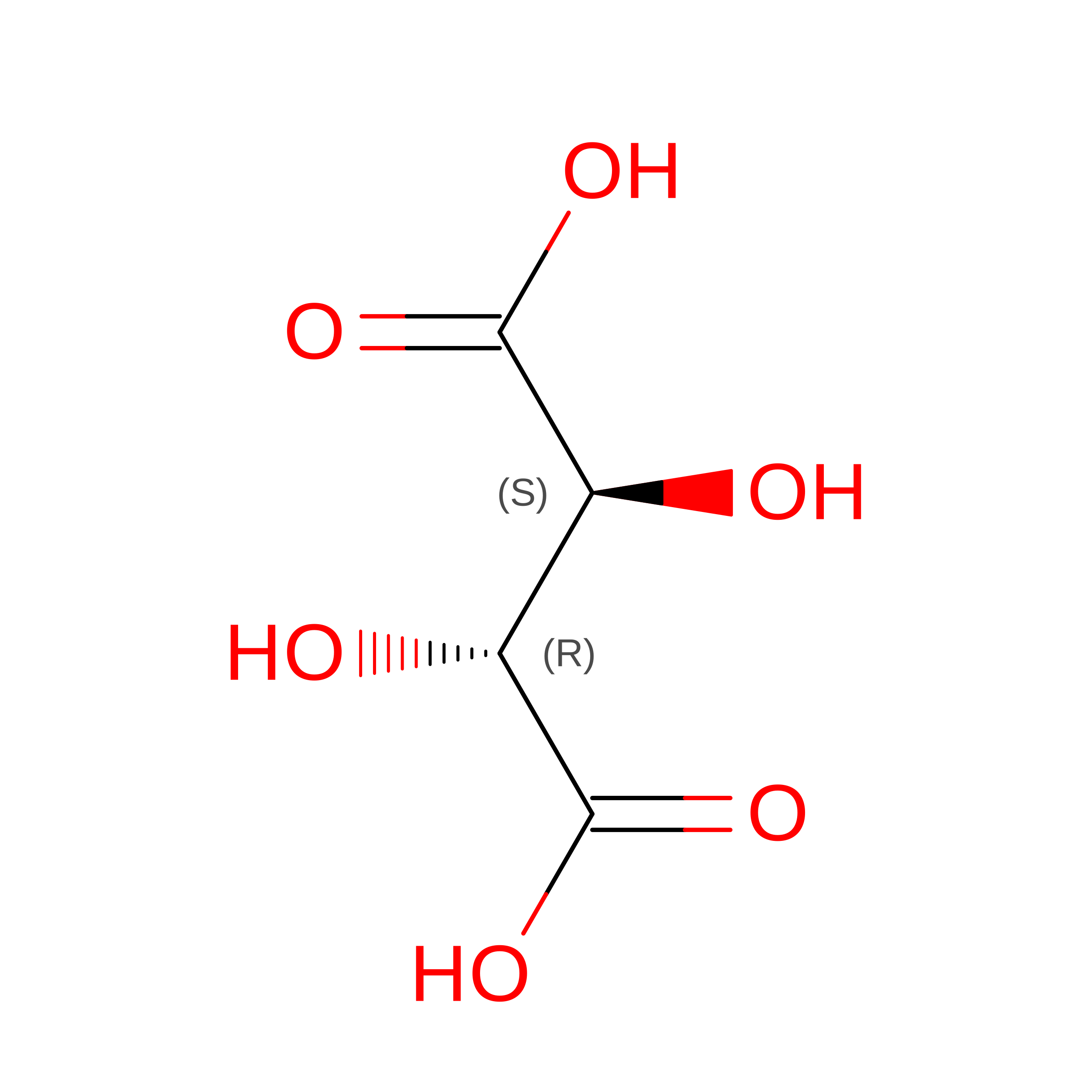
Y [auth C]S,R MESO-TARTARIC ACID
C4 H6 O6
FEWJPZIEWOKRBE-XIXRPRMCSA-N
PEG

Query on PEG


Download:Ideal Coordinates CCD File
HA [auth D],
Q [auth B]
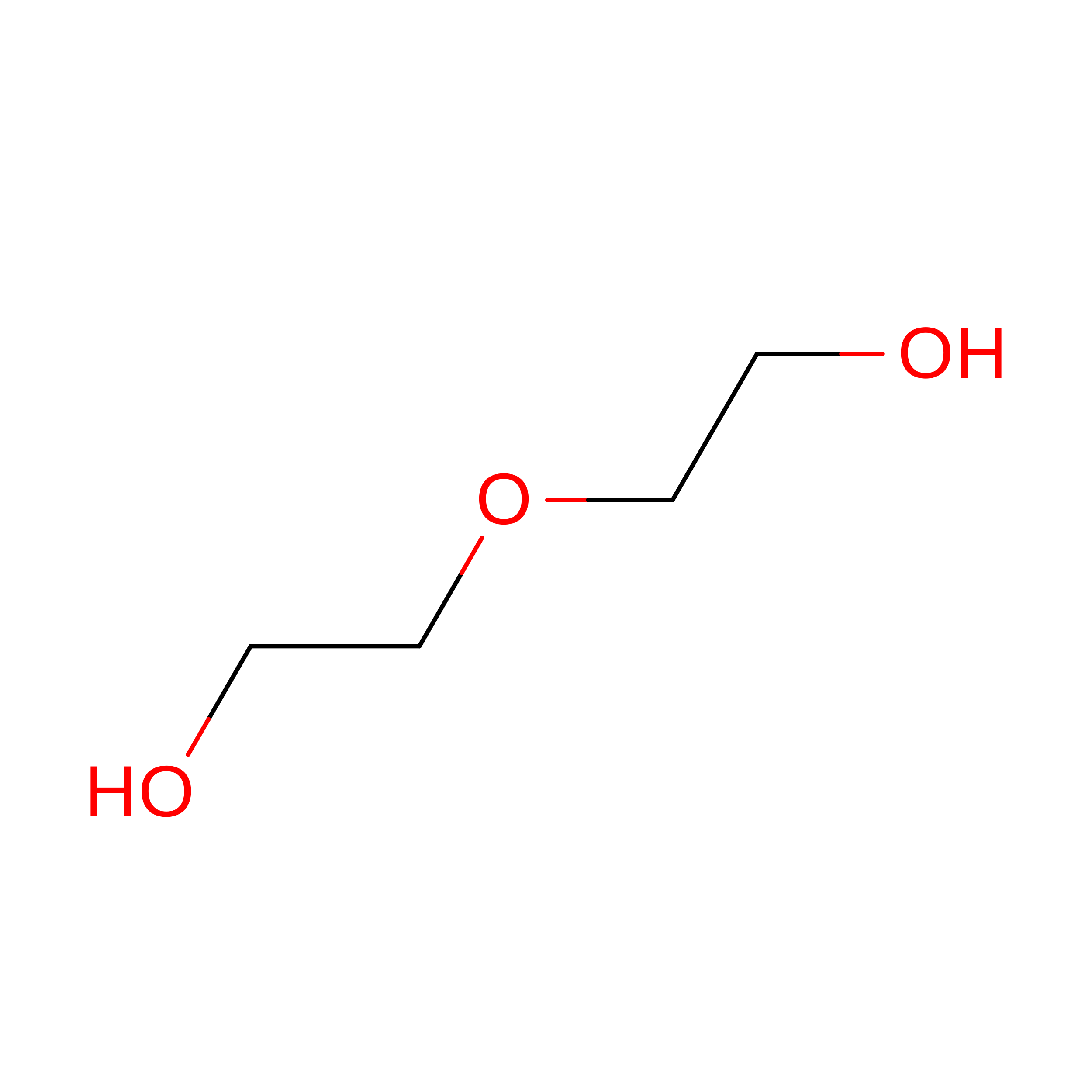
DI(HYDROXYETHYL)ETHER
C4 H10 O3
MTHSVFCYNBDYFN-UHFFFAOYSA-N
GOL

Query on GOL


Download:Ideal Coordinates CCD File
CA [auth D],
DA [auth D],
E [auth A],
EA [auth D]
GLYCEROL
C3 H8 O3
PEDCQBHIVMGVHV-UHFFFAOYSA-N
ACT

Query on ACT


Download:Ideal Coordinates CCD File
F [auth A]
FA [auth D]
G [auth A]
GA [auth D]
O [auth B]
F [auth A],
FA [auth D],
G [auth A],
GA [auth D],
O [auth B],
P [auth B],
V [auth C],
W [auth C],
X [auth C]
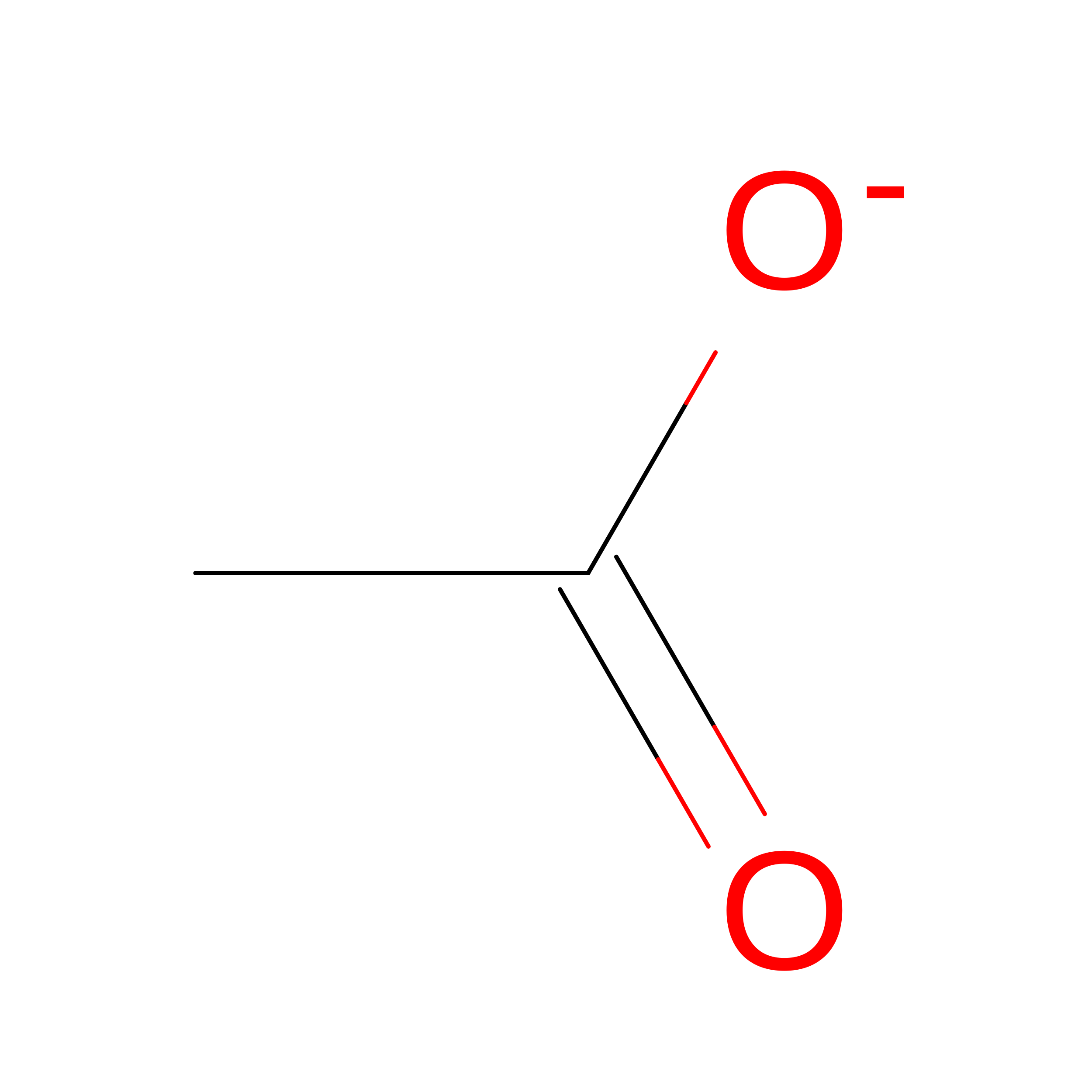
ACETATE ION
C2 H3 O2
QTBSBXVTEAMEQO-UHFFFAOYSA-M
CL

Query on CL


Download:Ideal Coordinates CCD File
AA [auth C]
BA [auth C]
H [auth A]
I [auth A]
IA [auth D]
AA [auth C],
BA [auth C],
H [auth A],
I [auth A],
IA [auth D],
J [auth A],
JA [auth D],
K [auth A],
KA [auth D],
L [auth A],
LA [auth D],
M [auth A],
MA [auth D],
N [auth A],
NA [auth D],
OA [auth D],
R [auth B],
S [auth B],
T [auth B],
U [auth B],
Z [auth C]
CHLORIDE ION
Cl
VEXZGXHMUGYJMC-UHFFFAOYSA-M

Experimental Data & Validation

Experimental Data

  • Method: X-RAY DIFFRACTION
  • Resolution: 2.25 Å
  • R-Value Free:  0.227 (Depositor), 0.229 (DCC) 
  • R-Value Work:  0.205 (Depositor), 0.208 (DCC) 
  • R-Value Observed: 0.206 (Depositor) 
Space Group: P 21 21 21
Unit Cell:
Length ( Å )Angle ( ˚ )
a = 112.085α = 90
b = 116.677β = 90
c = 120.747γ = 90
Software Package:
Software NamePurpose
PHENIXrefinement
HKL-3000data reduction
HKL-3000data scaling
HKL-3000phasing
SBC-Collectdata collection

Structure Validation

View Full Validation Report


Ligand Structure Quality Assessment 


Entry History 

& Funding Information

Deposition Data


Funding OrganizationLocationGrant Number
National Institutes of Health/National Institute Of Allergy and Infectious Diseases (NIH/NIAID)United StatesHHSN272201700060C

Revision History  (Full details and data files)

  • Version 1.0: 2020-10-14
    Type: Initial release
  • Version 1.1: 2022-11-16
    Changes: Database references
  • Version 1.2: 2023-10-18
    Changes: Data collection, Refinement description
  • Version 1.3: 2024-12-25
    Changes: Advisory, Derived calculations, Structure summary