7Z25 | pdb_00007z25

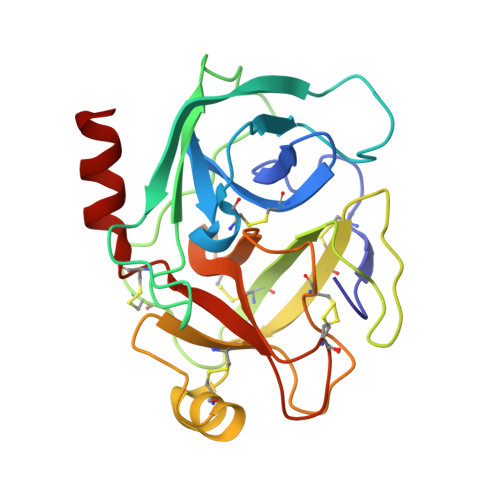
TRYPSIN (BOVINE) COMPLEXED WITH compound 12


Experimental Data Snapshot

  • Method: X-RAY DIFFRACTION
  • Resolution: 1.35 Å
  • R-Value Free: 
    0.174 (Depositor), 0.172 (DCC) 
  • R-Value Work: 
    0.144 (Depositor), 0.143 (DCC) 
  • R-Value Observed: 
    0.146 (Depositor) 

Starting Model: other
View more details

wwPDB Validation 3D Report Full Report

Validation slider image for 7Z25

Ligand Structure Quality Assessment 


This is version 1.4 of the entry. See complete history

Literature

Efficient Screening of Target-Specific Selected Compounds in Mixtures by 19 F NMR Binding Assay with Predicted 19 F NMR Chemical Shifts.

Vulpetti, A.Lingel, A.Dalvit, C.Schiering, N.Oberer, L.Henry, C.Lu, Y.

(2022) ChemMedChem 17: e202200163-e202200163

  • DOI: https://doi.org/10.1002/cmdc.202200163
  • Primary Citation Related Structures: 
    7Z25, 7Z2I

  • PubMed Abstract: 

    Ligand-based 19 F NMR screening is a highly effective and well-established hit-finding approach. The high sensitivity to protein binding makes it particularly suitable for fragment screening. Different criteria can be considered for generating fluorinated fragment libraries. One common strategy is to assemble a large, diverse, well-designed and characterized fragment library which is screened in mixtures, generated based on experimental 19 F NMR chemical shifts. Here, we introduce a complementary knowledge-based 19 F NMR screening approach, named 19 Focused screening, enabling the efficient screening of putative active molecules selected by computational hit finding methodologies, in mixtures assembled and on-the-fly deconvoluted based on predicted 19 F NMR chemical shifts. In this study, we developed a novel approach, named LEFshift, for 19 F NMR chemical shift prediction using rooted topological fluorine torsion fingerprints in combination with a random forest machine learning method. A demonstration of this approach to a real test case is reported.


  • Organizational Affiliation
    • Novartis Institutes for BioMedical Research, 4002, Basel, Switzerland.

Macromolecule Content 

  • Total Structure Weight: 23.95 kDa 
  • Atom Count: 2,118 
  • Modeled Residue Count: 223 
  • Deposited Residue Count: 223 
  • Unique protein chains: 1

Macromolecules

Find similar proteins by:|  3D Structure
Entity ID: 1
MoleculeChains  Sequence LengthOrganismDetailsImage
Serine protease 1223Bos taurusMutation(s): 0 
EC: 3.4.21.4
UniProt
Find proteins for P00760 (Bos taurus)
Explore P00760 
Go to UniProtKB:  P00760
Entity Groups
Sequence Clusters30% Identity50% Identity70% Identity90% Identity95% Identity100% Identity
UniProt GroupP00760
Sequence Annotations
Expand
Reference Sequence

Small Molecules

Ligands 3 Unique
IDChains Name / Formula / InChI Key2D Diagram3D Interactions
IAF
(Subject of Investigation/LOI)

Query on IAF


Download:Ideal Coordinates CCD File
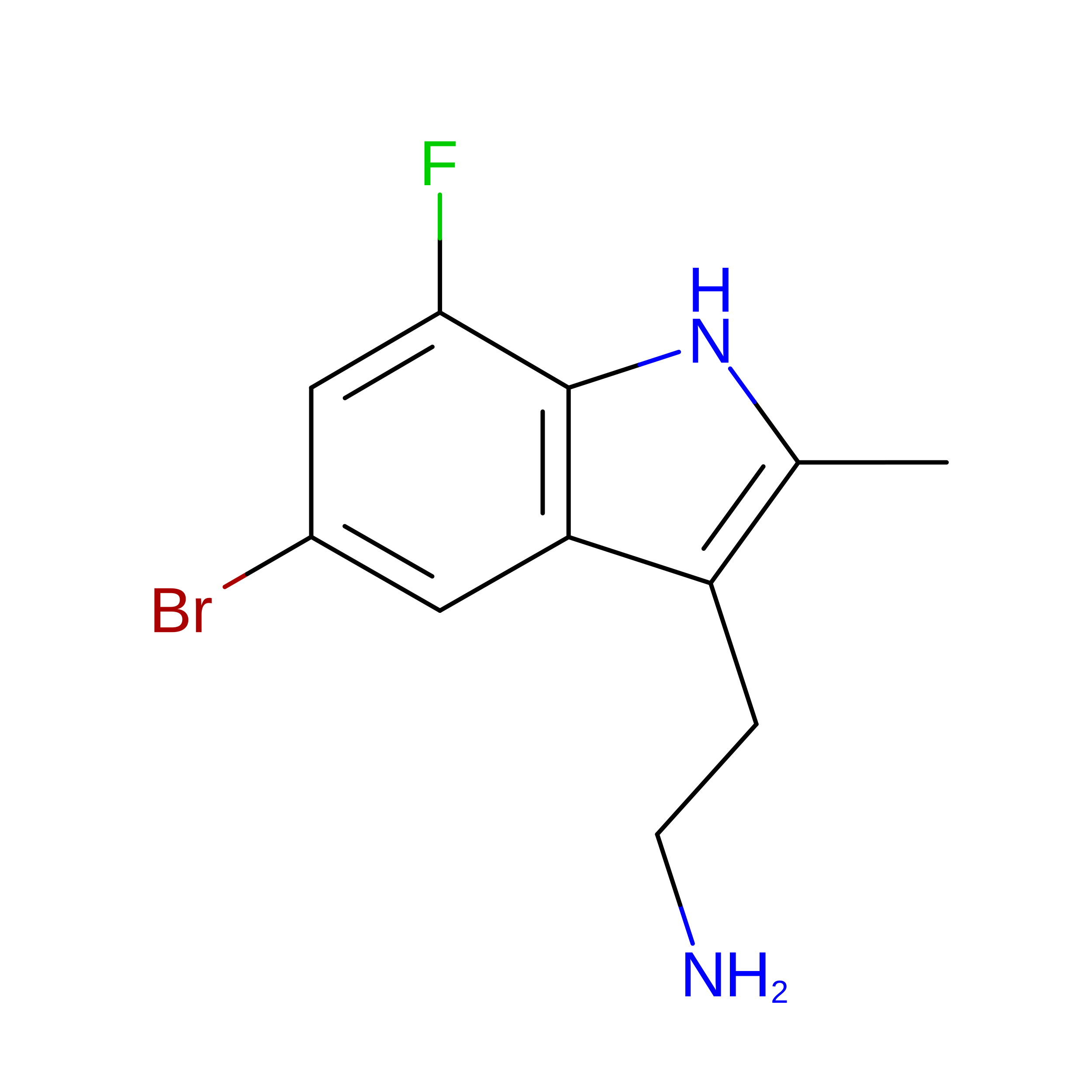
G [auth A]2-(5-bromanyl-7-fluoranyl-2-methyl-1H-indol-3-yl)ethanamine
C11 H12 Br F N2
ZXTLEYKPUYPREL-UHFFFAOYSA-N
DMS

Query on DMS


Download:Ideal Coordinates CCD File
B [auth A],
C [auth A],
D [auth A],
E [auth A]
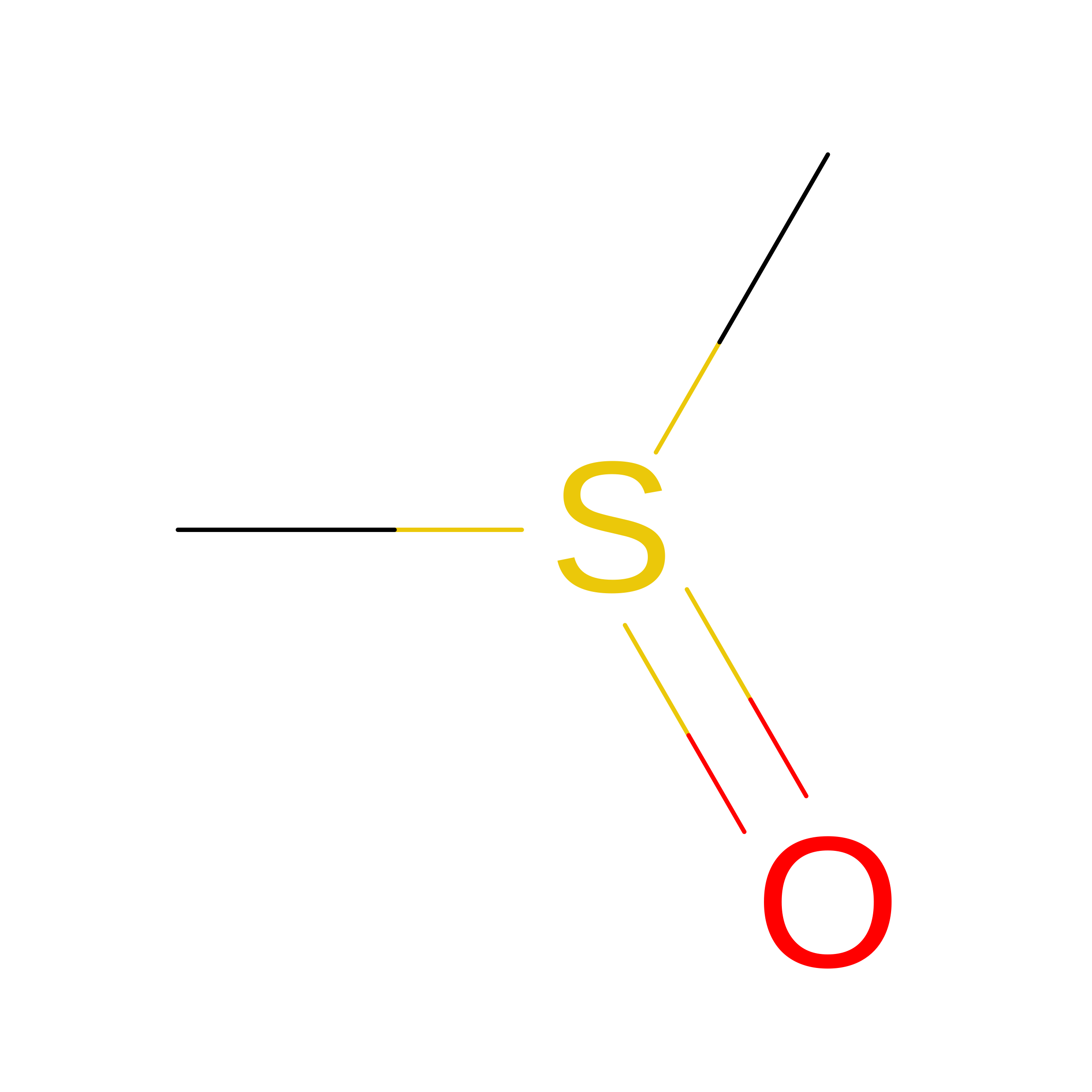
DIMETHYL SULFOXIDE
C2 H6 O S
IAZDPXIOMUYVGZ-UHFFFAOYSA-N
CA

Query on CA


Download:Ideal Coordinates CCD File
F [auth A]CALCIUM ION
Ca
BHPQYMZQTOCNFJ-UHFFFAOYSA-N

Experimental Data & Validation

Experimental Data

  • Method: X-RAY DIFFRACTION
  • Resolution: 1.35 Å
  • R-Value Free:  0.174 (Depositor), 0.172 (DCC) 
  • R-Value Work:  0.144 (Depositor), 0.143 (DCC) 
  • R-Value Observed: 0.146 (Depositor) 
Space Group: P 21 21 21
Unit Cell:
Length ( Å )Angle ( ˚ )
a = 54.294α = 90
b = 58.845β = 90
c = 66.575γ = 90
Software Package:
Software NamePurpose
XSCALEdata scaling
REFMACrefinement
PDB_EXTRACTdata extraction
XDSdata reduction
AMoREphasing

Structure Validation

View Full Validation Report


Ligand Structure Quality Assessment 


Entry History 

& Funding Information

Deposition Data


Funding OrganizationLocationGrant Number
Not funded--

Revision History  (Full details and data files)

  • Version 1.0: 2022-05-25
    Type: Initial release
  • Version 1.1: 2022-07-13
    Changes: Database references
  • Version 1.2: 2022-07-20
    Changes: Database references
  • Version 1.3: 2024-10-16
    Changes: Data collection, Structure summary
  • Version 1.4: 2026-03-04
    Changes: Refinement description