7UIB | pdb_00007uib

Crystal structure of BoNT/E receptor binding domain in complex with SV2, VHH, and sialic acid


Experimental Data Snapshot

  • Method: X-RAY DIFFRACTION
  • Resolution: 2.77 Å
  • R-Value Free: 
    0.261 (Depositor), 0.261 (DCC) 
  • R-Value Work: 
    0.235 (Depositor), 0.235 (DCC) 
  • R-Value Observed: 
    0.236 (Depositor) 

Starting Models: experimental
View more details

wwPDB Validation 3D Report Full Report

Validation slider image for 7UIB

Ligand Structure Quality Assessment 


This is version 1.3 of the entry. See complete history

Literature

Structural basis for botulinum neurotoxin E recognition of synaptic vesicle protein 2.

Liu, Z.Lee, P.G.Krez, N.Lam, K.H.Liu, H.Przykopanski, A.Chen, P.Yao, G.Zhang, S.Tremblay, J.M.Perry, K.Shoemaker, C.B.Rummel, A.Dong, M.Jin, R.

(2023) Nat Commun 14: 2338-2338

  • DOI: https://doi.org/10.1038/s41467-023-37860-8
  • Primary Citation Related Structures: 
    7UIA, 7UIB, 7UIE

  • PubMed Abstract: 

    Botulinum neurotoxin E (BoNT/E) is one of the major causes of human botulism and paradoxically also a promising therapeutic agent. Here we determined the co-crystal structures of the receptor-binding domain of BoNT/E (H C E) in complex with its neuronal receptor synaptic vesicle glycoprotein 2A (SV2A) and a nanobody that serves as a ganglioside surrogate. These structures reveal that the protein-protein interactions between H C E and SV2 provide the crucial location and specificity information for H C E to recognize SV2A and SV2B, but not the closely related SV2C. At the same time, H C E exploits a separated sialic acid-binding pocket to mediate recognition of an N-glycan of SV2. Structure-based mutagenesis and functional studies demonstrate that both the protein-protein and protein-glycan associations are essential for SV2A-mediated cell entry of BoNT/E and for its potent neurotoxicity. Our studies establish the structural basis to understand the receptor-specificity of BoNT/E and to engineer BoNT/E variants for new clinical applications.


  • Organizational Affiliation
    • Department of Physiology and Biophysics, University of California, Irvine, Irvine, CA, 92697, USA.

Macromolecule Content 

  • Total Structure Weight: 151.18 kDa 
  • Atom Count: 10,570 
  • Modeled Residue Count: 1,257 
  • Deposited Residue Count: 1,282 
  • Unique protein chains: 3

Macromolecules

Find similar proteins by:|  3D Structure
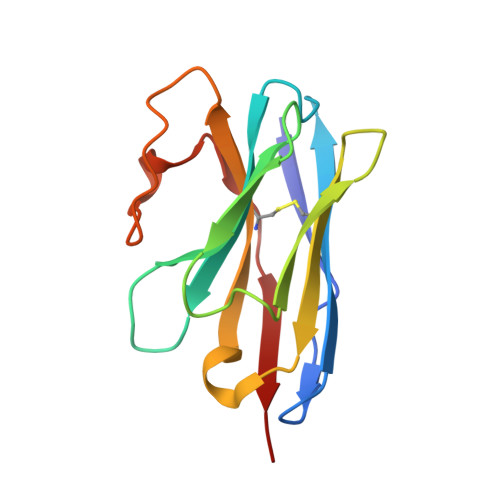
Entity ID: 1
MoleculeChains  Sequence LengthOrganismDetailsImage
VHH-G6A [auth B],
C [auth E]
129Vicugna pacosMutation(s): 0 
Find similar proteins by:|  3D Structure
Entity ID: 2
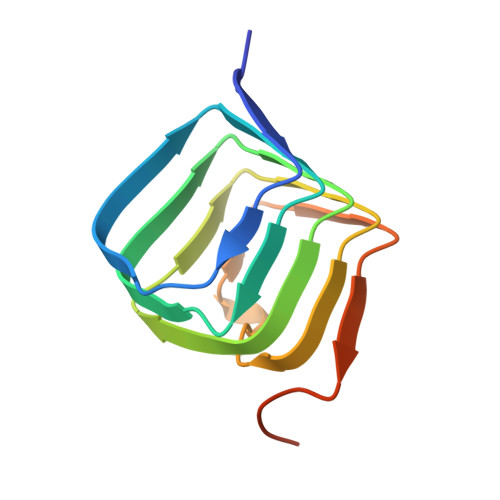
MoleculeChains  Sequence LengthOrganismDetailsImage
SV2B [auth C],
D [auth F]
105Homo sapiensMutation(s): 0 
UniProt & NIH Common Fund Data Resources
Find proteins for Q496J9 (Homo sapiens)
Explore Q496J9 
Go to UniProtKB:  Q496J9
PHAROS:  Q496J9
GTEx:  ENSG00000122012 
Entity Groups
Sequence Clusters30% Identity50% Identity70% Identity90% Identity95% Identity100% Identity
UniProt GroupQ496J9
Glycosylation
Glycosylation Sites: 3Go to GlyGen: Q496J9-1
Sequence Annotations
Expand
Reference Sequence
Find similar proteins by:|  3D Structure
Entity ID: 3
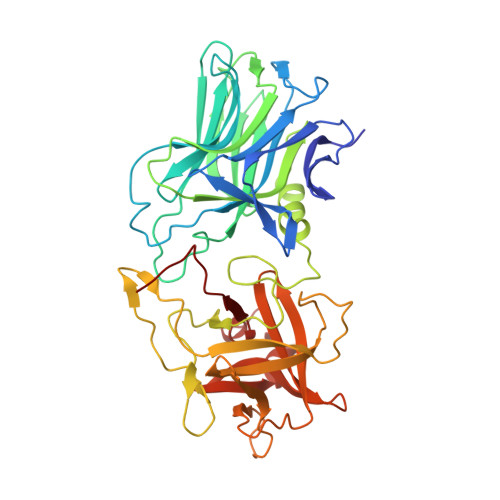
MoleculeChains  Sequence LengthOrganismDetailsImage
Neurotoxin type EE [auth D],
F [auth A]
407Clostridium botulinumMutation(s): 0 
UniProt
Find proteins for Q00496 (Clostridium botulinum)
Explore Q00496 
Go to UniProtKB:  Q00496
Entity Groups
Sequence Clusters30% Identity50% Identity70% Identity90% Identity95% Identity100% Identity
UniProt GroupQ00496
Sequence Annotations
Expand
Reference Sequence

Oligosaccharides

Help  
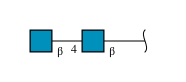
Entity ID: 4
MoleculeChains Length2D Diagram GlycosylationD Interactions
2-acetamido-2-deoxy-beta-D-glucopyranose-(1-4)-2-acetamido-2-deoxy-beta-D-glucopyranose
G, H
2N-Glycosylation
Glycosylation Resources
GlyTouCan: G42666HT
GlyCosmos: G42666HT
GlyGen: G42666HT

Small Molecules

Ligands 4 Unique
IDChains Name / Formula / InChI Key2D Diagram3D Interactions
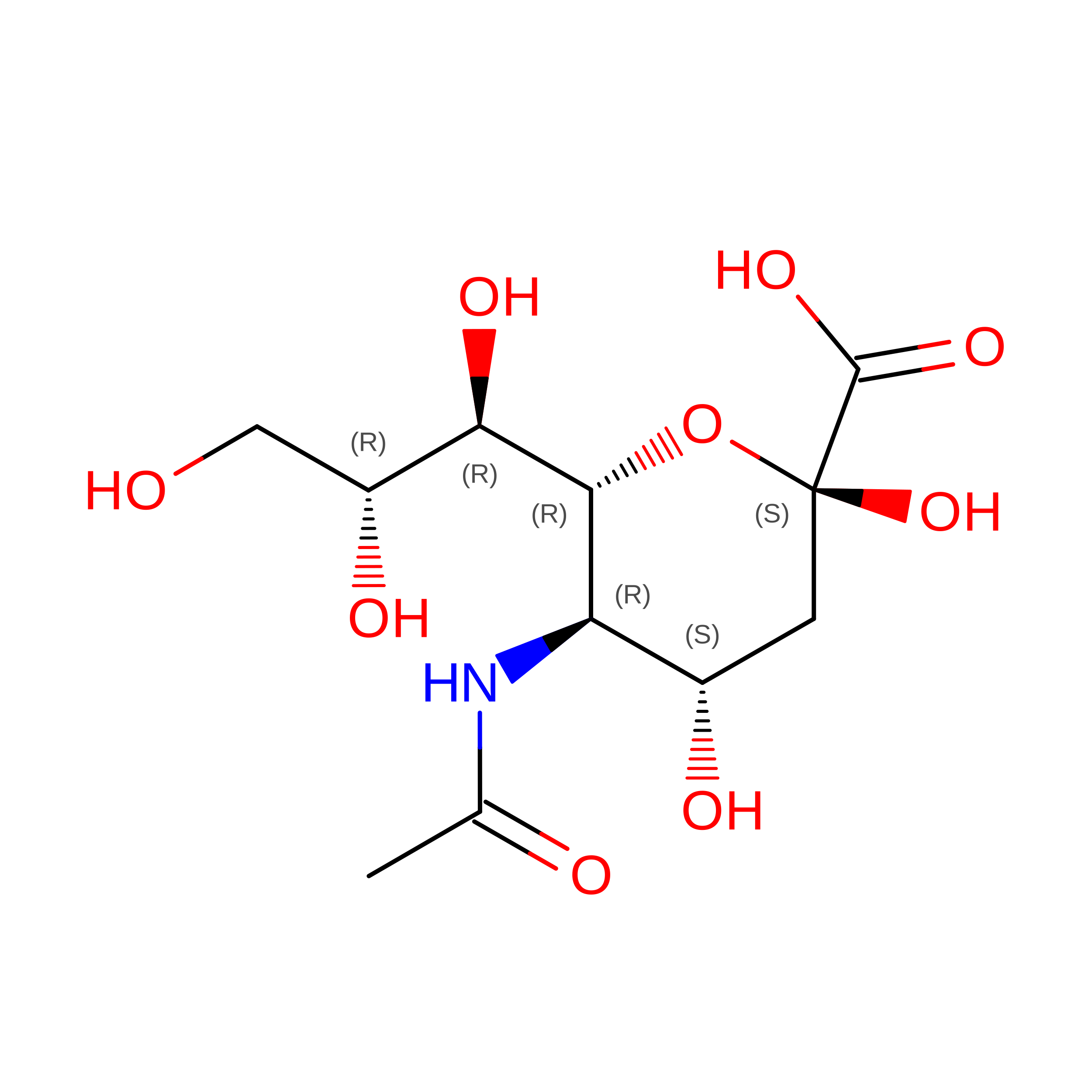
SLB

Query on SLB


Download:Ideal Coordinates CCD File
Q [auth D],
T [auth A]
N-acetyl-beta-neuraminic acid
C11 H19 N O9
SQVRNKJHWKZAKO-PFQGKNLYSA-N
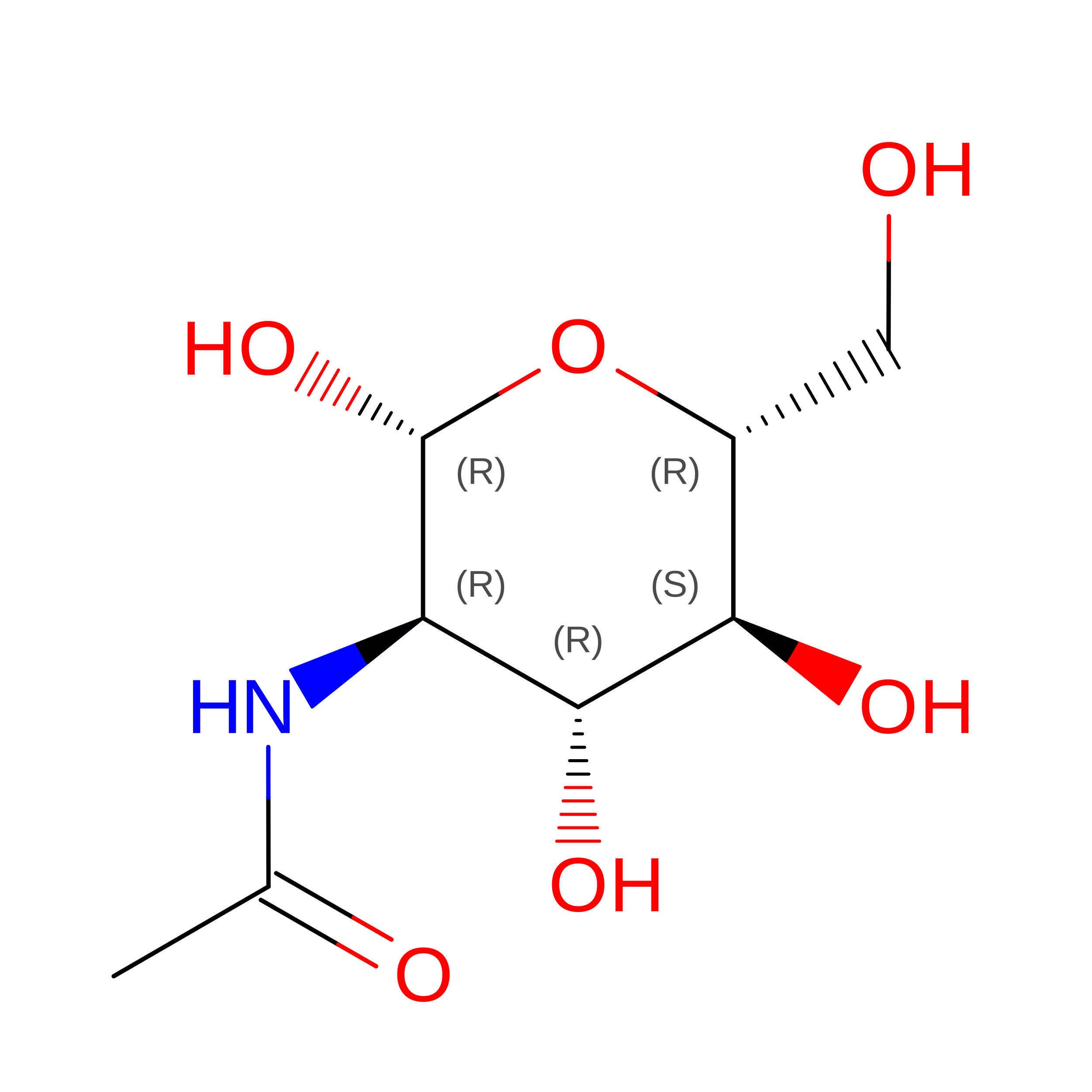
NAG

Query on NAG


Download:Ideal Coordinates CCD File
I [auth C],
L [auth F],
M [auth F],
N [auth F]
2-acetamido-2-deoxy-beta-D-glucopyranose
C8 H15 N O6
OVRNDRQMDRJTHS-FMDGEEDCSA-N
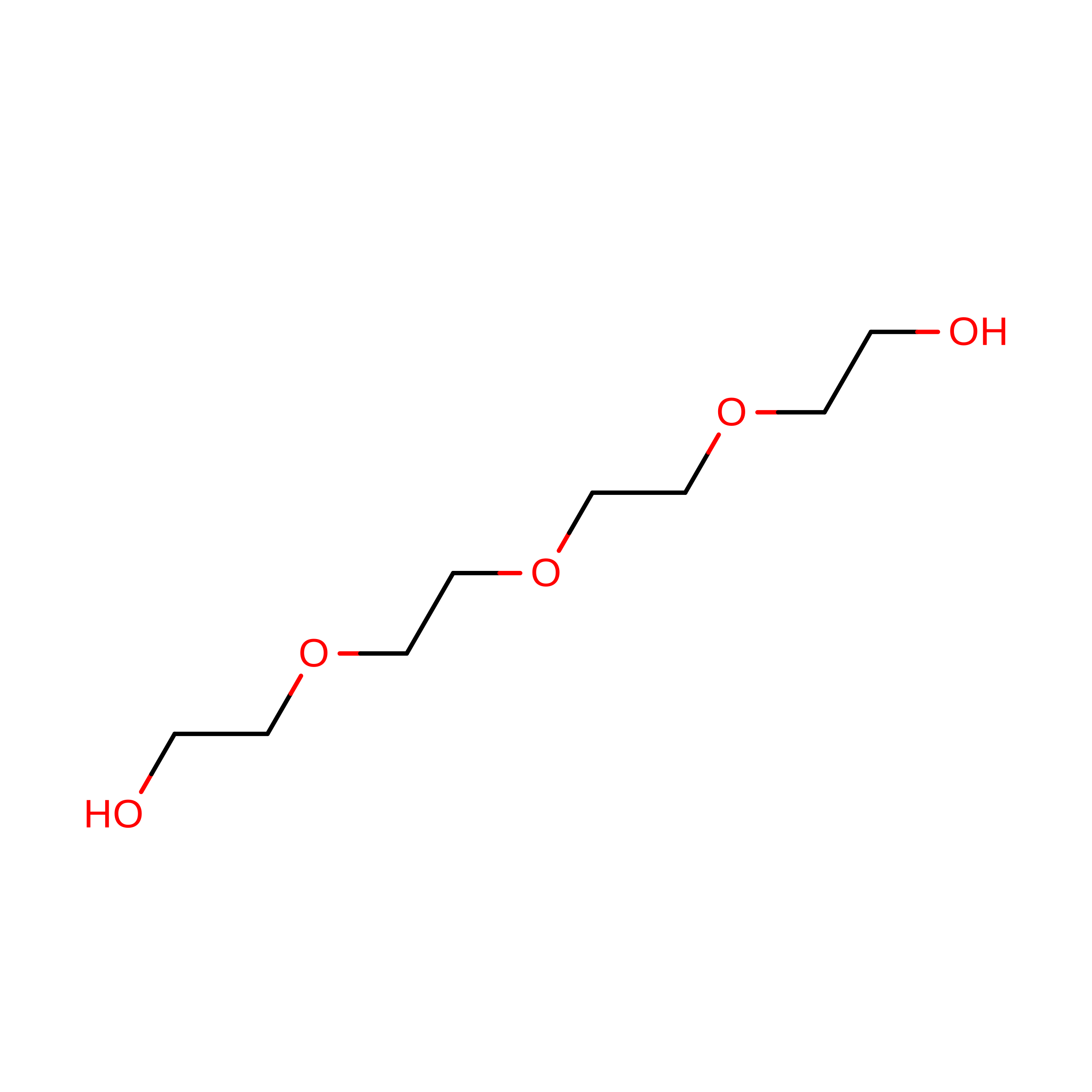
PG4

Query on PG4


Download:Ideal Coordinates CCD File
O [auth F]TETRAETHYLENE GLYCOL
C8 H18 O5
UWHCKJMYHZGTIT-UHFFFAOYSA-N
SO4
(Subject of Investigation/LOI)

Query on SO4


Download:Ideal Coordinates CCD File
J [auth C]
K [auth C]
P [auth F]
R [auth D]
S [auth D]
J [auth C],
K [auth C],
P [auth F],
R [auth D],
S [auth D],
U [auth A],
V [auth A]
SULFATE ION
O4 S
QAOWNCQODCNURD-UHFFFAOYSA-L

Experimental Data & Validation

Experimental Data

  • Method: X-RAY DIFFRACTION
  • Resolution: 2.77 Å
  • R-Value Free:  0.261 (Depositor), 0.261 (DCC) 
  • R-Value Work:  0.235 (Depositor), 0.235 (DCC) 
  • R-Value Observed: 0.236 (Depositor) 
Space Group: C 2 2 21
Unit Cell:
Length ( Å )Angle ( ˚ )
a = 141.368α = 90
b = 172.178β = 90
c = 137.054γ = 90
Software Package:
Software NamePurpose
REFMACrefinement
XDSdata reduction
XDSdata scaling
PHENIXphasing

Structure Validation

View Full Validation Report


Ligand Structure Quality Assessment 


Entry History 

& Funding Information

Deposition Data


Funding OrganizationLocationGrant Number
National Institutes of Health/National Institute Of Allergy and Infectious Diseases (NIH/NIAID)United States--

Revision History  (Full details and data files)

  • Version 1.0: 2023-04-05
    Type: Initial release
  • Version 1.1: 2023-05-03
    Changes: Database references, Source and taxonomy, Structure summary
  • Version 1.2: 2023-10-25
    Changes: Data collection, Refinement description
  • Version 1.3: 2024-10-16
    Changes: Structure summary