Download Mendeley
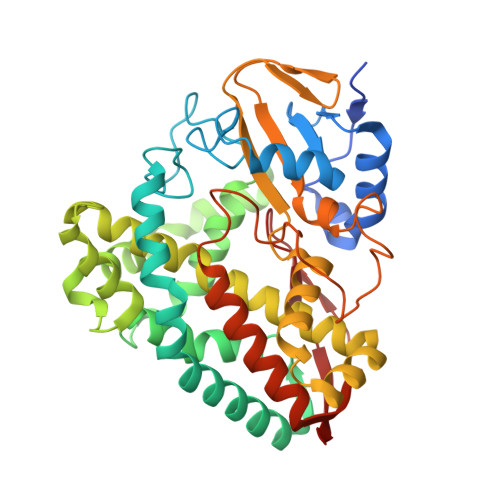
Cytochrome P450-catalyzed oxidation of halogen-containing substrates.
Coleman, T., Podgorski, M.N., Doyle, M.L., Scaffidi-Muta, J.M., Campbell, E.C., Bruning, J.B., De Voss, J.J., Bell, S.G.(2023) J Inorg Biochem 244: 112234-112234
- PubMed: 37116269 Search on PubMed
- DOI: https://doi.org/10.1016/j.jinorgbio.2023.112234
- Primary Citation Related Structures:
7TZM, 7TZN, 7TZW, 7TZX, 7TZY, 7U00 - PubMed Abstract:
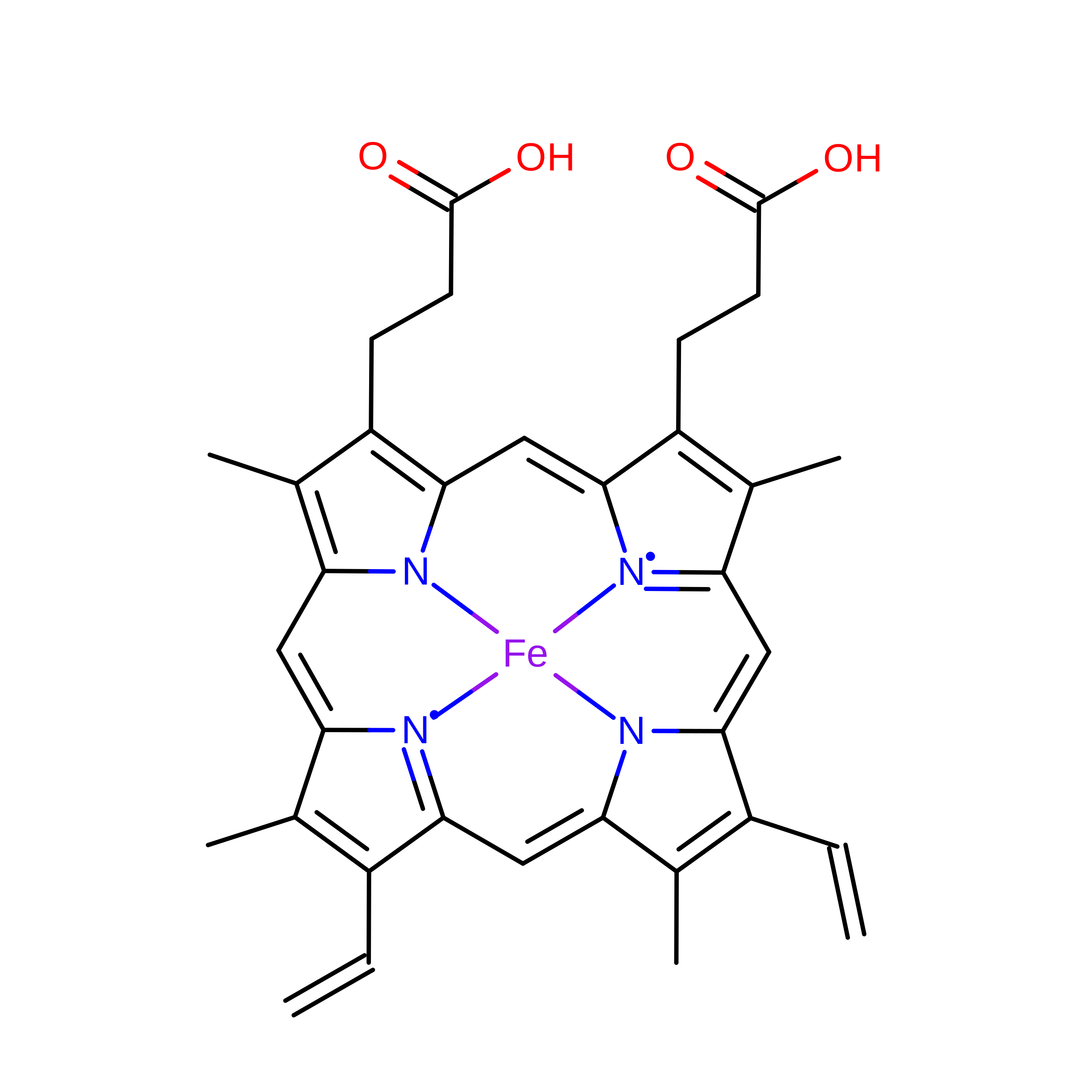
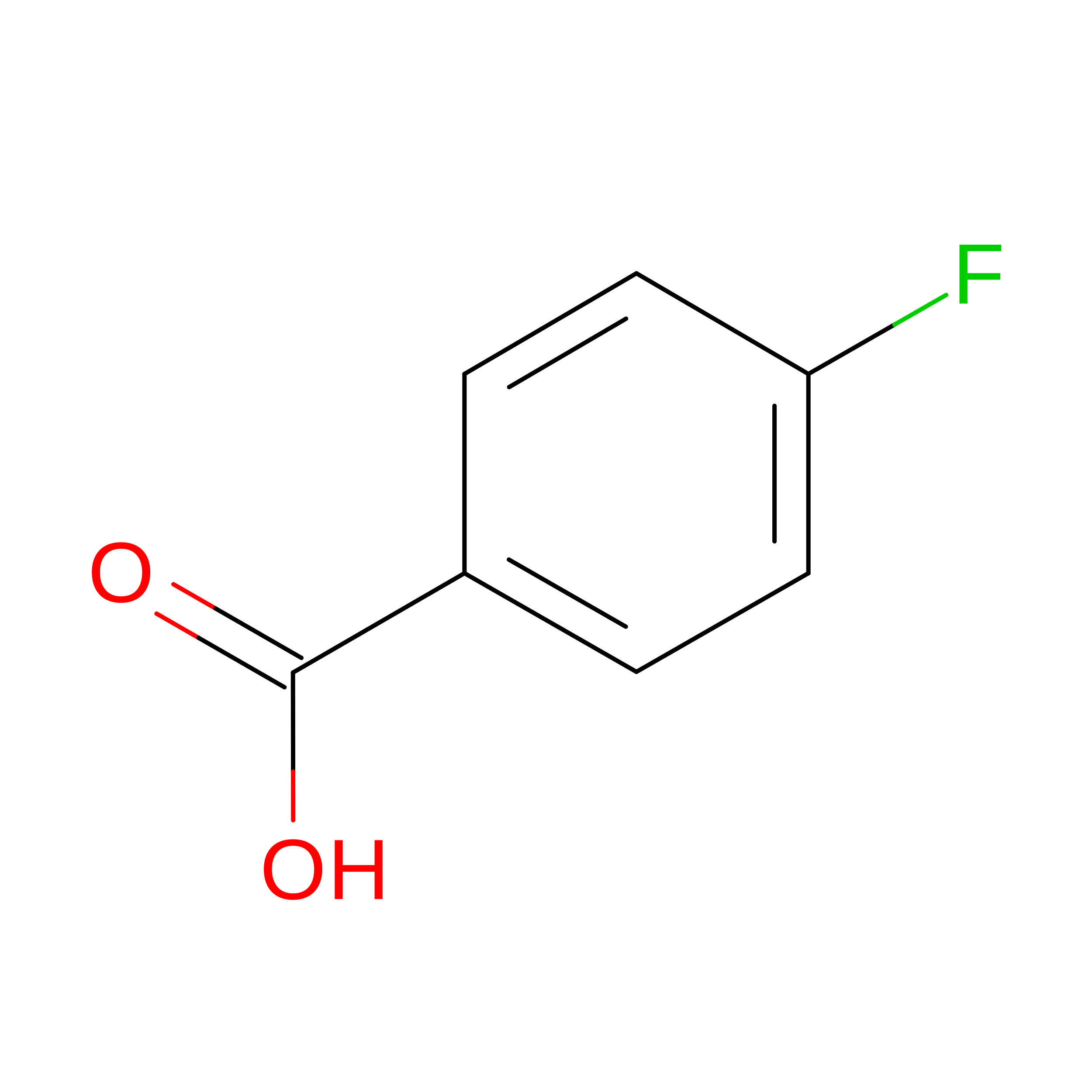
Cytochrome P450 (CYP) enzymes are heme-thiolate monooxygenases which catalyze the oxidation of aliphatic and aromatic C-H bonds and other reactions. The oxidation of halogens by cytochrome P450 enzymes has also been reported. Here we use CYP199A4, from the bacterium Rhodopseudomonas palustris strain HaA2, with a range of para-substituted benzoic acid ligands, which contain halogens, to assess if this enzyme can oxidize these species or if the presence of these electronegative atoms can alter the outcome of P450-catalyzed reactions. Despite binding to the enzyme, there was no detectable oxidation of any of the 4-halobenzoic acids. CYP199A4 was, however, able to efficiently catalyze the oxidation of both 4-chloromethyl- and 4-bromomethyl-benzoic acid to 4-formylbenzoic acid via hydroxylation of the α‑carbon. The 4-chloromethyl substrate bound in the enzyme active site in a similar manner to 4-ethylbenzoic acid. This places the benzylic α‑carbon hydrogens in an unfavorable position for abstraction indicating a degree of substrate mobility must be possible within the active site. CYP199A4 catalyzed oxidations of 4-(2'-haloethyl)benzoic acids yielding α-hydroxylation and desaturation metabolites. The α-hydroxylation product was the major metabolite. The desaturation pathway is significantly disfavored compared to 4-ethylbenzoic acid. This may be due to the electron-withdrawing halogen atom or a different positioning of the substrate within the active site. The latter was demonstrated by the X-ray crystal structures of CYP199A4 with these substrates. Overall, the presence of a halogen atom positioned close to the heme iron can alter the binding orientation and outcomes of enzyme-catalyzed oxidation.
- Department of Chemistry, University Adelaide, Adelaide, SA 5005, Australia.
Organizational Affiliation: