7Q9R | pdb_00007q9r

Cocrystal structure of PDE6D bound to NRAS peptide


Experimental Data Snapshot

  • Method: X-RAY DIFFRACTION
  • Resolution: 2.50 Å
  • R-Value Free: 
    0.276 (Depositor), 0.275 (DCC) 
  • R-Value Work: 
    0.234 (Depositor), 0.236 (DCC) 

Starting Model: experimental
View more details

wwPDB Validation 3D Report Full Report

Validation slider image for 7Q9R

Ligand Structure Quality Assessment 


This is version 1.2 of the entry. See complete history

Literature

Stabilization of the RAS:PDE6D Complex Is a Novel Strategy to Inhibit RAS Signaling.

Yelland, T.Garcia, E.Parry, C.Kowalczyk, D.Wojnowska, M.Gohlke, A.Zalar, M.Cameron, K.Goodwin, G.Yu, Q.Zhu, P.C.ElMaghloob, Y.Pugliese, A.Archibald, L.Jamieson, A.Chen, Y.X.McArthur, D.Bower, J.Ismail, S.

(2022) J Med Chem 65: 1898-1914

  • DOI: https://doi.org/10.1021/acs.jmedchem.1c01265
  • Primary Citation Related Structures: 
    7Q9Q, 7Q9R, 7Q9S, 7Q9U, 7QF9, 7QJK

  • PubMed Abstract: 

    RAS is a major anticancer drug target which requires membrane localization to activate downstream signal transduction. The direct inhibition of RAS has proven to be challenging. Here, we present a novel strategy for targeting RAS by stabilizing its interaction with the prenyl-binding protein PDE6D and disrupting its localization. Using rationally designed RAS point mutations, we were able to stabilize the RAS:PDE6D complex by increasing the affinity of RAS for PDE6D, which resulted in the redirection of RAS to the cytoplasm and the primary cilium and inhibition of oncogenic RAS/ERK signaling. We developed an SPR fragment screening and identified fragments that bind at the KRAS:PDE6D interface, as shown through cocrystal structures. Finally, we show that the stoichiometric ratios of KRAS:PDE6D vary in different cell lines, suggesting that the impact of this strategy might be cell-type-dependent. This study forms the foundation from which a potential anticancer small-molecule RAS:PDE6D complex stabilizer could be developed.


  • Organizational Affiliation
    • CRUK Beatson Institute, Glasgow G61 1BD, United Kingdom.

Macromolecule Content 

  • Total Structure Weight: 18.18 kDa 
  • Atom Count: 1,318 
  • Modeled Residue Count: 147 
  • Deposited Residue Count: 150 
  • Unique protein chains: 1

Macromolecules

Find similar proteins by:|  3D Structure
Entity ID: 1
MoleculeChains  Sequence LengthOrganismDetailsImage
Retinal rod rhodopsin-sensitive cGMP 3',5'-cyclic phosphodiesterase subunit deltaA [auth BBB]150Homo sapiensMutation(s): 0 
Gene Names: PDE6DPDED
UniProt & NIH Common Fund Data Resources
Find proteins for O43924 (Homo sapiens)
Explore O43924 
Go to UniProtKB:  O43924
PHAROS:  O43924
GTEx:  ENSG00000156973 
Entity Groups
Sequence Clusters30% Identity50% Identity70% Identity90% Identity95% Identity100% Identity
UniProt GroupO43924
Sequence Annotations
Expand
Reference Sequence

Small Molecules

Ligands 3 Unique
IDChains Name / Formula / InChI Key2D Diagram3D Interactions
FAR
(Subject of Investigation/LOI)

Query on FAR


Download:Ideal Coordinates CCD File
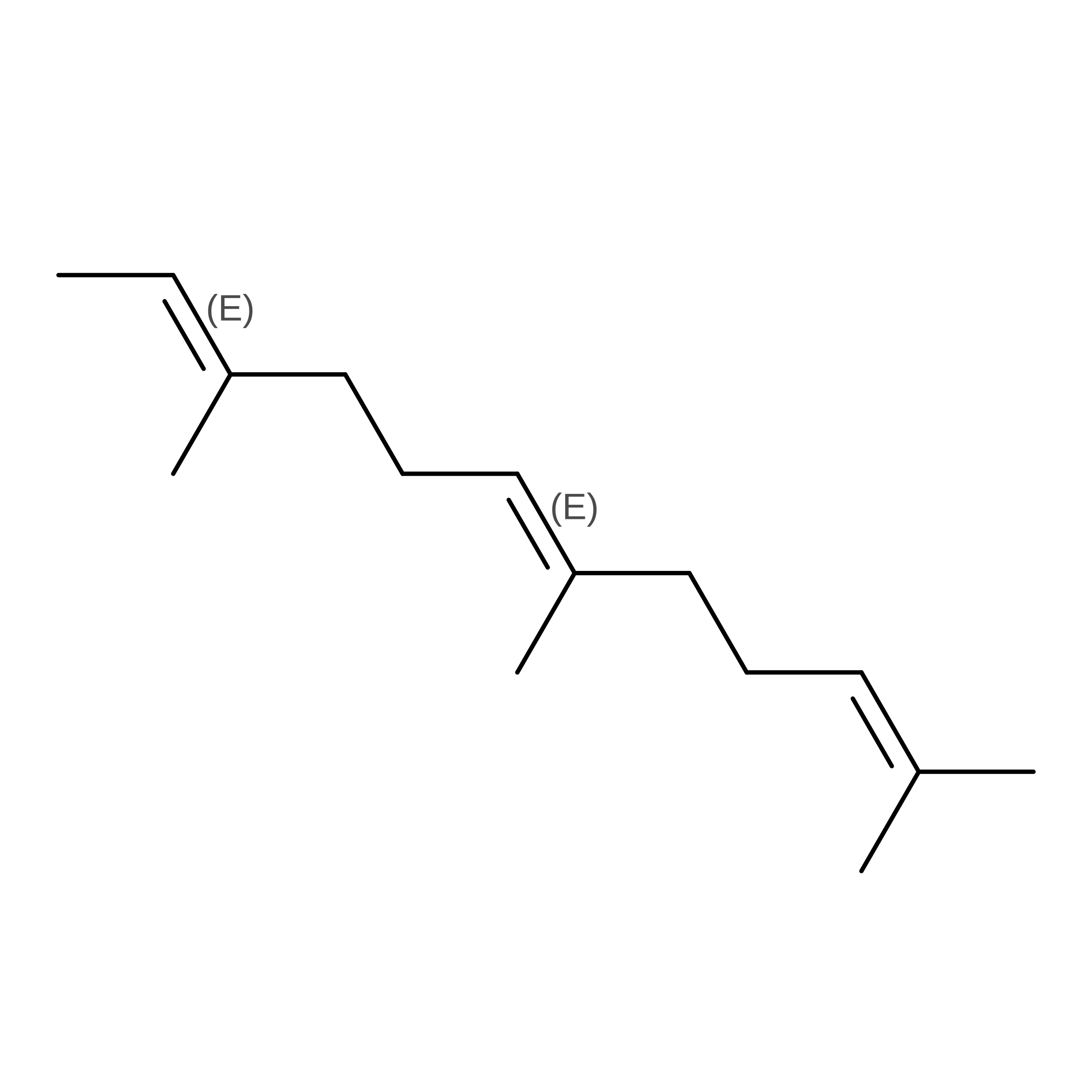
B [auth BBB]FARNESYL
C15 H26
JXBSHSBNOVLGHF-BUJBXKITSA-N
SO4

Query on SO4


Download:Ideal Coordinates CCD File
G [auth BBB],
H [auth BBB],
I [auth BBB]
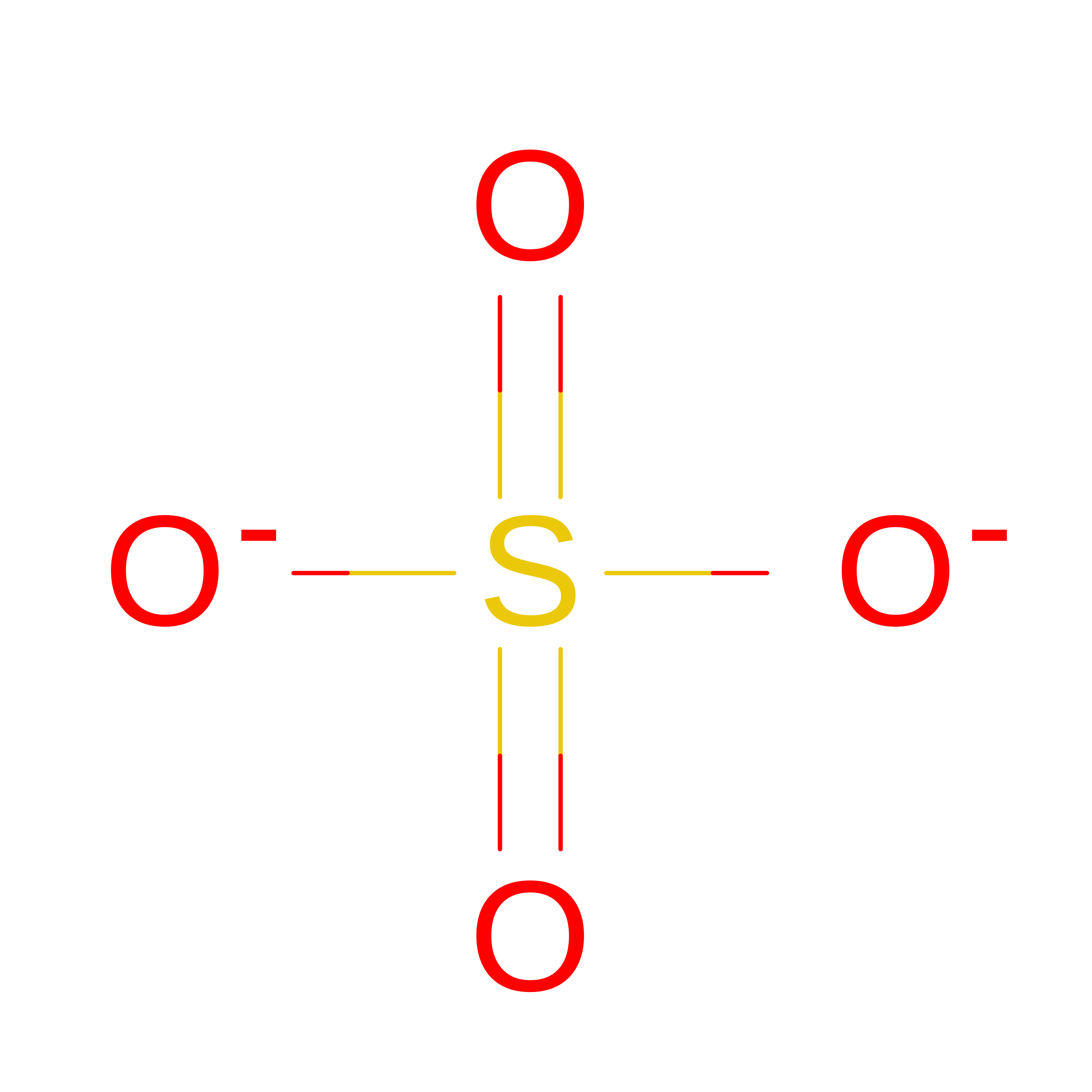
SULFATE ION
O4 S
QAOWNCQODCNURD-UHFFFAOYSA-L
EDO

Query on EDO


Download:Ideal Coordinates CCD File
C [auth BBB],
D [auth BBB],
E [auth BBB],
F [auth BBB]
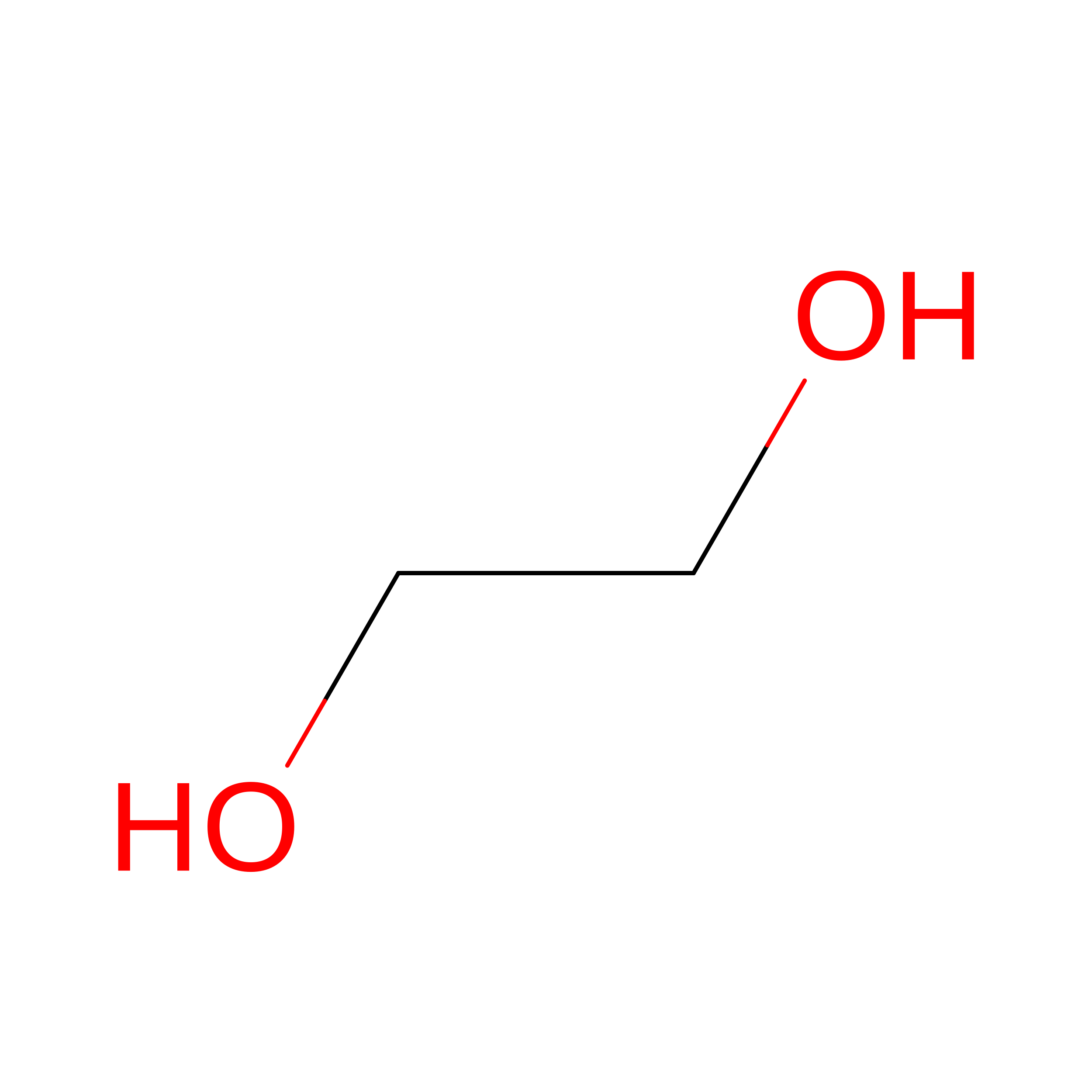
1,2-ETHANEDIOL
C2 H6 O2
LYCAIKOWRPUZTN-UHFFFAOYSA-N

Experimental Data & Validation

Experimental Data

  • Method: X-RAY DIFFRACTION
  • Resolution: 2.50 Å
  • R-Value Free:  0.276 (Depositor), 0.275 (DCC) 
  • R-Value Work:  0.234 (Depositor), 0.236 (DCC) 
Space Group: P 32 2 1
Unit Cell:
Length ( Å )Angle ( ˚ )
a = 55.788α = 90
b = 55.788β = 90
c = 114.842γ = 120
Software Package:
Software NamePurpose
REFMACrefinement
xia2data reduction
xia2data scaling
PHASERphasing

Structure Validation

View Full Validation Report


Ligand Structure Quality Assessment 


Entry History 

& Funding Information

Deposition Data


Funding OrganizationLocationGrant Number
Cancer Research UKUnited Kingdom--

Revision History  (Full details and data files)

  • Version 1.0: 2022-01-19
    Type: Initial release
  • Version 1.1: 2022-06-01
    Changes: Database references
  • Version 1.2: 2024-01-31
    Changes: Data collection, Derived calculations, Refinement description