7Q4V | pdb_00007q4v

Electron bifurcating hydrogenase - HydABC from A. woodii


Experimental Data Snapshot

  • Method: ELECTRON MICROSCOPY
  • Resolution: 4.70 Å
  • Aggregation State: PARTICLE 
  • Reconstruction Method: SINGLE PARTICLE 

wwPDB Validation 3D Report Full Report

Validation slider image for 7Q4V

This is version 1.3 of the entry. See complete history

Literature

Molecular Basis of the Electron Bifurcation Mechanism in the [FeFe]-Hydrogenase Complex HydABC.

Katsyv, A.Kumar, A.Saura, P.Poverlein, M.C.Freibert, S.A.T Stripp, S.Jain, S.Gamiz-Hernandez, A.P.Kaila, V.R.I.Muller, V.Schuller, J.M.

(2023) J Am Chem Soc 145: 5696-5709

  • DOI: https://doi.org/10.1021/jacs.2c11683
  • Primary Citation Related Structures: 
    7Q4V, 7Q4W, 8A5E, 8A6T, 8BEW

  • PubMed Abstract: 

    Electron bifurcation is a fundamental energy coupling mechanism widespread in microorganisms that thrive under anoxic conditions. These organisms employ hydrogen to reduce CO 2 , but the molecular mechanisms have remained enigmatic. The key enzyme responsible for powering these thermodynamically challenging reactions is the electron-bifurcating [FeFe]-hydrogenase HydABC that reduces low-potential ferredoxins (Fd) by oxidizing hydrogen gas (H 2 ). By combining single-particle cryo-electron microscopy (cryoEM) under catalytic turnover conditions with site-directed mutagenesis experiments, functional studies, infrared spectroscopy, and molecular simulations, we show that HydABC from the acetogenic bacteria Acetobacterium woodii and Thermoanaerobacter kivui employ a single flavin mononucleotide (FMN) cofactor to establish electron transfer pathways to the NAD(P) + and Fd reduction sites by a mechanism that is fundamentally different from classical flavin-based electron bifurcation enzymes. By modulation of the NAD(P) + binding affinity via reduction of a nearby iron-sulfur cluster, HydABC switches between the exergonic NAD(P) + reduction and endergonic Fd reduction modes. Our combined findings suggest that the conformational dynamics establish a redox-driven kinetic gate that prevents the backflow of the electrons from the Fd reduction branch toward the FMN site, providing a basis for understanding general mechanistic principles of electron-bifurcating hydrogenases.


  • Organizational Affiliation
    • Department of Molecular Microbiology & Bioenergetics, Institute of Molecular Biosciences, Johann Wolfgang Goethe University, Frankfurt am Main 60438, Germany.

Macromolecule Content 

  • Total Structure Weight: 297.95 kDa 
  • Atom Count: 19,303 
  • Modeled Residue Count: 2,520 
  • Deposited Residue Count: 2,676 
  • Unique protein chains: 3

Macromolecules

Find similar proteins by:|  3D Structure
Entity ID: 1
MoleculeChains  Sequence LengthOrganismDetailsImage
Iron hydrogenase HydA1A,
D [auth E]
583Acetobacterium woodii DSM 1030Mutation(s): 0 
EC: 1.12.7.2
UniProt
Find proteins for H6LFG3 (Acetobacterium woodii (strain ATCC 29683 / DSM 1030 / JCM 2381 / KCTC 1655 / WB1))
Explore H6LFG3 
Go to UniProtKB:  H6LFG3
Entity Groups
Sequence Clusters30% Identity50% Identity70% Identity90% Identity95% Identity100% Identity
UniProt GroupH6LFG3
Sequence Annotations
Expand
Reference Sequence
Find similar proteins by:|  3D Structure
Entity ID: 2
MoleculeChains  Sequence LengthOrganismDetailsImage
Iron hydrogenase HydBB,
E [auth F]
599Acetobacterium woodii DSM 1030Mutation(s): 0 
EC: 1.12.7.2
UniProt
Find proteins for H6LFG4 (Acetobacterium woodii (strain ATCC 29683 / DSM 1030 / JCM 2381 / KCTC 1655 / WB1))
Explore H6LFG4 
Go to UniProtKB:  H6LFG4
Entity Groups
Sequence Clusters30% Identity50% Identity70% Identity90% Identity95% Identity100% Identity
UniProt GroupH6LFG4
Sequence Annotations
Expand
Reference Sequence
Find similar proteins by:|  3D Structure
Entity ID: 3
MoleculeChains  Sequence LengthOrganismDetailsImage
Iron hydrogenase HydCC,
F [auth G]
156Acetobacterium woodii DSM 1030Mutation(s): 0 
EC: 1.12.7.2
UniProt
Find proteins for H6LFG7 (Acetobacterium woodii (strain ATCC 29683 / DSM 1030 / JCM 2381 / KCTC 1655 / WB1))
Explore H6LFG7 
Go to UniProtKB:  H6LFG7
Entity Groups
Sequence Clusters30% Identity50% Identity70% Identity90% Identity95% Identity100% Identity
UniProt GroupH6LFG7
Sequence Annotations
Expand
Reference Sequence

Small Molecules

Ligands 5 Unique
IDChains Name / Formula / InChI Key2D Diagram3D Interactions
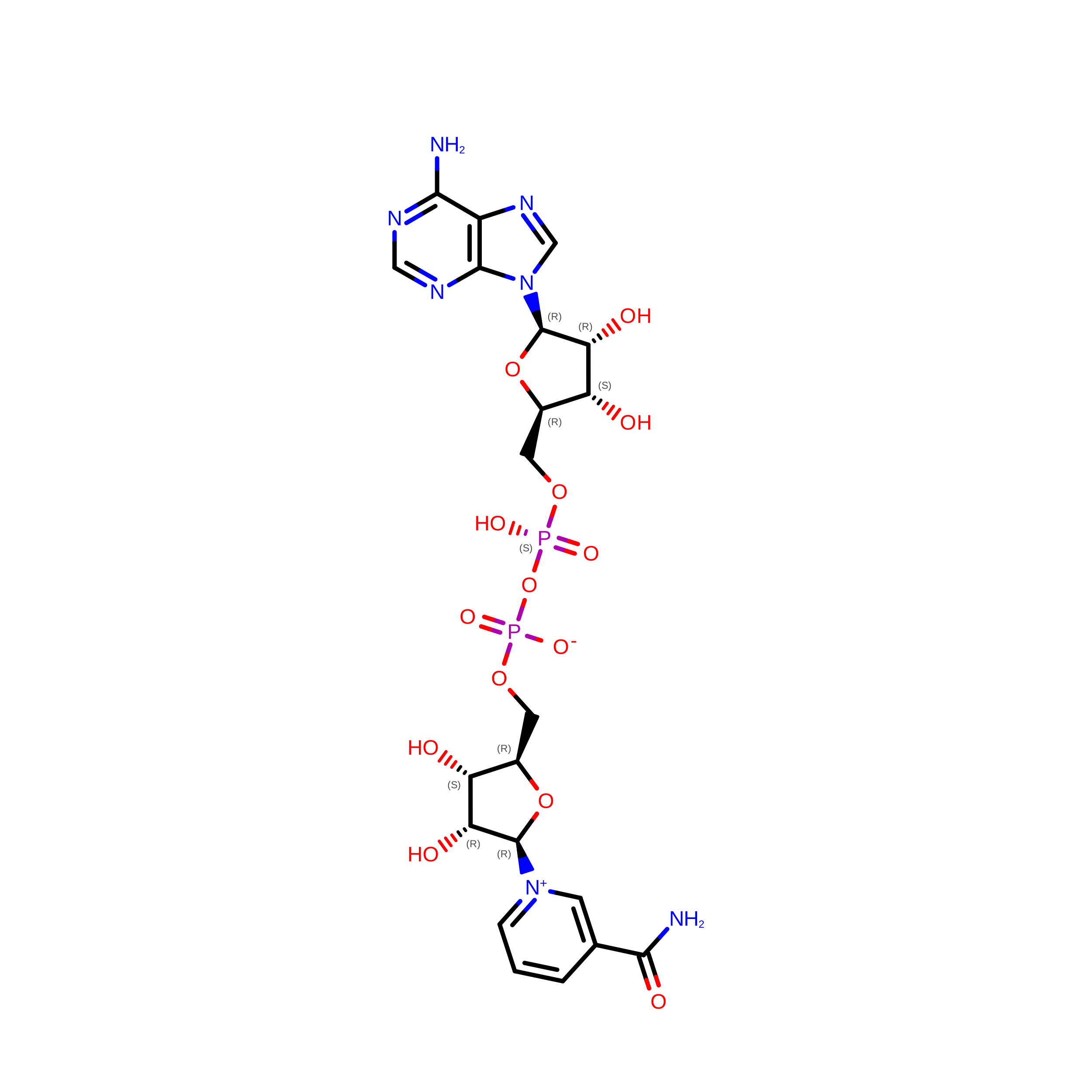
NAD
(Subject of Investigation/LOI)

Query on NAD


Download:Ideal Coordinates CCD File
BA [auth F]NICOTINAMIDE-ADENINE-DINUCLEOTIDE
C21 H27 N7 O14 P2
BAWFJGJZGIEFAR-NNYOXOHSSA-N
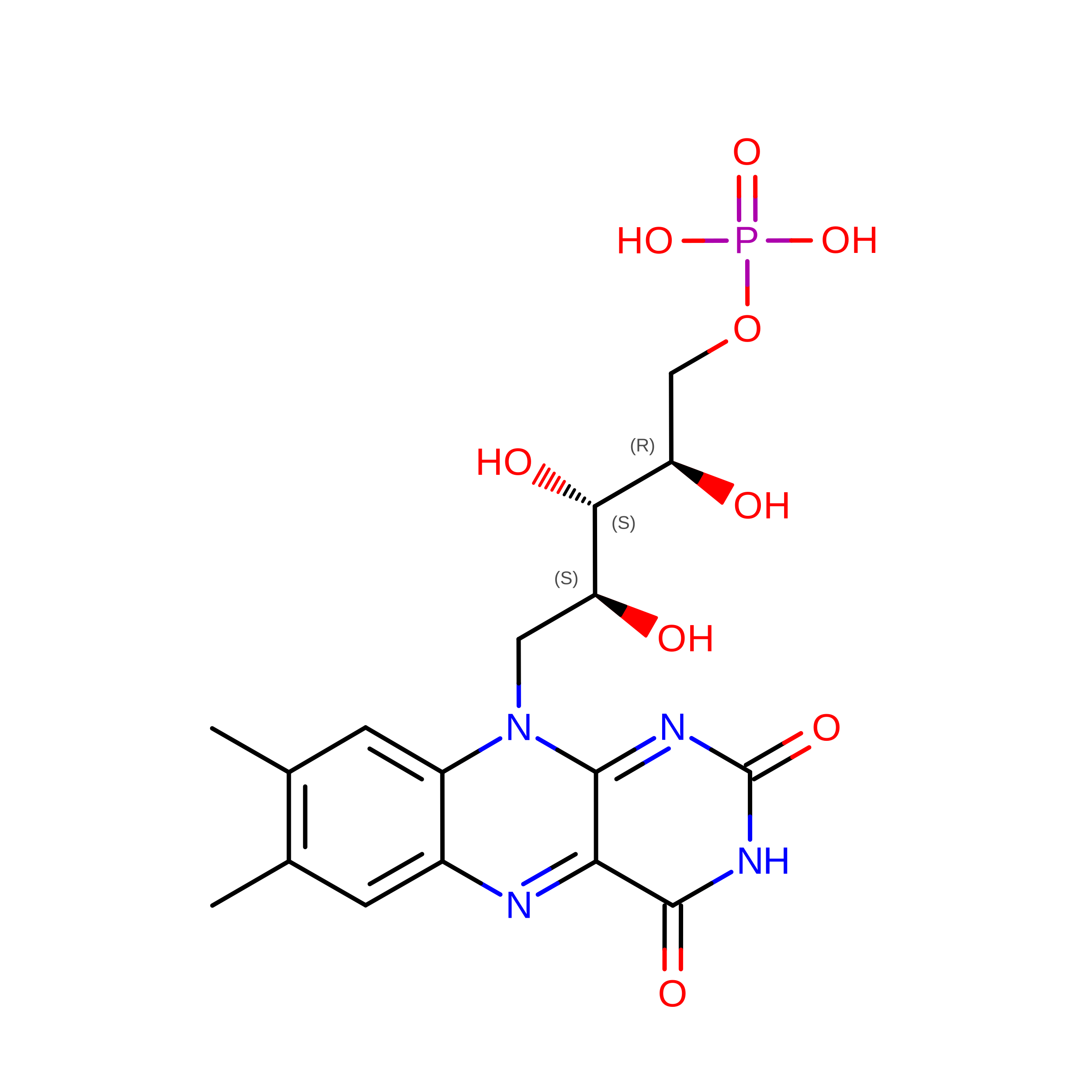
FMN
(Subject of Investigation/LOI)

Query on FMN


Download:Ideal Coordinates CCD File
AA [auth F],
P [auth B]
FLAVIN MONONUCLEOTIDE
C17 H21 N4 O9 P
FVTCRASFADXXNN-SCRDCRAPSA-N
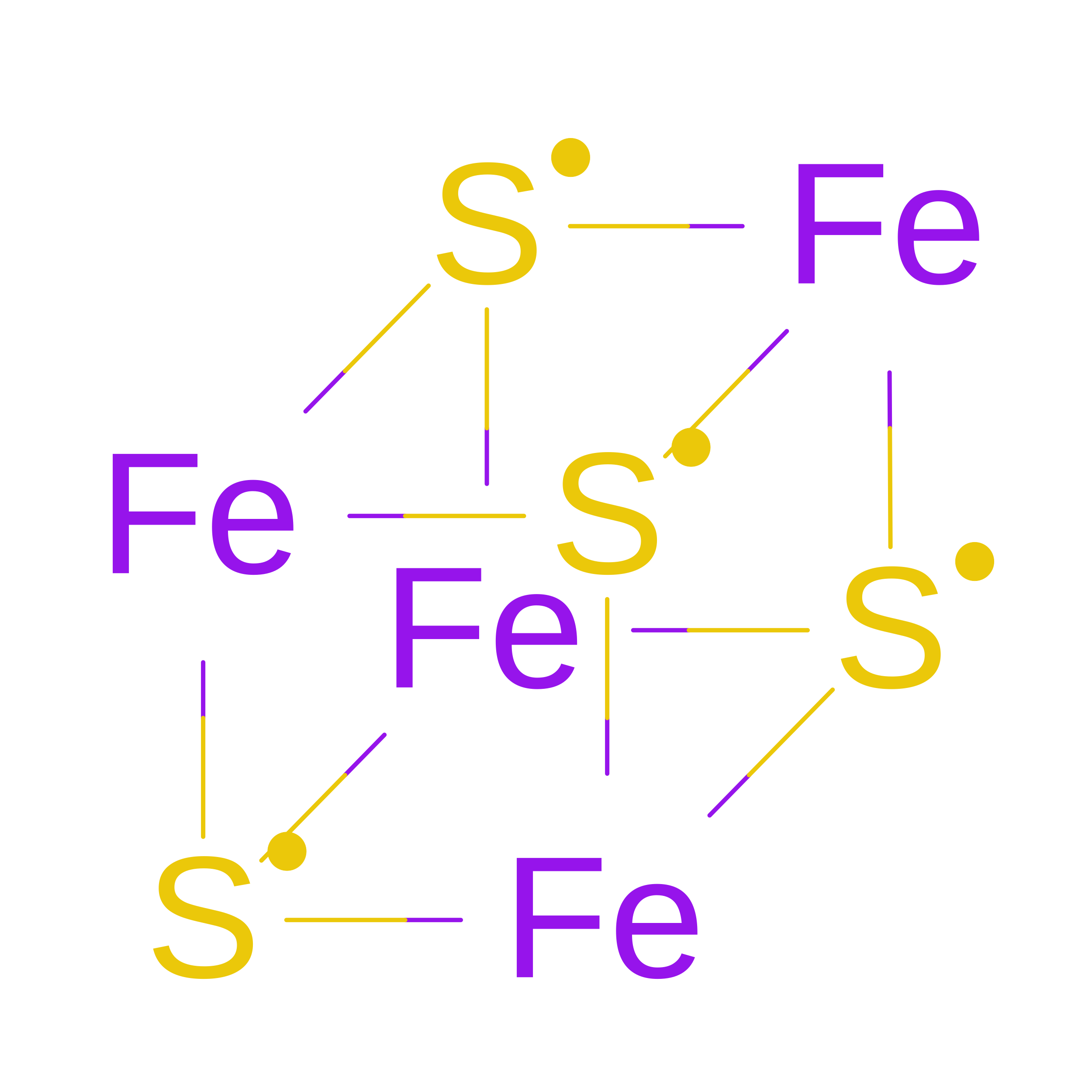
SF4
(Subject of Investigation/LOI)

Query on SF4


Download:Ideal Coordinates CCD File
CA [auth F]
G [auth A]
H [auth A]
I [auth A]
K [auth A]
CA [auth F],
G [auth A],
H [auth A],
I [auth A],
K [auth A],
M [auth B],
N [auth B],
Q [auth B],
S [auth E],
T [auth E],
U [auth E],
W [auth E],
X [auth F],
Y [auth F]
IRON/SULFUR CLUSTER
Fe4 S4
LJBDFODJNLIPKO-UHFFFAOYSA-N
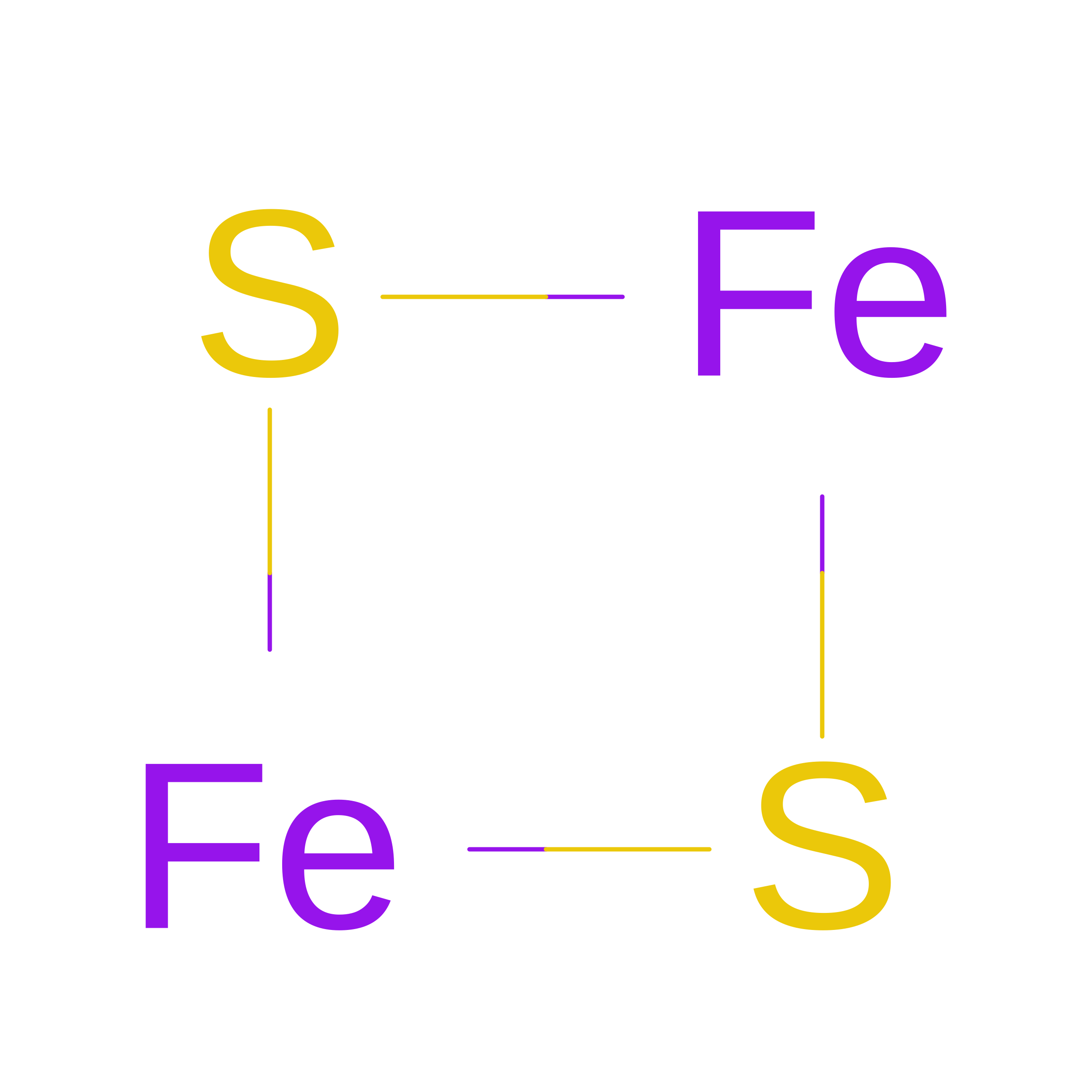
FES
(Subject of Investigation/LOI)

Query on FES


Download:Ideal Coordinates CCD File
DA [auth G],
J [auth A],
L [auth B],
R [auth C],
V [auth E]
FE2/S2 (INORGANIC) CLUSTER
Fe2 S2
NIXDOXVAJZFRNF-UHFFFAOYSA-N
ZN
(Subject of Investigation/LOI)

Query on ZN


Download:Ideal Coordinates CCD File
O [auth B],
Z [auth F]
ZINC ION
Zn
PTFCDOFLOPIGGS-UHFFFAOYSA-N

Experimental Data & Validation

Experimental Data

  • Method: ELECTRON MICROSCOPY
  • Resolution: 4.70 Å
  • Aggregation State: PARTICLE 
  • Reconstruction Method: SINGLE PARTICLE 

Structure Validation

View Full Validation Report


Entry History 

& Funding Information

Deposition Data


Funding OrganizationLocationGrant Number
German Research Foundation (DFG)European UnionSCHU 3364/1-1
European Research Council (ERC)European Union715311 (VRIK)
Knut and Alice Wallenberg FoundationEuropean Union--
Swedish Research CouncilEuropean Union016-07213
European Research Council (ERC)European Union741791
Swedish Research CouncilEuropean UnionSNIC 2020/1-38

Revision History  (Full details and data files)

  • Version 1.0: 2023-02-22
    Type: Initial release
  • Version 1.1: 2023-03-08
    Changes: Database references
  • Version 1.2: 2023-03-29
    Changes: Database references
  • Version 1.3: 2025-10-01
    Changes: Advisory, Data collection, Derived calculations, Structure summary