Download Mendeley
Chemotaxis of the Human Pathogen Pseudomonas aeruginosa to the Neurotransmitter Acetylcholine.
Matilla, M.A., Velando, F., Tajuelo, A., Martin-Mora, D., Xu, W., Sourjik, V., Gavira, J.A., Krell, T.(2022) mBio 13: e0345821-e0345821
- PubMed: 35254130 Search on PubMedSearch on PubMed Central
- DOI: https://doi.org/10.1128/mbio.03458-21
- Primary Citation Related Structures:
7PRQ, 7PRR, 7PSG - PubMed Abstract:
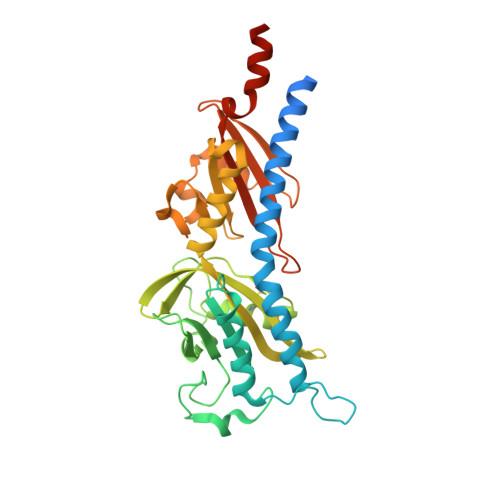
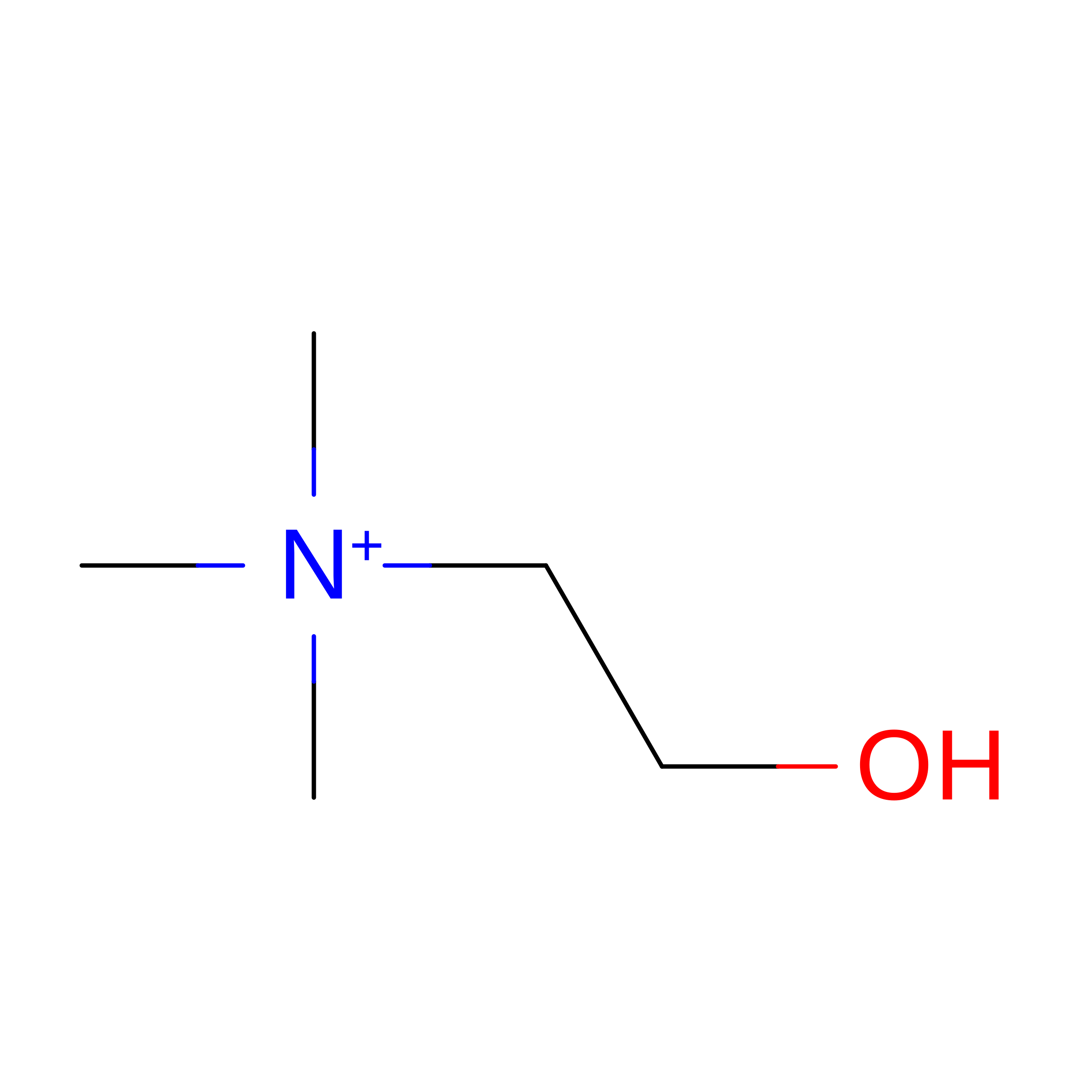
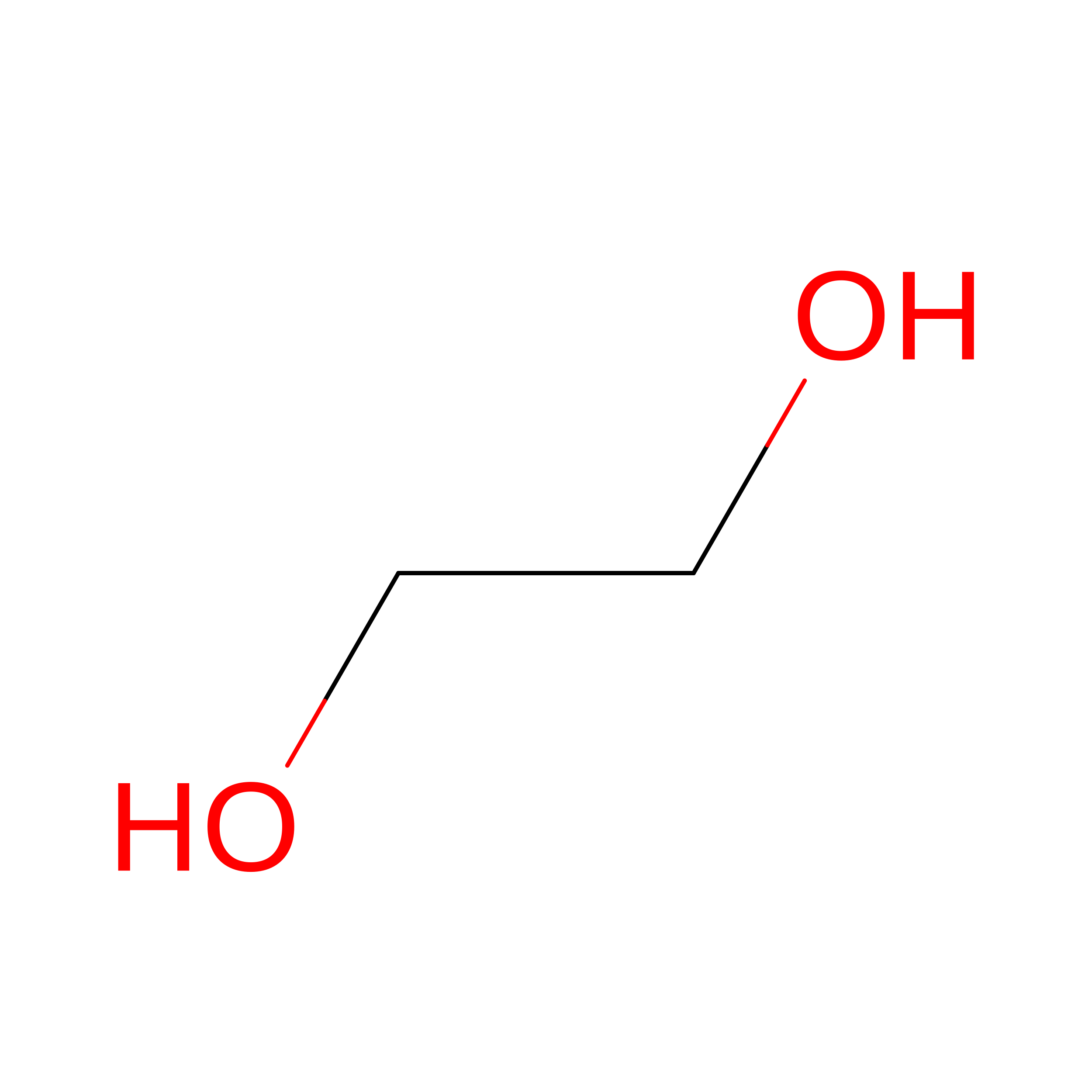
Acetylcholine is a central biological signal molecule present in all kingdoms of life. In humans, acetylcholine is the primary neurotransmitter of the peripheral nervous system; it mediates signal transmission at neuromuscular junctions. Here, we show that the opportunistic human pathogen Pseudomonas aeruginosa exhibits chemoattraction toward acetylcholine over a concentration range of 1 μM to 100 mM. The maximal magnitude of the response was superior to that of many other P. aeruginosa chemoeffectors. We demonstrate that this chemoattraction is mediated by the PctD (PA4633) chemoreceptor. Using microcalorimetry, we show that the PctD ligand-binding domain (LBD) binds acetylcholine with a equilibrium dissociation constant ( K D ) of 23 μM. It also binds choline and with lower affinity betaine. Highly sensitive responses to acetylcholine and choline, and less sensitive responses to betaine and l-carnitine, were observed in Escherichia coli expressing a chimeric receptor comprising the PctD-LBD fused to the Tar chemoreceptor signaling domain. We also identified the PacA (ECA_RS10935) chemoreceptor of the phytopathogen Pectobacterium atrosepticum, which binds choline and betaine but fails to recognize acetylcholine. To identify the molecular determinants for acetylcholine recognition, we report high-resolution structures of PctD-LBD (with bound acetylcholine and choline) and PacA-LBD (with bound betaine). We identified an amino acid motif in PctD-LBD that interacts with the acetylcholine tail. This motif is absent in PacA-LBD. Significant acetylcholine chemotaxis was also detected in the plant pathogens Agrobacterium tumefaciens and Dickeya solani. To the best of our knowledge, this is the first report of acetylcholine chemotaxis and extends the range of host signals perceived by bacterial chemoreceptors. IMPORTANCE P. aeruginosa causes a significant number of deaths annually worldwide. For many pathogens, chemotaxis plays an import role in the initial stages of infection, and deciphering the key chomoeffectors and their cognate chemoreceptors may permit the development of strategies to inhibit this process. Genome analyses have shown that many bacteria possess a large number of chemoreceptors. The chemoeffectors recognized by the large majority of chemoreceptors are unknown. However, identifying these chemoeffectors is crucial for deciphering the evolutionary forces that have shaped chemosensory signaling mechanisms in bacteria with different lifestyles. Our current understanding of the relationship between bacterial lifestyle and chemoreceptor repertoire is limited, and this work contributes to closing this gap in our knowledge. By expanding the list of known chemoeffectors and chemoreceptors, progress is made toward identifying functional receptor homologs in other bacteria.
- Department of Environmental Protection, Estación Experimental del Zaidín, Consejo Superior de Investigaciones Científicas, Granada, Spain.
Organizational Affiliation: