7P5U | pdb_00007p5u

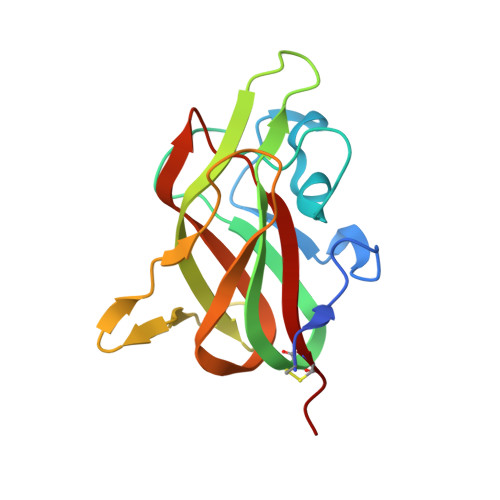
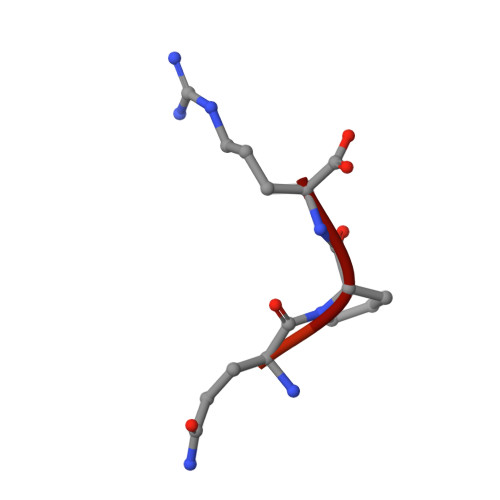
Neuropilin-b1 in a complex with a VEGFB-derived peptide


Experimental Data Snapshot

  • Method: X-RAY DIFFRACTION
  • Resolution: 1.60 Å
  • R-Value Free: 
    0.214 (Depositor), 0.221 (DCC) 
  • R-Value Work: 
    0.188 (Depositor), 0.199 (DCC) 

Starting Model: experimental
View more details

wwPDB Validation 3D Report Full Report

Validation slider image for 7P5U

This is version 1.3 of the entry. See complete history

Literature

Peptides Derived from Vascular Endothelial Growth Factor B Show Potent Binding to Neuropilin-1.

Mota, F.Yelland, T.Hutton, J.A.Parker, J.Patsiarika, A.Chan, A.W.E.O'Leary, A.Fotinou, C.Martin, J.F.Zachary, I.C.Djordjevic, S.Frankel, P.Selwood, D.L.

(2022) Chembiochem 23: e202100463-e202100463

  • DOI: https://doi.org/10.1002/cbic.202100463
  • Primary Citation Related Structures: 
    7P5U

  • PubMed Abstract: 

    Vascular endothelial growth factors (VEGFs) regulate significant pathways in angiogenesis, myocardial and neuronal protection, metabolism, and cancer progression. The VEGF-B growth factor is involved in cell survival, anti-apoptotic and antioxidant mechanisms, through binding to VEGF receptor 1 and neuropilin-1 (NRP1). We employed surface plasmon resonance technology and X-ray crystallography to analyse the molecular basis of the interaction between VEGF-B and the b1 domain of NRP1, and developed VEGF-B C-terminus derived peptides to be used as chemical tools for studying VEGF-B - NRP1 related pathways. Peptide lipidation was used as a means to stabilise the peptides. VEGF-B-derived peptides containing a C-terminal arginine show potent binding to NRP1-b1. Peptide lipidation increased binding residence time and improved plasma stability. A crystal structure of a peptide with NRP1 demonstrated that VEGF-B peptides bind at the canonical C-terminal arginine binding site. VEGF-B C-terminus imparts higher affinity for NRP1 than the corresponding VEGF-A 165 region. This tight binding may impact on the activity and selectivity of the full-length protein. The VEGF-B 167 derived peptides were more effective than VEGF-A 165 peptides in blocking functional phosphorylation events. Blockers of VEGF-B function have potential applications in diabetes and non-alcoholic fatty liver disease.


  • Organizational Affiliation
    • Wolfson Institute for Biomedical Research, University College London, Gower Street, London, WC1E 6BT, UK.

Macromolecule Content 

  • Total Structure Weight: 38.92 kDa 
  • Atom Count: 2,772 
  • Modeled Residue Count: 317 
  • Deposited Residue Count: 342 
  • Unique protein chains: 2

Macromolecules

Find similar proteins by:|  3D Structure
Entity ID: 1
MoleculeChains  Sequence LengthOrganismDetailsImage
Neuropilin-1A [auth AAA],
B [auth BBB]
158Homo sapiensMutation(s): 0 
Gene Names: NRP1NRPVEGF165R
UniProt & NIH Common Fund Data Resources
Find proteins for O14786 (Homo sapiens)
Explore O14786 
Go to UniProtKB:  O14786
PHAROS:  O14786
GTEx:  ENSG00000099250 
Entity Groups
Sequence Clusters30% Identity50% Identity70% Identity90% Identity95% Identity100% Identity
UniProt GroupO14786
Sequence Annotations
Expand
Reference Sequence
Find similar proteins by:  Sequence   |   3D Structure  
Entity ID: 2
MoleculeChains  Sequence LengthOrganismDetailsImage
MGC0122C [auth CCC],
D [auth EEE]
13Homo sapiensMutation(s): 0 

Experimental Data & Validation

Experimental Data

  • Method: X-RAY DIFFRACTION
  • Resolution: 1.60 Å
  • R-Value Free:  0.214 (Depositor), 0.221 (DCC) 
  • R-Value Work:  0.188 (Depositor), 0.199 (DCC) 
Space Group: P 21 21 21
Unit Cell:
Length ( Å )Angle ( ˚ )
a = 48.496α = 90
b = 74.35β = 90
c = 91.426γ = 90
Software Package:
Software NamePurpose
REFMACrefinement
xia2data reduction
xia2data scaling
MOLREPphasing

Structure Validation

View Full Validation Report


Entry History 

& Funding Information

Deposition Data


Funding OrganizationLocationGrant Number
British Heart FoundationUnited KingdomPG/10/52/28448

Revision History  (Full details and data files)

  • Version 1.0: 2022-07-27
    Type: Initial release
  • Version 1.1: 2024-01-31
    Changes: Data collection, Refinement description
  • Version 1.2: 2024-11-06
    Changes: Structure summary
  • Version 1.3: 2026-03-25
    Changes: Database references