7N4W | pdb_00007n4w

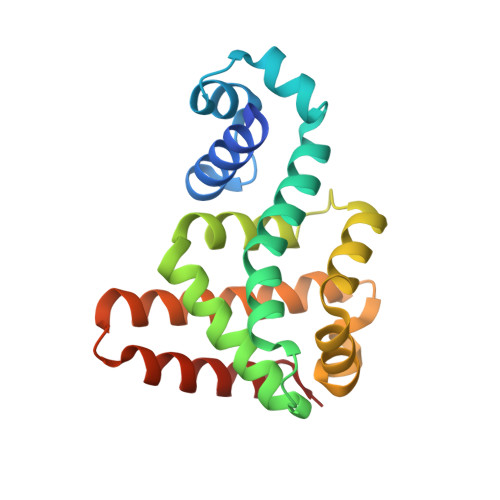
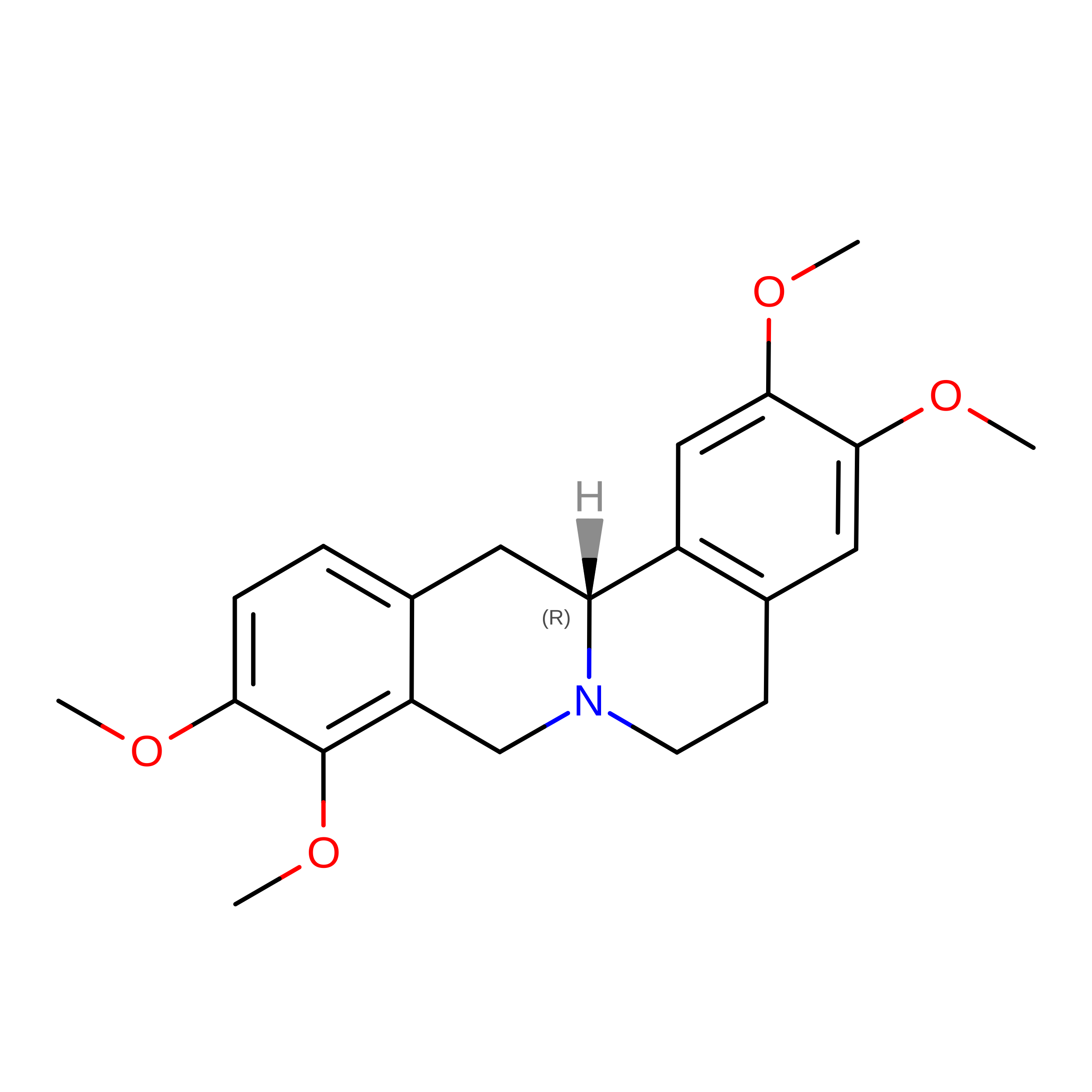
Complex structure of ROTU4 with rotundine


Experimental Data Snapshot

  • Method: X-RAY DIFFRACTION
  • Resolution: 1.64 Å
  • R-Value Free: 
    0.173 (Depositor), 0.190 (DCC) 
  • R-Value Work: 
    0.151 (Depositor) 
  • R-Value Observed: 
    0.152 (Depositor) 

Starting Model: experimental
View more details

wwPDB Validation 3D Report Full Report

Validation slider image for 7N4W

Ligand Structure Quality Assessment 


This is version 1.3 of the entry. See complete history

Literature

Using fungible biosensors to evolve improved alkaloid biosyntheses.

d'Oelsnitz, S.Kim, W.Burkholder, N.T.Javanmardi, K.Thyer, R.Zhang, Y.Alper, H.S.Ellington, A.D.

(2022) Nat Chem Biol 18: 981-989

  • DOI: https://doi.org/10.1038/s41589-022-01072-w
  • Primary Citation Related Structures: 
    7N4W, 7N4Z, 7N53, 7N54

  • PubMed Abstract: 

    A key bottleneck in the microbial production of therapeutic plant metabolites is identifying enzymes that can improve yield. The facile identification of genetically encoded biosensors can overcome this limitation and become part of a general method for engineering scaled production. We have developed a combined screening and selection approach that quickly refines the affinities and specificities of generalist transcription factors; using RamR as a starting point, we evolve highly specific (>100-fold preference) and sensitive (half-maximum effective concentration (EC 50 ) < 30 μM) biosensors for the alkaloids tetrahydropapaverine, papaverine, glaucine, rotundine and noscapine. High-resolution structures reveal multiple evolutionary avenues for the malleable effector-binding site and the creation of new pockets for different chemical moieties. These sensors further enabled the evolution of a streamlined pathway for tetrahydropapaverine, a precursor to four modern pharmaceuticals, collapsing multiple methylation steps into a single evolved enzyme. Our methods for evolving biosensors enable the rapid engineering of pathways for therapeutic alkaloids.


  • Organizational Affiliation
    • Department of Molecular Biosciences, University of Texas at Austin, Austin, TX, USA. simonsnitz@gmail.com.

Macromolecule Content 

  • Total Structure Weight: 22.69 kDa 
  • Atom Count: 1,607 
  • Modeled Residue Count: 183 
  • Deposited Residue Count: 194 
  • Unique protein chains: 1

Macromolecules

Find similar proteins by:|  3D Structure
Entity ID: 1
MoleculeChains  Sequence LengthOrganismDetailsImage
ROTU4194Salmonella enterica subsp. enterica serovar Typhimurium str. 14028SMutation(s): 0 
UniProt
Find proteins for A0A0F6AY66 (Salmonella typhimurium (strain 14028s / SGSC 2262))
Explore A0A0F6AY66 
Go to UniProtKB:  A0A0F6AY66
Entity Groups
Sequence Clusters30% Identity50% Identity70% Identity90% Identity95% Identity100% Identity
UniProt GroupA0A0F6AY66
Sequence Annotations
Expand
Reference Sequence

Experimental Data & Validation

Experimental Data

  • Method: X-RAY DIFFRACTION
  • Resolution: 1.64 Å
  • R-Value Free:  0.173 (Depositor), 0.190 (DCC) 
  • R-Value Work:  0.151 (Depositor) 
  • R-Value Observed: 0.152 (Depositor) 
Space Group: C 1 2 1
Unit Cell:
Length ( Å )Angle ( ˚ )
a = 87.88α = 90
b = 50.61β = 90.12
c = 46.079γ = 90
Software Package:
Software NamePurpose
HKL-2000data scaling
REFMACrefinement
PDB_EXTRACTdata extraction
HKL-2000data reduction
PHENIXphasing

Structure Validation

View Full Validation Report


Ligand Structure Quality Assessment 


Entry History 

& Funding Information

Deposition Data


Funding OrganizationLocationGrant Number
National Institutes of Health/National Institute of General Medical Sciences (NIH/NIGMS)United StatesR01GM104896
National Institutes of Health/National Institute of General Medical Sciences (NIH/NIGMS)United StatesR01GM125882

Revision History  (Full details and data files)

  • Version 1.0: 2022-06-29
    Type: Initial release
  • Version 1.1: 2022-07-20
    Changes: Database references
  • Version 1.2: 2022-09-07
    Changes: Database references
  • Version 1.3: 2023-10-18
    Changes: Data collection, Refinement description