7LC5 | pdb_00007lc5

Crystal structure of epoxyqueuosine reductase QueH from Thermotoga maritima


Experimental Data Snapshot

  • Method: X-RAY DIFFRACTION
  • Resolution: 1.50 Å
  • R-Value Free: 
    0.211 (Depositor), 0.237 (DCC) 
  • R-Value Work: 
    0.196 (Depositor) 
  • R-Value Observed: 
    0.196 (Depositor) 

wwPDB Validation 3D Report Full Report

Validation slider image for 7LC5

This is version 1.2 of the entry. See complete history

Literature

Epoxyqueuosine Reductase QueH in the Biosynthetic Pathway to tRNA Queuosine Is a Unique Metalloenzyme.

Li, Q.Zallot, R.MacTavish, B.S.Montoya, A.Payan, D.J.Hu, Y.Gerlt, J.A.Angerhofer, A.de Crecy-Lagard, V.Bruner, S.D.

(2021) Biochemistry 60: 3152-3161

  • DOI: https://doi.org/10.1021/acs.biochem.1c00164
  • Primary Citation Related Structures: 
    7LC5

  • PubMed Abstract: 

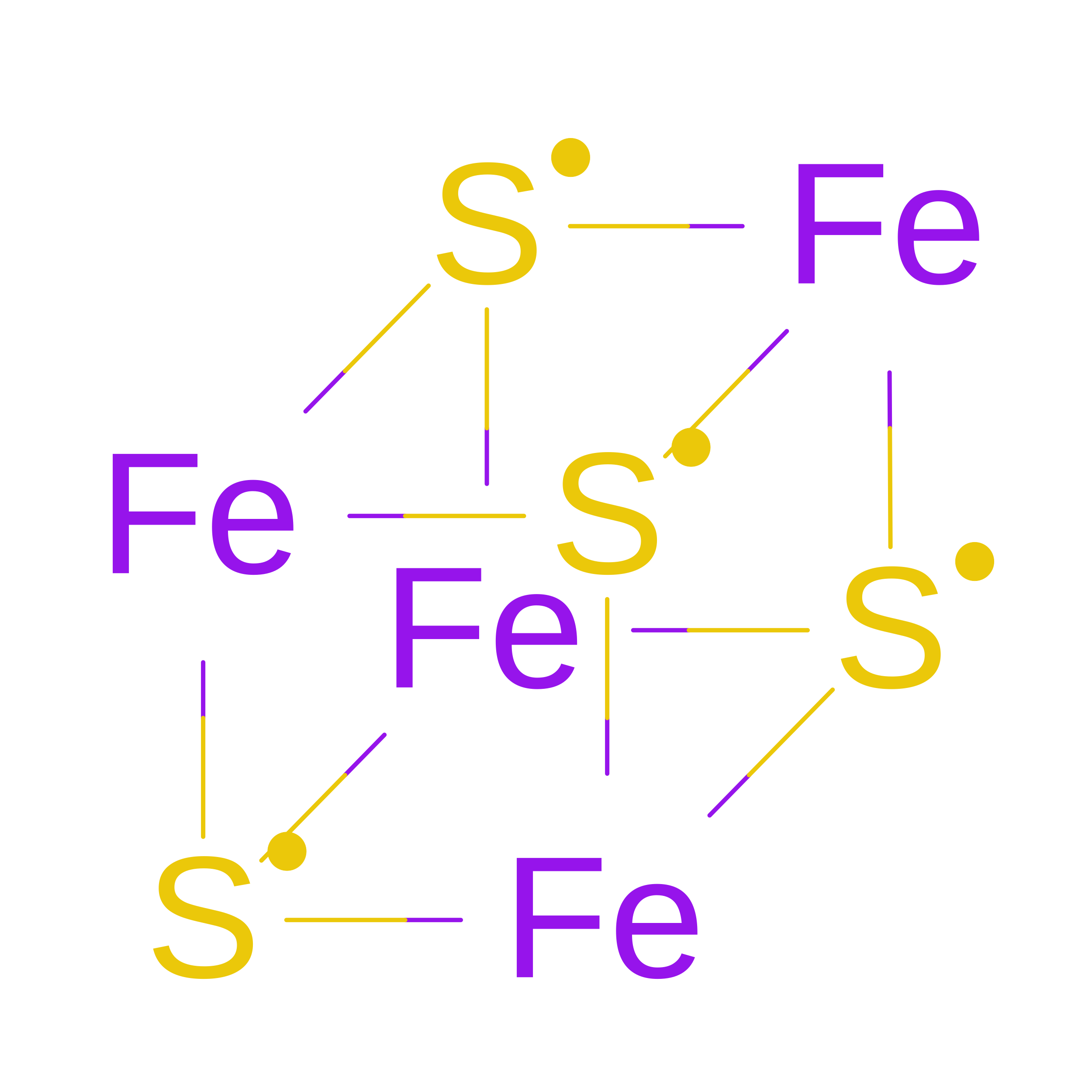
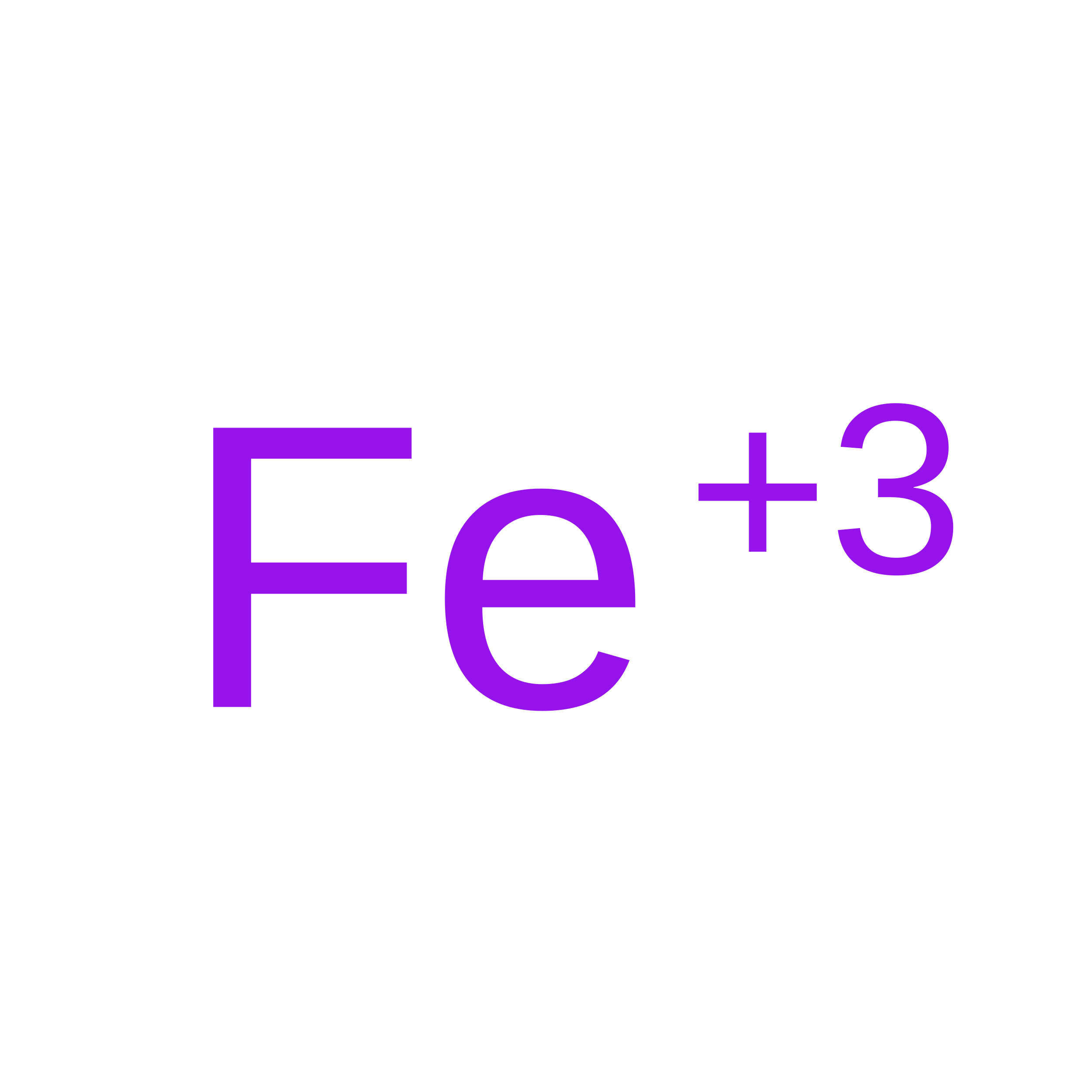
    Queuosine is a structurally unique and functionally important tRNA modification, widely distributed in eukaryotes and bacteria. The final step of queuosine biosynthesis is the reduction/deoxygenation of epoxyqueuosine to form the cyclopentene motif of the nucleobase. The chemistry is performed by the structurally and functionally characterized cobalamin-dependent QueG. However, the queG gene is absent from several bacteria that otherwise retain queuosine biosynthesis machinery. Members of the IPR003828 family (previously known as DUF208) have been recently identified as nonorthologous replacements of QueG, and this family was renamed QueH. Here, we present the structural characterization of QueH from Thermotoga maritima . The structure reveals an unusual active site architecture with a [4Fe-4S] metallocluster along with an adjacent coordinated iron metal. The juxtaposition of the cofactor and coordinated metal ion predicts a unique mechanism for a two-electron reduction/deoxygenation of epoxyqueuosine. To support the structural characterization, in vitro biochemical and genomic analyses are presented. Overall, this work reveals new diversity in the chemistry of iron/sulfur-dependent enzymes and novel insight into the last step of this widely conserved tRNA modification.


  • Organizational Affiliation
    • Department of Chemistry, University of Florida, Gainesville, Florida 32611, United States.

Macromolecule Content 

  • Total Structure Weight: 22.99 kDa 
  • Atom Count: 1,580 
  • Modeled Residue Count: 178 
  • Deposited Residue Count: 192 
  • Unique protein chains: 1

Macromolecules

Find similar proteins by:|  3D Structure
Entity ID: 1
MoleculeChains  Sequence LengthOrganismDetailsImage
Epoxyqueuosine reductase QueH192Thermotoga maritima MSB8Mutation(s): 0 
Gene Names: queHTM_0731
EC: 1.17.99.6
UniProt
Find proteins for Q9WZJ0 (Thermotoga maritima (strain ATCC 43589 / DSM 3109 / JCM 10099 / NBRC 100826 / MSB8))
Explore Q9WZJ0 
Go to UniProtKB:  Q9WZJ0
Entity Groups
Sequence Clusters30% Identity50% Identity70% Identity90% Identity95% Identity100% Identity
UniProt GroupQ9WZJ0
Sequence Annotations
Expand
Reference Sequence

Experimental Data & Validation

Experimental Data

  • Method: X-RAY DIFFRACTION
  • Resolution: 1.50 Å
  • R-Value Free:  0.211 (Depositor), 0.237 (DCC) 
  • R-Value Work:  0.196 (Depositor) 
  • R-Value Observed: 0.196 (Depositor) 
Space Group: C 2 2 21
Unit Cell:
Length ( Å )Angle ( ˚ )
a = 53.224α = 90
b = 105.181β = 90
c = 73.899γ = 90
Software Package:
Software NamePurpose
PHENIXrefinement
XDSdata reduction
Aimlessdata scaling
AutoSolphasing

Structure Validation

View Full Validation Report


Entry History 

& Funding Information

Deposition Data


Funding OrganizationLocationGrant Number
National Institutes of Health/National Institute of General Medical Sciences (NIH/NIGMS)United StatesR01 GM70641

Revision History  (Full details and data files)

  • Version 1.0: 2021-11-03
    Type: Initial release
  • Version 1.1: 2021-11-10
    Changes: Database references
  • Version 1.2: 2024-05-22
    Changes: Data collection