6DT1 | pdb_00006dt1

Crystal structure of the ligase from bacteriophage T4 complexed with DNA intermediate

  • Classification: LIGASE/DNA
  • Organism(s): Tequatrovirus T4
  • Expression System: Escherichia coli
  • Mutation(s): No 

  • Deposited: 2018-06-14 Released: 2018-09-19 
  • Deposition Author(s): Shi, K., Aihara, H.
  • Funding Organization(s): National Institutes of Health/National Institute of General Medical Sciences (NIH/NIGMS)

Experimental Data Snapshot

  • Method: X-RAY DIFFRACTION
  • Resolution: 2.75 Å
  • R-Value Free: 
    0.219 (Depositor), 0.219 (DCC) 
  • R-Value Work: 
    0.170 (Depositor), 0.173 (DCC) 
  • R-Value Observed: 
    0.172 (Depositor) 

Starting Model: experimental
View more details

wwPDB Validation 3D Report Full Report

Validation slider image for 6DT1

Ligand Structure Quality Assessment 


This is version 2.2 of the entry. See complete history

Literature

T4 DNA ligase structure reveals a prototypical ATP-dependent ligase with a unique mode of sliding clamp interaction.

Shi, K.Bohl, T.E.Park, J.Zasada, A.Malik, S.Banerjee, S.Tran, V.Li, N.Yin, Z.Kurniawan, F.Orellana, K.Aihara, H.

(2018) Nucleic Acids Res 46: 10474-10488

  • DOI: https://doi.org/10.1093/nar/gky776
  • Primary Citation Related Structures: 
    5WFY, 6DRT, 6DT1

  • PubMed Abstract: 

    DNA ligases play essential roles in DNA replication and repair. Bacteriophage T4 DNA ligase is the first ATP-dependent ligase enzyme to be discovered and is widely used in molecular biology, but its structure remained unknown. Our crystal structure of T4 DNA ligase bound to DNA shows a compact α-helical DNA-binding domain (DBD), nucleotidyl-transferase (NTase) domain, and OB-fold domain, which together fully encircle DNA. The DBD of T4 DNA ligase exhibits remarkable structural homology to the core DNA-binding helices of the larger DBDs from eukaryotic and archaeal DNA ligases, but it lacks additional structural components required for protein interactions. T4 DNA ligase instead has a flexible loop insertion within the NTase domain, which binds tightly to the T4 sliding clamp gp45 in a novel α-helical PIP-box conformation. Thus, T4 DNA ligase represents a prototype of the larger eukaryotic and archaeal DNA ligases, with a uniquely evolved mode of protein interaction that may be important for efficient DNA replication.


  • Organizational Affiliation
    • Department of Biochemistry, Molecular Biology, and Biophysics, University of Minnesota, 6-155 Jackson Hall, 321 Church Street S.E. Minneapolis, MN 55455, USA.

Macromolecule Content 

  • Total Structure Weight: 143.64 kDa 
  • Atom Count: 9,524 
  • Modeled Residue Count: 1,007 
  • Deposited Residue Count: 1,098 
  • Unique protein chains: 1
  • Unique nucleic acid chains: 3

Macromolecules


Find similar proteins by:|  3D Structure
Entity ID: 1
MoleculeChains  Sequence LengthOrganismDetailsImage
DNA ligaseA,
B [auth E]
507Tequatrovirus T4Mutation(s): 0 
Gene Names: 30
EC: 6.5.1.1
UniProt
Find proteins for P00970 (Enterobacteria phage T4)
Explore P00970 
Go to UniProtKB:  P00970
Entity Groups
Sequence Clusters30% Identity50% Identity70% Identity90% Identity95% Identity100% Identity
UniProt GroupP00970
Sequence Annotations
Expand
Reference Sequence
Find similar nucleic acids by:  Sequence
Entity ID: 2
MoleculeChains LengthOrganismImage
DNA (5'-D(*GP*CP*TP*GP*AP*TP*GP*CP*GP*TP*(DOC))-3')C [auth B],
F
11Tequatrovirus T4
Sequence Annotations
Expand
Reference Sequence
Find similar nucleic acids by:  Sequence
Entity ID: 3
MoleculeChains LengthOrganismImage
DNA (5'-D((AMP)*GP*TP*CP*GP*GP*AP*CP*TP*GP*AP*)-3')D [auth C],
G
10Tequatrovirus T4
Sequence Annotations
Expand
Reference Sequence
Find similar nucleic acids by:  Sequence
Entity ID: 4
MoleculeChains LengthOrganismImage
DNA (5'-D(*TP*CP*AP*GP*TP*CP*CP*GP*AP*CP*GP*AP*CP*GP*CP*AP*TP*CP*AP*GP*C)-3')E [auth D],
H
21Tequatrovirus T4
Sequence Annotations
Expand
Reference Sequence

Small Molecules

Ligands 6 Unique
IDChains Name / Formula / InChI Key2D Diagram3D Interactions
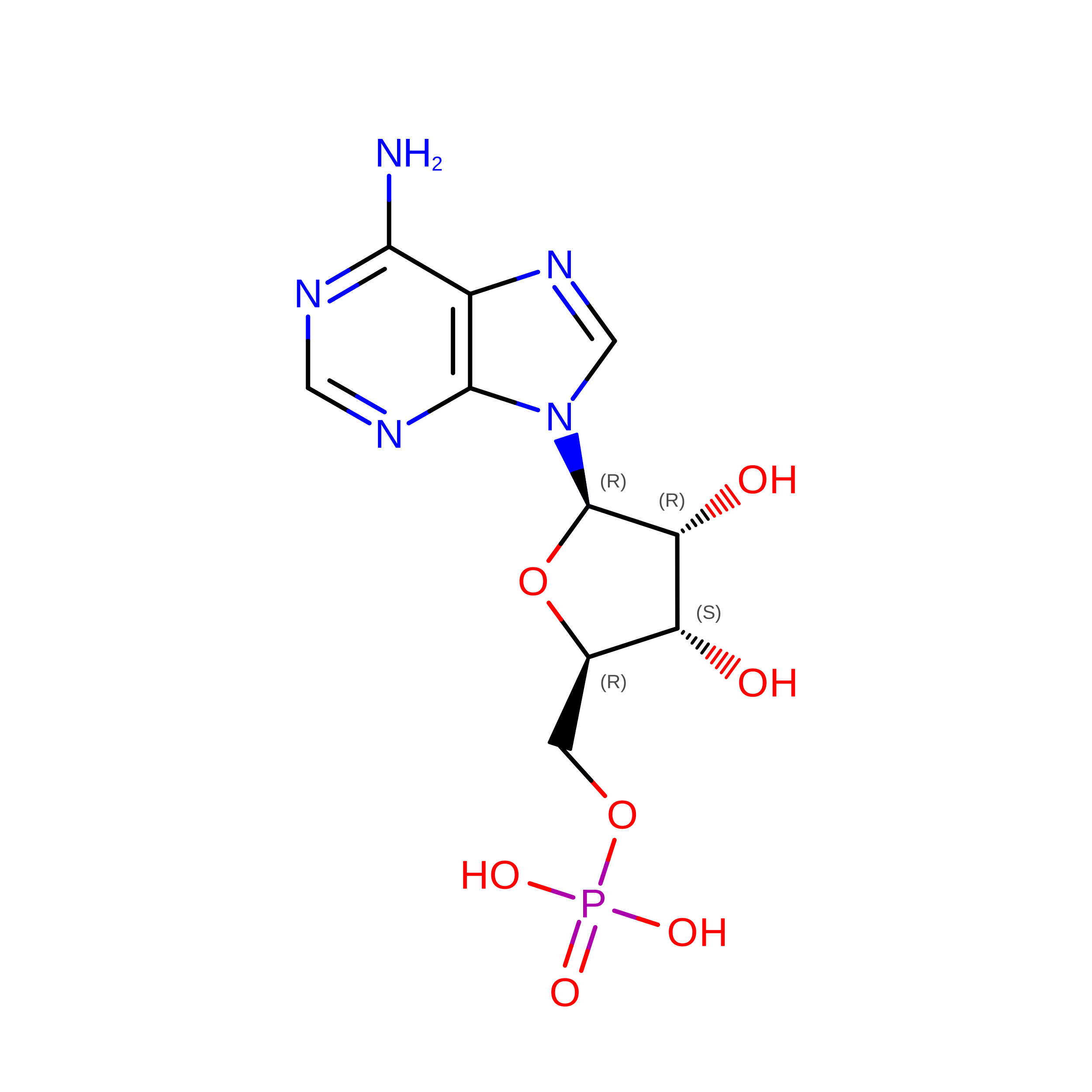
AMP

Query on AMP


Download:Ideal Coordinates CCD File
CA [auth C],
Z [auth E]
ADENOSINE MONOPHOSPHATE
C10 H14 N5 O7 P
UDMBCSSLTHHNCD-KQYNXXCUSA-N
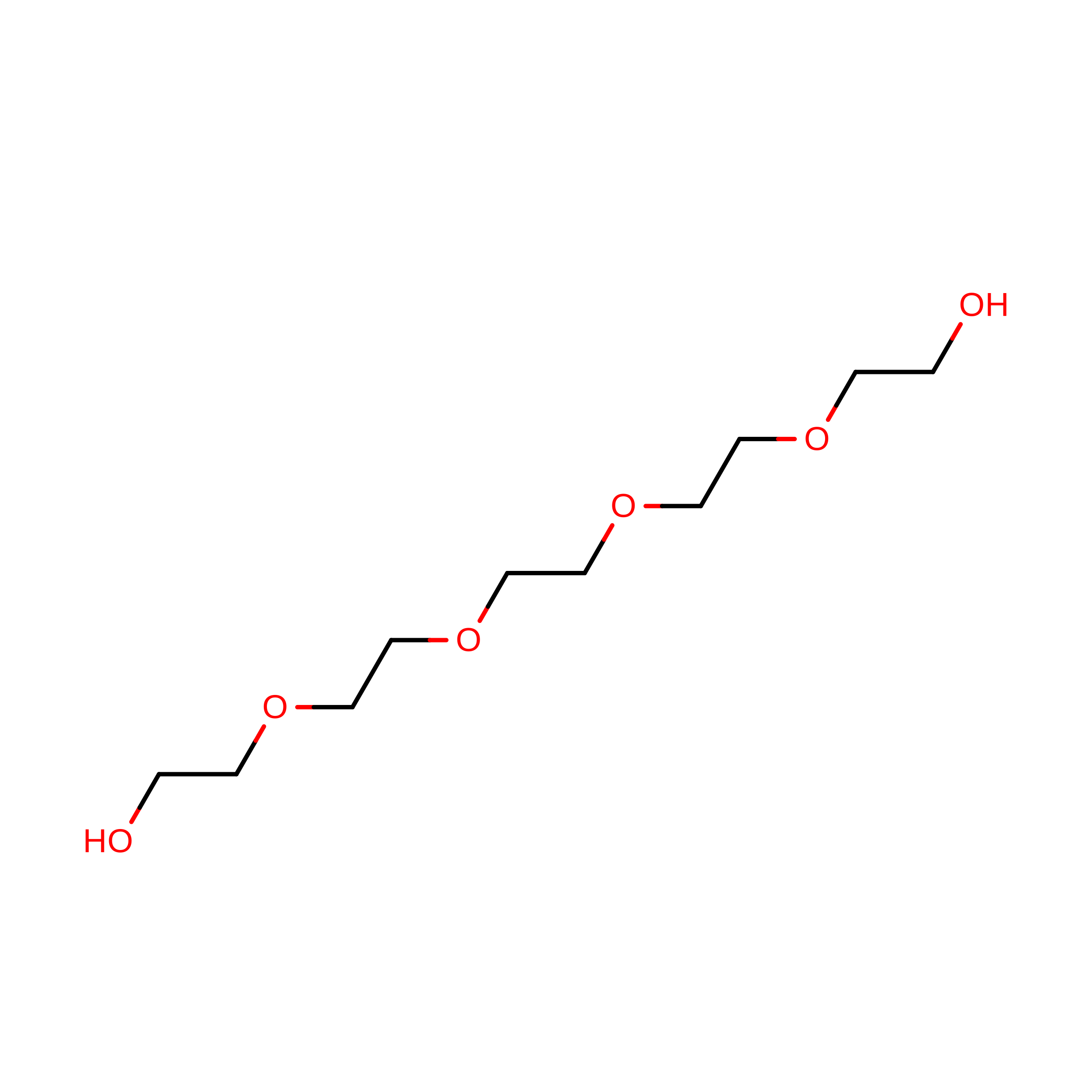
1PE

Query on 1PE


Download:Ideal Coordinates CCD File
N [auth A]PENTAETHYLENE GLYCOL
C10 H22 O6
JLFNLZLINWHATN-UHFFFAOYSA-N
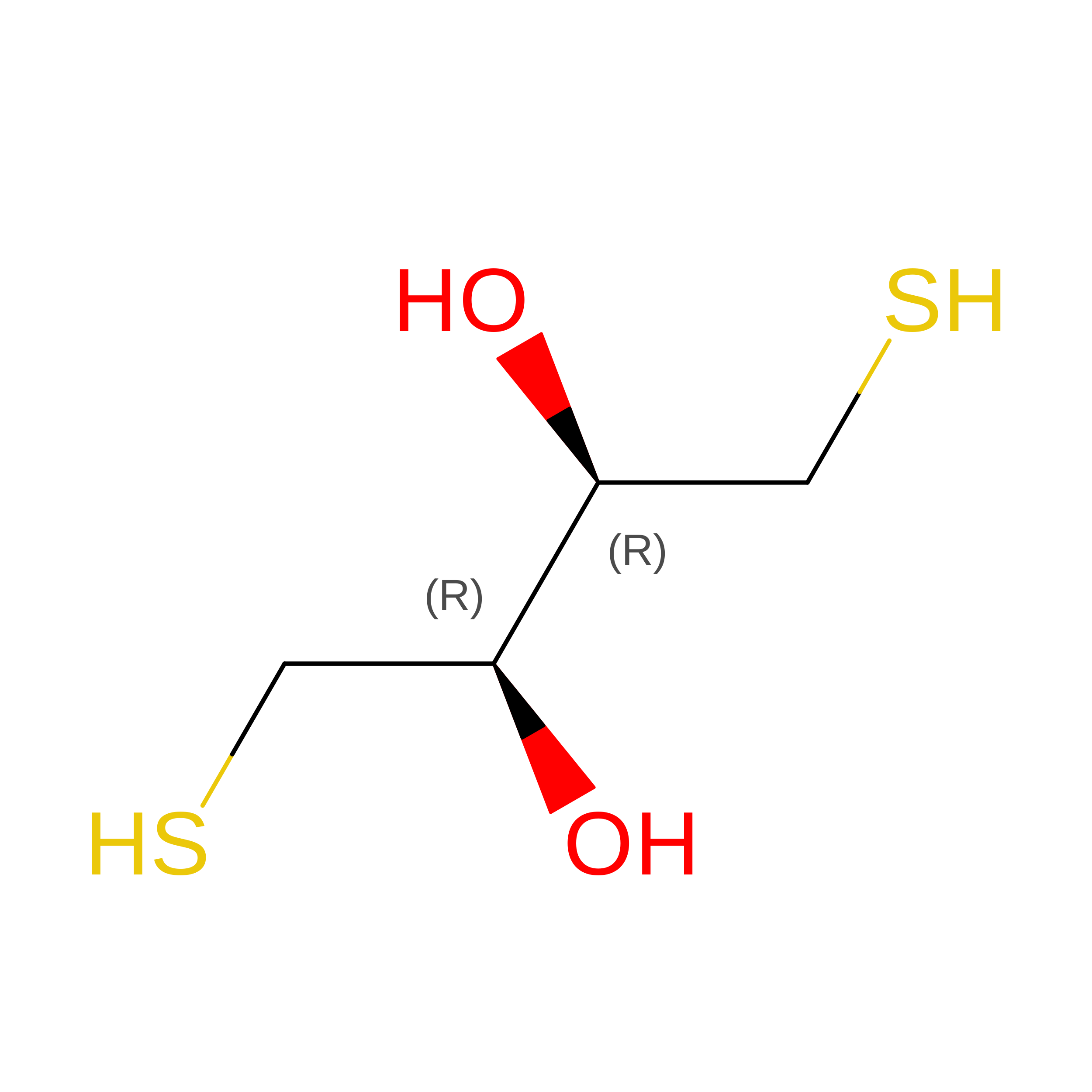
DTT

Query on DTT


Download:Ideal Coordinates CCD File
BA [auth B],
DA [auth D],
EA [auth D],
T [auth A],
U [auth A]
2,3-DIHYDROXY-1,4-DITHIOBUTANE
C4 H10 O2 S2
VHJLVAABSRFDPM-IMJSIDKUSA-N
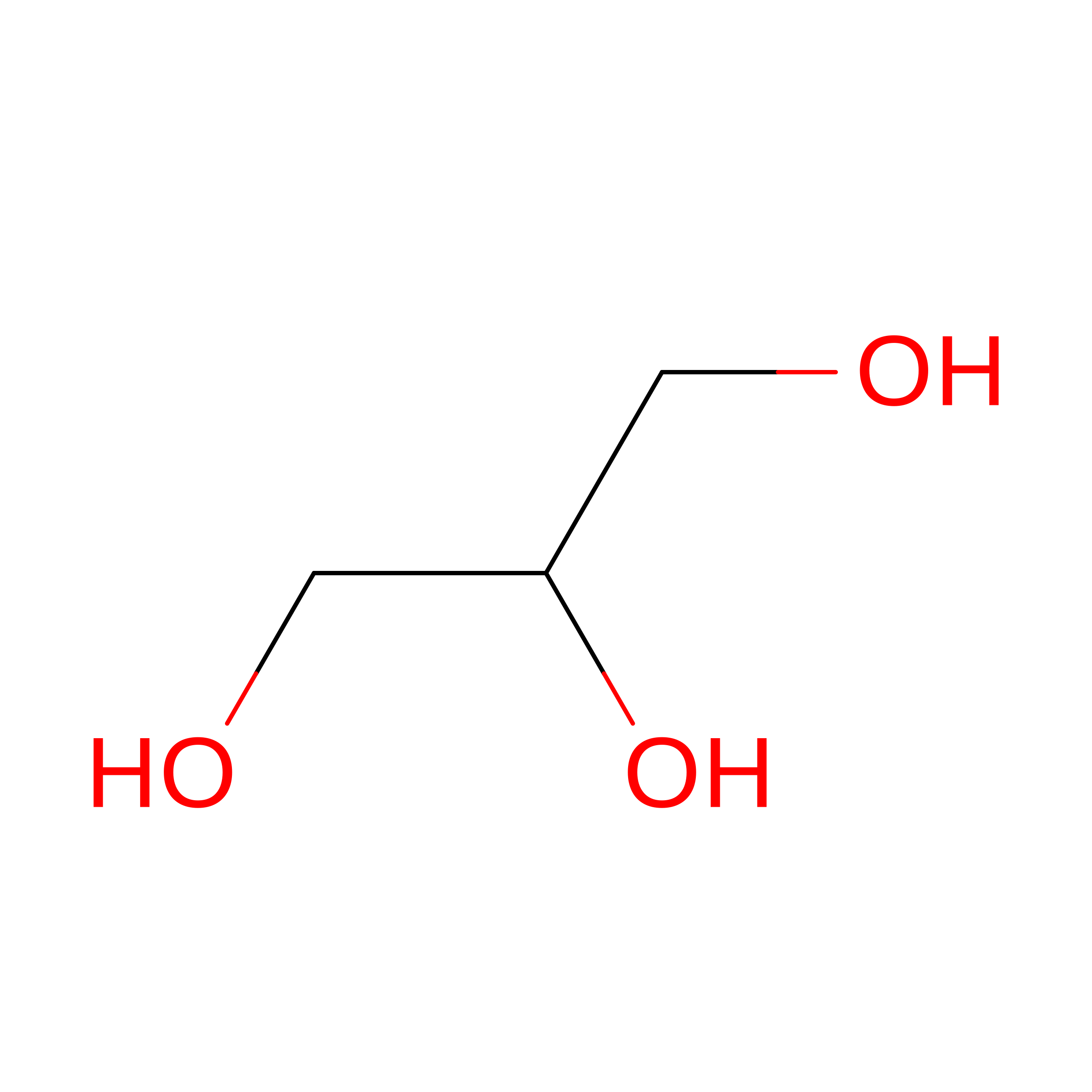
GOL

Query on GOL


Download:Ideal Coordinates CCD File
I [auth A]
J [auth A]
K [auth A]
L [auth A]
M [auth A]
I [auth A],
J [auth A],
K [auth A],
L [auth A],
M [auth A],
O [auth A],
P [auth A],
Q [auth A],
R [auth A],
S [auth A],
V [auth A],
W [auth A]
GLYCEROL
C3 H8 O3
PEDCQBHIVMGVHV-UHFFFAOYSA-N
CL

Query on CL


Download:Ideal Coordinates CCD File
AA [auth E],
X [auth A]
CHLORIDE ION
Cl
VEXZGXHMUGYJMC-UHFFFAOYSA-M
MG

Query on MG


Download:Ideal Coordinates CCD File
Y [auth A]MAGNESIUM ION
Mg
JLVVSXFLKOJNIY-UHFFFAOYSA-N

Experimental Data & Validation

Experimental Data

  • Method: X-RAY DIFFRACTION
  • Resolution: 2.75 Å
  • R-Value Free:  0.219 (Depositor), 0.219 (DCC) 
  • R-Value Work:  0.170 (Depositor), 0.173 (DCC) 
  • R-Value Observed: 0.172 (Depositor) 
Space Group: P 1
Unit Cell:
Length ( Å )Angle ( ˚ )
a = 63.526α = 88.78
b = 67.429β = 80.94
c = 114.635γ = 62.97
Software Package:
Software NamePurpose
PHENIXrefinement
XDSdata reduction
XDSdata scaling
PHASERphasing

Structure Validation

View Full Validation Report


Ligand Structure Quality Assessment 


Entry History 

& Funding Information

Deposition Data


Funding OrganizationLocationGrant Number
National Institutes of Health/National Institute of General Medical Sciences (NIH/NIGMS)United StatesGM095558

Revision History  (Full details and data files)

  • Version 1.0: 2018-09-19
    Type: Initial release
  • Version 1.1: 2018-11-14
    Changes: Data collection, Database references
  • Version 2.0: 2019-07-10
    Changes: Advisory, Atomic model, Data collection, Database references, Derived calculations, Polymer sequence, Source and taxonomy, Structure summary
  • Version 2.1: 2020-01-01
    Changes: Author supporting evidence
  • Version 2.2: 2023-10-11
    Changes: Data collection, Database references, Derived calculations, Refinement description