6Y1Q | pdb_00006y1q

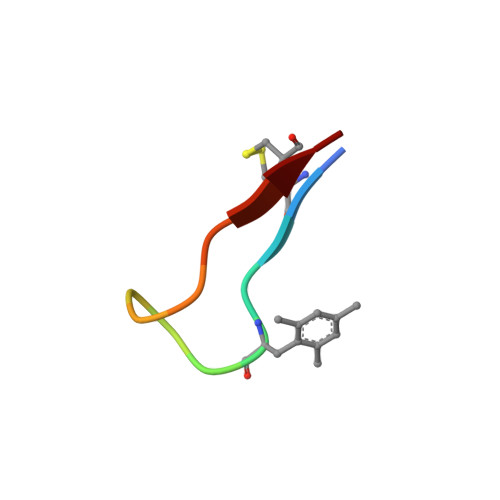
Cortistatin analog with improved immunoregulatory activity

  • Classification: HORMONE
  • Organism(s): synthetic construct
  • Mutation(s): No 

  • Deposited: 2020-02-13 Released: 2021-01-27 
  • Deposition Author(s): Rol, A.
  • Funding Organization(s): Ministry of Economy and Competitiveness (MINECO)

Experimental Data Snapshot

  • Method: SOLUTION NMR
  • Conformers Calculated: 200 
  • Conformers Submitted: 20 
  • Selection Criteria: structures with the lowest energy 

wwPDB Validation 3D Report Full Report

Validation slider image for 6Y1Q

This is version 3.0 of the entry. See complete history

Literature

Structure-based design of a Cortistatin analogue with immunomodulatory activity in models of inflammatory bowel disease.

Rol, A.Todorovski, T.Martin-Malpartida, P.Escola, A.Gonzalez-Rey, E.Aragon, E.Verdaguer, X.Valles-Miret, M.Farrera-Sinfreu, J.Puig, E.Fernandez-Carneado, J.Ponsati, B.Delgado, M.Riera, A.Macias, M.J.

(2021) Nat Commun 12: 1869-1869

  • DOI: https://doi.org/10.1038/s41467-021-22076-5
  • Primary Citation Related Structures: 
    6Y1Q

  • PubMed Abstract: 

    Ulcerative colitis and Crohn's disease are forms of inflammatory bowel disease whose incidence and prevalence are increasing worldwide. These diseases lead to chronic inflammation of the gastrointestinal tract as a result of an abnormal response of the immune system. Recent studies positioned Cortistatin, which shows low stability in plasma, as a candidate for IBD treatment. Here, using NMR structural information, we design five Cortistatin analogues adopting selected native Cortistatin conformations in solution. One of them, A5, preserves the anti-inflammatory and immunomodulatory activities of Cortistatin in vitro and in mouse models of the disease. Additionally, A5 displays an increased half-life in serum and a unique receptor binding profile, thereby overcoming the limitations of the native Cortistatin as a therapeutic agent. This study provides an efficient approach to the rational design of Cortistatin analogues and opens up new possibilities for the treatment of patients that fail to respond to other therapies.


  • Organizational Affiliation
    • Institute for Research in Biomedicine (IRB-Barcelona), The Barcelona Institute of Science and Technology, Barcelona, Spain.

Macromolecule Content 

  • Total Structure Weight: 1.93 kDa 
  • Atom Count: 134 
  • Modeled Residue Count: 14 
  • Deposited Residue Count: 14 
  • Unique protein chains: 1

Macromolecules

Find similar proteins by:  Sequence   |   3D Structure  
Entity ID: 1
MoleculeChains  Sequence LengthOrganismDetailsImage
Analog 514synthetic constructMutation(s): 0 

Small Molecules

Ligands 1 Unique
IDChains Name / Formula / InChI Key2D Diagram3D Interactions
OCA

Query on OCA


Download:Ideal Coordinates CCD File
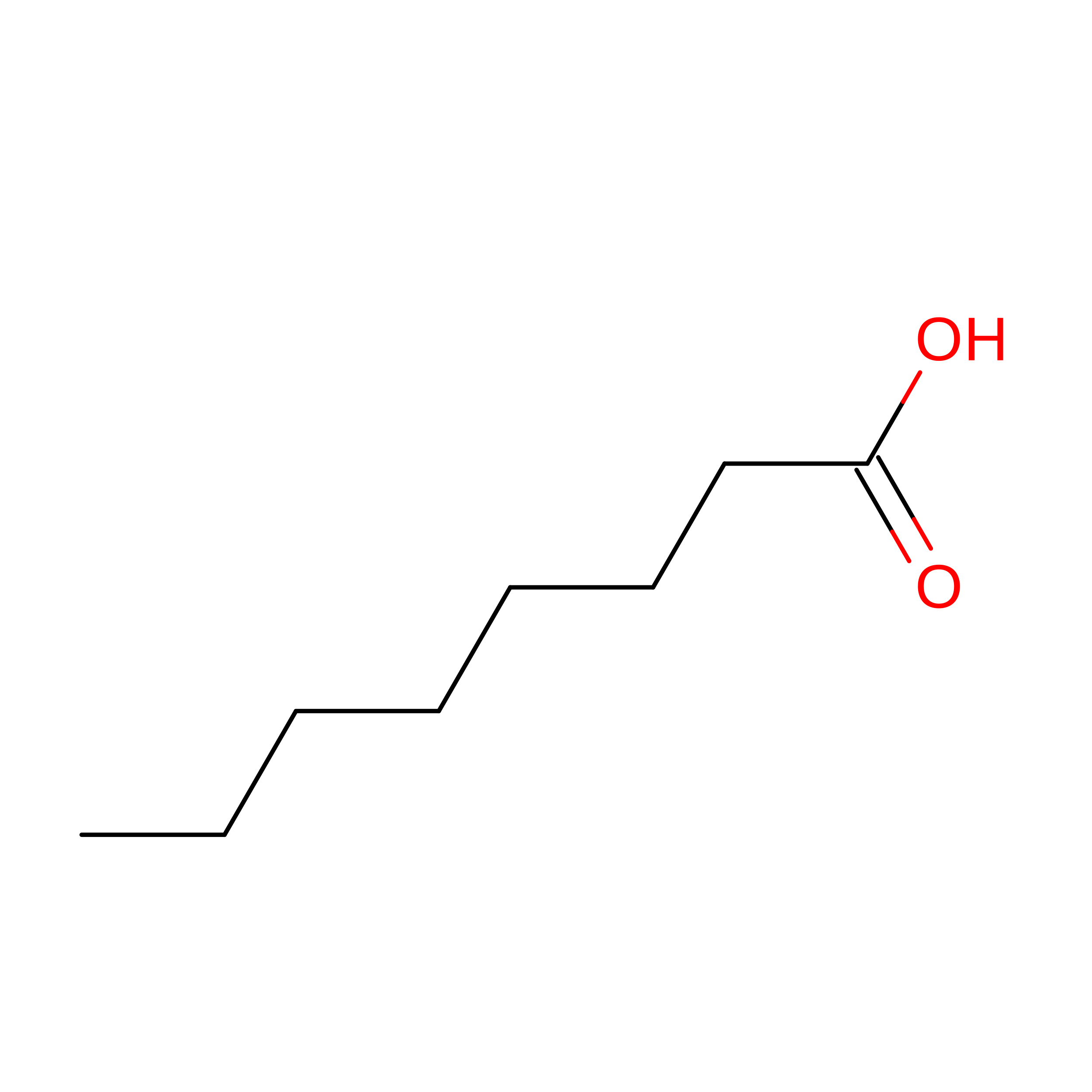
B [auth A]OCTANOIC ACID (CAPRYLIC ACID)
C8 H16 O2
WWZKQHOCKIZLMA-UHFFFAOYSA-N
Modified Residues  1 Unique
IDChains TypeFormula2D DiagramParent
DTR
Query on DTR
A
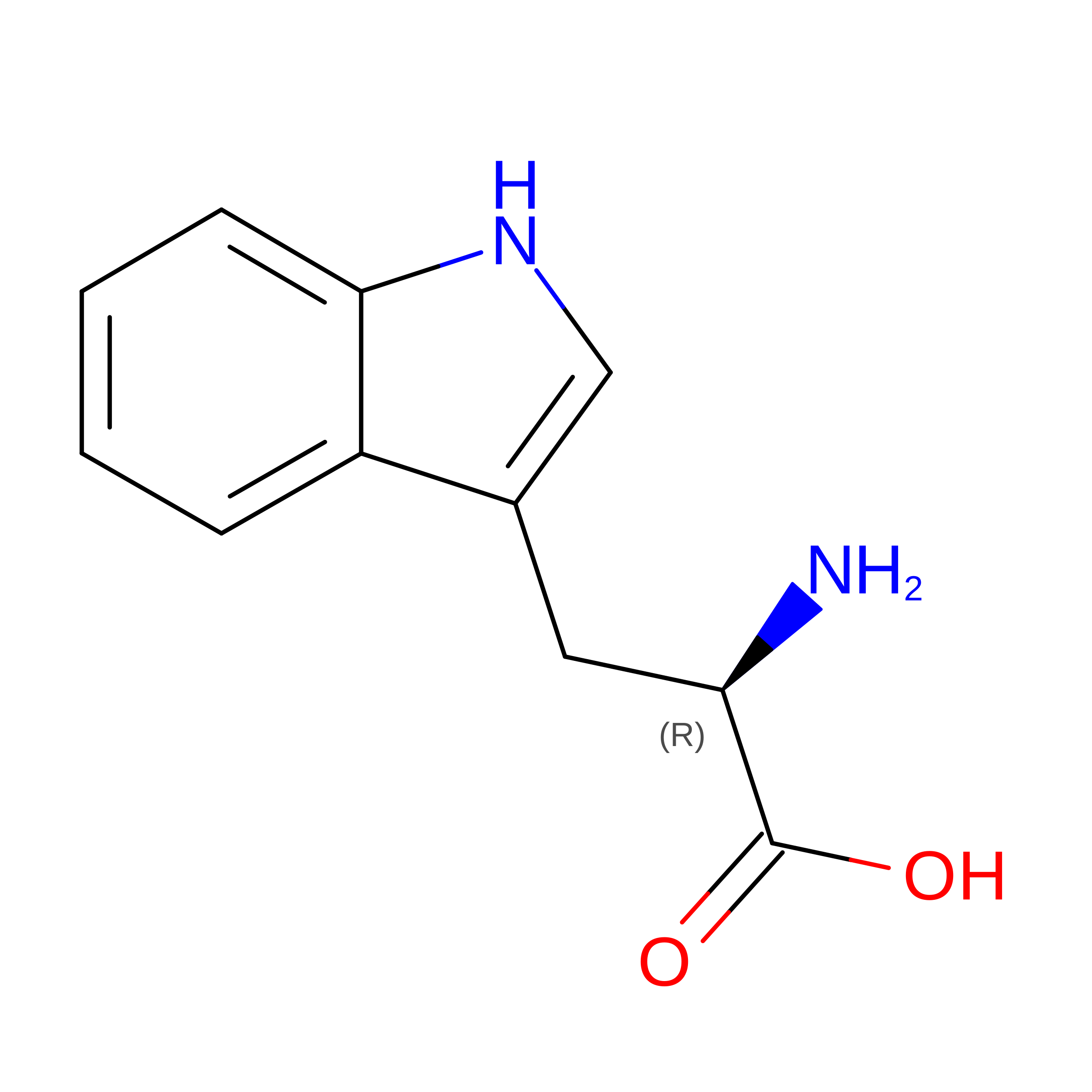
D-PEPTIDE LINKINGC11 H12 N2 O2

--

O6H
Query on O6H
A
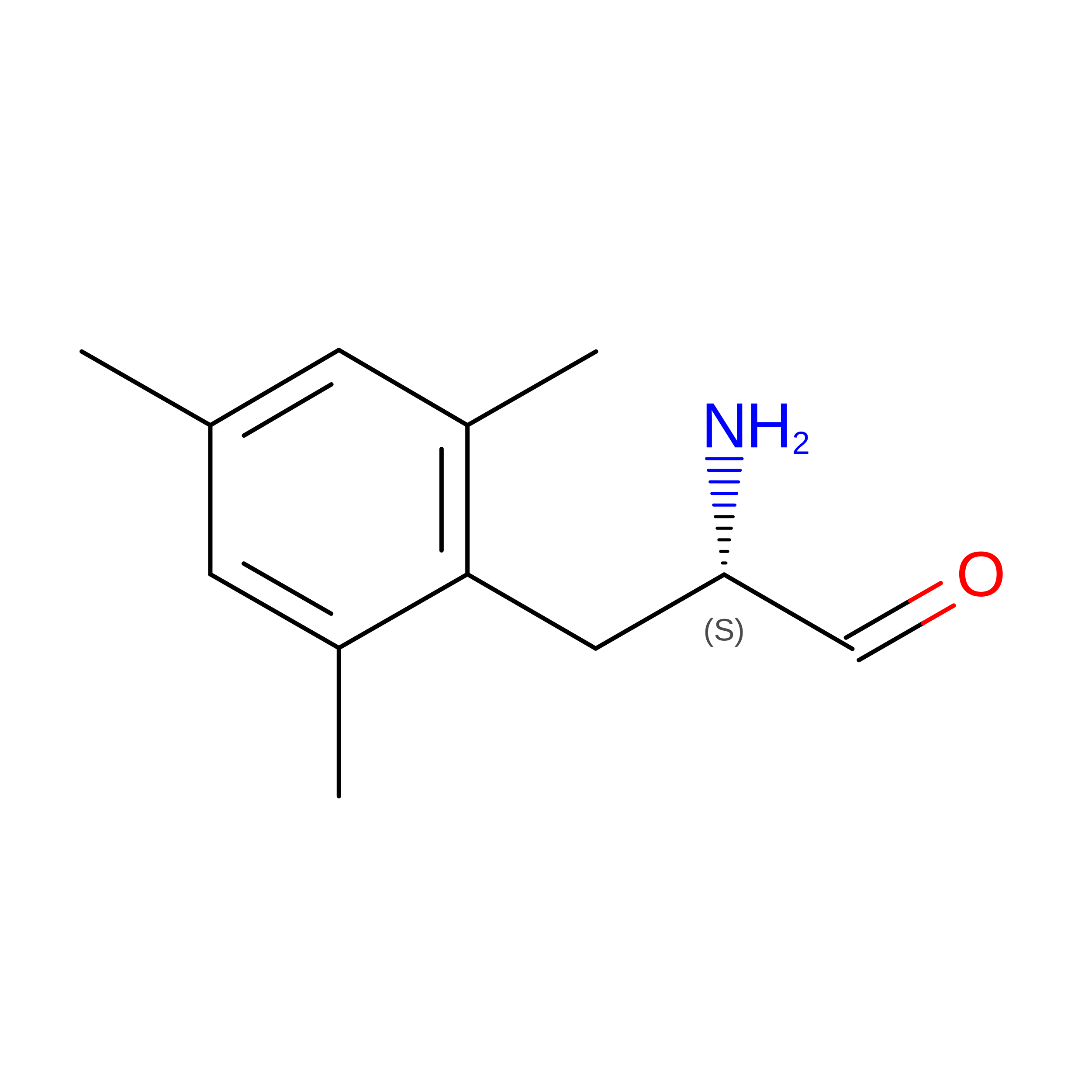
L-PEPTIDE LINKINGC12 H17 N O2TRP

Experimental Data & Validation

Experimental Data

  • Method: SOLUTION NMR
  • Conformers Calculated: 200 
  • Conformers Submitted: 20 
  • Selection Criteria: structures with the lowest energy 

Structure Validation

View Full Validation Report


Entry History 

& Funding Information

Deposition Data

  • Released Date: 2021-01-27 
  • Deposition Author(s): Rol, A.

Funding OrganizationLocationGrant Number
Ministry of Economy and Competitiveness (MINECO)SpainRTI2018-100700-B-100

Revision History  (Full details and data files)

  • Version 1.0: 2021-01-27
    Type: Initial release
  • Version 1.1: 2021-04-07
    Changes: Database references
  • Version 1.2: 2022-12-28
    Changes: Database references
  • Version 2.0: 2023-11-15
    Changes: Atomic model, Data collection, Derived calculations
  • Version 3.0: 2024-07-10
    Changes: Data collection, Database references, Derived calculations, Non-polymer description, Structure summary