6X4J | pdb_00006x4j

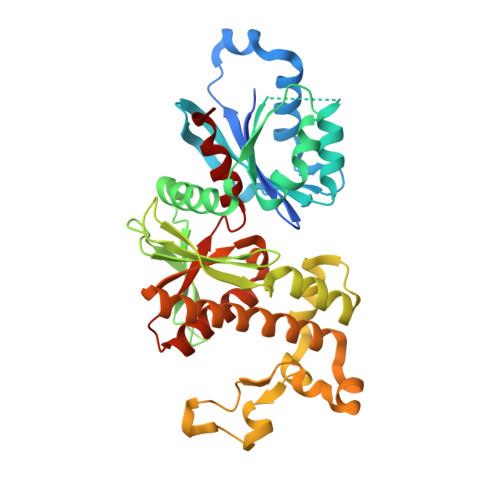
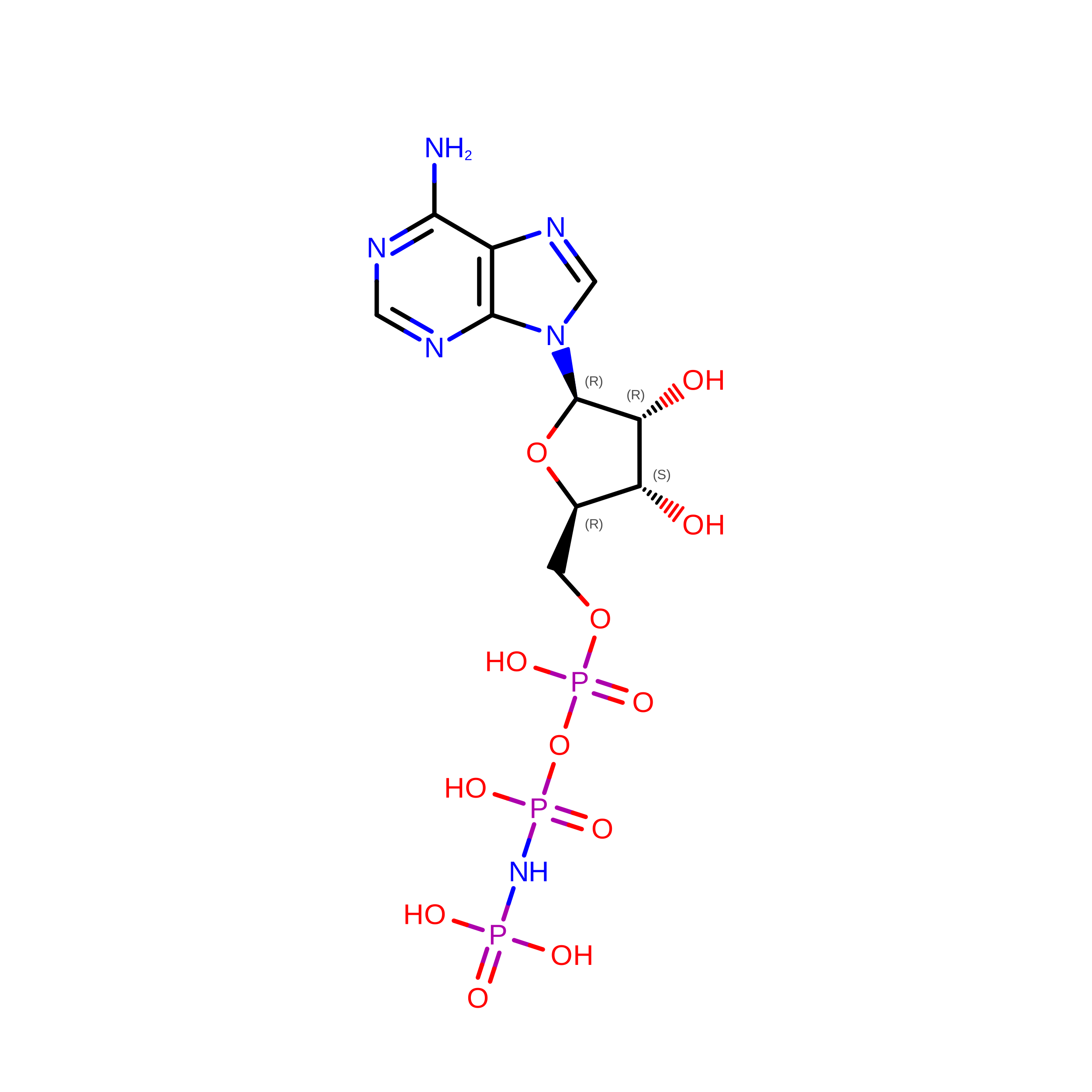
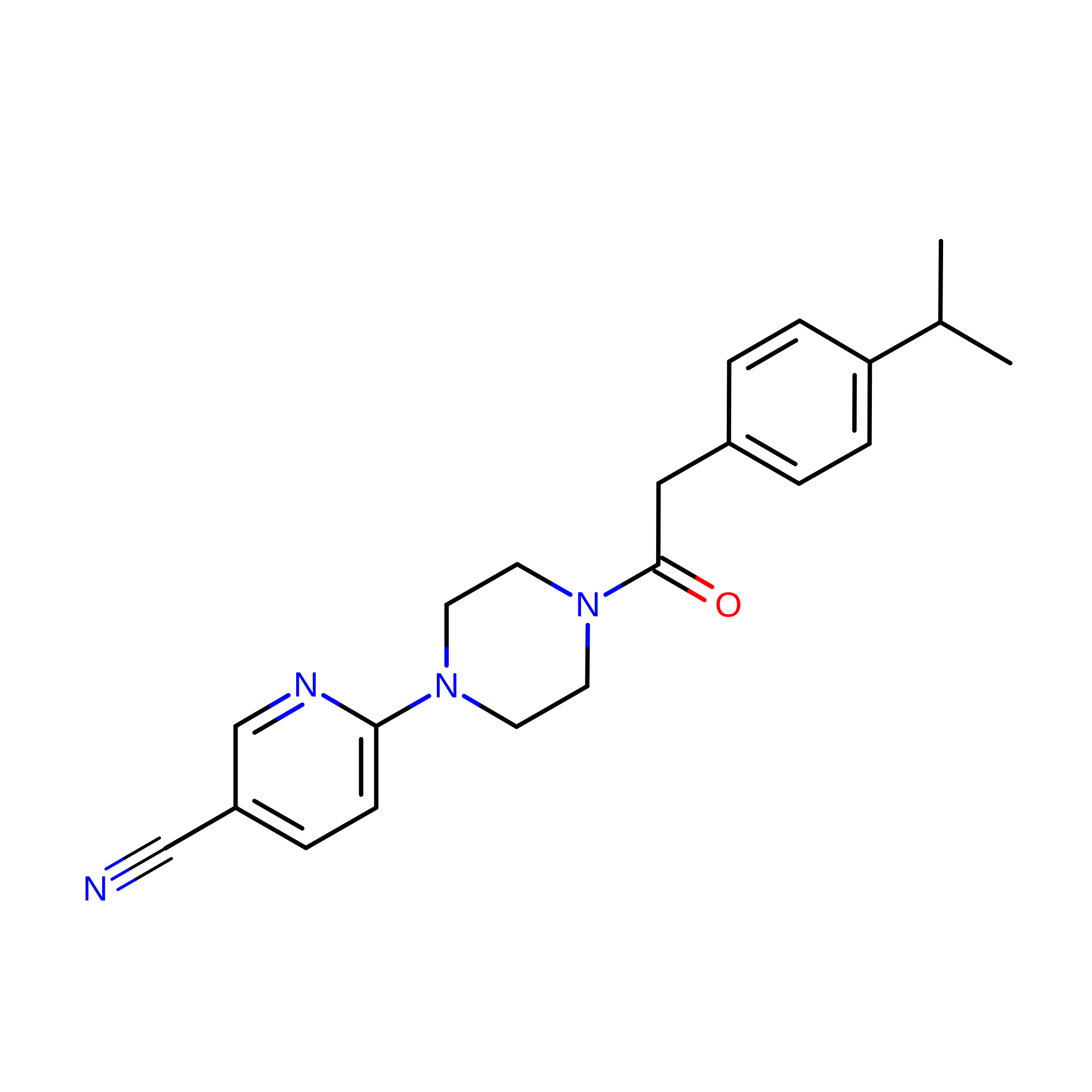
PANK3 complex structure with compound PZ-2863


Experimental Data Snapshot

  • Method: X-RAY DIFFRACTION
  • Resolution: 2.30 Å
  • R-Value Free: 
    0.236 (Depositor), 0.235 (DCC) 
  • R-Value Work: 
    0.198 (Depositor), 0.199 (DCC) 
  • R-Value Observed: 
    0.200 (Depositor) 

Starting Model: experimental
View more details

wwPDB Validation 3D Report Full Report

Validation slider image for 6X4J

Ligand Structure Quality Assessment 


This is version 1.2 of the entry. See complete history

Literature

LipE guided discovery of isopropylphenyl pyridazines as pantothenate kinase modulators.

Sharma, L.K.Yun, M.K.Subramanian, C.Tangallapally, R.Jackowski, S.Rock, C.O.White, S.W.Lee, R.E.

(2021) Bioorg Med Chem 52: 116504-116504

  • DOI: https://doi.org/10.1016/j.bmc.2021.116504
  • Primary Citation Related Structures: 
    6X4J, 6X4K, 6X4L

  • PubMed Abstract: 

    Pantothenate kinase (PANK) is the critical regulator of intracellular levels of coenzyme A and has emerged as an attractive target for treating neurological and metabolic disorders. This report describes the optimization, synthesis, and full structure-activity relationships of a new chemical series of pantothenate competitive PANK inhibitors. Potent drug-like molecules were obtained by optimizing a high throughput screening hit, using lipophilic ligand efficiency (LipE) derived from human PANK3 IC 50 values to guide ligand development. X-ray crystal structures of PANK3 with index inhibitors from the optimization were determined to rationalize the emerging structure activity relationships. The analysis revealed a key bidentate hydrogen bonding interaction between pyridazine and R306' as a major contributor to the LipE gain observed in the optimization. A tractable series of PANK3 modulators with nanomolar potency, excellent LipE values, desirable physicochemical properties, and a well-defined structural binding mode was produced from this study.


  • Organizational Affiliation
    • Department of Chemical Biology and Therapeutics, St. Jude Children's Research Hospital, 262 Danny Thomas PI, MS1000, Memphis, TN 38105, United States; Department of Infectious Diseases, St. Jude Children's Research Hospital, United States.

Macromolecule Content 

  • Total Structure Weight: 43.07 kDa 
  • Atom Count: 2,835 
  • Modeled Residue Count: 352 
  • Deposited Residue Count: 380 
  • Unique protein chains: 1

Macromolecules

Find similar proteins by:|  3D Structure
Entity ID: 1
MoleculeChains  Sequence LengthOrganismDetailsImage
Pantothenate kinase 3380Homo sapiensMutation(s): 0 
Gene Names: PANK3
EC: 2.7.1.33
UniProt & NIH Common Fund Data Resources
Find proteins for Q9H999 (Homo sapiens)
Explore Q9H999 
Go to UniProtKB:  Q9H999
PHAROS:  Q9H999
GTEx:  ENSG00000120137 
Entity Groups
Sequence Clusters30% Identity50% Identity70% Identity90% Identity95% Identity100% Identity
UniProt GroupQ9H999
Sequence Annotations
Expand
Reference Sequence

Small Molecules

Binding Affinity Annotations 
IDSourceBinding Affinity
UOM BindingDB:  6X4J IC50: 60 (nM) from 1 assay(s)

Experimental Data & Validation

Experimental Data

  • Method: X-RAY DIFFRACTION
  • Resolution: 2.30 Å
  • R-Value Free:  0.236 (Depositor), 0.235 (DCC) 
  • R-Value Work:  0.198 (Depositor), 0.199 (DCC) 
  • R-Value Observed: 0.200 (Depositor) 
Space Group: P 31 2 1
Unit Cell:
Length ( Å )Angle ( ˚ )
a = 98.428α = 90
b = 98.428β = 90
c = 68.922γ = 120
Software Package:
Software NamePurpose
PHENIXrefinement
HKL-2000data reduction
HKL-2000data scaling
PHASERphasing

Structure Validation

View Full Validation Report


Ligand Structure Quality Assessment 


Entry History 

Deposition Data

Revision History  (Full details and data files)

  • Version 1.0: 2021-11-24
    Type: Initial release
  • Version 1.1: 2021-12-08
    Changes: Database references
  • Version 1.2: 2023-10-18
    Changes: Data collection, Refinement description