6WB4 | pdb_00006wb4

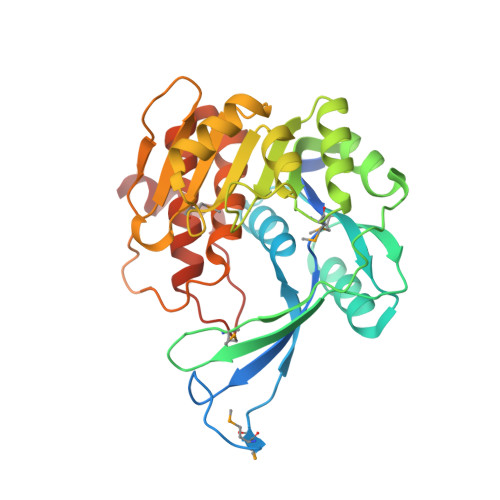
Microbiome-derived Acarbose Kinase Mak1 Labeled with selenomethionine


Experimental Data Snapshot

  • Method: X-RAY DIFFRACTION
  • Resolution: 2.59 Å
  • R-Value Free: 
    0.253 (Depositor), 0.257 (DCC) 
  • R-Value Work: 
    0.186 (Depositor), 0.193 (DCC) 
  • R-Value Observed: 
    0.189 (Depositor) 

wwPDB Validation 3D Report Full Report

Validation slider image for 6WB4

Ligand Structure Quality Assessment 


This is version 1.3 of the entry. See complete history

Literature

The human microbiome encodes resistance to the antidiabetic drug acarbose.

Balaich, J.Estrella, M.Wu, G.Jeffrey, P.D.Biswas, A.Zhao, L.Korennykh, A.Donia, M.S.

(2021) Nature 600: 110-115

  • DOI: https://doi.org/10.1038/s41586-021-04091-0
  • Primary Citation Related Structures: 
    6WB4, 6WB5, 6WB7

  • PubMed Abstract: 

    The human microbiome encodes a large repertoire of biochemical enzymes and pathways, most of which remain uncharacterized. Here, using a metagenomics-based search strategy, we discovered that bacterial members of the human gut and oral microbiome encode enzymes that selectively phosphorylate a clinically used antidiabetic drug, acarbose 1,2 , resulting in its inactivation. Acarbose is an inhibitor of both human and bacterial α-glucosidases 3 , limiting the ability of the target organism to metabolize complex carbohydrates. Using biochemical assays, X-ray crystallography and metagenomic analyses, we show that microbiome-derived acarbose kinases are specific for acarbose, provide their harbouring organism with a protective advantage against the activity of acarbose, and are widespread in the microbiomes of western and non-western human populations. These results provide an example of widespread microbiome resistance to a non-antibiotic drug, and suggest that acarbose resistance has disseminated in the human microbiome as a defensive strategy against a potential endogenous producer of a closely related molecule.


  • Organizational Affiliation
    • Department of Molecular Biology, Princeton University, Princeton, NJ, USA.

Macromolecule Content 

  • Total Structure Weight: 71.64 kDa 
  • Atom Count: 4,721 
  • Modeled Residue Count: 604 
  • Deposited Residue Count: 638 
  • Unique protein chains: 1

Macromolecules

Find similar proteins by:|  3D Structure
Entity ID: 1
MoleculeChains  Sequence LengthOrganismDetailsImage
Acarbose Kinase Mak1
A, B
319uncultured bacteriumMutation(s): 0 

Oligosaccharides

Help  
Entity ID: 2
MoleculeChains Length2D Diagram GlycosylationD Interactions
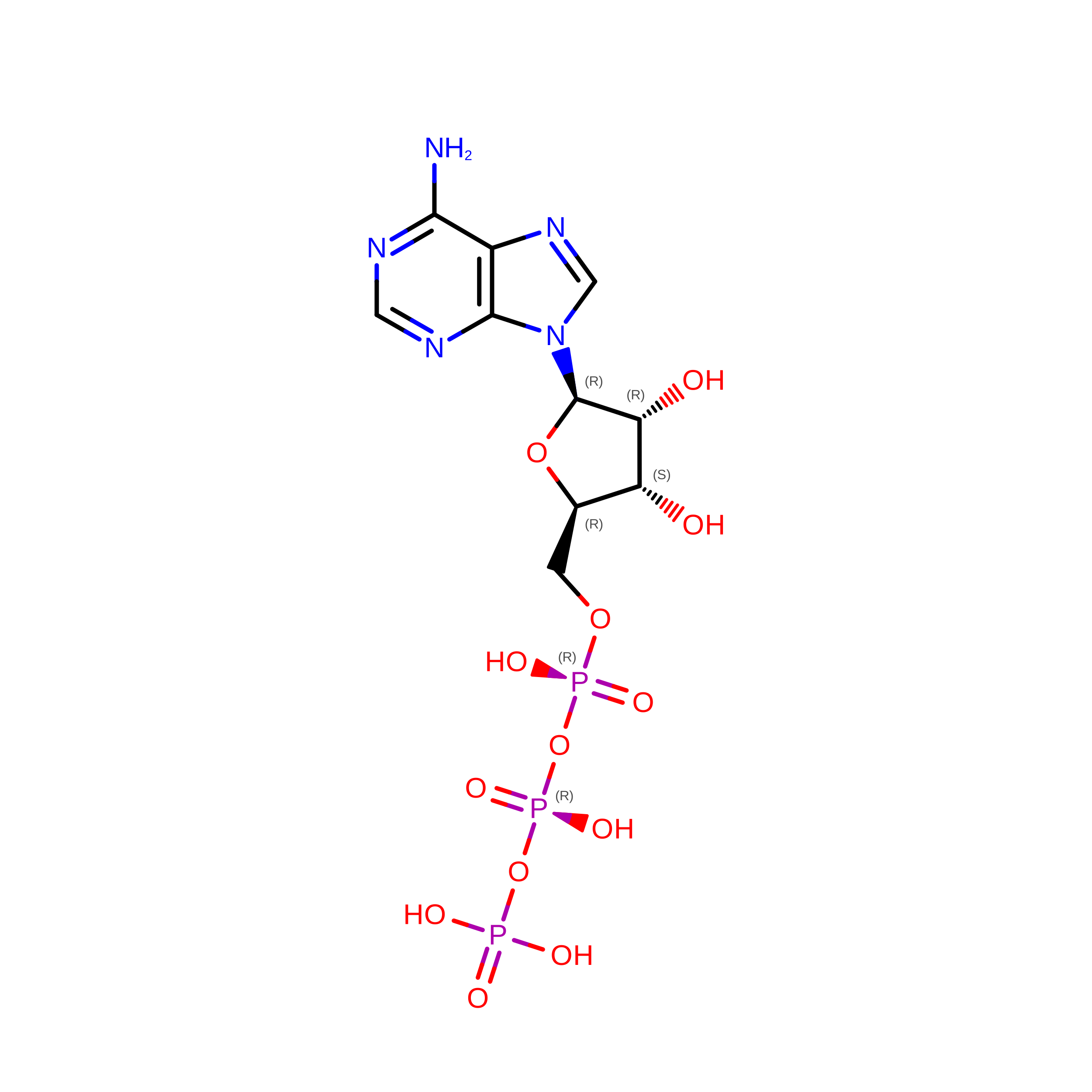
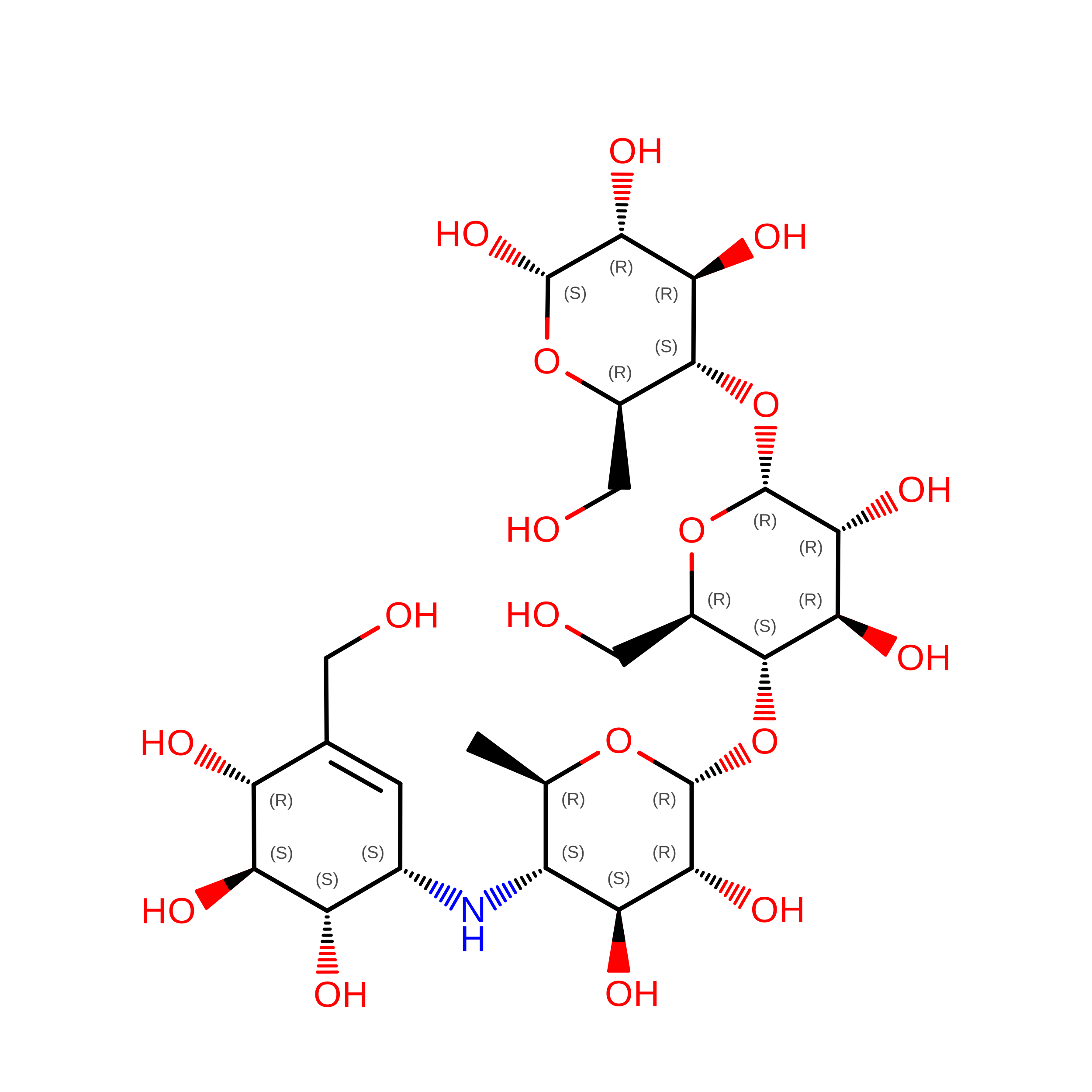
4,6-dideoxy-4-{[(1S,4R,5S,6S)-4,5,6-trihydroxy-3-(hydroxymethyl)cyclohex-2-en-1-yl]amino}-alpha-D-glucopyranose-(1-4)-alpha-D-glucopyranose-(1-4)-alpha-D-glucopyranose
C, D
3N/AN/A
Glycosylation Resources
GlyTouCan: G66431MI
GlyCosmos: G66431MI

Small Molecules

Modified Residues  1 Unique
IDChains TypeFormula2D DiagramParent
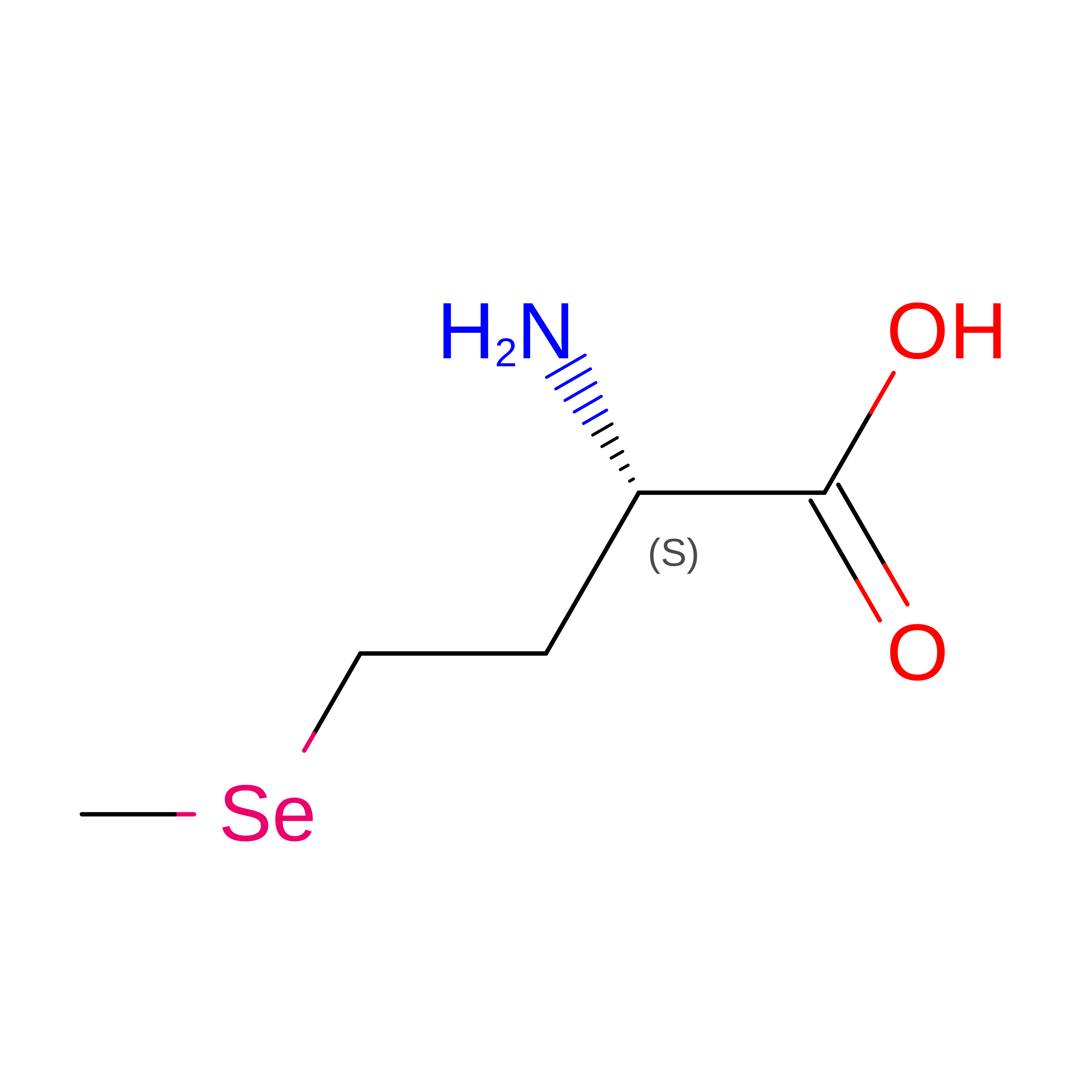
MSE
Query on MSE
A, B
L-PEPTIDE LINKINGC5 H11 N O2 SeMET

Biologically Interesting Molecules (External Reference) 

1 Unique

Experimental Data & Validation

Experimental Data

  • Method: X-RAY DIFFRACTION
  • Resolution: 2.59 Å
  • R-Value Free:  0.253 (Depositor), 0.257 (DCC) 
  • R-Value Work:  0.186 (Depositor), 0.193 (DCC) 
  • R-Value Observed: 0.189 (Depositor) 
Space Group: C 2 2 21
Unit Cell:
Length ( Å )Angle ( ˚ )
a = 113.831α = 90
b = 123.509β = 90
c = 102.443γ = 90
Software Package:
Software NamePurpose
XDSdata reduction
Aimlessdata scaling
SHELXphasing
PHENIXrefinement
PDB_EXTRACTdata extraction
Cootmodel building

Structure Validation

View Full Validation Report


Ligand Structure Quality Assessment 


Entry History 

& Funding Information

Deposition Data


Funding OrganizationLocationGrant Number
National Institutes of Health/National Institute Of Allergy and Infectious Diseases (NIH/NIAID)--

Revision History  (Full details and data files)

  • Version 1.0: 2021-04-21
    Type: Initial release
  • Version 1.1: 2021-12-08
    Changes: Database references
  • Version 1.2: 2021-12-15
    Changes: Database references
  • Version 1.3: 2024-10-30
    Changes: Data collection, Refinement description, Structure summary