Download Mendeley
Structural and functional evaluation of de novo-designed, two-component nanoparticle carriers for HIV Env trimer immunogens.
Antanasijevic, A., Ueda, G., Brouwer, P.J.M., Copps, J., Huang, D., Allen, J.D., Cottrell, C.A., Yasmeen, A., Sewall, L.M., Bontjer, I., Ketas, T.J., Turner, H.L., Berndsen, Z.T., Montefiori, D.C., Klasse, P.J., Crispin, M., Nemazee, D., Moore, J.P., Sanders, R.W., King, N.P., Baker, D., Ward, A.B.(2020) PLoS Pathog 16: e1008665-e1008665
- PubMed: 32780770 Search on PubMedSearch on PubMed Central
- DOI: https://doi.org/10.1371/journal.ppat.1008665
- Primary Citation Related Structures:
6VFK, 6VFL - PubMed Abstract:
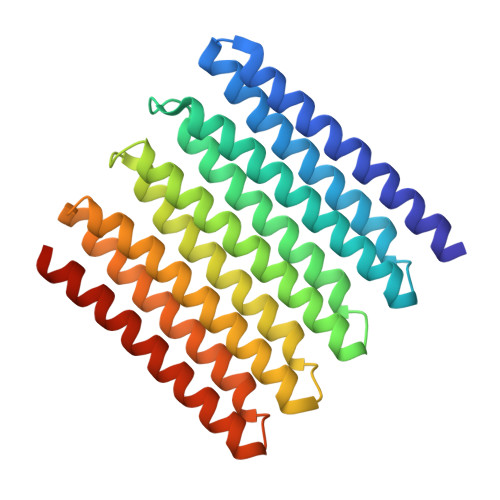
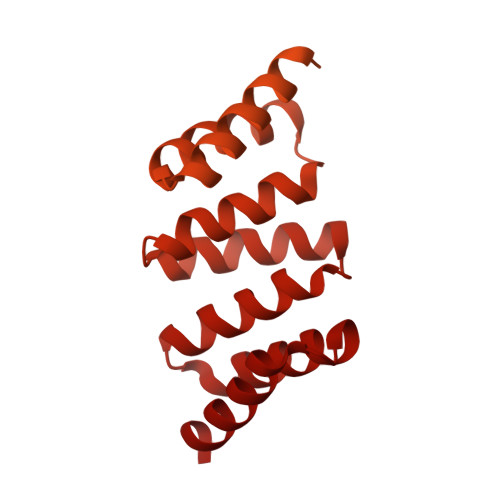
Two-component, self-assembling nanoparticles represent a versatile platform for multivalent presentation of viral antigens. Computational design of protein nanoparticles with differing sizes and geometries enables combination with antigens of choice to test novel multimerization concepts in immunization strategies where the goal is to improve the induction and maturation of neutralizing antibody lineages. Here, we describe detailed antigenic, structural, and functional characterization of computationally designed tetrahedral, octahedral, and icosahedral nanoparticle immunogens displaying trimeric HIV envelope glycoprotein (Env) ectodomains. Env trimers, based on subtype A (BG505) or consensus group M (ConM) sequences and engineered with SOSIP stabilizing mutations, were fused to an underlying trimeric building block of each nanoparticle. Initial screening yielded one icosahedral and two tetrahedral nanoparticle candidates, capable of presenting twenty or four copies of the Env trimer. A number of analyses, including detailed structural characterization by cryo-EM, demonstrated that the nanoparticle immunogens possessed the intended structural and antigenic properties. When the immunogenicity of ConM-SOSIP trimers presented on a two-component tetrahedral nanoparticle or as soluble proteins were compared in rabbits, the two immunogens elicited similar serum antibody binding titers against the trimer component. Neutralizing antibody titers were slightly elevated in the animals given the nanoparticle immunogen and were initially more focused to the trimer apex. Altogether, our findings indicate that tetrahedral nanoparticles can be successfully applied for presentation of HIV Env trimer immunogens; however, the optimal implementation to different immunization strategies remains to be determined.
- Department of Integrative, Structural and Computational Biology, Scripps Research, La Jolla, California, United States of America.
Organizational Affiliation: