6VEC | pdb_00006vec

Cryo-EM structure of F-actin/Plastin2-ABD2 complex


Experimental Data Snapshot

  • Method: ELECTRON MICROSCOPY
  • Resolution: 3.90 Å
  • Aggregation State: FILAMENT 
  • Reconstruction Method: HELICAL 

Starting Model: experimental
View more details

wwPDB Validation 3D Report Full Report

Validation slider image for 6VEC

This is version 1.2 of the entry. See complete history

Literature

Osteogenesis imperfecta mutations in plastin 3 lead to impaired calcium regulation of actin bundling.

Schwebach, C.L.Kudryashova, E.Zheng, W.Orchard, M.Smith, H.Runyan, L.A.Egelman, E.H.Kudryashov, D.S.

(2020) Bone Res 8: 21-21

  • DOI: https://doi.org/10.1038/s41413-020-0095-2
  • Primary Citation Related Structures: 
    6VEC

  • PubMed Abstract: 

    Mutations in actin-bundling protein plastin 3 (PLS3) emerged as a cause of congenital osteoporosis, but neither the role of PLS3 in bone development nor the mechanisms underlying PLS3-dependent osteoporosis are understood. Of the over 20 identified osteoporosis-linked PLS3 mutations, we investigated all five that are expected to produce full-length protein. One of the mutations distorted an actin-binding loop in the second actin-binding domain of PLS3 and abolished F-actin bundling as revealed by cryo-EM reconstruction and protein interaction assays. Surprisingly, the remaining four mutants fully retained F-actin bundling ability. However, they displayed defects in Ca 2+ sensitivity: two of the mutants lost the ability to be inhibited by Ca 2+ , while the other two became hypersensitive to Ca 2+ . Each group of the mutants with similar biochemical properties showed highly characteristic cellular behavior. Wild-type PLS3 was distributed between lamellipodia and focal adhesions. In striking contrast, the Ca 2+ -hyposensitive mutants were not found at the leading edge but localized exclusively at focal adhesions/stress fibers, which displayed reinforced morphology. Consistently, the Ca 2+ -hypersensitive PLS3 mutants were restricted to lamellipodia, while chelation of Ca 2+ caused their redistribution to focal adhesions. Finally, the bundling-deficient mutant failed to co-localize with any F-actin structures in cells despite a preserved F-actin binding through a non-mutation-bearing actin-binding domain. Our findings revealed that severe osteoporosis can be caused by a mutational disruption of the Ca 2+ -controlled PLS3's cycling between adhesion complexes and the leading edge. Integration of the structural, biochemical, and cell biology insights enabled us to propose a molecular mechanism of plastin activity regulation by Ca 2+ .


  • Organizational Affiliation
    • Department of Chemistry and Biochemistry, The Ohio State University, Columbus, OH 43210 USA.

Macromolecule Content 

  • Total Structure Weight: 995.85 kDa 
  • Atom Count: 53,064 
  • Modeled Residue Count: 6,721 
  • Deposited Residue Count: 8,789 
  • Unique protein chains: 2

Macromolecules

Find similar proteins by:|  3D Structure
Entity ID: 1
MoleculeChains  Sequence LengthOrganismDetailsImage
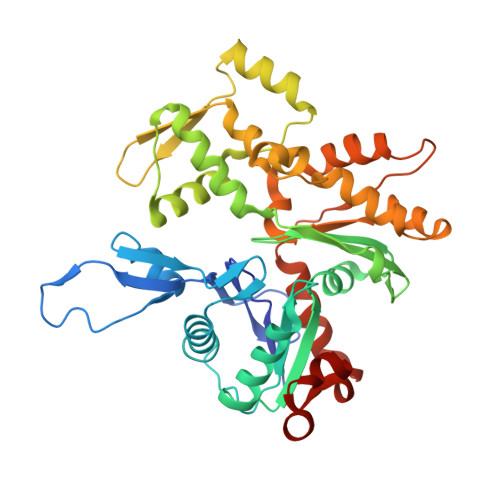
Actin, alpha skeletal muscle
A, B, C, D, E
A, B, C, D, E, F, G, H, I, J, K
377Oryctolagus cuniculusMutation(s): 0 
EC: 3.6.4
UniProt
Find proteins for P68135 (Oryctolagus cuniculus)
Explore P68135 
Go to UniProtKB:  P68135
Entity Groups
Sequence Clusters30% Identity50% Identity70% Identity90% Identity95% Identity100% Identity
UniProt GroupP68135
Sequence Annotations
Expand
Reference Sequence
Find similar proteins by:|  3D Structure
Entity ID: 2
MoleculeChains  Sequence LengthOrganismDetailsImage
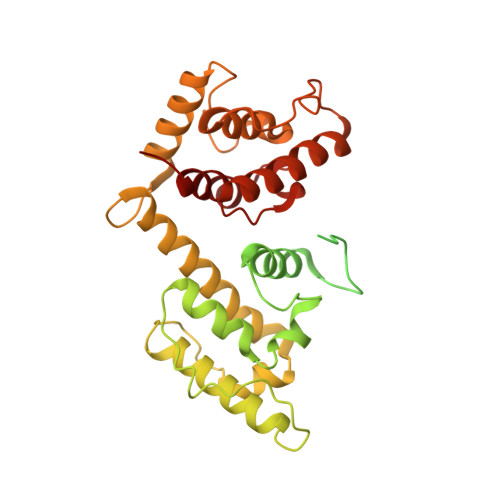
LCP1422Homo sapiensMutation(s): 0 
Gene Names: HEL-S-37
UniProt & NIH Common Fund Data Resources
Find proteins for P13796 (Homo sapiens)
Explore P13796 
Go to UniProtKB:  P13796
PHAROS:  P13796
GTEx:  ENSG00000136167 
Entity Groups
Sequence Clusters30% Identity50% Identity70% Identity90% Identity95% Identity100% Identity
UniProt GroupP13796
Sequence Annotations
Expand
Reference Sequence

Small Molecules

Ligands 2 Unique
IDChains Name / Formula / InChI Key2D Diagram3D Interactions
ADP

Query on ADP


Download:Ideal Coordinates CCD File
AA [auth C]
CA [auth D]
EA [auth E]
GA [auth F]
IA [auth G]
AA [auth C],
CA [auth D],
EA [auth E],
GA [auth F],
IA [auth G],
KA [auth H],
MA [auth I],
OA [auth J],
QA [auth K],
W [auth A],
Y [auth B]
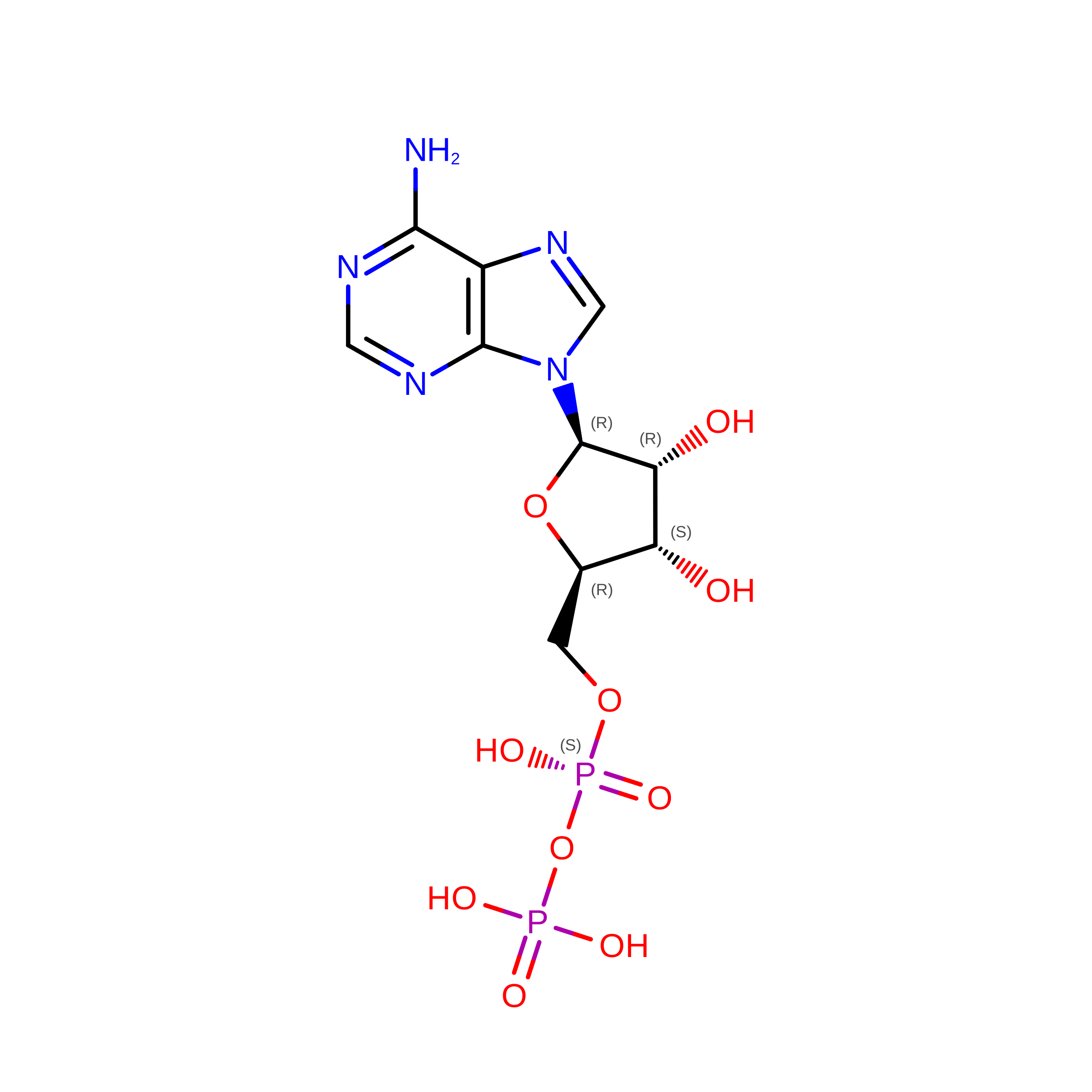
ADENOSINE-5'-DIPHOSPHATE
C10 H15 N5 O10 P2
XTWYTFMLZFPYCI-KQYNXXCUSA-N
MG

Query on MG


Download:Ideal Coordinates CCD File
BA [auth C]
DA [auth D]
FA [auth E]
HA [auth F]
JA [auth G]
BA [auth C],
DA [auth D],
FA [auth E],
HA [auth F],
JA [auth G],
LA [auth H],
NA [auth I],
PA [auth J],
RA [auth K],
X [auth A],
Z [auth B]
MAGNESIUM ION
Mg
JLVVSXFLKOJNIY-UHFFFAOYSA-N

Experimental Data & Validation

Experimental Data

  • Method: ELECTRON MICROSCOPY
  • Resolution: 3.90 Å
  • Aggregation State: FILAMENT 
  • Reconstruction Method: HELICAL 
EM Software:
TaskSoftware PackageVersion
RECONSTRUCTIONRELION
MODEL REFINEMENTCoot
MODEL REFINEMENTPHENIX

Structure Validation

View Full Validation Report


Entry History 

& Funding Information

Deposition Data


Funding OrganizationLocationGrant Number
National Institutes of Health/National Institute of General Medical Sciences (NIH/NIGMS)United StatesR35GM122510

Revision History  (Full details and data files)

  • Version 1.0: 2020-12-09
    Type: Initial release
  • Version 1.1: 2020-12-23
    Changes: Database references, Structure summary
  • Version 1.2: 2024-03-06
    Changes: Data collection, Database references, Refinement description