6THY | pdb_00006thy

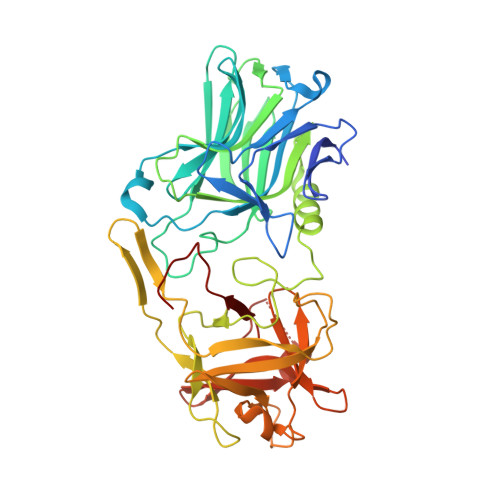
Botulinum neurotoxin A3 Hc domain in complex with GD1a


Experimental Data Snapshot

  • Method: X-RAY DIFFRACTION
  • Resolution: 1.75 Å
  • R-Value Free: 
    0.213 (Depositor), 0.205 (DCC) 
  • R-Value Work: 
    0.178 (Depositor) 

Starting Model: experimental
View more details

wwPDB Validation 3D Report Full Report

Validation slider image for 6THY

This is version 2.1 of the entry. See complete history

Literature

Crystal structure of botulinum neurotoxin subtype A3 cell binding domain in complex with GD1a co-receptor ganglioside.

Gregory, K.S.Liu, S.M.Acharya, K.R.

(2020) FEBS Open Bio 10: 298-305

  • DOI: https://doi.org/10.1002/2211-5463.12790
  • Primary Citation Related Structures: 
    6THY

  • PubMed Abstract: 

    Botulinum neurotoxins (BoNTs) are one of the most toxic proteins known to humans. Their molecular structure is comprised of three essential domains-a cell binding domain (H C ), translocation domain and catalytic domain (light chain) . The H C domain facilitates the highly specific binding of BoNTs to the neuronal membrane via a dual-receptor complex involving a protein receptor and a ganglioside. Variation in activity/toxicity across subtypes of serotype A has been attributed to changes in protein and ganglioside interactions, and their implications are important in the design of novel BoNT-based therapeutics. Here, we present the structure of BoNT/A3 cell binding domain (H C /A3) in complex with the ganglioside GD1a at 1.75 Å resolution. The structure revealed that six residues interact with the three outermost monosaccharides of GD1a through several key hydrogen bonding interactions. A detailed comparison of structures of H C /A3 with H C /A1 revealed subtle conformational differences at the ganglioside binding site upon carbohydrate binding.


  • Organizational Affiliation
    • Department of Biology and Biochemistry, Claverton Down, University of Bath, UK.

Macromolecule Content 

  • Total Structure Weight: 52.14 kDa 
  • Atom Count: 3,931 
  • Modeled Residue Count: 409 
  • Deposited Residue Count: 433 
  • Unique protein chains: 1

Macromolecules

Find similar proteins by:|  3D Structure
Entity ID: 1
MoleculeChains  Sequence LengthOrganismDetailsImage
BoNT/A3A [auth AAA]433Clostridium botulinumMutation(s): 0 
UniProt
Find proteins for Q3LRX9 (Clostridium botulinum)
Explore Q3LRX9 
Go to UniProtKB:  Q3LRX9
Entity Groups
Sequence Clusters30% Identity50% Identity70% Identity90% Identity95% Identity100% Identity
UniProt GroupQ3LRX9
Sequence Annotations
Expand
Reference Sequence

Oligosaccharides

Help  
Entity ID: 2
MoleculeChains Length2D Diagram GlycosylationD Interactions
N-acetyl-alpha-neuraminic acid-(2-3)-beta-D-galactopyranose-(1-3)-2-acetamido-2-deoxy-beta-D-galactopyranose-(1-4)-beta-D-galactopyranose-(1-4)-beta-D-glucopyranoseB [auth A]5N/A
Glycosylation Resources
GlyTouCan: G03277YI
GlyCosmos: G03277YI
GlyGen: G03277YI

Small Molecules

Ligands 4 Unique
IDChains Name / Formula / InChI Key2D Diagram3D Interactions
P6G

Query on P6G


Download:Ideal Coordinates CCD File
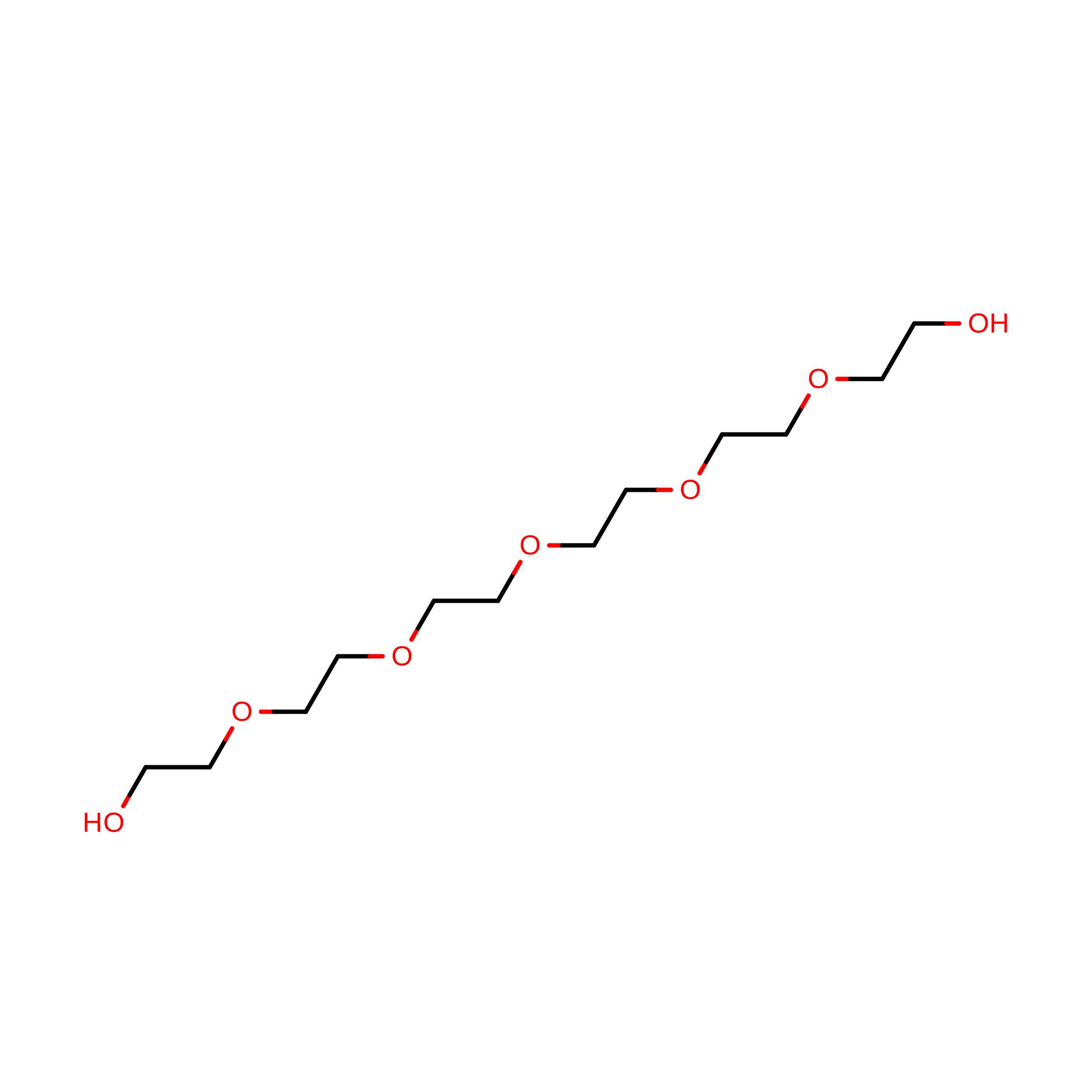
C [auth AAA]HEXAETHYLENE GLYCOL
C12 H26 O7
IIRDTKBZINWQAW-UHFFFAOYSA-N
PEG

Query on PEG


Download:Ideal Coordinates CCD File
G [auth AAA],
H [auth AAA]
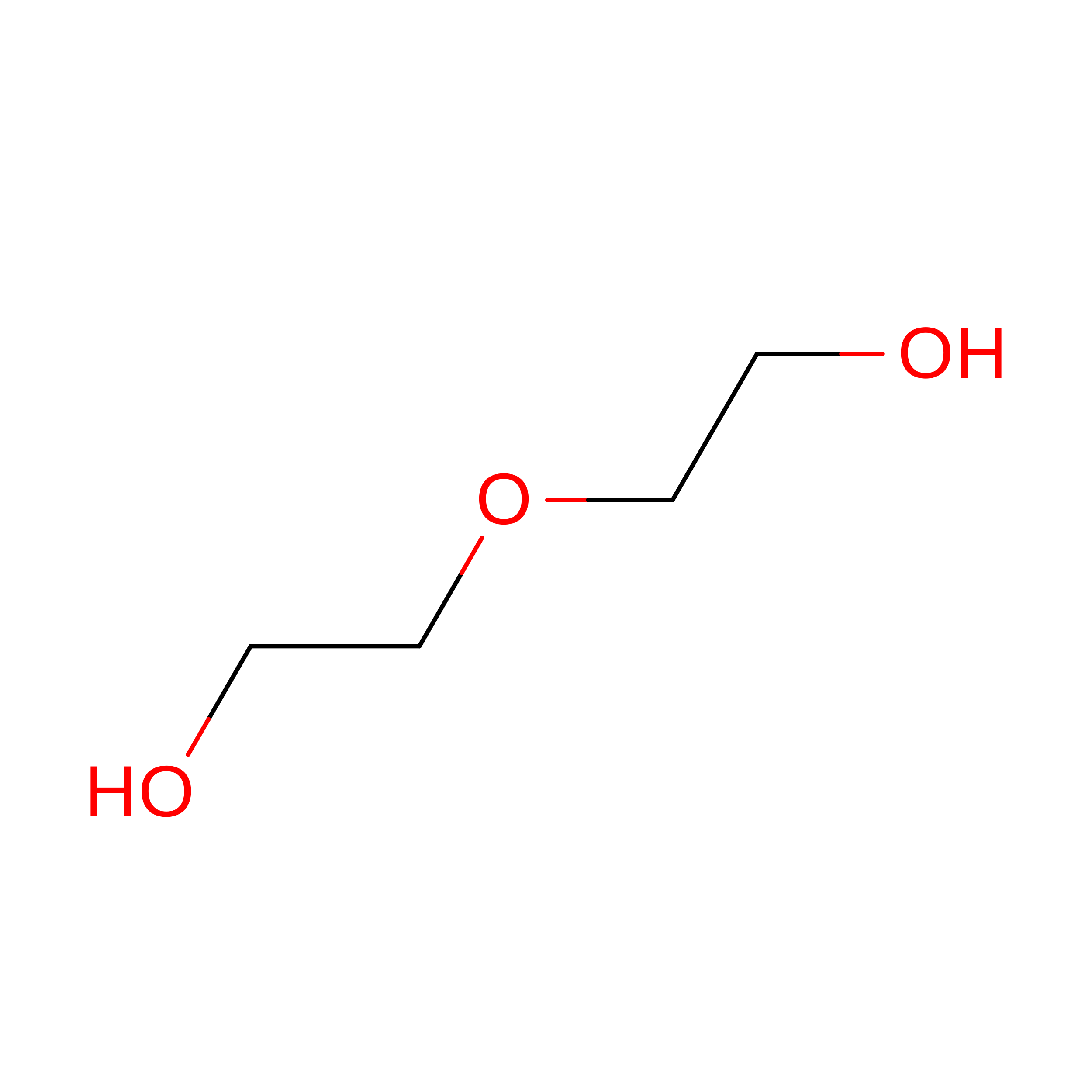
DI(HYDROXYETHYL)ETHER
C4 H10 O3
MTHSVFCYNBDYFN-UHFFFAOYSA-N
EDO

Query on EDO


Download:Ideal Coordinates CCD File
D [auth AAA],
F [auth AAA]
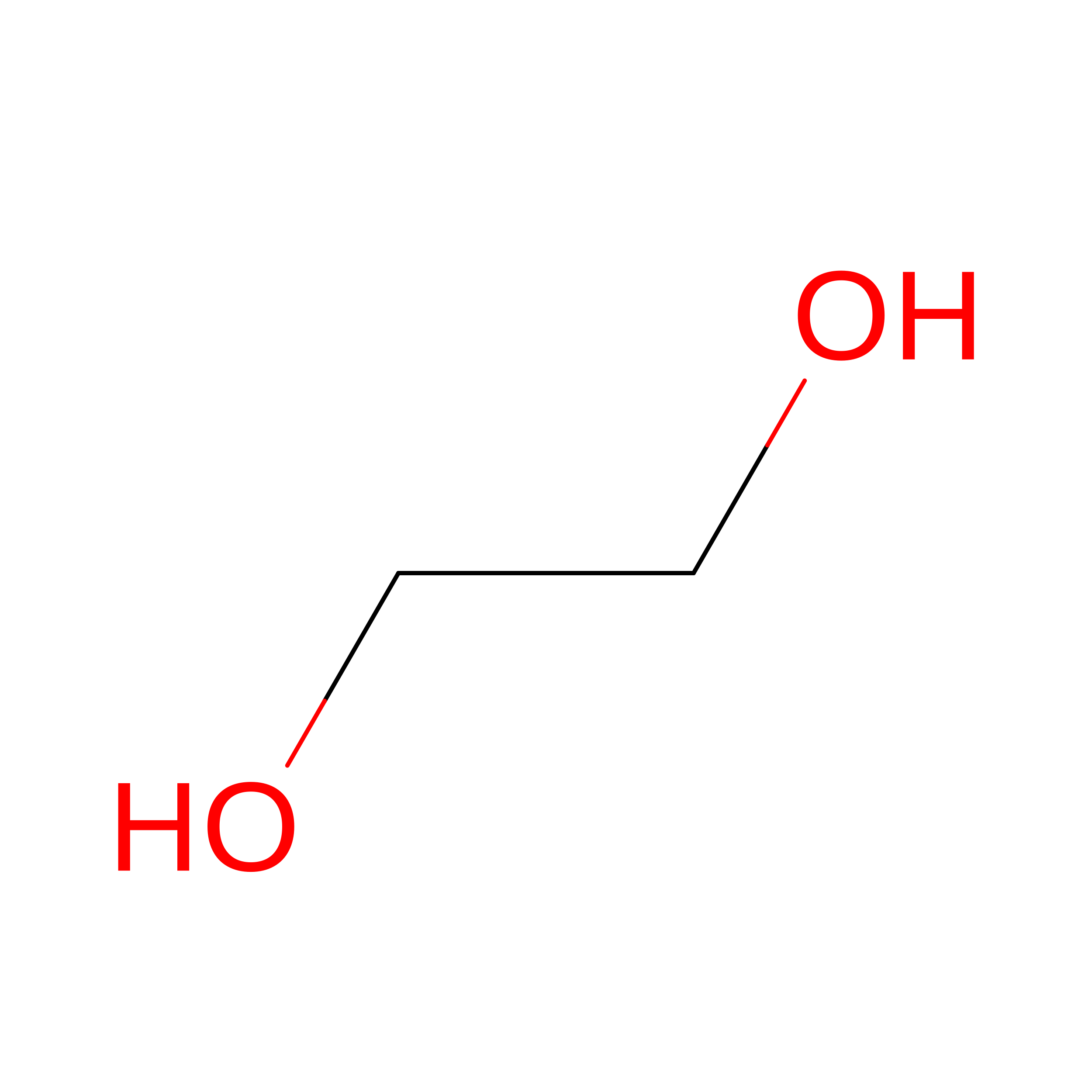
1,2-ETHANEDIOL
C2 H6 O2
LYCAIKOWRPUZTN-UHFFFAOYSA-N
ACT

Query on ACT


Download:Ideal Coordinates CCD File
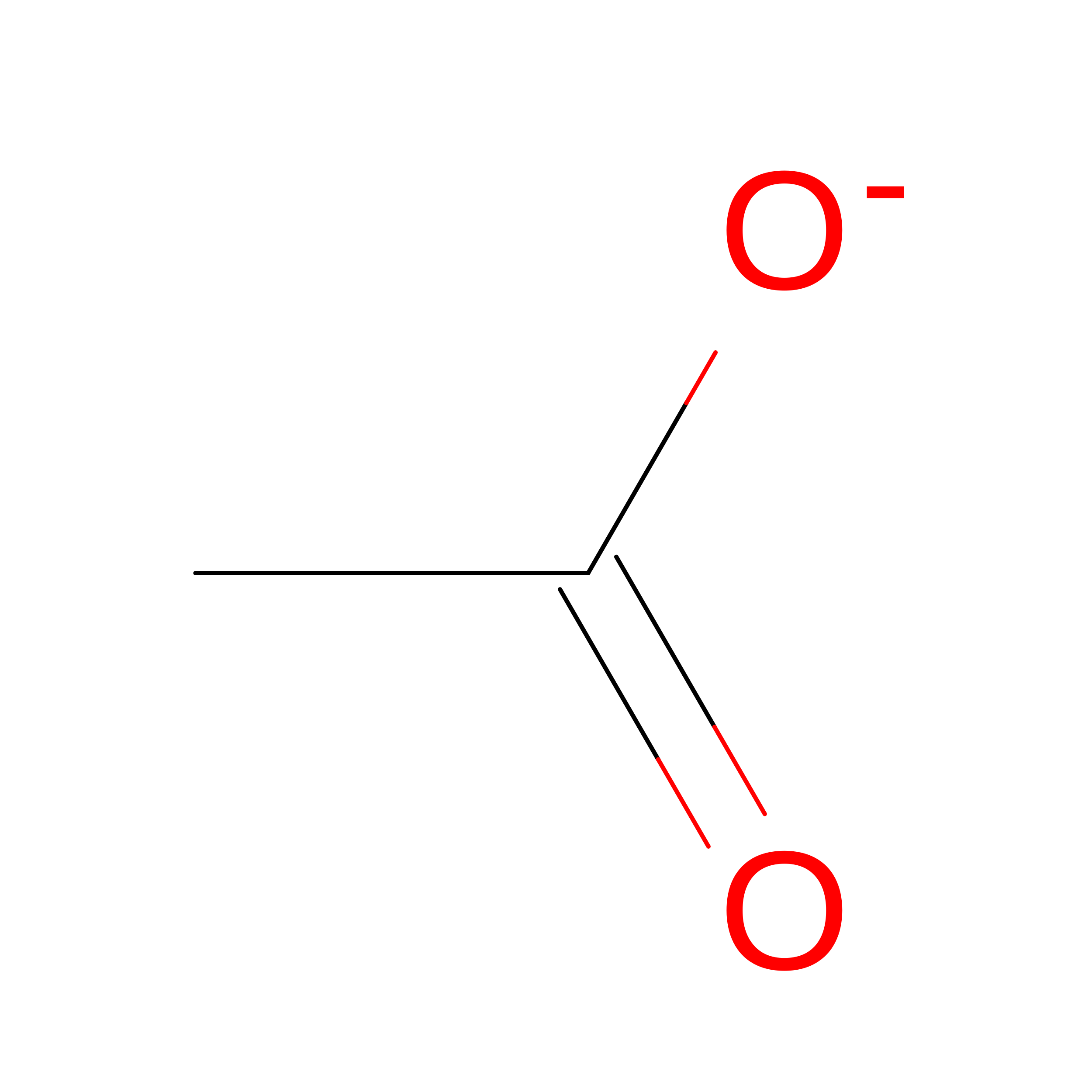
E [auth AAA]ACETATE ION
C2 H3 O2
QTBSBXVTEAMEQO-UHFFFAOYSA-M

Experimental Data & Validation

Experimental Data

  • Method: X-RAY DIFFRACTION
  • Resolution: 1.75 Å
  • R-Value Free:  0.213 (Depositor), 0.205 (DCC) 
  • R-Value Work:  0.178 (Depositor) 
Space Group: P 21 21 21
Unit Cell:
Length ( Å )Angle ( ˚ )
a = 45.228α = 90
b = 73.129β = 90
c = 140.18γ = 90
Software Package:
Software NamePurpose
REFMACrefinement
DIALSdata reduction
Aimlessdata scaling
PHASERphasing

Structure Validation

View Full Validation Report


Entry History 

Deposition Data

Revision History  (Full details and data files)

  • Version 1.0: 2020-01-29
    Type: Initial release
  • Version 1.1: 2020-03-11
    Changes: Data collection, Database references
  • Version 2.0: 2020-07-29
    Type: Remediation
    Reason: Carbohydrate remediation
    Changes: Atomic model, Author supporting evidence, Data collection, Derived calculations, Structure summary
  • Version 2.1: 2024-01-24
    Changes: Data collection, Database references, Derived calculations, Refinement description, Structure summary